


You’ve already published content, clarified your podcast concept, and lined up guests. At some point, the next step is packaging that work in a way others can quickly understand, evaluate, and respond to.
That’s where a podcast pitch deck comes in.
This guide focuses on the execution side of podcast pitching: how to structure a podcast pitch deck, what slides to include, how to present your concept clearly, and how to avoid common structural mistakes. It does not define how sponsors, platforms, or partners make decisions — it shows how podcast creators typically present information for review.
I’m Viktor. I work on pitch decks and presentation systems across different industries, including media and content-driven projects. This guide shares a practical framework you can use to build your own podcast pitch deck or adapt a ready-made template, depending on how quickly you need to move.
This guide focuses on execution mechanics only. Strategic evaluation logic — including how podcasts are assessed as consumer brand assets — is addressed elsewhere and is not defined here. For broader context, see the consumer brand evaluation context.
Let’s start with the basics.
What Is a Podcast Pitch Deck?
A podcast pitch deck is a structured presentation that summarizes the core elements of a podcast project in a clear, review-friendly format.
It typically includes:
- the podcast concept and positioning
- information about the host or hosts
- format and episode structure
- target audience and distribution platforms
- basic production and publishing details
A podcast pitch deck is commonly used when introducing a show to sponsors, collaborators, networks, or platforms. Its role is not to persuade on its own, but to present information consistently, making it easier for reviewers to understand what the podcast is, how it works, and what stage it’s at.
In practice, the deck acts as a shared reference point — aligning expectations before deeper conversations take places. Let’s move on to the step by step guide.
A podcast pitch deck isn’t a persuasion manifesto. It’s a structured presentation tool that helps reviewers understand your show quickly and consistently. If structure is off, clarity collapses — regardless of how good the idea is.
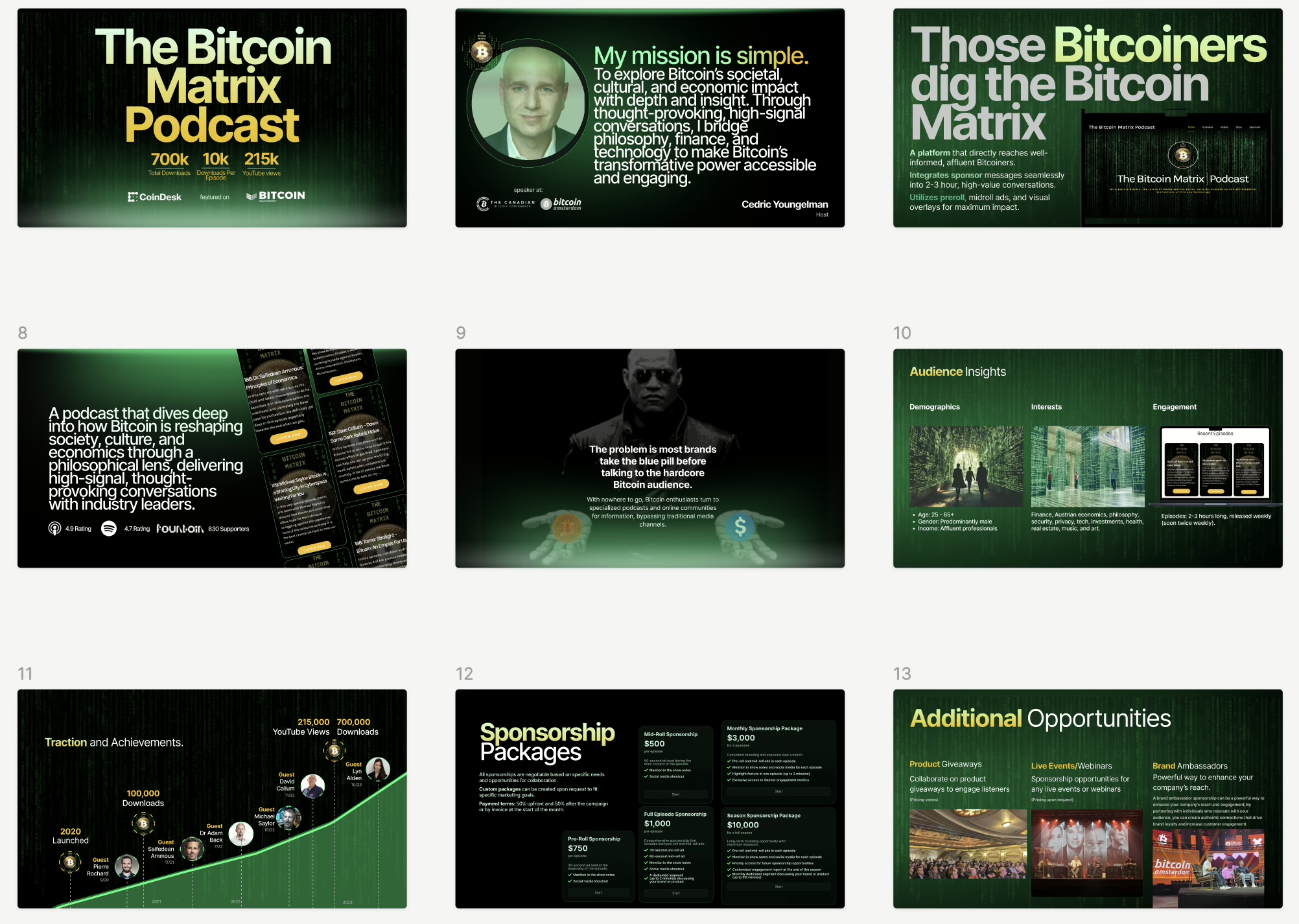
Step 1: Decide what this deck is for (pick ONE primary use)
Before opening slides, decide the primary context:
- Sponsorship outreach
- Guest or collaborator outreach
- Network or platform submission
- Brand or distribution partnerships
Trying to make one deck do everything usually leads to bloated slides. Deck length and emphasis should change based on use case, which is why pitch deck length matters.
Step 2: Write your show in one sentence
This sentence anchors your title slide, intro, and outreach messages.
If this line feels fuzzy, the rest of the deck will overcompensate with text — a common issue in text-heavy vs image-heavy pitch decks.
Step 3: Lock the “concept triangle” (topic × audience × promise)
Most weak decks fail here by drifting across topics or audiences.
This step overlaps directly with problem–solution clarity, even in non-startup decks.
Your goal isn’t novelty — it’s repeatable listener value, clearly framed.
Step 4: Choose the deck length (then commit)
For most podcasts, 10–14 slides is enough. More slides only make sense when you’re supporting:
- proven traction
- partnerships
- or complex monetization models
If you’re unsure whether to compress or expand, see: https://viktori.co/how-to-create-a-short-vs-long-pitch-deck/
Step 5: Build the slide skeleton first (no design yet)
Start with structure, not visuals. This prevents the classic mistake of “designing your way into confusion.”
If you want a broader framework for structuring slides before content: https://viktori.co/framing-your-pitch-deck/
Use this structure:
Slide 1: Title / Elevator Pitch
Purpose: Instantly explain what this podcast is in one glance.
Include:
- Podcast name
- One-sentence description
- Host name(s)
- Optional tagline
If this slide needs explaining verbally, the sentence isn’t tight enough.
This is the same discipline used in one-sentence elevator pitches.
Slide 2: Podcast Overview
Purpose: Provide context without backstory overload.
Include:
- What the podcast covers
- Why it exists
- How it fits its niche
Avoid origin stories here — those belong later, if at all.
This slide often fails due to framing mistakes.
Slide 3: Podcast Concept
Purpose: Define the show’s core idea clearly.
Include:
- Core topic
- Angle or POV
- Boundaries (what the show is not)
This mirrors classic problem–solution clarity, adapted for media.
Slide 4: Target Audience
Purpose: Make the listener concrete.
Include:
- Primary audience profile
- Demographics or psychographics
- Where they already spend time
“Everyone who likes podcasts” is not an audience.
This slide often collapses due to vague language.
Slide 5: Episode Format & Structure
Purpose: Show repeatability.
Include:
- Episode length
- Segment breakdown
- Release cadence
If the format changes every episode, reviewers assume chaos.
Consistency here supports deck length discipline overall.
Slide 6: Host(s) & Credibility
Purpose: Establish why this show can be sustained.
Include:
- Host background
- Relevant experience
- Voice, perspective, or access
This is not a résumé dump. One slide. One story.
Overloading here is a classic storytelling mistake.
Slide 7: Production & Technical Setup
Purpose: Signal reliability.
Include:
- Recording setup
- Editing process
- Publishing workflow
This slide reassures reviewers the show can actually ship.
Keep it visual and clean — avoid text density.
Slide 8: Marketing & Promotion
Purpose: Explain how people will find the show.
Include:
- Distribution platforms
- Promotion channels
- Launch or growth tactics
Avoid “we’ll go viral.” Stick to mechanics.
This slide often suffers from over-claiming.
Slide 9: Monetization Approach
Purpose: Describe revenue structure, not outcomes.
Include:
- Sponsorship types
- Ad formats
- Affiliate or partnership models
Use ranges and examples. No projections unless asked for.
If numbers are included, they must be readable.
Slide 10: Competitive Positioning
Purpose: Show awareness, not dominance.
Include:
- Similar podcasts
- Key differences
- Positioning angle
This is about context, not “winning.”
Common errors mirror competitive analysis mistakes.
Slide 11: Growth Plan
Purpose: Explain how the podcast evolves.
Include:
- Content expansion
- Audience growth levers
- Collaboration ideas
Keep this grounded. Growth ≠ scale fantasies.
This connects to traction framing.
Slide 12: Financial Snapshot (Optional)
Purpose: Summarize economics if relevant.
Include:
- High-level costs
- Revenue model summary
- Simple assumptions
If this slide becomes dense, it belongs in an appendix.
Projection hygiene matters.
Slide 13: The Ask / Next Step
Purpose: Clarify what happens after the deck.
Include:
- What you’re asking for
- What’s offered in return
- How to proceed
One box. One action.
This aligns with hook-slide discipline.
Slide 14: Contact & Close
Purpose: End cleanly.
Include:
- Name
- Website or link
- Thank you
No jokes. No quotes. No slogans. Just contact clarity.
Step 6: Fill each slide with review-friendly blocks
Each slide should contain:
- one clear headline
- 3–5 bullets max
- one proof signal
- optional visual support
If slides feel crowded, it’s usually due to layout mistakes, not content.
Step 7: Gather proof assets before making claims
Proof doesn’t need to be massive — it needs to be specific:
- episode titles
- guest confirmations
- teaser clips
- early audience signals
Weak proof often shows up as vague storytelling. This is where rookie storytelling mistakes creep in.
Step 8: Make monetization concrete (not optimistic)
This slide should explain how money flows, not how big the future could be.
If you include projections, keep them grounded and aligned with basic financial credibility.
Ranges > big promises. Clarity > hype.
Step 9: Put the “Ask” in one box
Your request slide should answer:
- what you’re asking for
- what’s being offered
- what the next step is
This is closely related to the hook slide — clarity here determines whether conversations continue.
Step 10: Design last (and keep it simple)
Pitch decks fail visually more often than conceptually.
Common issues usually come from ignoring:
👉 https://viktori.co/pitch-deck-design-mistakes/
Consistency beats creativity at this stage.
Step 11: Export correctly
At minimum:
- PDF (for sending)
- Google Slides (for collaboration)
If you’re experimenting with tools, this overview helps:
👉 https://viktori.co/tools-for-creating-pitch-decks/
👉 https://viktori.co/best-ai-pitch-deck-tools/
Step 12: Final QA pass (don’t skip this)
Before sending:
- every slide answers “so what?”
- no duplicated points
- bullets stay under control
- claims are framed clearly
- contact info is visible
Many decks fail not because of ideas, but because of accumulated small mistakes:
👉 https://viktori.co/10-pitch-deck-mistakes/
Podcast Pitch Deck FAQ
How long should a podcast pitch deck be?
Most podcast pitch decks fall between 10 and 14 slides. This range is usually enough to explain the concept, structure, and monetization mechanics without overwhelming the reader. Shorter versions (6–8 slides) can be useful for initial outreach, while longer decks are typically reserved for cases where additional context or proof is required.
Do I need a podcast pitch deck if I already have episodes published?
Yes. A pitch deck serves a different purpose than published episodes. Episodes show content quality; the deck explains structure, intent, and direction in a format that’s easier to review quickly. Many teams use the deck as a summary reference even after a show is live.
Should I use a podcast pitch deck template or build from scratch?
Templates are useful for speed and structure, especially if you’re new to pitch decks. Building from scratch offers more flexibility but increases the risk of layout and hierarchy issues. If you use a template, focus on adapting the content — not decorating the slides.
What format should I send my podcast pitch deck in?
The most common formats are:
- PDF for emailing or sharing
- Google Slides for collaboration or updates
Some teams maintain both. A short PDF version is often helpful for cold outreach.
Do I need financial projections in a podcast pitch deck?
Not always. Many podcast pitch decks include a monetization overview instead of full projections. If you do include numbers, keep them high-level and assumption-based. Dense financial models are usually better placed in a separate document.
How detailed should the monetization slide be?
The monetization slide should explain how revenue is generated, not forecast outcomes. Common approaches include sponsorship slots, ad reads, affiliates, or partnerships. Use examples and ranges where possible, and avoid overloading the slide.
Can one podcast pitch deck be used for sponsors, guests, and networks?
A single deck can support multiple use cases, but it should have one primary purpose. If you’re pitching to very different audiences, creating short variants is often more effective than forcing one deck to do everything.
Should I include competitor podcasts in my deck?
Yes, when done carefully. Competitive slides are meant to provide context and positioning, not rankings. Highlight differences in format, audience, or focus rather than trying to prove superiority.
How much design work should go into a podcast pitch deck?
Enough to be clear and consistent — no more. A pitch deck is a working document, not a brand campaign. Simple layouts, readable text, and consistent visuals outperform complex designs in review settings.
What’s the most common mistake in podcast pitch decks?
Trying to explain everything instead of presenting a clear structure. Overloaded slides, vague language, and repeated points are far more common problems than weak ideas.
Can a podcast pitch deck evolve over time?
Yes — and it should. Most decks go through several iterations as episodes are published, guests change, and distribution improves. Treat the deck as a living document that reflects the current state of the podcast.
