

Social Media Pitch Deck: A Practical 2026 Guide (With Examples & Templates)

Author: Viktor
Social Media Pitch Deck Expert. Ex Advertising. Founder of Viktori. $500mill In Funding. Bald Since 2010.
Let’s get one thing straight: a social media pitch deck is not just a “startup deck with Instagram screenshots.”
It’s a persuasion tool built for attention economics — short cycles, visual proof, traction signals, and outcomes people can feel.
Whether you’re pitching:
investors for a new social platform,
brands for partnerships or campaigns,
or clients for ongoing social media services,
…the rules are different from a traditional pitch deck. Faster. Louder. More visual. Less theory, more proof.
Hi, I’m Viktor. Pitch deck consultant, creative strategist, occasional cynic, and professional hype man for people like you who have genius ideas but don’t know how to make investors, clients, or stakeholders sit up and go, “Take my money!”
This guide breaks down how to build a social media pitch deck that actually gets a “yes” in 2026, using real-world structures, examples, and templates — not vague startup folklore.
2026 Update: What’s New in Social Media Pitch Decks
Social media decks have changed — quietly, but significantly. If your deck still looks like it did in 2021, it already feels old.
Here’s what’s different in 2026:
- Attention-first storytelling
Decks now assume a 30–90 second skim. Headlines carry more weight than paragraphs. Visual hierarchy matters more than polish. - Proof > potential
Audiences expect early signals: audience growth, engagement loops, creator traction, retention curves, or campaign results — even at early stages. - Platform-native thinking
TikTok ≠ Instagram ≠ YouTube ≠ LinkedIn. Strong decks show platform fluency, not generic “social media growth.” - Creators as infrastructure
Influencers and creators aren’t a “marketing channel” anymore — they’re part of the product, distribution, or revenue model. - AI-assisted workflows (but human judgment)
Smart decks acknowledge automation (AI editing, scheduling, analytics), while clearly showing where human insight still wins. - Less “vision theater,” more execution clarity
Investors and brands are allergic to fluffy vision slides. Clear mechanics beat grand statements.
What is a Social Media Pitch Deck?
A social media pitch deck is a visual sales document designed to convince someone to invest, partner, or hire you based on:
- audience dynamics
- content mechanics
- distribution leverage
- monetization or outcomes
Unlike traditional decks, it lives closer to media, culture, and behavior than pure technology or operations.
Types of Social Media Pitch Decks (Choose Your Weapon)
Not all social media pitch decks serve the same goal. Mixing them is one of the fastest ways to lose credibility.
1. Social Media Startup Pitch Deck (Investors)
Used by platforms, apps, creator tools, or niche networks.
Focuses on:
- user growth loops
- retention & engagement
- network effects
- monetization paths
- defensibility in a crowded market
Think: “Why this platform, why now, and why it scales.”
2. Brand Partnership / Campaign Pitch Deck
Used to pitch brands on collaborations, launches, or sponsored campaigns.
Focuses on:
- audience fit
- reach + engagement quality
- content formats
- creator alignment
- projected campaign outcomes
Think: “Why our audience moves your product.”
3. Social Media Agency / Services Pitch Deck
Used to close clients on retainers, projects, or performance-based work.
Focuses on:
- strategy clarity
- execution process
- past results
- differentiation
- commercial logic
Think: “Why working with us reduces risk and gets results.”
4. Creator / Influencer Pitch Deck
Used by individual creators or collectives.
Focuses on:
- audience demographics
- engagement depth
- content tone
- brand fit
- case studies
Think: “Why my audience trusts me — and why that matters to you.”
Social Media Pitch Deck vs a Regular Pitch Deck
Here’s where many decks quietly fail.
| Regular Pitch Deck | Social Media Pitch Deck |
|---|---|
| Product-centric | Audience-centric |
| Long explanations | Fast, visual storytelling |
| Vision-heavy | Proof-driven |
| TAM/SAM/SOM | Reach, engagement, influence |
| Tech differentiation | Cultural & distribution leverage |
A regular startup deck asks:
“Can this business work?”
A social media pitch deck asks:
“Can this attention turn into outcomes?”
Different question. Different structure.
Who This Guide Is For
This guide is built for:
- founders building social platforms or tools
- agencies pitching social media services
- creators pitching brands
- teams preparing partnership decks
- anyone tired of decks that look nice but don’t convert
Next, we’ll break down the exact slide-by-slide structure for a modern social media pitch deck — and how to adapt it depending on who you’re pitching.
Why Social Media Pitch Decks Matter (And Why Most Fail)
In social media, decisions are made fast — and usually before the meeting ends.
Your pitch deck isn’t there to explain everything. It’s there to remove doubt.
Whether you’re pitching investors, brands, or clients, a social media pitch deck needs to do three things quickly:
- Make the opportunity obvious
Not with vision slides, but with audience behavior, engagement signals, and traction logic. - Show proof, not promises
Screenshots, metrics, growth loops, campaign outcomes — even imperfect ones — beat polished speculation. - Build trust through clarity
Clear structure, clean visuals, and realistic claims signal execution ability more than enthusiasm ever could.
In 2026, the strongest social media pitch decks aren’t louder — they’re sharper.
They respect attention. They show leverage. And they make the next step feel low-risk.
That’s what this guide is designed to help you build.
Slide-by-Slide Social Media Pitch Deck Template (10–12 Slides)
This 12 slide pitch deck template is perfectly crafted to fit 80% of all social media deals. If you need a tailor made template, I left a note on where you can ask for it, below. Alternatively, check out our database of pre-made pitch deck templates.
Slide 1 — Cover / Hook
Goal: Buy attention immediately.
Include:
- Brand / product / agency name
- One sharp, outcome-focused headline
(Not “Revolutionizing social media” — think “Turning passive audiences into repeat buyers”)
Optional:
Subtle visual cue of the platform(s) you operate on
If this slide doesn’t make someone want to turn the page, the rest won’t save you.
If you need more tips on how to build this slide, check out my elevator pitch article.
Slide 2 — The Context (What Changed)
Goal: Show you understand the social media landscape now.
Include:
- One clear shift (behavioral, platform, or economic)
- Why the old way no longer works
Examples:
- Organic reach collapse
- Creator fatigue
- Rising CAC for brands
- Platform algorithm changes
Slide 3 — The Problem (Real, Expensive, Specific)
Goal: Make the problem feel unavoidable.
Include:
- 2–3 concrete pain points
- Who is affected (users, brands, creators, clients)
- What it costs them (money, time, reach, trust)
Avoid abstract language. If it doesn’t hurt, it doesn’t sell.
Check out the problem slide article for more tips.
Slide 4 — The Solution (Your Angle)
Goal: Show how you solve the problem — not just that you exist.
Include:
- One-sentence solution description
- What you do differently
- Why it works in today’s social environment
This is not a feature list. It’s a positioning statement.
Check out the solution slide article for more tips.
Slide 5 — Product / Service in Action
Goal: Make it tangible.
Include:
- Screenshots, mockups, or real examples
- Content flow, platform flow, or workflow
- Before / after or old vs new comparison
Social media decks live or die here. Show something real.
Slide 6 — Audience & Distribution Logic
Goal: Prove you understand attention, not just content.
Include:
- Who the audience is
- Where attention comes from
- How it compounds (sharing, creators, loops)
For agencies: client audience
For startups: user audience
For brands: customer audience
Same slide. Different lens.
Slide 7 — Traction / Proof (Even Early)
Goal: Reduce skepticism.
Include (pick what you have):
- Growth metrics
- Engagement rates
- Campaign results
- Case snippets
- Early adoption signals
No traction? Show learning velocity or demand signals.
Check out the traction slide article for more tips.
Slide 8 — Monetization / Value Creation
Goal: Explain how attention turns into outcomes.
Include:
- How money is made (or saved)
- Pricing logic or revenue streams
- Unit-level thinking (even rough)
For brands: ROI logic
For agencies: retainers, performance fees
For startups: revenue model
Slide 9 — Competitive Landscape (Optional but Powerful)
Goal: Show awareness without paranoia.
Include:
- 3–5 alternatives (tools, agencies, platforms, status quo)
- What everyone does the same
- Where you win
Avoid giant matrices. One clean comparison is enough.
Slide 10 — Go-To-Market / Growth Strategy
Goal: Show execution realism.
Include:
- Primary growth channels
- Platform-specific tactics
- Why this is repeatable
No “we’ll go viral.” Ever.
Slide 11 — Team / Capability
Goal: Build confidence in execution.
Include:
- Why this team can win
- Relevant experience
- Proof of doing this before
Keep it tight. Credibility beats biography.
Slide 12 — The Ask / Next Step
Goal: Make the decision easy.
Include:
- What you’re asking for (funding, partnership, retainer)
- What happens next
- Clear call to action
If they like the deck but don’t know what to do next, you failed here.
Check out the financials slide article for more tips.
Slide 12: The Ask
Title: “Join the Movement”
Content:
- Funding Request:
- “Seeking $3M for 18 months of runway.”
- “Allocation: 40% product development, 30% marketing, 20% team expansion, 10% operational costs.”
- Vision for the Future:
- “By 2026, become the top community-focused platform with 10M active users.”
- Call to Action:
- “Let’s transform the way people connect. Are you ready to lead the change with us?”
- Visual:
- A dynamic image of diverse users connecting, with a bold tagline: “Connect. Belong. Empower.”
Before You Build the Deck: Define the Decision
Before you touch slides, visuals, or templates, you need to be clear about one thing:
What decision are you trying to trigger?
A social media pitch deck isn’t a presentation — it’s a decision-making tool.
Different objectives require different emphasis, proof, and storytelling.
Here are the most common objectives social media pitch decks are built for:
Securing Investment
Used when pitching a social media app, platform, or tool.
Focus on:
- scalability
- user behavior & retention
- monetization logic
- defensibility
Investors don’t fund content. They fund systems that compound attention.
Building Brand Partnerships
Used for campaigns, collaborations, or co-branded launches.
Focus on:
- audience fit
- engagement quality
- creative concepts
- measurable outcomes
Brands aren’t buying ideas — they’re buying upside with low risk.
Selling a Product or SaaS Tool
Used by platforms offering analytics, scheduling, creator tools, or ad tech.
Focus on:
- clear pain points
- workflow improvements
- time or cost savings
- adoption logic
If the value isn’t obvious in five slides, it won’t convert.
Gaining Client Buy-In (Agencies & Freelancers)
Used to close retainers, projects, or long-term engagements.
Focus on:
- process clarity
- proof of results
- reporting & accountability
- commercial structure
Clients don’t want inspiration. They want certainty.
Attracting Advertisers
Used by creators, networks, or media platforms.
Focus on:
- audience insights
- engagement depth
- previous campaign results
- brand safety & alignment
Advertisers care less about reach — more about relevance.
Selling the Company or Platform
Used for M&A or strategic exits.
Focus on:
- financial performance
- growth trajectory
- market position
- strategic value to buyers
At this stage, storytelling supports numbers — not the other way around.
If you can’t summarize your objective in one sentence, your deck will drift.
And a drifting deck doesn’t close.
Know Who You’re Pitching To (One Deck, Different Brains)
Once your objective is clear, the next constraint is simple:
Who is making the decision?
In social media, you’re rarely pitching a neutral audience. You’re pitching people with very different mental models — and your deck needs to speak their language without changing its structure.
Below is how the same deck should feel to different audiences.
Investors (VCs, Angels, Crowdfunding)
They think in systems, not campaigns.
They care about:
- scalability
- defensibility
- market dynamics
- execution risk
They’re silently asking:
- “How fast can this grow?”
- “Why doesn’t someone copy this?”
- “What breaks at scale?”
Deck emphasis:
- traction and growth mechanics
- user behavior & retention
- monetization logic
- market timing
Creative slides don’t impress investors. Clarity does.
Brands & Clients
They think in outcomes and brand risk.
They care about:
- relevance to their audience
- engagement quality
- creative alignment
- measurable results
They’re silently asking:
- “Will this resonate with our customers?”
- “Can we trust you with our brand?”
- “What happens if this fails?”
Deck emphasis:
- audience insights
- campaign concepts
- past results
- ROI logic
If they can’t picture the campaign, they won’t buy it.
Advertisers & Media Buyers
They think in performance and efficiency.
They care about:
- audience data
- CPM / CPC / CPA
- attribution
- scalability without fatigue
They’re silently asking:
- “Is this traffic worth paying for?”
- “How repeatable is this?”
Deck emphasis:
- analytics
- benchmarks
- testing logic
- optimization loops
This is where vague decks die quickly.
Strategic Partners
They think in leverage and alignment.
They care about:
- shared upside
- audience overlap
- long-term value
They’re silently asking:
- “What do we gain that we don’t already have?”
- “Is this worth internal effort?”
Deck emphasis:
- synergy
- role clarity
- mutual growth logic
If the partnership feels asymmetrical, it won’t happen.
Internal Stakeholders (Executives, Boards, Teams)
They think in risk and execution.
They care about:
- feasibility
- budget
- timelines
- strategic fit
They’re silently asking:
- “What could go wrong?”
- “Is this worth prioritizing?”
Deck emphasis:
- roadmap
- constraints
- trade-offs
- accountability
Internal decks fail when they feel optimistic instead of grounded.
The Rule That Saves Most Decks
You don’t need different decks.
You need different emphasis.
Same structure.
Same slides.
Different weight.
If your audience doesn’t recognize their priorities in the first half of the deck, they’ll stop listening — even if the idea is good.
Versions by Audience (Same Deck, Different Emphasis)
The biggest mistake with social media pitch decks is assuming one version fits everyone.
It doesn’t. The structure stays the same, but what you emphasize changes depending on who’s on the other side of the table.
1. Investor Version (Social Platform / App)
Primary goal: Prove this can scale and defend attention.
Investors don’t care about content aesthetics. They care about:
- how users arrive
- why they stay
- what keeps competitors out
What to emphasize:
- User behavior loops (creation → engagement → retention)
- Early traction signals (even imperfect ones)
- Network effects or data advantages
- Clear monetization logic
Spend more time on:
- Traction & growth mechanics
- Distribution strategy
- Market dynamics
Spend less time on:
- Creative concepts
- Brand visuals
- Platform feature tours
If your investor deck reads like a marketing proposal, you’ve already lost them.
2. Brand Partnership Version (Campaign / Collaboration)
Primary goal: Show brand fit and measurable upside.
Brands want clarity, not vision decks. They’re asking:
- “Is this audience right for us?”
- “Will this move the needle?”
- “Can we trust you with our brand?”
What to emphasize:
- Audience demographics & behavior
- Engagement quality (not vanity metrics)
- Past campaign results
- Creative alignment with the brand
Spend more time on:
- Case snippets
- Content formats
- Distribution reach
- Expected outcomes
Spend less time on:
- Long-term product vision
- Market size theory
- Competitive landscapes
If a brand can’t visualize the campaign by Slide 6, they won’t buy.
3. Agency / Client Version (Services & Retainers)
Primary goal: Reduce risk and justify the fee.
Clients aren’t buying creativity. They’re buying:
- reliability
- clarity
- results
What to emphasize:
- Your process
- How you think strategically
- Proof of execution
- Clear commercial logic
Spend more time on:
- Before / after results
- Retainer structure
- KPIs and reporting
- Workflow clarity
Spend less time on:
- Vision statements
- Platform evangelism
- Trend commentary
If the client understands how working with you feels, you’re close to a yes.
Worked Examples (How This Looks in Practice)
Below are simplified examples using the same structure — but different intent.
Example 1: Social Platform Pitch (Investor-Focused)
Concept: Niche social platform for fitness creators
Audience: Seed investors
Key slides emphasized:
- Problem: creators trapped between reach and monetization
- Solution: audience-owned micro-communities
- Traction: early creator adoption + engagement metrics
- Monetization: subscriptions + brand deals
- GTM: creator-led growth loops
Why it works:
The deck shows behavioral leverage, not just features.
Example 2: Brand Campaign Pitch (Partnership)
Concept: TikTok-first product launch for a skincare brand
Audience: DTC brand marketing team
Key slides emphasized:
- Audience demographics
- Content concepts
- Creator partnerships
- Engagement benchmarks
- Campaign ROI projections
Why it works:
The brand can immediately see where their money goes and what they get back.
Example 3: Social Media Agency Pitch (Client)
Concept: Retainer-based social media growth for SaaS companies
Audience: Founders & marketing leads
Key slides emphasized:
- Clear positioning
- Past results
- Process & reporting
- Monthly retainer structure
- First 90-day plan
Why it works:
It removes uncertainty and positions the agency as a low-risk decision.
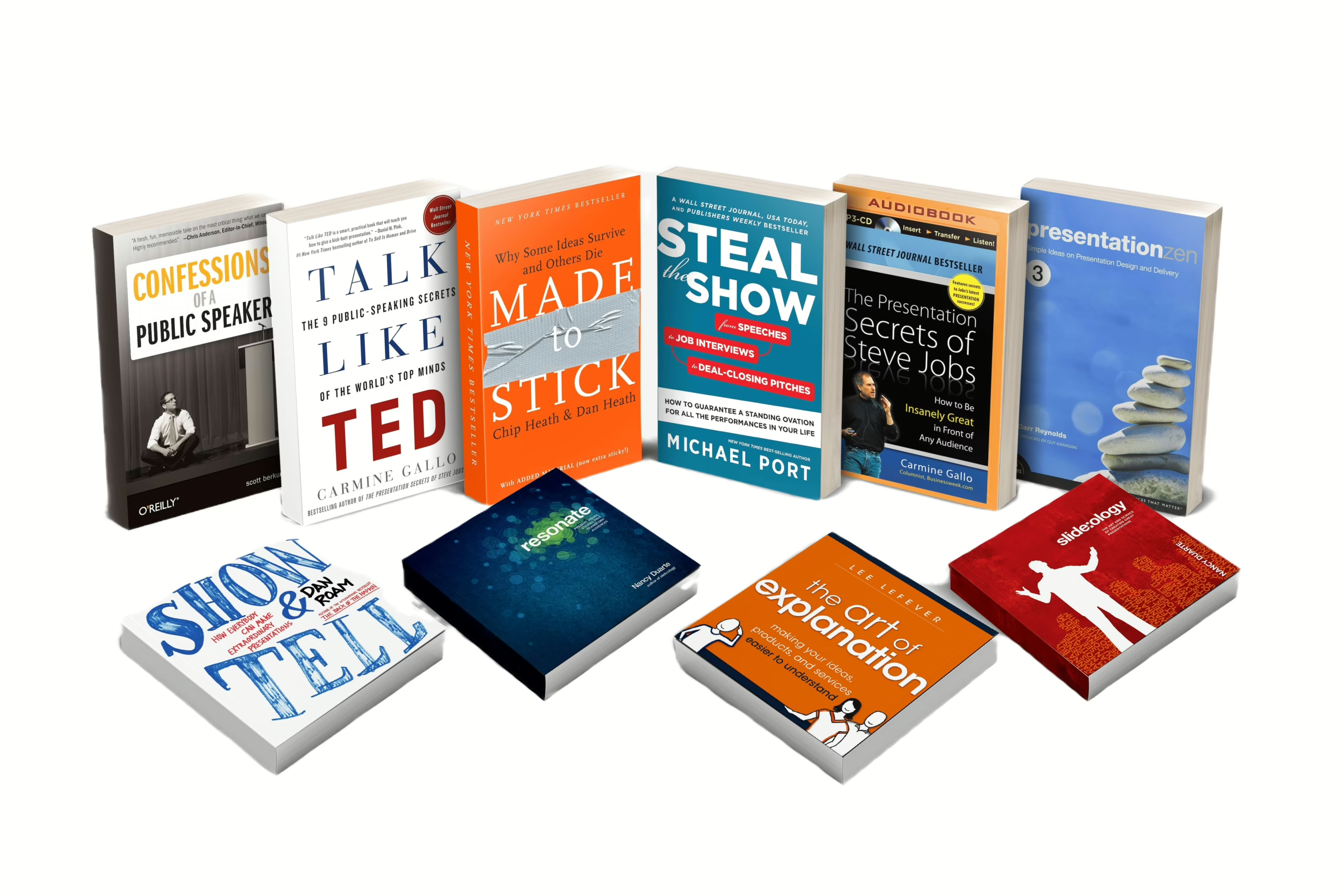
Presentation Books
Must have popular books that 1000s of presenters and CEO's read in order to help them become better at communicating their ideas. Click on the image for the full article.
Recommended Tools for Creating Templates
- Canva: Great for creating visually appealing, customizable templates with ease.
- PowerPoint: A reliable choice for building professional presentations with advanced features like slide animations and data integration.
- Gamma: Ai pitch deck tool that makes a decent presentation if you’re strapped for budget. I wouldn’t recommend this if you’re pitching a project that’s 7 figures +. Check out the Gamma generated deck below.
- Professional Design Services: For high-stakes presentations, consider hiring a pitch deck expert to create a polished, custom template that reflects your brand’s professionalism.
Common Mistakes Social Media Pitch Decks Still Make
These are the reasons good ideas still get ignored.
1. One Deck for Everyone
Trying to impress investors, brands, and clients with the same deck guarantees you impress no one.
2. Vanity Metrics Without Context
Follower counts mean nothing without:
- engagement quality
- growth consistency
- relevance to the audience being pitched
3. Overdesigned, Underspecified Slides
Beautiful slides with vague messaging signal insecurity, not professionalism.
4. No Clear Outcome
If the deck doesn’t clearly answer:
“What happens after this?”
…it’s not a pitch. It’s a presentation.
5. Talking About Platforms Instead of People
Algorithms change. Behavior doesn’t. Decks that focus on human behavior age better — and convert better.
Your Investor Deck, Done.
Book a free 30-minute audit; we’ll apply our award winning Pitcherman Blueprint™ to diagnose, score, and decide go/no-go—then build the deck for you. Expect an investor-tight narrative, sharp design, realistic financials, and usable GTM ideas the next day, without pulling you off ops. Trusted by 15,000+ founders/month. Top Rated on Upwork & Trustpilot. $500M+ raised.
3 Social Media Pitch Deck Examples

Objective: Designed to secure funding or partnerships for a social media platform or product with a unique value proposition.
Breakdown of Key Slides:
- Title Slide:
- Includes the product name, tagline, and a visually captivating image.
- What makes it effective: The title sets the tone with bold branding and immediately positions the idea as innovative and relevant.
- Problem Statement:
- Clearly identifies a gap in the social media landscape, such as “Users are overwhelmed with irrelevant content and lack meaningful connections.”
- What makes it effective: It uses relatable language and highlights a specific pain point that resonates with stakeholders.
- Solution Slide:
- Introduces the product, emphasizing its core feature—e.g., an AI-driven algorithm for personalized content discovery.
- What makes it effective: The slide provides a concise overview of the product while tying it directly to the identified problem.
- Market Opportunity:
- Highlights data on the rapid growth of the social media industry, user engagement statistics, and monetization potential.
- What makes it effective: It uses charts and numbers to demonstrate a clear and lucrative market opportunity, boosting investor confidence.
- Business Model:
- Explains how the product generates revenue, such as through a subscription model or ad placements.
- What makes it effective: The slide uses visuals (like pie charts or timelines) to simplify the explanation of a potentially complex business structure.
- Traction or Milestones:
- Includes data on beta users, early growth metrics, or partnerships already established.
- What makes it effective: Demonstrates momentum, proving the idea is more than just a concept.
- Ask:
- Details funding requirements or partnership expectations, with a breakdown of how resources will be allocated.
- What makes it effective: The slide is specific and actionable, making it easy for stakeholders to evaluate the request.
Why It Works:
- The visual storytelling is top-notch, with clean, minimalistic slides that use bold headers and infographics.
- The content strikes a balance between creativity and data, catering to both emotionally driven and data-oriented decision-makers.
- The narrative flow seamlessly guides the audience from problem identification to the solution, and then to the ask.

Objective: Perfect for agencies pitching their services to prospective clients, showcasing their expertise in managing social media campaigns.
Breakdown of Key Slides:
- Introduction Slide:
- Includes the agency name, tagline, and a sleek image that reflects the agency’s branding.
- What makes it effective: Sets a professional tone while introducing the agency’s unique identity.
- About Us:
- Provides a brief overview of the agency, including years of experience, core values, and notable clients or campaigns.
- What makes it effective: Establishes credibility and positions the agency as a trusted partner.
- Client Problem/Opportunity Statement:
- Describes common challenges faced by the target audience, such as low engagement rates or ineffective ad spend.
- What makes it effective: Speaks directly to client pain points, making the presentation feel relevant and personalized.
- Services Offered:
- Lists services such as content creation, paid media management, influencer partnerships, and analytics reporting.
- What makes it effective: Clearly defines the scope of services, helping clients understand exactly what they’ll get.
- Case Studies/Success Stories:
- Showcases results from past campaigns, e.g., “Increased Instagram engagement by 250% for a beauty brand in 90 days.”
- What makes it effective: Provides tangible proof of success and demonstrates the agency’s ability to deliver measurable results.
- Process/Workflow:
- Explains the agency’s approach step-by-step, from strategy development to campaign execution and reporting.
- What makes it effective: Shows clients that the agency has a proven, structured process in place.
- Metrics & ROI:
- Features sample analytics dashboards, ROI data, and industry benchmarks to set expectations.
- What makes it effective: Addresses clients’ primary concern—results—using specific, relevant metrics.
- Team Slide:
- Highlights the team’s expertise with short bios of key members (e.g., creative directors, media buyers, analysts).
- What makes it effective: Builds trust by showcasing the agency’s talent and experience.
- Pricing & Packages:
- Outlines service tiers (e.g., Basic, Premium, Enterprise), with pricing tied to deliverables.
- What makes it effective: Makes it easy for clients to see what fits their budget and needs.
- Closing Slide (Call to Action):
- Ends with a strong CTA, such as “Let’s grow your brand together. Contact us at [email/phone].”
- What makes it effective: Encourages immediate action, leaving no ambiguity about next steps.
Why It Works:
- This template focuses on building trust and credibility by highlighting expertise, success stories, and a clear process.
- It uses a client-centric approach, addressing pain points and offering tailored solutions rather than generic services.
- The ROI-focused slides (metrics and case studies) provide hard evidence of the agency’s ability to deliver value.
3. Innovative Online Dating Pitch Deck Template
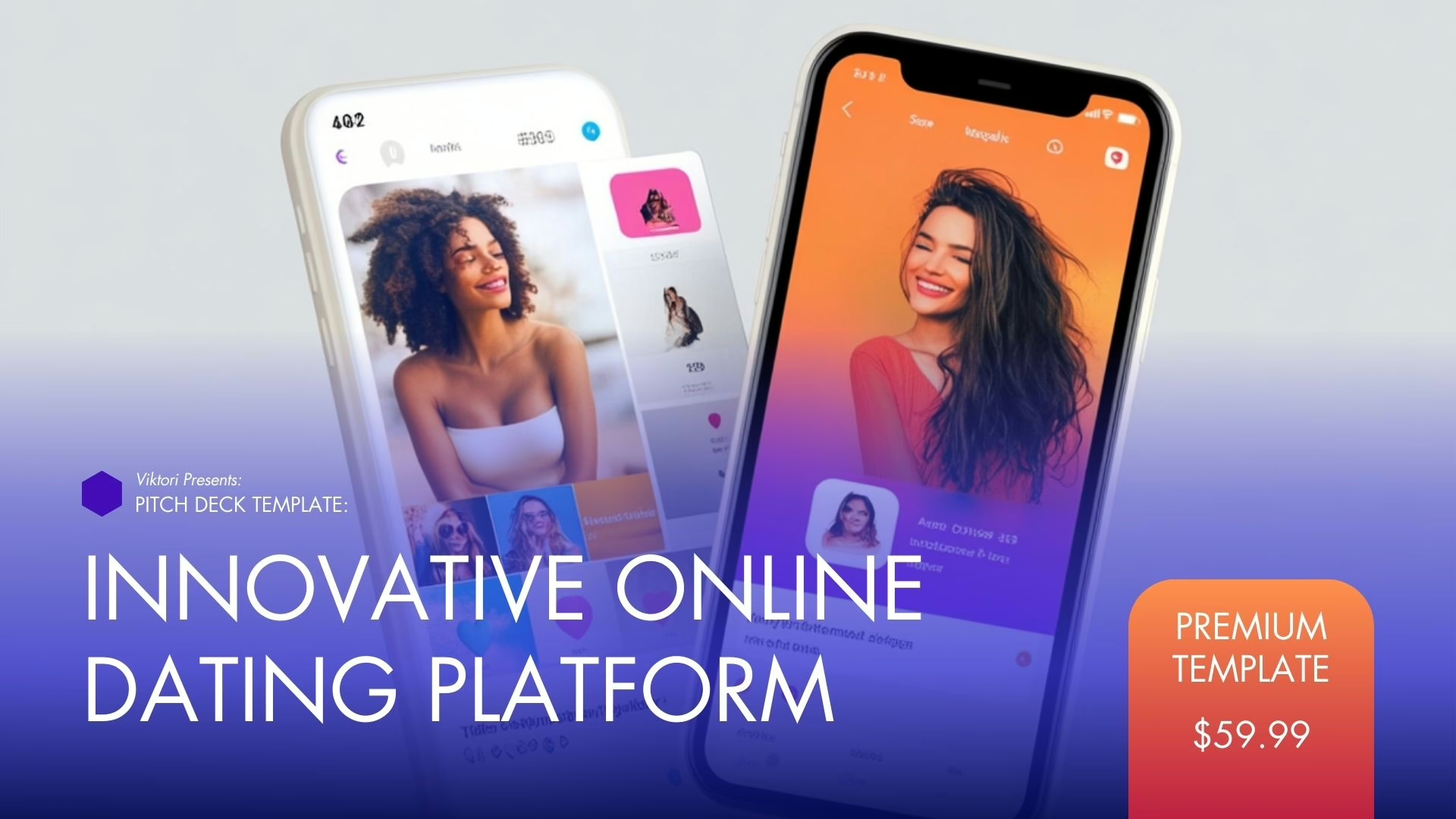
Objective: Designed to secure investment for an innovative online dating platform that leverages social media trends and user behavior to create a unique and engaging experience.
Breakdown of Key Slides:
1. Title Slide:
- Slide Content: The app name, tagline (e.g., “The Dating App That’s More Than a Swipe”), and a sleek, on-brand visual of the app interface or concept.
- What Makes It Effective: Sets the tone with bold visuals and a catchy tagline that communicates the app’s value proposition in a single sentence.
2. Problem Statement:
- Slide Content: “Modern dating apps lack authenticity and emotional connection. 70% of users report burnout from endless swiping with no meaningful matches.”
- What Makes It Effective: Identifies a relatable problem in the online dating market, using a real statistic to ground the pitch in data. The problem is clear, compelling, and speaks directly to the frustrations of both users and investors.
3. Solution Slide:
- Slide Content: Introduces the dating app’s innovative approach, e.g., “Our app combines social media integration, video-first profiles, and real-time compatibility quizzes to create authentic connections.”
- What Makes It Effective: Clearly explains how the app differentiates itself by solving the identified problem, aligning with current user behavior trends (e.g., short-form video and interactive content).
4. Product Features (Show, Don’t Tell):
- Slide Content: A visual walkthrough of the key features:
- Video-first profiles for authenticity.
- AI-powered compatibility matching.
- A built-in “social lounge” for real-time group chats based on interests.
- What Makes It Effective: Uses app screenshots, mockups, or simple icons to showcase features visually, making it easier for investors to understand and imagine the user experience.
5. Market Opportunity:
- Slide Content:
- “Online dating is a $9 billion industry, growing at 7.2% CAGR. With Gen Z and Millennials dominating the space, our app targets 50% of the market: tech-savvy, authenticity-driven users.”
- What Makes It Effective: Includes compelling data about the market’s size and growth potential. By tying this information to the app’s specific target demographic, the slide positions the opportunity as lucrative and untapped.
6. Competitive Analysis:
- Slide Content:
- A comparison table of major competitors (e.g., Tinder, Bumble, Hinge) versus the new app. Focuses on unique features such as video profiles, real-time interaction, and social media integration.
- What Makes It Effective: Clearly differentiates the app from established players while highlighting its innovative edge. Visual aids like tables or Venn diagrams make this slide engaging and easy to process.
7. Business Model:
- Slide Content:
- Freemium structure with optional premium features like enhanced profile visibility, compatibility insights, and in-app purchases for virtual gifts or date-planning tools.
- What Makes It Effective: Outlines a scalable and proven revenue model (freemium) that resonates with investors, while also showcasing innovative monetization streams.
8. Traction and Milestones:
- Slide Content:
- “Beta launch: 25,000 downloads in 30 days with a 70% weekly active user rate. Early feedback highlights strong engagement with video profiles.”
- Future milestones include app-wide rollout, expanded marketing efforts, and partnerships with lifestyle influencers.
- What Makes It Effective: Combines current traction with a roadmap for growth, proving the app’s early success and scalability.
9. Team Slide:
- Slide Content: Highlights the key members driving the project, e.g.:
- Founder: 10+ years in social media app development.
- CTO: AI and machine learning expert.
- Marketing Lead: Former brand strategist for major Gen Z-focused campaigns.
- What Makes It Effective: Demonstrates that the team has the experience and expertise needed to execute the vision successfully.
10. Ask:
- Slide Content:
- “We’re seeking $1.5 million to fund full-scale development, marketing, and user acquisition. Our goal is to reach 500,000 active users in the first year.”
- Includes a breakdown of funding allocation: 50% product development, 30% marketing, 20% operations.
- What Makes It Effective: Clearly states the funding ask and how the money will be used, making it easy for investors to evaluate the pitch and understand its growth potential.
FAQ
1. What is the purpose of a social media pitch deck?
A social media pitch deck is a presentation designed to persuade investors, clients, or partners to support a social media-related idea, whether it’s funding a new platform, greenlighting a campaign, or purchasing a service or product. It uses storytelling, data, and visuals to communicate your vision, highlight the value proposition, and outline the opportunity for stakeholders.
2. What are the essential slides to include in a social media pitch deck?
Key slides in a social media pitch deck include:
- Introduction: Overview of the idea or project.
- Problem Statement: The challenge you’re solving in the industry.
- Solution: Your product, strategy, or campaign and how it addresses the problem.
- Market Opportunity: Data-driven insights into market size, growth trends, or demographics.
- Business Model: How your idea generates revenue or value.
- Execution Plan: A roadmap for implementation.
- Metrics/Case Studies: Proof of concept or results from past campaigns/projects.
- Team: The people driving the idea forward.
- Ask: The funding, partnership, or approval you’re seeking.
3. How can I make my pitch deck stand out?
To stand out, focus on:
- Visual Storytelling: Use clean, on-brand visuals, charts, and infographics to convey data and ideas clearly.
- Tailored Messaging: Customize your deck for your audience, addressing their goals, pain points, and interests.
- Data-Driven Insights: Include industry statistics, engagement metrics, and projections to back up your claims.
- Clarity: Avoid unnecessary jargon—make your slides concise and easy to follow.
- Emotional Connection: Show how your idea solves a meaningful problem or taps into a growing trend.
4. How long should my social media pitch deck be?
A social media pitch deck should typically have 10–15 slides and take no more than 10–15 minutes to present. Keep it concise, focusing on the most impactful information, and leave room for a Q&A session after your presentation.
5. What metrics should I include in a social media pitch deck?
Relevant metrics vary depending on your pitch’s purpose but could include:
- Engagement Rates: Likes, comments, shares, or CTR (click-through rates).
- Reach and Impressions: Audience size or content visibility.
- Revenue Metrics: ROI, ARPU (average revenue per user), or lifetime value.
- Market Growth: TAM (total addressable market) or industry growth rates.
- User Metrics: DAU (daily active users), MAU (monthly active users), or retention rates.
6. How do I tailor a pitch deck for different audiences?
Understand your audience’s priorities and customize your deck accordingly. For example:
- Investors: Focus on scalability, ROI, market opportunity, and financial projections.
- Brands/Clients: Highlight audience insights, creative strategy, and case studies with relevant results.
- Advertisers: Showcase your audience demographics, ad performance metrics, and unique selling points (USPs).
- Strategic Partners: Emphasize how the partnership creates mutual value and aligns with their goals.
7. How can I effectively present my social media pitch deck?
- Practice Your Delivery: Rehearse your pitch multiple times to ensure confidence and smooth transitions.
- Focus on the Narrative: Tell a compelling story with a beginning (problem), middle (solution), and end (ask).
- Engage the Audience: Make eye contact, speak clearly, and avoid reading directly from the slides.
- Anticipate Questions: Prepare to address potential objections or concerns during the Q&A.
- Use Visual Aids: Let visuals enhance your pitch, but ensure they don’t overwhelm the audience.
8. What trends should I highlight in a social media pitch deck?
Include trends that align with your idea’s relevance and market opportunity, such as:
- Short-Form Video Growth: Platforms like TikTok, Instagram Reels, and YouTube Shorts dominating engagement.
- Social Commerce: The rise of shopping directly through social platforms.
- Influencer Marketing: Increasing reliance on creators to drive brand campaigns.
- Personalization and AI: Algorithms improving user experiences or targeting for ads.
- Authenticity: Demand for genuine, unpolished content (especially among younger audiences).
9. What common mistakes should I avoid in a social media pitch deck?
- Overloading Slides: Avoid cramming too much text or data onto a single slide.
- Skipping the Problem: Always explain the problem you’re solving—don’t assume the audience knows.
- Unclear Ask: Be specific about what you need (funding, partnership, approval) and why.
- Poor Visual Design: Amateurish or cluttered slides can distract from your message.
- Focusing Too Much on Features: Emphasize the value your idea delivers, not just its features.
10. Can I include templates or examples in my pitch deck?
Absolutely! Templates or real-world examples can add credibility and make complex concepts easier to understand. For instance:
- Campaign Mockups: Visuals that show what your ads or content would look like.
- Case Studies: Results from previous campaigns or projects that highlight your success.
- User Personas: Profiles of your target audience to show you’ve done your research.
Be sure to customize these examples to align with your idea and make them as relevant as possible to the audience.
Related social media pitch deck resources
Viktori. Pitching your way to your next funding.
Locations
Office 1: 633 North Wells Street Chicago, IL, United States, 60654
HQ: Boulevard P.O. 10000 Skopje, North Macedonia
Pitch Deck Resources
Case Studies
Client Reviews
Presentation Resources
Pitch Deck Services
Industry Specific Pitch Deck Services:
Additional Services
About Viktori