Product Messaging: What QueryPal’s Pal Gets Right About Simplicity

A practical product messaging example from my Pal identity work for QueryPal: a clear name, an honest description and a next step people can understand.
Your startup’s pitch deck shouldn’t be as bland as your morning oatmeal. Let’s spice it up with templates and tips that turn ‘meh’ into ‘wow!’
A practical product messaging example from my Pal identity work for QueryPal: a clear name, an honest description and a next step people can understand.
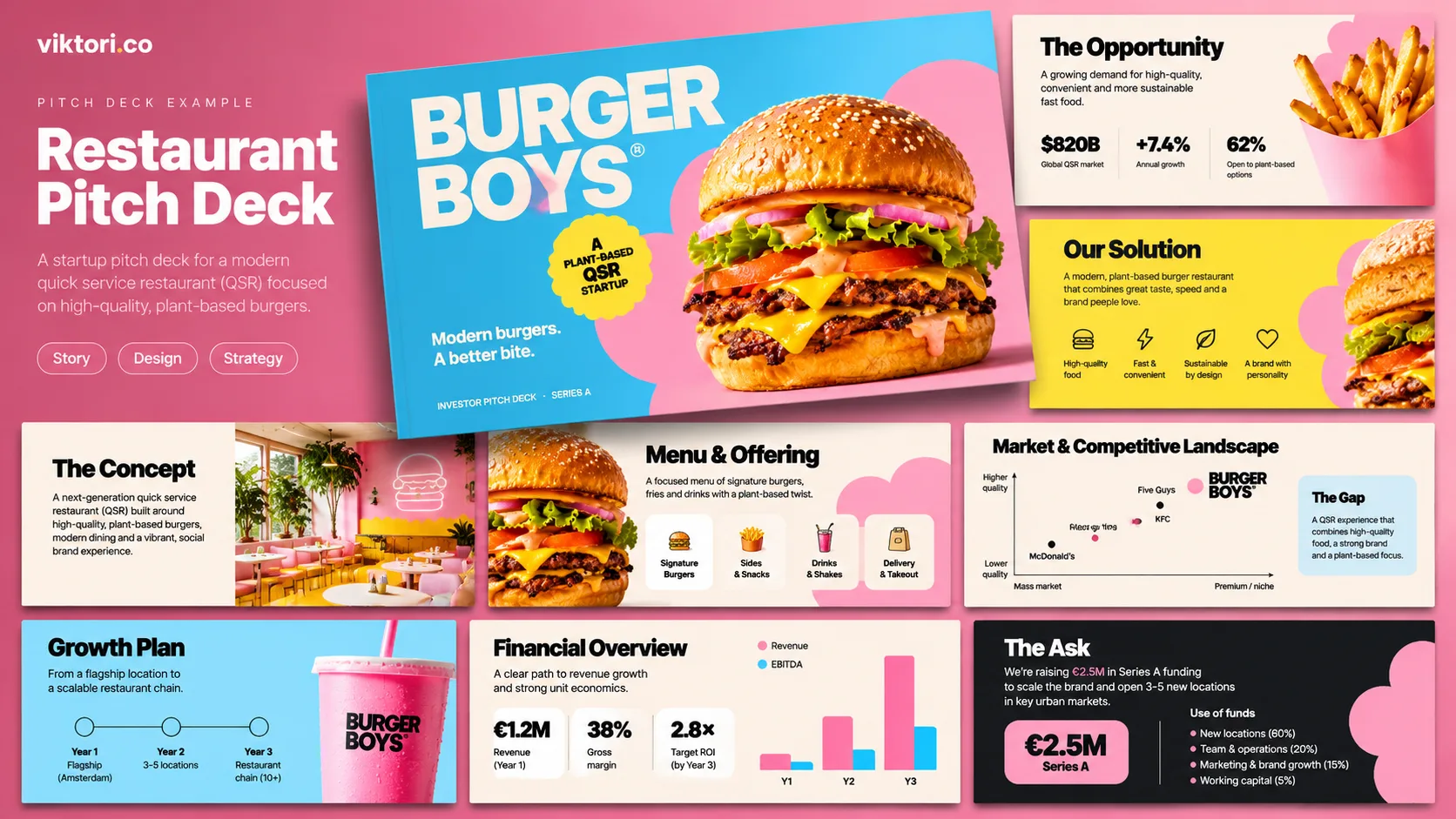
A fictional fast food restaurant pitch, built slide by slide to show what investors would need to believe. A smiling sun on a burger box can make someone hungry. It won’t tell an investor whether the kitchen can survive a slow Tuesday. That’s the problem I wanted to explore with Burger Boys. I created the … Read more

What makes a compelling pitch deck for a fintech startup? Is it the market opportunity, the product demonstration, the business model, or the way those elements come together in a convincing investment story? I developed FORMA to explore that question. FORMA is an independent financial technology concept built around a simple proposition: Money, in a … Read more

Burn rate is where a pitch deck stops being brave and starts being accountable. Up to this point, the deck can talk about the market, the product, the team, the vision, and the size of the opportunity. All of that matters, but burn rate brings the conversation back to earth. How much cash are you … Read more
A financial projection slide shows investors how your business could grow over time. It usually includes forecasted revenue, costs, margins, profit or loss, cash needs, and the assumptions behind the numbers. But the real purpose of the slide is not to prove that the future will happen exactly as planned. No serious investor expects your … Read more

A revenue model slide explains how your business makes money. That sounds simple, but this is one of the slides where many pitch decks become vague. Founders often explain the product, the market, the problem, and the vision, but when investors reach the revenue model, they need something more concrete. They want to understand how … Read more

Use Of Funds Slide Quick Summary A use of funds slide explains how the capital you are raising will be used and what that capital is expected to unlock. It should not be a random budget breakdown. Investors are not only asking, “Where will the money go?” They are asking: A strong use of funds … Read more
Most founders pitch the wrong VCs. Here’s the exact research framework to identify funds that match your stage, sector, and check size — before you waste 30 meetings learning the hard way.
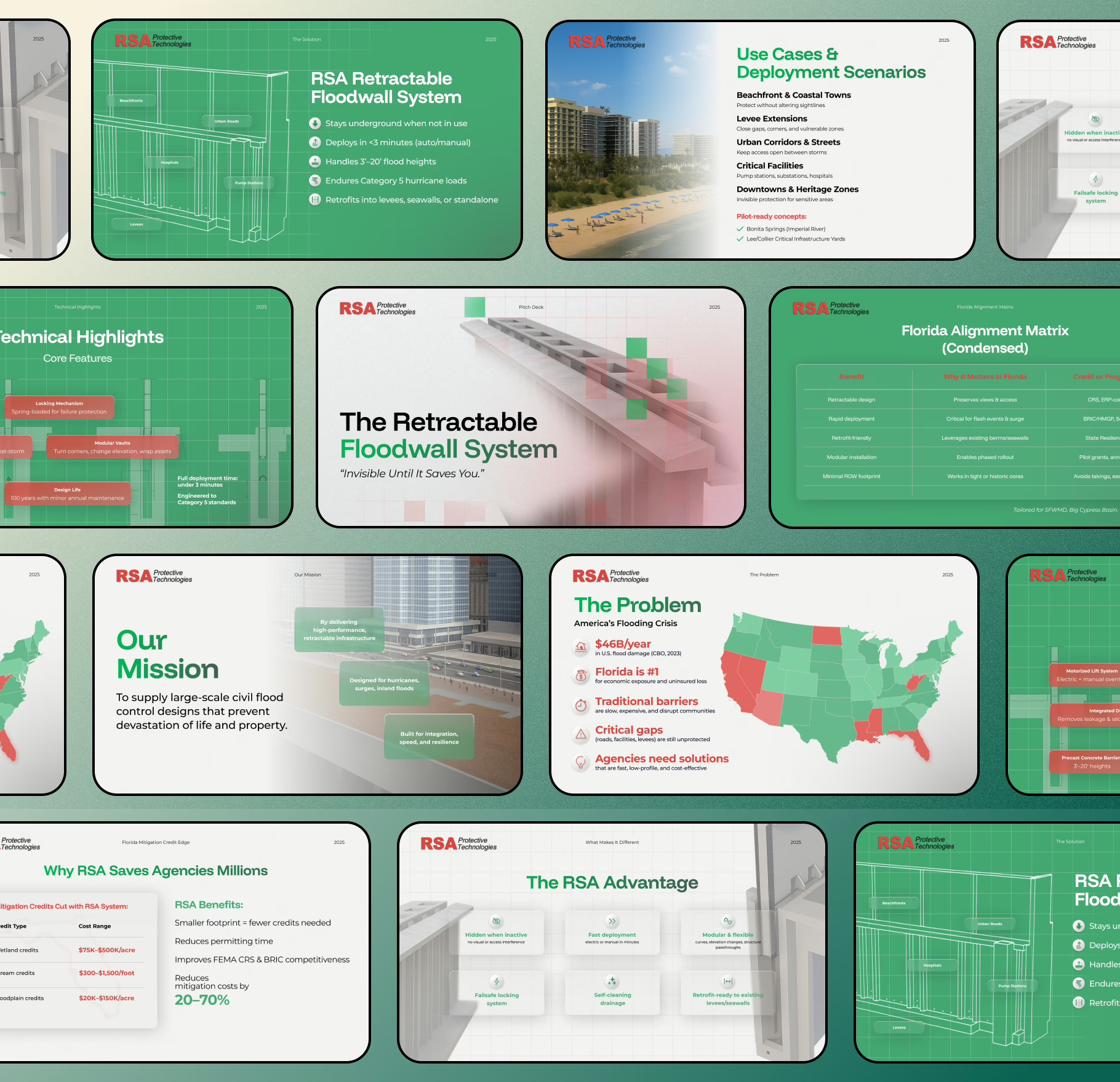
Flood mitigation is emotionally easy to sell (“floods are bad”). But institutional adoption requires a different standard: feasibility, deployment, and budget logic. This deck’s visuals show a clean green/white system: a retractable floodwall concept, deployment scenarios, alignment matrix (Florida), benefits, cost ranges, a national map, and “why it saves agencies millions.” The challenge: two audiences, … Read more
Most founders think they’re pitching to a partner. They’re not. They’re pitching to a 26-year-old associate who’s reviewed 30 decks today, has an investment thesis to enforce, and needs to write a one-page memo to justify why your company deserves a partner’s time. This isn’t a knock on associates. They’re often sharp, deeply sector-focused, and … Read more
