


Documentary ideas are easy.
Getting someone to fund 90 minutes of your obsession with a niche topic is the hard part.
Producers and funders want clarity on story, access, credibility and why this film needs to exist now.
I’m Viktor, a pitch deck consultant that will guide through this chaotic world of pitching, storytelling, and turning skepticism into signatures on the dotted line.
After building 144 documentary and film pitch decks for directors, producers and indie teams, I turned everything that consistently works in the room into this guide. Along the way, I’ve made mistakes (pitched a project to HBO that went so bad I needed a stiff drink afterward) and learned exactly what separates the “maybe” decks from the “hell yes” decks.
Here’s what you’re getting in this guide:
- A no-fluff breakdown of what a pitch deck is and why it’s the backbone of your funding strategy.
- 5 actionable steps to build an effective deck that wows investors, producers, and networks.
- Real-world examples and templates that you can steal (I won’t sue, I promise).
What Is a Documentary Pitch Deck?
A documentary pitch deck is your visual and strategic storytelling weapon to secure funding, partnerships, or distribution deals for your documentary. Think of it as a highlight reel on paper—it’s not just about showing what your documentary is about, but why it matters, who cares, and how it will succeed. Whether you’re pitching to investors, producers, or streaming platforms, this deck is your bridge between concept and commitment.
Why Is a Pitch Deck Essential for Documentary?
A pitch deck is essential for a documentary because it’s your all-in-one tool for selling your vision, establishing credibility, and showing that you’re not just another creative with a cool idea—you’re a filmmaker with a plan. In an industry where 75% of investors prefer presentations with clear, visual storytelling, a well-crafted deck can mean the difference between securing funding or hearing a polite, “We’ll pass.” Here’s why it’s a non-negotiable:
1. Securing Funding from Investors
Investors don’t just throw money at good ideas—they fund ideas with strategy and measurable potential. A pitch deck shows them:
- How their money will be used and returned (budget breakdowns and ROI projections).
- Why your documentary is a unique and valuable investment.
- That you’re serious, prepared, and capable of following through.
Without a deck, you’re hoping investors “just get it,” and trust me, they won’t.
Fact: According to Doc Society, documentaries with comprehensive funding presentations have 2x higher chances of securing development grants compared to those without them.
2. Presenting Deals to Potential Buyers (Networks, Distributors, Streamers)
Platforms like Netflix, Amazon Prime, and distributors aren’t only looking for great stories—they’re looking for marketable, high-impact projects with clear execution plans. A pitch deck communicates:
- Why your documentary fits their audience and brand.
- How your project can generate viewership or awards traction.
- What makes it stand out in an oversaturated market.
When you walk into a room with executives, they want confidence backed by visuals, data, and structure. A strong pitch deck does exactly that—it shows them you’ve already thought about how they can benefit from your success.
3. Building Trust and Credibility with Stakeholders
Film production is risky, and stakeholders—whether they’re co-producers, sponsors, or grant providers—need assurance that you’re reliable and capable. A pitch deck gives them the full picture of your creative vision and business acumen.
Key components like team bios, project timelines, and production plans demonstrate that you have:
- The right team to bring the story to life.
- A clear roadmap that minimizes risk.
- The capacity to meet deadlines and budget constraints.
Stat: Projects with structured production plans are 60% more likely to maintain investor support throughout development, according to Film Independent.
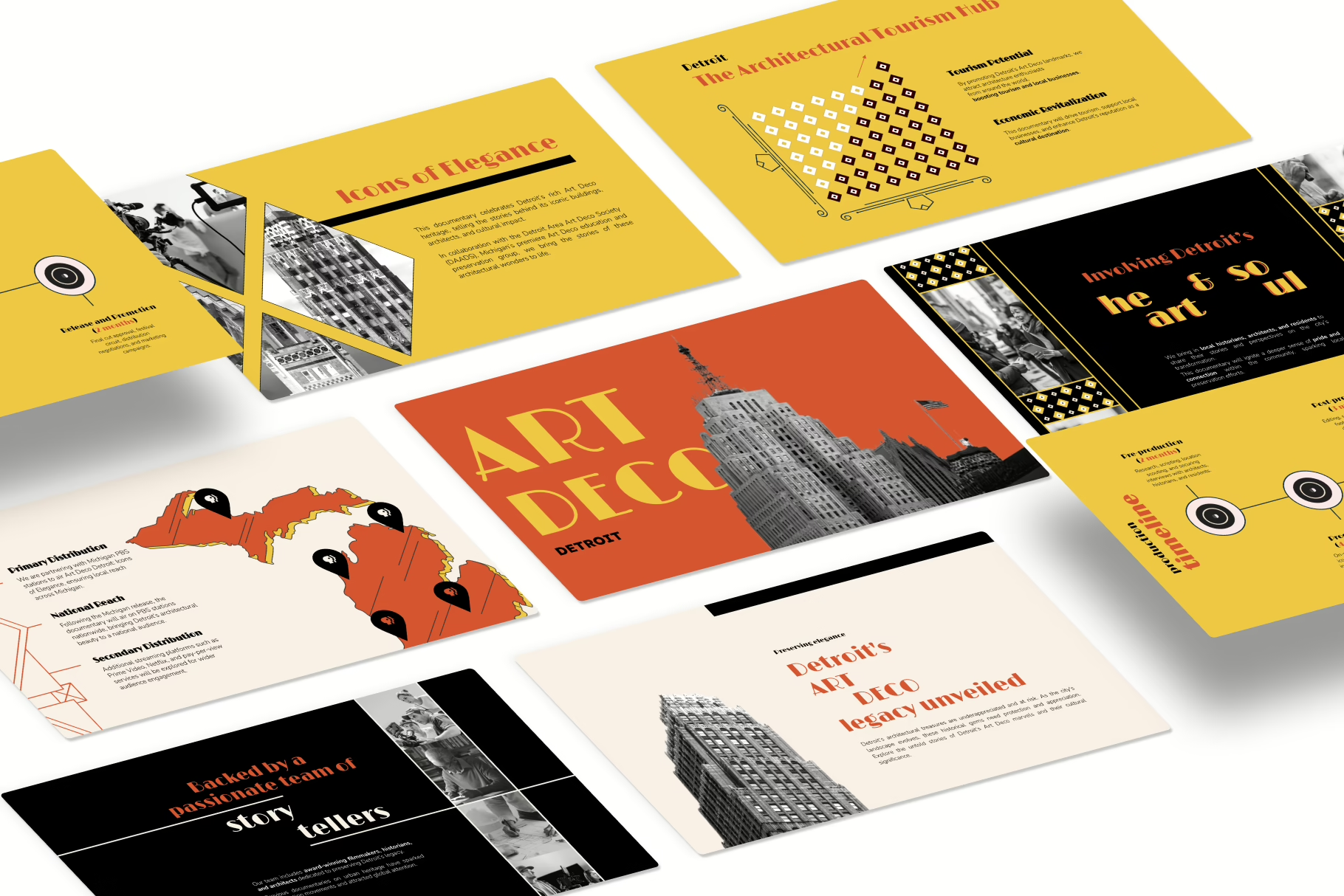
Step-by-Step Guide to Creating a Documentary Pitch Deck Presentation
Here’s my battle tested, 5 step pitch deck development process that I’ve used to help my clients get investor ready decks.
Step 1: Define Your Objective
Before you start throwing slides together, you need crystal clarity on why you’re pitching in the first place. A documentary pitch deck can serve multiple goals depending on your target audience. These objectives will shape the tone, structure, and content of your presentation. Here are the most common types of objectives tailored for the documentary space:
Investment
- Goal: Secure direct funding from private investors, production studios, angel investors, or film-specific investment firms.
- What investors expect: They’ll be laser-focused on financial viability—budgets, projected revenue, licensing deals, and distribution opportunities. Your deck should clearly outline how their investment will generate a return (e.g., box office revenue, digital streaming rights, or sponsorship deals).
Co-Production Partnership
- Goal: Partner with another production company, studio, or media organization to co-finance and co-produce the documentary.
- What partners expect: They’ll want to see if their resources complement yours, whether it’s funding, creative input, or technical support. Be clear about what you’re offering (e.g., access to exclusive interviews or rare footage) and what you need in return (e.g., additional funds, crew, or distribution).
Distribution or Licensing Deal
- Goal: Convince platforms (Netflix, Amazon, Hulu, etc.), networks (PBS, National Geographic), or film distributors to acquire your completed or partially completed documentary.
- What distributors expect: They’ll evaluate market demand, audience potential, and storytelling appeal. They’ll also check if your project fits their programming goals or content strategy. Highlight your documentary’s genre, target audience, and recent successful docs in the same space.
Sponsorship / Brand Partnership
- Goal: Partner with brands or organizations that align with your documentary’s subject matter and values.
- What sponsors expect: Sponsors will care about brand exposure, brand alignment, and audience engagement. If you’re creating a nature documentary, think about partnering with environmental nonprofits or outdoor brands like Patagonia. Include metrics on expected viewership, cross-promotional opportunities, and audience demographics.
Grants or Film Funds
- Goal: Obtain funding through grants from documentary-specific funds (Sundance Documentary Fund, Ford Foundation, etc.) or public art/culture organizations.
- What grant organizations expect: They’ll assess your project based on social impact, artistic merit, and feasibility. Be sure to emphasize the societal relevance of your documentary and its ability to inspire change or spark important conversations.
Step 2: Know Your Audience
Not all investors or stakeholders have the same priorities, and tailoring your pitch to their specific concerns is critical to your success. Here’s how to research your audience and tailor your approach to what they care about most:
Types of Audience Members and Their Priorities:
Private Investors / Angel Investors
- Top concerns: Return on Investment (ROI), risk mitigation, market growth potential
- Tailor your pitch: Include revenue models, projected income streams, and examples of successful documentaries that turned a profit (e.g., 13th, Free Solo). Private investors often focus on numbers—show them how and when they’ll see their returns.
Production Companies or Co-Producers
- Top concerns: Creative synergy, control over content, shared resources
- Tailor your pitch: Emphasize how your creative vision aligns with theirs and what you bring to the table—access to key interviews, technical expertise, or established credibility. Be transparent about roles, decision-making power, and responsibilities.
Film Distributors / Networks / Streaming Platforms
- Top concerns: Market appeal, audience engagement, alignment with their programming
- Tailor your pitch: Present audience data, genre popularity, and successful case studies of similar films. Platforms like Netflix and Amazon will want proof that your documentary can attract niche but engaged audiences or cross over into mainstream success. Highlight any early buzz or festivals where your project has gained traction.
Grant Providers / Nonprofits / Social Impact Organizations
- Top concerns: Social relevance, alignment with mission, public impact
- Tailor your pitch: Focus on the message and societal contribution of your documentary. Include stories, testimonials, or case studies that demonstrate its potential to make a difference. Showcase partnerships with organizations that can amplify its impact.
Brands / Corporate Sponsors
- Top concerns: Brand visibility, audience alignment, PR value
- Tailor your pitch: Provide audience insights and cross-promotional opportunities. For example, if your documentary is about sustainable living, show how their brand can be positioned as a champion of sustainability. Highlight media exposure, festival screenings, and marketing tie-ins that offer measurable brand impact.
Specific Concerns to Address in Your Pitch Deck:
- Financial Viability: Show how much funding you need, where it will be allocated, and when investors can expect to see results.
- Market Trends: Discuss how documentaries in similar genres have recently performed. Highlight streaming trends—documentary viewership on platforms like Netflix increased by over 40% in the past 3 years.
- Project Feasibility: Investors don’t like risky projects without clear timelines or deliverables. Include detailed production plans, shoot schedules, and contingency plans to minimize risk.
- Long-Term Potential: Will your documentary be a one-off release, or can it generate revenue long after its initial launch (through licensing, digital sales, or educational distribution)?
- Social Impact Metrics: For grants and nonprofits, discuss measurable outcomes—how will your documentary create change? Provide data on advocacy reach, school screenings, or policy influence.
Tailoring your pitch deck to each audience doesn’t just improve your odds—it shows them you’ve done the homework and that their investment (whether financial or strategic) will be worth it.
Step 3: Use This 12 Slide Pitch Documentar Deck Template
This 12 slide pitch deck template is perfectly crafted to fit 80% of all pharma deals. If you need a tailor made template, I left a note on where you can ask for it, below. Alternatively, check out our database of pre-made documentary pitch deck templates.
Slide 1: Elevator Pitch (The Hook + Why It Matters)
- Goal: Quickly grab attention with a powerful hook that highlights the core problem and emotional pull.
- Structure:
- Headline: A bold statement or shocking fact.
- Subheadline: A brief statement of the documentary’s core purpose or mission.
- Core message: 2-3 sentences summarizing:
- The problem or gap your documentary addresses
- What makes your approach different or unique
- Why it matters today
- Supporting visual: A captivating image or stat that reinforces the problem or theme.
Example:
- Headline: “Every 4 minutes, an acre of rainforest disappears—taking our future with it.”
- Subheadline: A story of greed, resilience, and redemption in the Amazon.
- Core Message: Our documentary explores how indigenous communities, activists, and scientists are fighting to save the Amazon, the planet’s lungs, from irreversible destruction. By showcasing their stories, we reveal how protecting these ecosystems is key to our survival.
- Visual: A split image showing lush rainforest vs. barren deforested land.
If you need more tips on how to build this slide, check out my elevator pitch article.
Slide 2: Investor Highlights
- Goal: Quickly highlight why this is an attractive investment using key points that combine creative impact and financial viability.
- Structure:
- Market Opportunity: Data on the documentary industry’s growth (e.g., the rise of streaming services)
- Key Talent: Names of director, producer, and notable contributors
- Partnerships: Distribution deals or negotiations with streaming platforms
- Social Impact Potential: Link to activism, education, or policy change (if relevant)
- Funding Security: Mention secured funds, grants, or co-producers, if applicable
Example Format:
- Growing Market: 35% growth in demand for documentaries on streaming platforms over the past 3 years.
- Proven Talent: Directed by an Emmy Award-winning filmmaker.
- Distribution Talks: Early interest from major players like Netflix and National Geographic.
- Social Impact: Collaboration with environmental NGOs and global youth movements.
- Secure Funding: 40% of the budget covered by grants and co-production partners.
Slide 3: The Story and Its Relevance
- Goal: Tell a compelling story about the documentary’s subject and connect it to current trends or cultural relevance.
- Structure:
- Story Summary: Describe the documentary’s core narrative (1-2 paragraphs).
- Key Characters or Stakeholders: Briefly highlight any notable individuals featured.
- Why Now?: Link the documentary’s theme to current global events or movements (e.g., climate change, social justice).
Example:
- Story: “A forgotten coastal town in the Pacific Northwest is battling rising tides, economic decay, and political indifference. Our film follows the town’s last remaining fishermen as they fight to preserve their way of life.”
- Key Characters:
- John “Salty” Hughes – a 60-year-old fisherman watching his family’s legacy fade
- Lisa Cheng – an activist rallying the community for environmental justice
- Dr. Mike Barron – a marine biologist studying the impact of warming oceans
- Why Now?: Climate-driven sea level rise is threatening coastal communities worldwide. By 2050, over 570 low-lying cities could be submerged. This film captures a microcosm of the global crisis.
Slide 4: The Vision and Goal
- Goal: Show the big-picture vision for the film and the desired outcome for audiences and stakeholders.
- Structure:
- Vision Statement: A succinct, powerful statement of what the documentary seeks to achieve.
- Core Goals:
- What will the audience gain (awareness, education, or inspiration)?
- Will it push for change (policy shifts, behavior change, or cultural discussion)?
- Long-Term Impact: What lasting effect will the documentary have (e.g., increased funding for research or policy changes)?
Example:
- Vision Statement: “Reignite the conversation around disappearing coastal communities before they vanish forever.”
- Core Goals:
- Raise awareness about rising sea levels through real human stories
- Inspire policy makers to prioritize small communities in climate action plans
- Provide educational material for schools and environmental organizations
- Long-Term Impact: Drive sustainable fishing initiatives and influence national policy on coastal preservation.
Slide 5: Unique Approach or Angle
- Goal: Show how your documentary stands out from others covering similar topics.
- Structure:
- What’s Unique: Is it rare access to subjects, groundbreaking cinematography, or a unique storytelling device?
- New Perspectives: Highlight untold or overlooked perspectives being explored.
- Innovative Techniques: Mention creative production approaches, such as using VR footage, animated reconstructions, or immersive sound design.
- Visual Element: Include a sample storyboard, scene breakdown, or frame captures (if available).
Example:
- What’s Unique: Exclusive access to indigenous leaders deep in the Amazon who have never spoken on camera before.
- New Perspective: Unlike previous films focused on environmental damage, we follow those on the frontlines who are preserving their heritage through sustainable living.
- Innovative Technique: Filmed in 8K using drones for aerial views of deforestation juxtaposed against untouched rainforest.
- Visual Support: A slide with side-by-side visuals of archival footage, current scenes, and drone footage.
Check out the solution slide article for more tips.
Slide 6: Market Opportunity
- Goal: Show the commercial viability of the project and its ability to generate returns through multiple channels.
- Structure:
- Industry Growth: Highlight the rising demand for documentaries, especially on streaming platforms.
- Target Audience: Define your primary audience (e.g., environmentalists, Gen Z, educators).
- Comparable Success Stories: Show examples of similar films and their financial or cultural success.
- Distribution Potential: Identify key platforms or networks interested in socially conscious content.
Example:
- Industry Growth: Global documentary viewership on streaming services has grown by 35% year-over-year.
- Target Audience: Millennials and Gen Z audiences (ages 18-34) are increasingly drawn to climate and social impact documentaries.
- Comparable Success Stories: “My Octopus Teacher” ($5M budget, $20M+ in returns via Netflix) demonstrates demand for nature documentaries.
- Distribution Potential: Platforms like Netflix, Hulu, and Amazon Prime are investing heavily in purpose-driven content.
Slide 7: Distribution Strategy
- Goal: Showcase a well-thought-out distribution plan that maximizes reach, exposure, and profitability. Investors want to know how you’ll get this documentary seen.
- Structure:
- Primary Channels: Theatrical release (if relevant), streaming platforms, festivals, and television networks.
- Festival Strategy: Outline key film festivals where you’ll debut the documentary (e.g., Sundance, Tribeca, Hot Docs).
- Streaming/OTT: Highlight interest or targets for platforms like Netflix, Amazon Prime, Hulu, or niche platforms (like CuriosityStream).
- Educational and NGO Distribution: Mention partnerships with schools, universities, or NGOs for screenings.
- Social Media & Community Engagement: Plans for leveraging social platforms and influencer partnerships.
Example:
- Theatrical & Festival Release: Launch at major festivals such as Tribeca or Toronto International Film Festival. Follow up with limited theatrical releases in key regions.
- Streaming/OTT: Targeting distribution deals with Netflix or Hulu for global reach. Initial talks underway.
- TV Networks: Collaborating with PBS and BBC to target socially conscious audiences.
- Educational & NGO Distribution: Collaborations with Greenpeace and educational platforms for classrooms and campaigns.
- Social Media Campaign: Partnerships with environmental influencers and TikTok creators to drive engagement.
Slide 8: Visual and Storytelling Impact (Show, Don’t Tell)
- Goal: Use visuals to captivate investors and demonstrate the emotional depth and aesthetic beauty of the documentary.
- Structure:
- Teaser Video or Visual Montage: A short teaser or impactful images showing the tone, setting, and emotional arc.
- Key Scenes or Moments: Briefly outline pivotal scenes or interviews that will resonate with audiences.
- Mood Board: Include stills, color palettes, or visual references to communicate the visual tone and style.
- Cinematographic Approach: Highlight specific techniques (e.g., drone footage, time-lapse, immersive sound design).
Example:
- Teaser Video: 45-second clip showcasing the opening scene, including drone shots of the rainforest transitioning into scenes of devastation.
- Key Moments:
- A heartfelt interview with a young activist defending his ancestral land.
- Footage of protests and confrontations with logging companies.
- A sunrise time-lapse showcasing the serene beauty of untouched forest areas.
- Cinematographic Approach: Intimate, character-driven storytelling complemented by wide, sweeping visuals of nature’s grandeur.
Slide 9: Financial Overview and Ask
- Goal: Clearly present the documentary’s budget, how the funds will be used, and the expected return on investment.
- Structure:
- Total Budget: Outline major cost categories such as pre-production, production, post-production, and marketing.
- Funding Secured: Mention any grants, pre-sales, or other funding already secured.
- Use of Funds: How investor contributions will be used (e.g., equipment, talent, marketing, festival submissions).
- Revenue Streams: Identify key revenue sources (e.g., streaming rights, TV licensing, educational licensing).
- ROI Potential: Include projections based on comparable successful films.
Example:
- Total Budget: $1.5M
- Funding Secured: $600K through grants and co-productions
- Use of Funds:
- $500K for production (crew, equipment, travel)
- $300K for post-production (editing, color grading, sound design)
- $200K for marketing and festival submissions
- Revenue Streams: Streaming deals (Netflix, Amazon), TV rights (PBS, BBC), educational distribution, VOD sales, and NGO sponsorships.
- ROI Potential: Comparable project “Seaspiracy” achieved a 3x ROI after a Netflix deal.
Check out the financials slide article for more tips.
Slide 10: Team (Build Trust)
- Goal: Highlight the experienced team behind the project to build investor confidence in its success.
- Structure:
- Core Team Members: Director, producer, cinematographer, and editor
- Bios and Key Achievements: Short bios highlighting relevant experience (awards, past successful projects)
- Advisors or Notable Contributors: If applicable, mention experts, consultants, or narrators
- Team Strengths: How the team’s combined skills contribute to the project’s unique vision
Example:
- Director – Sarah Rivera: Emmy Award-winning filmmaker known for socially driven documentaries. Directed “Voices Unheard,” which won Best Feature at Sundance.
- Producer – Jack Patel: Co-produced the Oscar-nominated environmental film “The Tide Is Turning.”
- Cinematographer – Mia Chen: Known for capturing stunning nature visuals in “Wild Planet” (BBC).
- Editor – Sam Harris: Edited Netflix hit “Our Planet” and received a BAFTA nomination.
- Advisors: Dr. Alex Bennett (environmental scientist) and Paul Roberts (award-winning journalist specializing in ecological crises).
Slide 11: Social and Cultural Impact
- Goal: Demonstrate the documentary’s potential to create meaningful change and inspire action.
- Structure:
- Core Message: What message or awareness the documentary aims to spread
- Measurable Impact: Metrics you aim to achieve (e.g., social media reach, policy changes, donations to causes)
- Collaborations: NGOs, charities, or advocacy groups supporting the campaign
- Educational Value: Plans for integrating the film into educational curriculums
Example:
- Core Message: Protecting endangered ecosystems isn’t just an environmental issue—it’s about cultural survival and our collective future.
- Measurable Impact:
- Reach 1M+ social media impressions via influencer partnerships
- Host 50+ community screenings with discussion panels
- Partner with three leading environmental organizations to develop policy recommendations
- Collaborations: Partnering with Greenpeace, The Rainforest Alliance, and the UN Environmental Programme
- Educational Value: Creating classroom toolkits and companion guides for high schools and universities.
Slide 12: Call to Action and Contact Information
- Goal: End with a compelling call to action and provide all necessary contact details for follow-up.
- Structure:
- Restate the Ask: Summarize the funding requirement and the opportunity for investors
- Next Steps: Outline key next steps (e.g., meetings, follow-up discussions, deadlines)
- Contact Information: Include the name, role, email, phone number, and company website
Example:
- Restate the Ask: We are seeking $900K to complete production and distribution of this documentary, which has the potential to reach millions and create lasting change.
- Next Steps: Let’s discuss how you can be part of bringing this story to life. Contact us to set up a meeting or visit the set during production.
- Contact Info:
- Sarah Rivera, Producer
- Email: [email protected]
- Phone: +1 (555) 123-4567
- Website: www.documentaryproject.com
Step 4: Design a Professional Pitch Deck
Your pitch deck’s design plays a significant role in capturing attention and conveying professionalism. A well-designed deck ensures your content is visually appealing and easy to follow, leaving a lasting impression on your audience.
Creating a pitch deck from scratch can be time-consuming, but with the right tools and templates, you can streamline the process and ensure a professional result.
Here are some resources to help you get started:
Download a Premade Pitch Deck Presentation Template
- Access ready-made documentary pitch deck templates designed for various project types, including residential, commercial, and mixed-use developments.
- Each template includes:
- Pre-formatted slides for investor highlights, financials, and location analysis.
- Editable placeholders for property visuals, charts, and project details.
- Instructions for customizing fonts, colors, and layouts to match your branding.
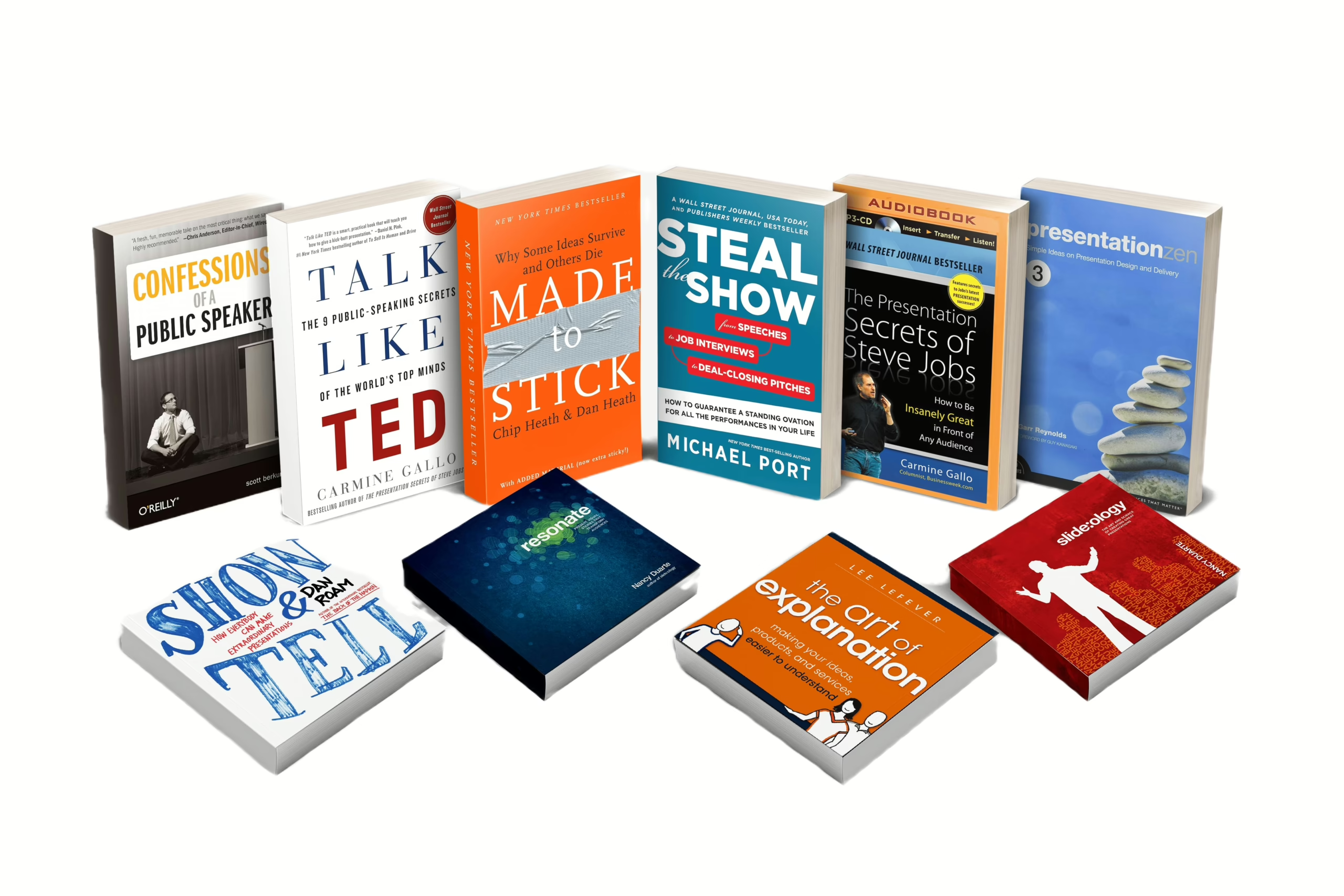
Presentation Books
Must have popular books that 1000s of presenters and CEO's read in order to help them become better at communicating their ideas. Click on the image for the full article.
Recommended Tools for Creating Templates
- Canva: Great for creating visually appealing, customizable templates with ease.
- PowerPoint: A reliable choice for building professional presentations with advanced features like slide animations and data integration.
- Gamma: Ai pitch deck tool that makes a decent presentation if you’re strapped for budget. I wouldn’t recommend this if you’re pitching a project that’s 7 figures +. Check out the Gamma generated deck below.
- Professional Design Services: For high-stakes presentations, consider hiring a pitch deck expert to create a polished, custom template that reflects your brand’s professionalism.
Tips for Designing a Polished Template
- Use Clean, Consistent Fonts and Colors:
- Select no more than two fonts: one for headings and another for body text.
- Stick to a color palette that aligns with your branding or project theme.
- Avoid overly decorative fonts or clashing colors that distract from your message.
- Incorporate High-Quality Visuals:
- Include images that showcase your project in the best light.
- Add charts and graphs to present financial data and market trends clearly and concisely.
- Use infographics to simplify complex information, such as timelines, leasing plans, or development phases.
- Maintain Slide Consistency:
- Ensure all slides have aligned text boxes, consistent margins, and matching layouts.
- Use bullet points and icons to break up text-heavy slides for better readability.
Step 5: Practice and Refine Your Pitch
Nailing your documentary pitch isn’t just about what’s on the slides—it’s about how you deliver it. The way you present your story, answer questions, and build excitement can make or break the deal. Remember, most investors are not just evaluating the documentary—they’re evaluating you as the person they’ll trust with their money or partnership. Here are specific tips to practice and refine your pitch:
1. Know Your Key Talking Points (Don’t Memorize Every Word)
- Instead of memorizing your entire pitch deck, focus on mastering key points:
- The core message of your documentary
- The biggest reason investors should care
- The financial overview and return expectations
By internalizing key points, you can speak naturally and confidently without sounding robotic.
2. Rehearse with Real Feedback
- Practice your pitch in front of people who understand the industry or can provide honest, constructive feedback. If possible, simulate the Q&A session investors might conduct.
- Ask for feedback on body language, pacing, and whether your slides enhanced or distracted from the presentation.
3. Anticipate and Prepare for Tough Questions
- Investors won’t let you off easy. They’ll ask questions about funding gaps, potential risks, and scalability. Have well-thought-out answers ready (we’ll cover this with 20 common questions in a minute).
- Practice answering without getting defensive—investors aren’t attacking you; they’re vetting your project to see if it’s worth their money.
4. Keep It Short, but Leave Room for Engagement
- You don’t need to explain every single slide in detail. The most effective pitches run 10-15 minutes max, with 15-20 minutes for Q&A.
- If someone interrupts with a question mid-pitch, welcome it—this shows engagement. Be flexible enough to answer and loop back to the presentation naturally.
5. Record Yourself and Review
- Record your practice sessions and review them critically. Are you pausing in the right places? Are you speaking too quickly when discussing complex ideas?
- Watch for body language cues. Investors are paying attention to how confident you appear, so maintain strong posture and eye contact.
20 Questions an Investor Will Ask (and How to Answer Them)
What is your documentary about, in one sentence?
Answer: Provide a clear, concise logline. Example: “My documentary follows the lives of displaced climate refugees as they fight to rebuild their communities amidst environmental and political crises.”
Why is this documentary relevant now?
Answer: Back it up with data and current events. “Climate migration is one of the biggest global challenges today, affecting over 21 million people annually. This documentary taps into a pressing issue that is gaining international media attention.”
What’s the problem or opportunity your film is addressing?
Answer: Be specific. “We’re addressing the lack of public awareness around the human cost of climate change. By putting a human face on the statistics, we aim to inspire empathy, policy change, and action.”
How is this project different from existing documentaries on the same topic?
Answer: Highlight your unique angle. “Unlike other environmental documentaries, this film doesn’t focus on scientific jargon—it focuses on individual stories of survival and resilience, with access to key communities and leaders.”
What’s your projected budget, and how will the funds be allocated?
Answer: Break down the budget visually in your pitch deck, and explain how each phase (pre-production, production, post) is accounted for.
What’s your current funding status?
Answer: Be transparent. Investors appreciate honesty. If you have partial funding, mention it and highlight any in-kind contributions.
How will you generate revenue or recoup investment?
Answer: “Revenue will come from distribution deals with streaming platforms, theatrical releases, educational licensing, and VOD sales. Our projections are based on similar films like [Example Documentary], which earned $X in distribution rights.”
What is your target audience, and how do you plan to reach them?
Answer: Provide demographics and psychographics. “Our target audience includes socially conscious viewers aged 18-35, environmental advocates, and policymakers. We’ll reach them through social media campaigns, festivals, and partnerships with climate NGOs.”
What festivals or awards are you aiming for?
Answer: List specific festivals. “We’re targeting Sundance, TIFF, and Hot Docs, where socially conscious films tend to receive high visibility.”
Do you have distribution interest already?
Answer: If you do, mention it. If not, talk about your strategy. “We plan to approach distributors like XYZ Films, who have a track record of handling impact-driven documentaries.”
What’s the expected timeline for production and release?
Answer: Provide realistic milestones. Example: “We’re currently in development, with plans to begin production in 6 months. Post-production will take 4 months, and we aim for a festival debut within 18 months.”
What risks or challenges do you foresee, and how will you handle them?
Answer: Acknowledge risks and show mitigation plans. “Shooting in conflict zones presents logistical risks, but we’ve secured local fixers, translators, and safety protocols.”
What’s your experience as a filmmaker, and who is on your team?
Answer: Highlight relevant experience and key collaborators. “I’ve directed two award-winning short docs. Our producer has 10 years of experience securing funding and distribution for international films.”
Why are you the right person to tell this story?
Answer: Be authentic. “I’ve spent 5 years covering environmental justice as a journalist and have built trust within the affected communities.”
How will you measure the success of the documentary?
Answer: Include both financial (revenue, distribution deals) and impact-driven metrics (audience reach, policy changes).
What’s your marketing strategy?
Answer: Cover festival exposure, social media campaigns, influencer outreach, and PR efforts.
Do you have any sponsors or strategic partners already
Answer: Highlight any existing partnerships or pending deals.
What’s your contingency plan if you don’t raise the full amount?
Answer: Discuss potential scale-backs or alternative funding sources. “We can adjust production costs without compromising core content, and we have backup grant applications submitted.”
What is the expected ROI for investors?
Answer: “Based on projected distribution deals, we expect an ROI of X% within 3-5 years.”
Why should we invest in this documentary, and not another project?
Answer: Reiterate the uniqueness of your film, its timeliness, and your proven ability to deliver results. End confidently: “This documentary isn’t just a film—it’s a movement. And with your support, it can reach audiences and create lasting change.”
3 Documentary Pitch Deck Examples
Below you’ll find three documentary pitch deck examples I’ve built for clients in several niches.
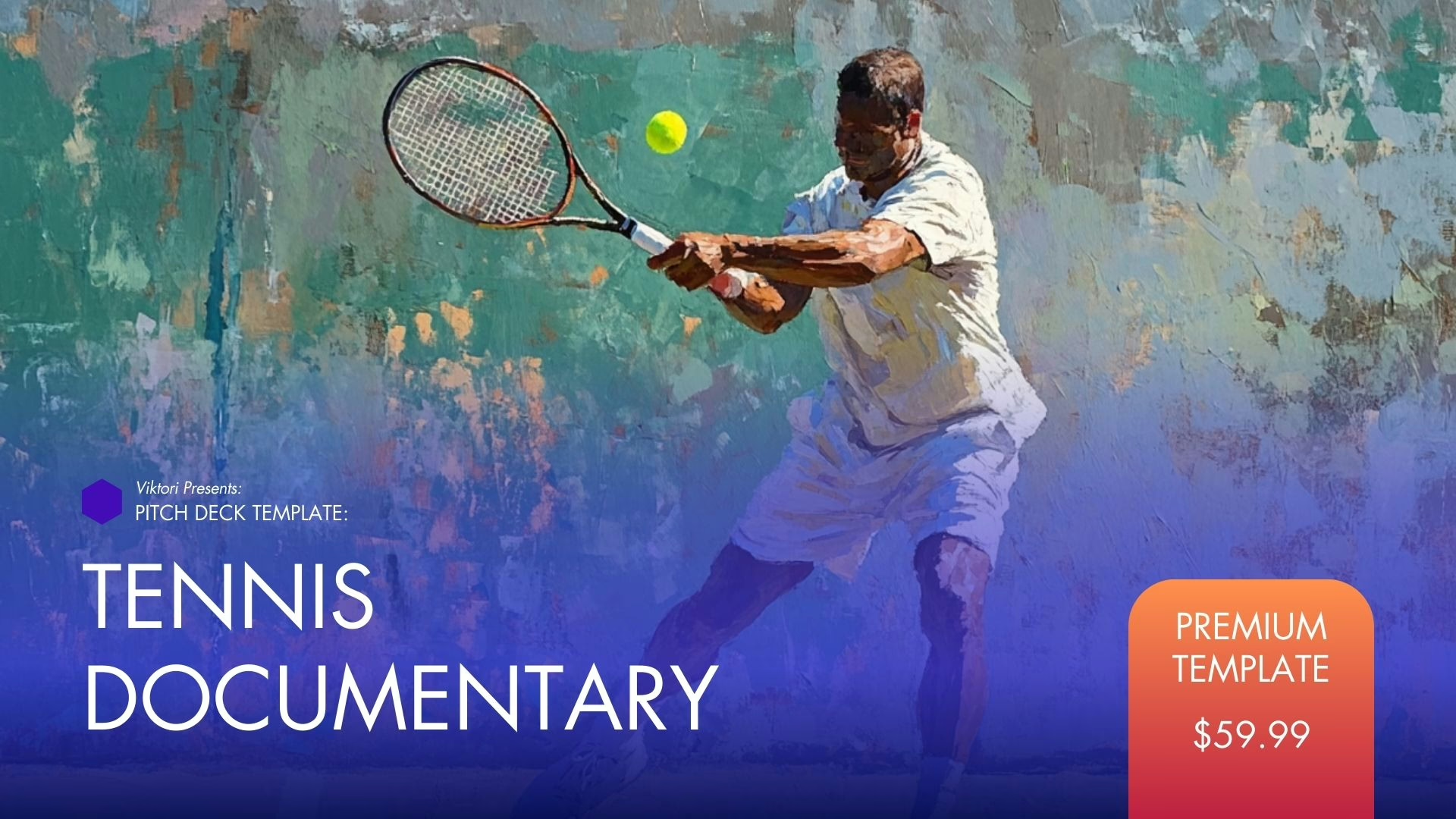
Topic: A behind-the-scenes look at the evolution of tennis, featuring legendary players, rivalries, and untold stories from the court.
Key Slides & Breakdown:
- Title Slide:
- A high-energy action shot of a tennis player mid-serve, with the documentary title in bold typography.
- Subtitle: “Beyond the Baseline”
Why it works: The visual immediately captures the essence of the documentary—motion, intensity, and passion—drawing viewers into the world of competitive tennis.
- Logline:
- “An inside look at the sport that shaped icons, broke barriers, and redefined athletic greatness.”
Why it’s effective: It’s concise, attention-grabbing, and teases the audience with the emotional and historical depth of the film.
- Problem/Opportunity Statement:
- “While tennis continues to grow globally, many stories of its greatest players and historical moments remain untold. This documentary bridges that gap, offering both nostalgia for longtime fans and fresh insights for new audiences.”
Why it works: It highlights the gap in the market and positions the documentary as the solution, making a compelling case for its relevance.
- Visual Style Slide:
- Mood board featuring archival footage, dramatic player close-ups, and slow-motion action shots.
Why it’s effective: It sets the visual tone—dynamic, emotional, and cinematic—which resonates with both sports fans and distributors looking for high-energy content.
- Distribution Strategy:
- Target streaming platforms like ESPN+, Netflix, and Amazon Prime, with additional distribution through sports documentaries festivals and partnerships with tennis organizations.
Why it works: Clear distribution channels show investors that the filmmakers have done their homework, increasing the project’s appeal.
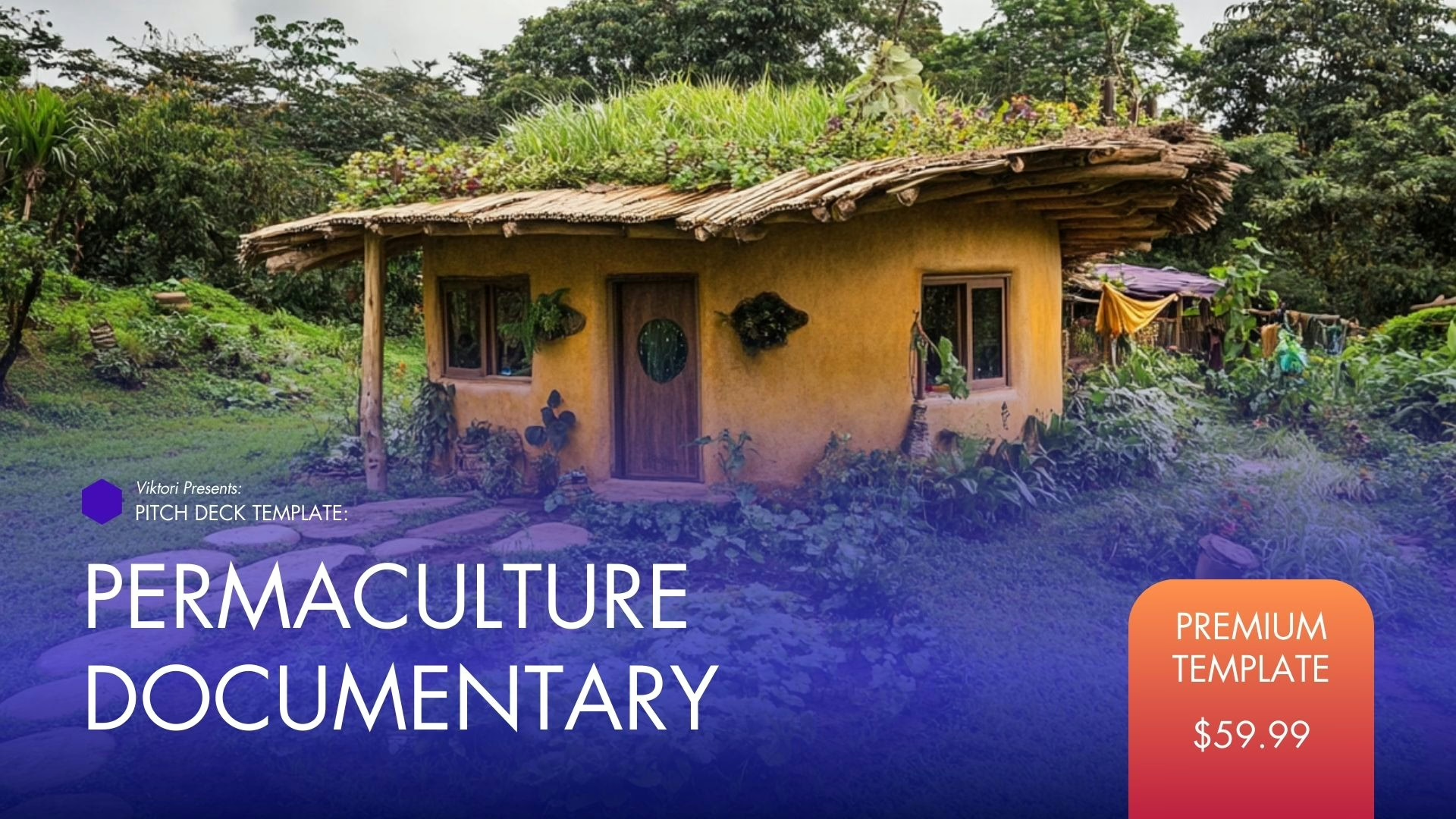
Topic: A deep dive into the principles of permaculture and sustainable farming, following farmers and environmental advocates who are reshaping how we grow food.
Key Slides & Breakdown:
- Title Slide:
- An aerial shot of lush, regenerative farmland with the title “The Future is Growing.”
Why it works: The vibrant, nature-driven image immediately conveys the documentary’s focus on sustainability and environmental impact.
- Problem/Opportunity Statement:
- “The current industrial farming system is unsustainable, contributing to environmental degradation and food insecurity. However, permaculture offers a regenerative solution with scalable impact.”
Why it’s effective: It frames the problem with urgency and presents the documentary as a timely exploration of solutions.
- Target Audience Slide:
- Primary Audience: Environmentally conscious viewers, permaculture practitioners, and sustainability advocates.
- Secondary Audience: Educators, policymakers, and food industry stakeholders.
- Supporting Data: Streaming stats show that environmental documentaries have seen a 60% increase in viewership over the last 3 years.
Why it works: By clearly defining who the documentary will reach, it assures potential investors that the project has a built-in audience.
- Visual Style and Mood Board:
- Combination of scenic landscapes, close-up shots of farmers at work, and animations of regenerative systems.
Why it’s effective: The mood board helps stakeholders visualize the documentary’s aesthetic, ensuring that the content is both educational and visually engaging.
- Impact Plan:
- Screening campaigns targeting eco-conscious festivals and sustainability conferences.
- Educational outreach programs in schools and universities.
Why it works: The plan demonstrates that the documentary will not only generate revenue but also have a lasting societal impact, making it appealing to grant providers and social impact investors.
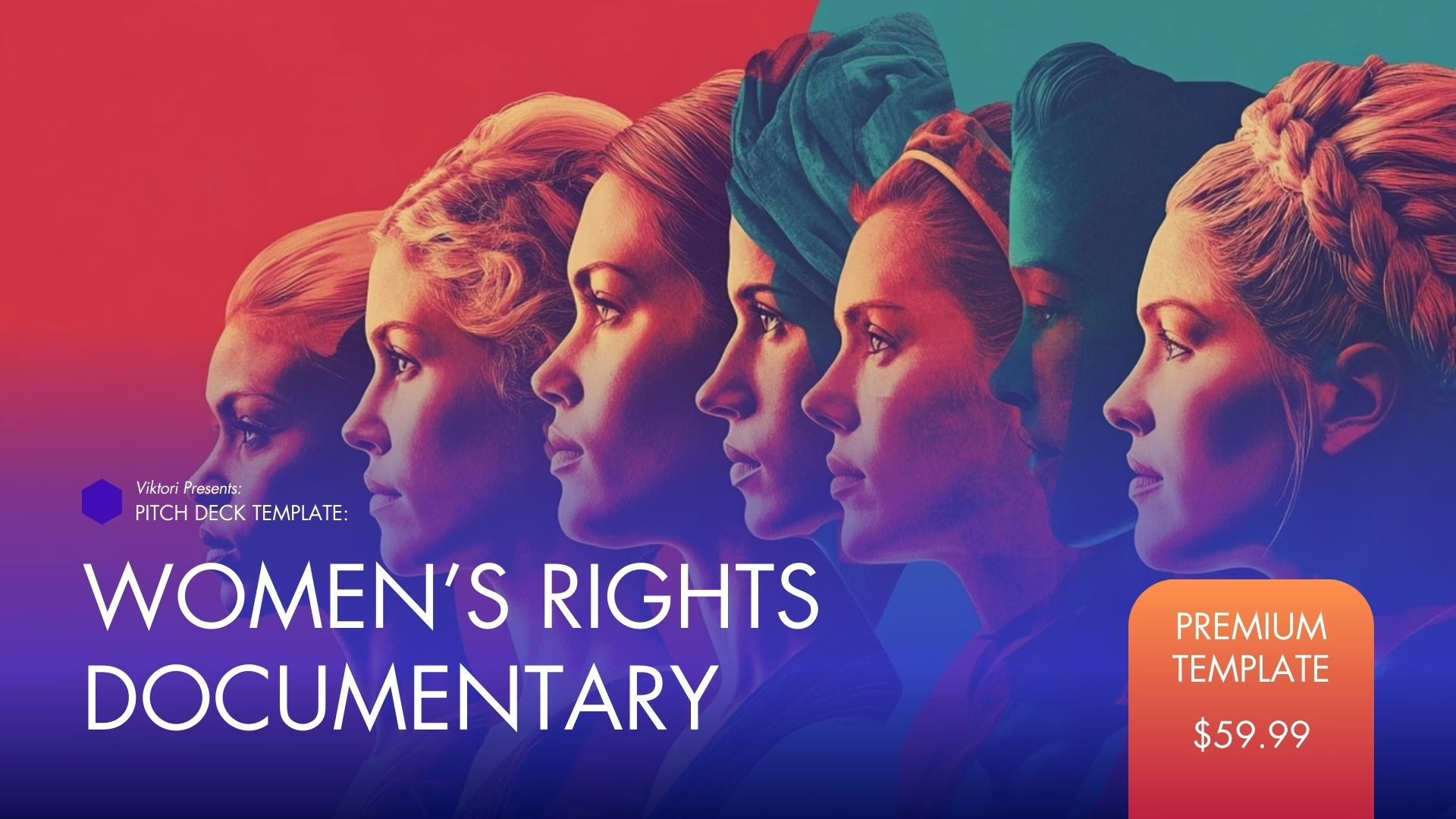
Topic: A powerful exploration of the fight for women’s rights, focusing on personal stories of activists across generations and their impact on global gender equality.
Key Slides & Breakdown:
- Title Slide:
- A striking image of a women’s march, with the documentary title in bold, block letters.
- Subtitle: “Voices of Change”
Why it works: The combination of a powerful visual and an inspiring title instantly conveys the importance and emotional depth of the documentary.
- Logline:
- “From the streets to the boardrooms, this documentary tells the stories of women who refused to stay silent and changed the world.”
Why it’s effective: It’s short, emotional, and promises compelling stories that resonate globally.
- The Solution (Why This Story Needs to Be Told):
- “Despite decades of progress, gender inequality persists. By amplifying voices across generations, this documentary aims to bridge the past with the present and inspire future movements.”
Why it works: It establishes the documentary’s purpose as not only a historical exploration but a catalyst for ongoing change.
- Narrative Structure:
- Act 1: The origins of the women’s rights movement (archival footage and interviews).
- Act 2: Current activists leading today’s major campaigns (on-the-ground coverage).
- Act 3: Where we go from here (calls to action and future goals).
Why it’s effective: A clear, 3-act structure assures investors that the documentary has a coherent and engaging flow.
- Call to Action/Investment Ask:
- $350,000 funding needed for production, post-production, and promotional efforts.
- Return on investment through distribution deals, licensing, and educational screenings.
Why it works: The investment ask is specific and tied to clear financial returns, making it attractive to investors seeking both impact and profitability.
FAQ
How long should a documentary pitch deck be?
Ideally, a documentary pitch deck should be 10-15 slides. Keep it concise but impactful. Focus on key visuals, relevant data, and the core message. Investors prefer decks that provide essential details without overwhelming them.
What’s the best way to present the financials in a documentary pitch deck?
Financials should be clear and transparent. Include a budget breakdown (pre-production, production, post-production), secured funding (if any), and your funding ask. If applicable, show projections for ROI through distribution deals, licensing, or streaming platforms. Use simple charts and visuals to avoid overwhelming investors with complex tables.
How much emphasis should be placed on visuals in the pitch deck?
A documentary pitch deck relies heavily on compelling visuals because it’s a medium driven by visual storytelling. Include:
- Mood boards
- Sample shots or test footage (if available)
- Concept art or photos that reflect the documentary’s tone
However, don’t let visuals overwhelm the core message. Balance aesthetics with key business information.
How do I demonstrate the documentary’s market potential?
Showcase the target audience and demand by including:
- Market research on viewership trends for similar genres
- Case studies of successful documentaries (e.g., 13th, Free Solo)
- Streaming and festival stats demonstrating audience growth in documentary content
Back this up with data, graphs, or charts showing that the documentary has strong market appeal.
What type of call to action should I include in my pitch deck?
The call to action depends on your objective. Be clear and specific about what you’re asking for:
- For funding: Include the total amount needed, specific investment tiers, and what the investor will receive in return (e.g., producer credits, backend points).
- For partnerships: Define how collaborators will contribute and benefit.
- For distribution: Include distribution goals and potential release platforms.
What’s the role of the director’s statement in the pitch deck?
The director’s statement is a personal note explaining why the filmmaker is uniquely qualified to tell the story. This slide helps build emotional connection and trust with investors by showing your passion and personal connection to the topic. It’s particularly important for social impact or highly personal docs.
How do I address risks and challenges in my pitch deck?
Investors appreciate honesty about potential risks. Include a slide or section that outlines:
- Production risks (logistics, permissions, or weather)
- Financial risks (delays or cost overruns)
- Mitigation strategies to address these risks
For example, show backup plans for location changes or explain how contingency funds are built into the budget.
Do I need to include potential distribution plans in the pitch deck?
Yes. Distribution is crucial to demonstrating the project’s revenue potential and reach. Include:
- Target platforms (Netflix, Hulu, Amazon Prime, film festivals, etc.)
- Strategies for theatrical release, VOD, or educational distribution
- Partnerships with distributors or PR firms (if applicable)
Showing you’ve thought about distribution builds investor confidence in the project’s success.
