


Pitch deck cost refers to the total cost of creating a pitch deck (the full deck, not just “nice slides”) that communicates a business opportunity clearly in a decision environment. That includes pitch deck design, story and structure work, visual hierarchy, and revisions—everything required for a professional pitch deck that holds together when a potential investor scans it in minutes, not hours.
Most startup teams ask “much does a pitch deck cost?” as if it’s a single number, but pitch deck design cost depends on what the deck needs to carry: research, financial projections, narrative compression, and design consistency. If you want the baseline definition of the object you’re pricing, the framing is visible in what an investor pitch deck is. It’s also helpful to anchor expectations against the broader mechanics of how to create a pitch deck, because that shows where the work actually accumulates.
This guide breaks down the factors that affect deck design costs, typical price ranges, and what you pay for—so your budget isn’t based on vibes and a Canva template.
Key Factors That Affect Pitch Deck Cost
Pitch deck cost varies because the work behind a deck is rarely just presentation design. These are the factors that most consistently affect pricing across pitch deck projects.
Scope and length of the deck (number of slides)
More slides usually means more decisions per page: more claims to support, more structure to maintain, and more chances to confuse the reader. A short deck can be expensive if it demands tight compression; a long deck can be cheap if it’s mostly filler. This pattern shows up in how founders choose between formats—see short vs long pitch decks for how the same story behaves differently depending on length.
Design complexity and custom branding
Design ranges from light formatting to a fully custom system. Custom pitch deck design includes layout rules, typography behavior, iconography, chart styling, and brand alignment.
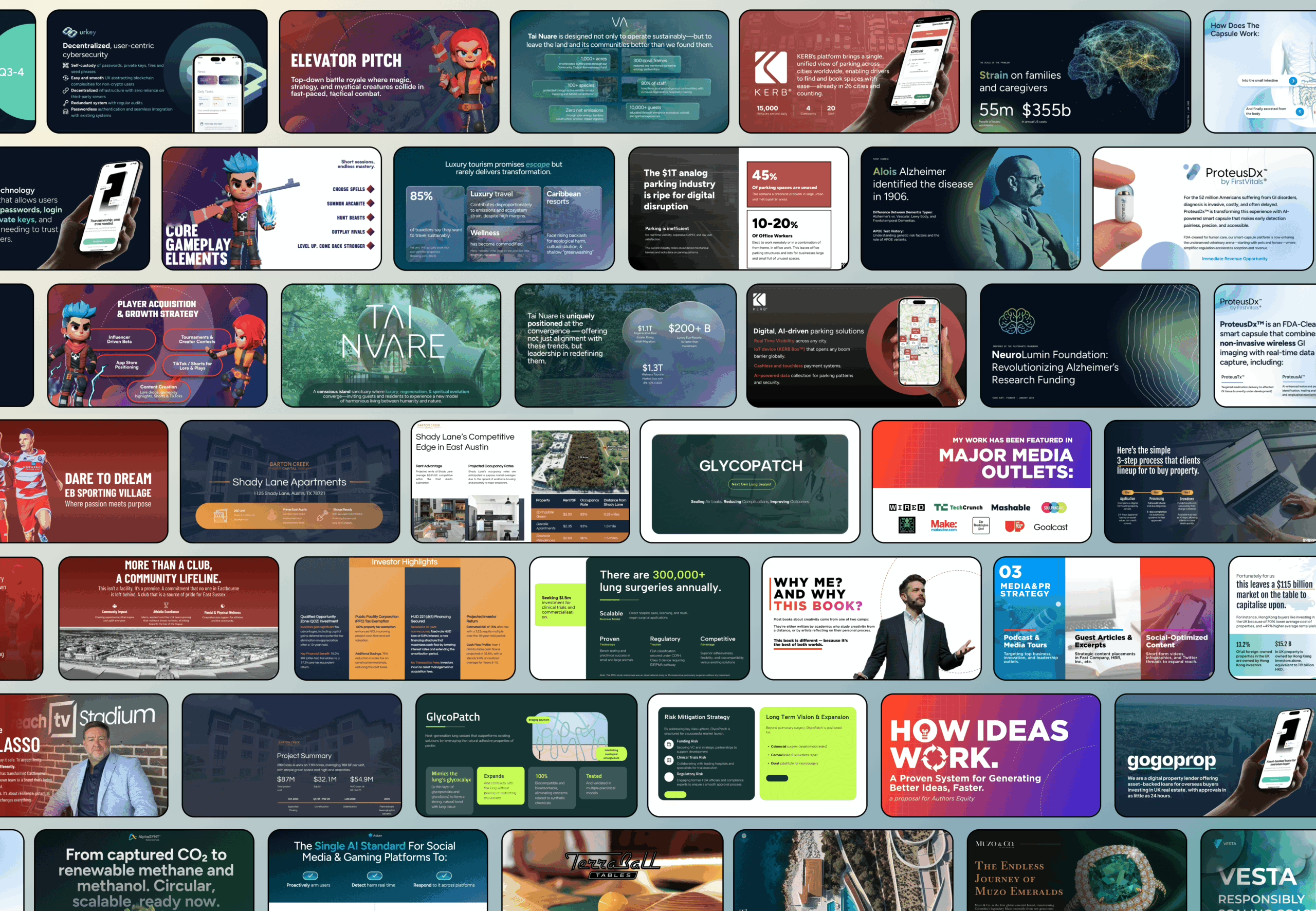
These details matter because perception is formed fast, and it’s shaped by fundamentals like pitch deck color psychology and font psychology for pitch decks. If the deck uses animation or advanced transitions, that increases production time and revision time—especially when a deck must work in PowerPoint and google slides without breaking.
Content development: copywriting, storytelling, data visualization
A deck is read like a compressed argument. If the provider is shaping narrative and messaging—not just making it “look good”—cost increases. The narrative layer shows up as headline clarity (see pitch deck headlines that hook) and as story compression (see the art of simplification). Storytelling also affects how information is interpreted under pressure; this dynamic is visible in emotional storytelling for pitch decks and broader storytelling frameworks.
Data visualization adds cost because it’s not just chart-making; it’s making the chart understandable at a glance.
Research and financial modeling requirements
Research work (market, competition, benchmarks) increases pitch deck cost because it adds analysis time and iteration. Financial modeling adds even more because assumptions, outputs, and narrative claims must stay consistent across the deck. This is typically expressed through how the numbers are framed and supported—see how to present financials in a pitch deck and how mistakes show up in revenue mistakes in pitch decks. If a competitive section is needed, analysis depth matters too—see competitive analysis for startups.
Experience and location of the service provider (freelancer, agency, consultant)
A junior designer might deliver basic layout; a senior pitch deck designer can shape structure, narrative, and clarity under investor scrutiny. Geography affects rates, but experience affects iteration count. If you want a definition of what you’re really paying for at the higher end, see what a pitch deck expert is.
Turnaround time and revisions
Rush projects cost more because they compress cycles and force priority scheduling. Revisions also change price: the more stakeholder rounds, the more scope drift risk. Many “unexpected” overruns are simply revision chaos wearing a fake mustache.
Additional services: pitch coaching, investor targeting, printing
Add-ons like pitch coaching and investor targeting expand scope beyond the deck. This tends to align with the reality of the fundraising process, where the deck is just one artifact inside a larger evaluation sequence.
Typical Price Ranges
Pricing varies, but most pitch deck work falls into a few tiers.
DIY or template-based: low cost to free
Using a template (or pre-designed pitch deck templates) can keep the design cost low. The trade-off is time and quality control, because narrative and structure still need to be coherent.
Typical range: $0–$150
Freelancers: typical ranges and what to expect
Freelancers range from layout-only to full narrative + design. Pricing can be hourly, fixed, or per slide.
Typical range: $300–$2,000
(Varies based on scope, revision policy, and whether they touch pitch deck content.)
Specialized agencies and boutique studios: premium pricing
Boutique studios typically include research support, messaging refinement, and stronger production systems.
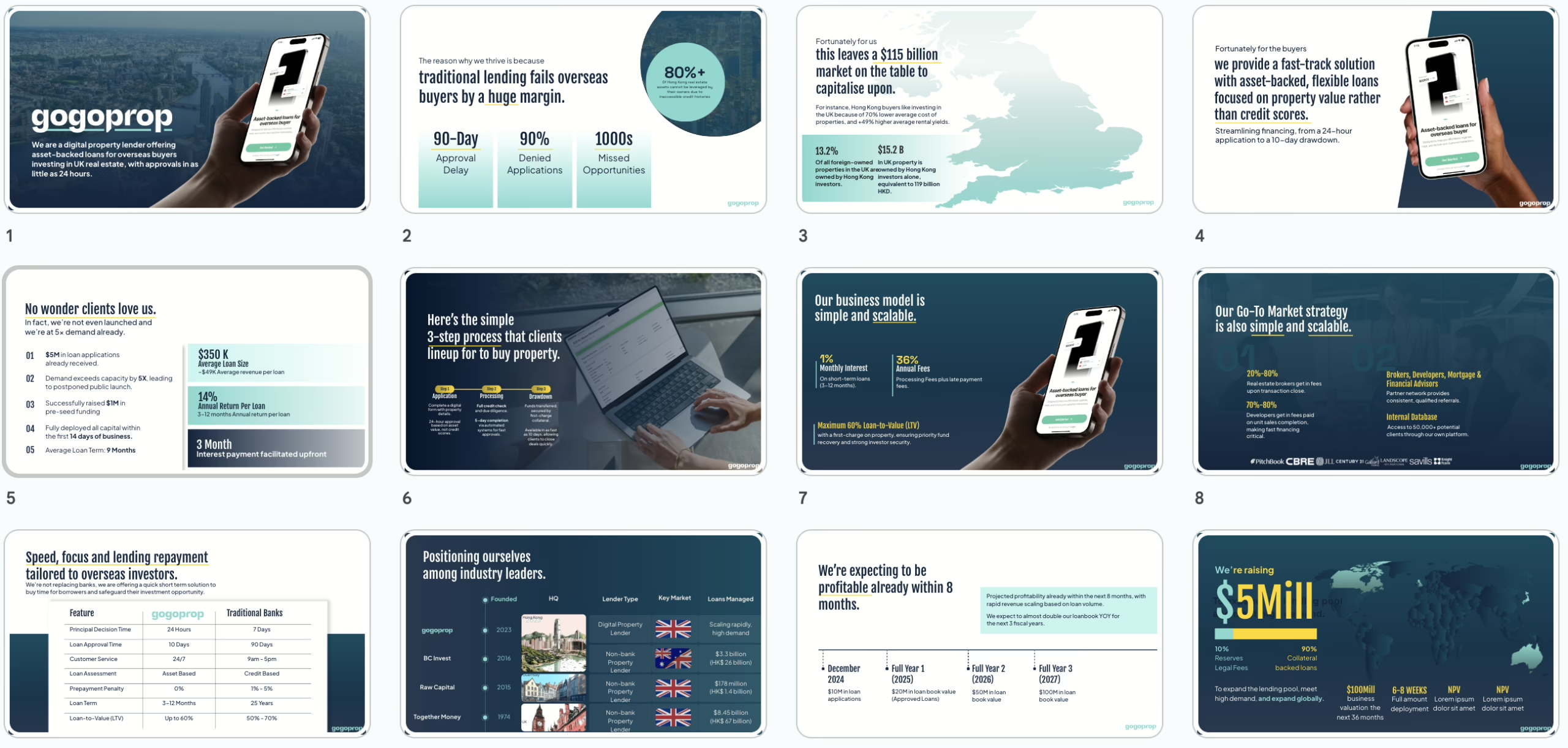
Typical range: $2,000–$8,000+
Enterprise-level or VC-ready packages: highest tier
Institutional-grade decks often bundle research, modeling, narrative control, custom design systems, and multi-round revision support.
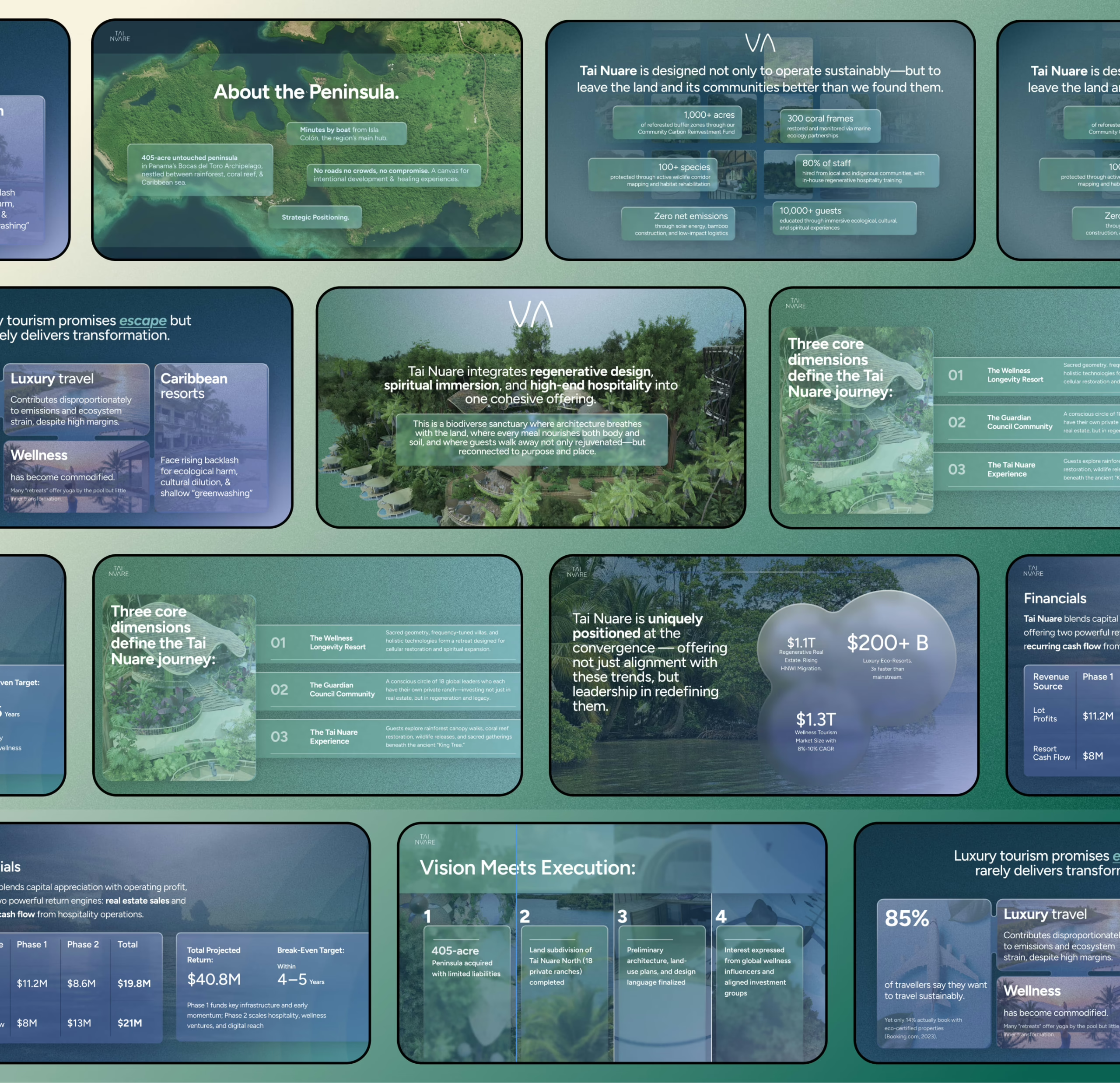
Typical range: $8,000–$25,000+
Regional price variations and hourly vs fixed pricing
Hourly rates can range widely, but project-based pricing often makes budgeting easier—especially when scope is clearly defined and revision count is controlled.
Cost Breakdown: What You Pay For
If pitch deck cost feels inconsistent, it’s because different providers include different layers of work.
Research and market analysis
Market framing, competitor mapping, TAM logic, and proof selection. Market sizing usually shows up in how the deck frames categories—see TAM/SAM/SOM in a pitch deck.
Story and narrative development
This includes structuring the argument, tightening the message, and making the deck readable fast. It shows up in core slides like the problem slide and solution slide, and how those two relate (see problem-solution slides tips).
Financial model and projections
Assumptions, scenario logic, and consistency checks across charts and narrative. The “numbers layer” is often what determines whether a deck feels grounded.
Slide design and visual assets
Layout, chart systems, iconography, typography, and brand consistency. This is where a deck becomes a clean professional presentation, not a collage.
Revisions, meetings, and project management
Calls, review rounds, stakeholder alignment, change tracking. This is also where scope creep quietly turns into real money.
Supplementary deliverables (one-pagers, leave-behinds, executive summary)
Often required for follow-ups. A one-pager behaves differently than a deck, and the relationship is visible in one-pager pitch decks.
DIY vs Hiring Professionals
Doing the pitch deck yourself can keep pitch deck cost low, but it pushes the real cost into time, iteration, and clarity debt. DIY usually works when the story is already tight, the numbers are stable, and you’re not trying to compress a complicated business into a few slides under pressure. If you’re relying on a deck template, the risk isn’t that it looks “templated” — it’s that the deck starts to behave like a collage instead of a coherent argument.
Hiring a professional shifts the cost from “hours spent wrestling slides” to a defined process and deliverable. A freelance designer might focus mainly on layout and visual cleanup; a senior pitch deck designer or studio often includes narrative shaping and structure so the pitch reads cleanly to an investor.
Two useful references for where DIY typically breaks (and what people use instead):
- A practical view of the tooling landscape shows up in the common tools used for building decks.
- The AI layer (useful, but easy to overtrust) is framed in the current set of AI deck tools.
How to Reduce Pitch Deck Cost Without Sacrificing Quality
You reduce deck design costs by reducing ambiguity — not by cutting corners that make the deck harder to read. The cheapest deck is the one that doesn’t get rebuilt three times.
- Use a clear brief and stable inputs. Cost goes up when the story changes every call.
- Provide existing materials up front. Data, screenshots, product flows, metrics, customer notes — anything that prevents “guessing” lowers the total cost.
- Prioritize must-have slides. A shorter, coherent slide deck beats a longer one that dilutes the argument.
- Control revisions. Scope creep is the silent tax on every pitch deck project.
- Use stock assets intelligently. It’s fine to be practical — just keep consistency.
Two cost-saving patterns that show up repeatedly in real decks:
- Tight pacing and disciplined slide count shows up in the 10/20/30 rule context.
- Visual variety that stays coherent (without exploding production) shows up in how diverse visuals can support comprehension.
Return on Investment (ROI)
ROI on pitch deck design isn’t “it looks nicer.” It’s whether the deck reduces friction in the decision process: fewer follow-up clarifications, fewer misinterpretations, faster next steps, and a shorter cycle from first view to serious conversation.
A useful way to measure ROI is simple: funded capital per dollar spent, plus time saved (weeks matter). A deck that costs more but prevents a month of confusion can be cheaper in total outcome terms.
Two places where ROI gets real (because expectations and decision filters change):
- The stage context that reshapes investor expectations is visible in pre-seed vs series A dynamics.
- The typical rejection patterns (often caused by clarity gaps, not “bad ideas”) show up in why investors say no.
How to Choose a Pitch Deck Provider
Choosing a provider is mostly about whether they can produce a deck that behaves well under scrutiny. Portfolio matters, but so does process: how they handle inputs, narrative, revisions, and stakeholder noise.
What to evaluate:
- Portfolio quality and relevance. Look for clarity, not “effects.”
- Testimonials and references. Especially from founders who raised in similar conditions.
- Process clarity. What do they need from you, and what do they deliver back?
- Revision policy. This affects budget stability more than most founders expect.
- IP / ownership. Make sure you own the final assets and source files.
Two quick “provider smell tests” that map to common failure points in decks:
- The broader pattern of avoidable errors is captured in common pitch deck mistakes.
- The content layer (too vague, too dense, too thin) is spelled out in content mistakes that wreck comprehension.
Sample Pricing Packages
Pricing packages are just standardized pricing structures. The difference between tiers is usually: who owns the narrative, who owns the research burden, and how far the provider is responsible for “decision-grade” clarity.
Starter Package (template upgrade + basic design)
- Best when your pitch deck content is already strong
- Minimal restructuring, light visuals, limited revisions
- Lower pitch deck cost, but relies on your clarity
Growth Package (custom slides + basic financials + 2 revisions)
- Stronger structure and more consistent pitch deck design
- Basic chart cleanup and visual hierarchy improvements
- Good balance of budget and outcome
Investor-Ready Package (research + modeling + coaching)
- Full narrative control, deeper research support, tighter story
- Financial projections and consistency checks
- Higher cost, but usually fewer “rebuild” cycles
À la carte services
- Design-only, modeling-only, or advisory blocks when scope is constrained
If you want packages to mirror how different industries express evaluation logic through structure, these two references show the difference in what “investor-ready” means by context:
- Software expectations are reflected in the SaaS pitch deck structure.
- Capital markets / regulated narratives show up in the fintech pitch deck structure.
Pre-Engagement Checklist
Before you spend on pitch deck cost, get the inputs stable. Most overruns aren’t caused by the provider — they’re caused by unclear goals and moving targets.
Checklist:
- Define fundraising goal (amount, stage, timeline) and target investor type
- Gather materials: product, traction metrics, customer proof, pricing, pipeline, market notes
- Decide budget and timeline (rush costs more; chaos costs most)
- Define success criteria: what should the deck enable after it’s shared?
- Confirm who signs off (limit stakeholders early)
Two areas to lock early because they typically reshape the entire deck once clarified:
- The traction layer that shows “this is working” is expressed through traction and growth structure.
- The distribution logic investors look for is expressed through go-to-market structure.
Frequently Asked Questions (FAQs)
How much should a startup expect to spend on a pitch deck?
Most startup teams land somewhere between “DIY + template” and “freelancer + light narrative help,” depending on how stable the story and numbers already are. A practical way to think about pitch deck cost is: you’re paying for how much uncertainty gets removed before the deck is sent. If you’re trying to map price to the type of work involved (not just vibes), this framing shows up clearly in what it means to work with a pitch deck expert.
Is it worth paying more for design?
Sometimes. More expensive pitch deck design is worth it when the deck needs to operate as a high-trust artifact: clean hierarchy, fast comprehension, strong evidence formatting, and consistent visual logic. But design doesn’t compensate for weak structure or unclear claims. If you want a reality check on when “design-first” becomes a trap, the pattern shows up in pitch deck design mistakes.
How long does it typically take to create a pitch deck?
Timelines depend on input quality and the number of revision cycles. A deck built from stable materials can move fast; a deck built while the business model is still shifting will drag. The timeline also changes depending on whether you’re creating a short or long format.
Can agencies guarantee investor interest?
No. Nobody can guarantee investor interest, because a deck doesn’t control market timing, fund thesis, or risk appetite. What a strong deck can do is remove preventable reasons for rejection by making the story and logic legible.
Should I create different decks for different investors?
Often, yes — not because you’re “changing the truth,” but because different evaluators weight different parts of the same story. That dynamic is typically expressed through what gets emphasized or compressed. If you’re looking at this through structure, it’s visible in how founders tailor a deck for different investors.
Conclusion
Pitch deck cost isn’t a single number — it’s the price of turning a messy reality into a coherent pitch deck that can be understood quickly and stress-tested by an investor. The cost of a deck is shaped by slide count, design complexity, narrative clarity, research depth, financial projections, timeline pressure, and revision behavior. That’s why pitch deck design cost depends less on “how many slides” and more on how much uncertainty the deck needs to resolve.
The safest way to balance cost and quality is to treat your deck like a decision artifact, not a design project. Start with stable inputs, control revisions, prioritize the slides that carry the argument, and invest where comprehension and credibility actually change outcomes.
Now you can set a realistic budget, choose a provider without guessing, and keep your pitch deck cost proportional to what the deck needs to accomplish.
