
The Power of the First Sentence: Crafting Pitch Deck Headlines That Hook

Author: Viktor
Pitch Deck & Fundraising Consultant. Ex Advertising. Founder of Viktori. $500mill In Funding. Bald Since 2010.
A few years back, I was helping a startup founder prep for a massive Series A pitch. Brilliant product, airtight market strategy, slides that looked like they’d been kissed by Dieter Rams himself. But when he opened with, “We are a disruptive SaaS company leveraging AI for…,” I watched five investors simultaneously check their phones. One even opened Candy Crush. I’m not kidding.
That’s when it hit me: the first sentence isn’t just the beginning—it’s the dealbreaker. It doesn’t matter how beautiful your deck is or how groundbreaking your idea sounds in your head. If your opening line doesn’t land, the rest might as well be lorem ipsum.
So here’s the big idea: your first sentence is your first impression, compressed into 7–10 words. It should punch. It should pull. And ideally, it should whisper, “You’re not gonna wanna miss this.”
This post breaks down how to write a great first sentence that actually hooks human attention (and maybe even gets an investor to put their phone down). If you’re building a pitch and want help turning yawns into nods, you’ll want to check out my expert pitch deck services or get something custom built via my pitch deck design studio.
Let’s make the first line do the heavy lifting, shall we?
The Psychology Behind a Great First Sentence
Why Humans Are Hardwired for Openings
The importance of the first sentence cannot be overstated—whether it’s on the first page of a novel, the first paragraph of a pitch deck, or the opening dialogue of a business presentation. It isn’t just literary flair; it’s rooted in evolutionary psychology.
From classics like “Call me Ishmael” to “It was the best of times, it was the worst of times,” the first sentence of a book functions as a neural trigger. It imprints a mental frame and sets expectations in the reader’s mind about what’s to come. This is more than literary history—it’s cognitive design.
When your brain reads a great first sentence, it initiates what’s known in neuroscience as the “curiosity loop.” This loop is a cognitive mechanism that compels the brain to seek closure. Essentially, the moment a question is raised or a conflict hinted at in that first line, your brain activates attention systems. You’re biologically invested in the next sentence.
Studies show we make snap judgments within six seconds of reading or hearing something new. In those precious moments, your opening sentence decides whether your audience will lean in—or lean out. It’s the micro-hook that either grabs attention or gets lost in the noise.
Put simply: the first sentence is the first impression, and as in life, you don’t get a second chance to make a first impression.
The “Cognitive Leverage” of the First Sentence
To truly understand the power of the first sentence, let’s apply first principles thinking—a core mental model from The Great Mental Models by Shane Parrish. Strip away the surface-level fluff, and you realize that the opening sentence of a novel, pitch, or blog post performs three critical functions:
It introduces tension or contrast (e.g., “It was the best of times, it was the worst of times…”).
It promises transformation or insight (“Call me Ishmael” subtly signals a shift into the unknown).
It defines the frame through which the reader will process every next sentence.
This is narrative leverage. If the first two sentences don’t hold weight, the entire first chapter loses impact. If your opening sentence lacks clarity or emotional hook, even the most compelling data or story will fall flat.
This is why agents and editors, particularly in publishing and film, often decide a submission’s fate based solely on the first paragraph. They know: if you can’t draw the reader in early, they’ll never stick around for the climax.
Great storytellers from Jane Austen (“It is a truth universally acknowledged…”) to J.D. Salinger (“If you really want to hear about it…”) mastered this art. These great first lines not only hook readers—they set the tone, introduce the main character, and signal the journey ahead.
A powerful first sentence can be used to provoke emotion, challenge assumptions, or even shock. In pitching, it might sound like: “Every 60 seconds, a startup dies—ours won’t.” It makes a first sentence unforgettable, and that memorability is your first form of traction.
So whether you’re starting a book, crafting a sales deck, or writing the first draft of a pitch, remember: one perfect first sentence can launch a narrative, influence millions, or close the deal.
In the end, the first sentence becomes the DNA of your entire message. Make your reader feel, get the reader guessing, and most of all—make your reader want more.
What Makes a Great First Sentence in a Pitch Deck?
Traits of High-Performance Opening Lines
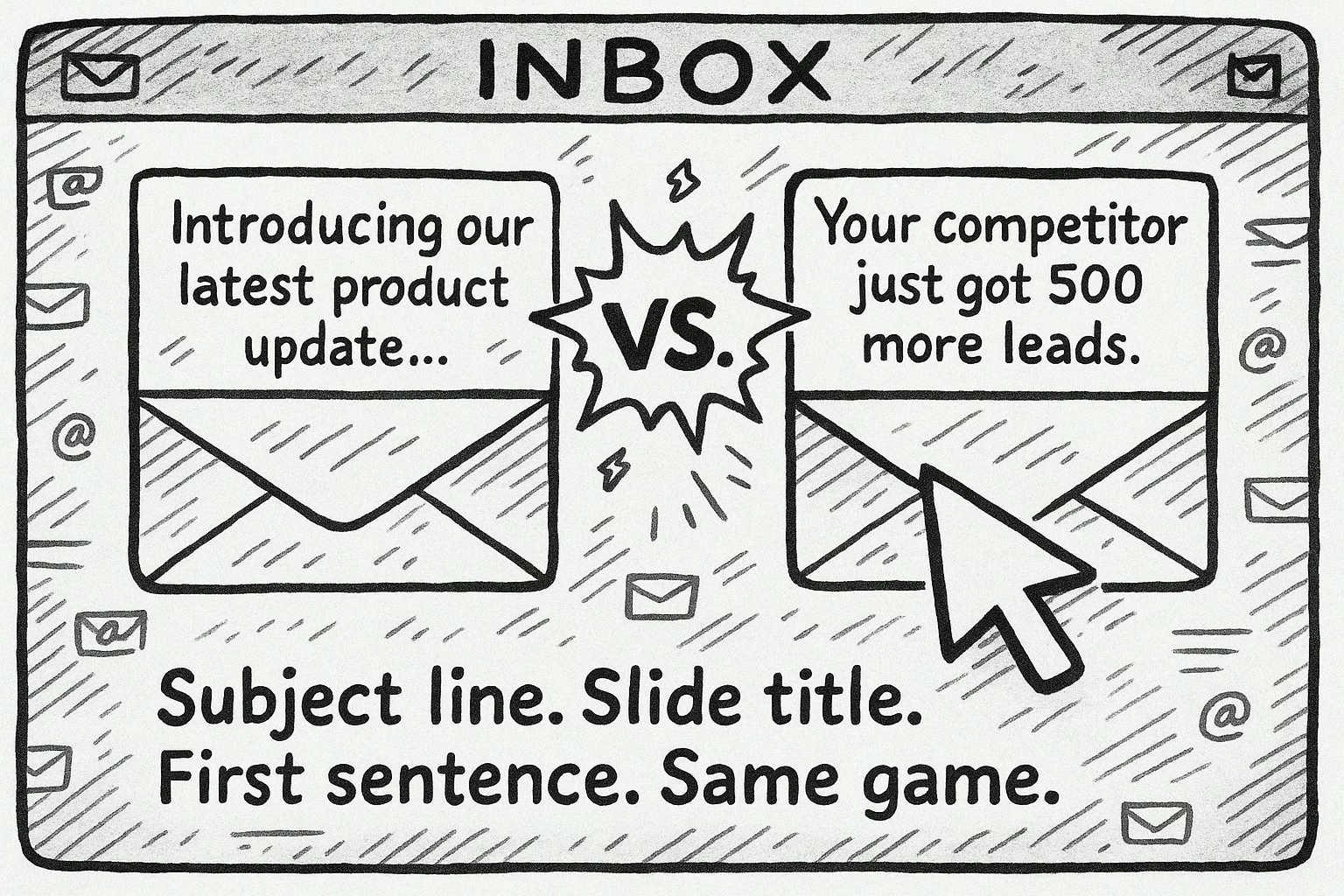
The first sentence of your pitch deck isn’t just a line of text—it’s your moment to hook readers, plant a powerful idea, and begin the story that investors want to be part of. Whether it’s the first few words on your first page, or a slide that defines your narrative, a great first sentence acts like the ignition switch in a high-performance engine: without it, nothing moves.
After analyzing over 500+ pitch decks and applying insights from The Pitchermann Blueprint, Pitch Anything by Oren Klaff, and Presentation Zen, we’ve identified five traits that make the perfect first sentence not just possible—but predictable.
1. Name a Clear Enemy or Pain Point
From “Fossil fuels are killing the planet” to “Rents have doubled in 2 years—our generation is priced out,” effective openings define the problem upfront. Much like “It is a truth universally acknowledged…” by Jane Austen, this approach positions the reader to agree, relate, and emotionally invest. You’re not just introducing an idea—you’re introducing a villain.
2. Spark Intrigue or Emotional Dissonance
Sentences like “We fired half our customers to double our profits” disrupt expectations. They trigger the mental itch known as the curiosity gap—a storytelling tactic used by greats from Marquez to Holden Caulfield. This tactic makes the reader into the story by creating a question they feel compelled to answer.
3. Promise Transformational Change
Instead of listing features, introduce the MC—the main character in your solution story—and what changes because of them. Think: “We help refugees become remote developers in 90 days.” This is how you write a great first sentence—with purpose, promise, and transformation.
4. Be Benefit-Led, Not Feature-Heavy
Technical details belong later in the pitch. Early on, focus on impact. “This AI tutor doesn’t just teach math—it raises grades by 40% in 3 months.” That one sentence carries more weight than 30 feature-packed slides.
5. Use Concrete, Visual Language
Avoid vagueness. Instead of “We offer innovative solutions,” say “We cut freight costs by 60% for 3 of the top 5 retailers.” Concrete beats abstract every time. It’s how you write a sentence that works, and more importantly, a sentence that sells.
Sentence Frameworks That Work
To help you write a first sentence that resonates with investors and stakeholders, here are three proven templates. These aren’t just well-worded examples—they’re optimized for conversion, engagement, and even semantic SEO.
1. The Enemy Approach
“Fossil fuels are killing the planet—our tech is the cure.”
This framework names a universally acknowledged problem and positions your solution as the antidote. It’s the truth universally acknowledged approach for the startup world.
2. The Unexpected Statistic
“98% of apps fail in their first year—we cracked the code.”
Numbers catch attention—especially when they imply risk or loss. Like the opening sentence of The Catcher in the Rye, this approach uses bluntness to hook readers and signal contrarian insight.
3. The Visionary Hook
“Imagine a world where no child dies of dehydration.”
This sentence type taps into vision, morality, and purpose. It’s not just about your company—it’s about what the world could be. These are the kinds of beloved first sentences that make investors think: “I want to be part of that story.”
You might like: Storytelling Frameworks That Work in Investor Pitches
SEO Strategy for Headlines and First Sentences
Entity-Rich, NLP-Optimized Copy
In today’s search-driven digital landscape, writing a great first sentence isn’t just about grabbing human attention—it’s also about speaking the language of machines. Search engines like Google rely on Natural Language Processing (NLP) and entity recognition to evaluate and rank content. That means your opening line needs to be optimized for both semantic relevance and reader engagement.
To ensure your first paragraph and first sentence are algorithmically favored, follow these tactical principles rooted in Holistic SEO and semantic search theory:
Include Your Main Keywords
Your core entity—first sentence, for example—should appear early and naturally. This signals topical relevance. A good example:
“Your first sentence is the most important line in your pitch deck—it sets the tone and hooks the reader.”
Use Semantic Variants and Synonyms
Instead of repeating “first sentence” robotically, blend in LSI (Latent Semantic Indexing) variants and descriptive modifiers like:
opening line
headline that hooks
great first sentence
perfect first sentence
write a great first sentence
This builds lexical diversity—an SEO metric linked to ranking potential.
Anchor to Related Entities
For topical depth, connect your sentence to conceptually associated topics:
VCs, founders, attention span, elevator pitch, reader knows, introduce the MC
This allows Google’s entity graph to associate your content with high-authority domains. It also gives your opening paragraph more semantic weight.
Pro Tip: Use Named Examples and Literary References
Dropping in recognizable titles or lines like “Call me Ishmael” or books of the 20th century triggers NLP recognition of literary history, a trusted topical cluster. This is why naming Jane Austen, Marquez, or referencing “the first English novel” adds SEO and cultural context.
Structuring for Featured Snippets
One of the easiest ways to rank in featured snippets—the “zero position” on Google—is to start your first sentence with a clear “what,” “why,” or “how” structure. This is how you write a great opening line not just for readers, but for search bots too.
Example for Pitch Decks:
“Why the first sentence in your pitch deck is more important than your product.”
This does three things at once:
Answers an implied question investors might ask.
Delivers a counterintuitive hook that boosts click-through.
Structures the sentence in a snippet-ready format—clear, declarative, concise.
Questions That Trigger Snippets:
What is a great first sentence in a pitch deck?
How do I write a perfect first sentence?
Why does the first sentence matter in storytelling?
Using these formats increases your snippet probability, but more importantly—it improves clarity. And clarity is king for both human readers and machine readers.
Case Studies and Real-World Examples
Nothing illustrates the importance of the first sentence like real-world successes. Whether in business pitches or literary masterpieces, a great first sentence does more than introduce—it defines. Let’s examine three examples that demonstrate how a powerful first paragraph begins with one line that frames the story that’s going to unfold.
Tesla’s “This Sucks” Opener
“This is how it is today… it sucks.” — Elon Musk
This may seem casual or even crude, but it’s one of the most strategic first sentences in pitch deck history. Delivered at Tesla’s Powerwall unveiling, Musk uses this line to name the enemy—fossil fuels and inefficient energy systems. The sentence is also emotionally charged, instantly sets a tone, and delivers an unfiltered truth that investors and the public couldn’t ignore.
This sentence works because it:
Establishes urgency: the world is broken, and change is overdue.
Creates contrast: by stating how bad things are, the audience is primed for a better future.
Engages emotionally: frustration is universal—Musk channels it into vision.
This is not just a first sentence, it’s a framing device that makes everything after—every benefit, stat, or second sentence—more compelling. It’s the perfect first sentence for a pitch grounded in disruption.

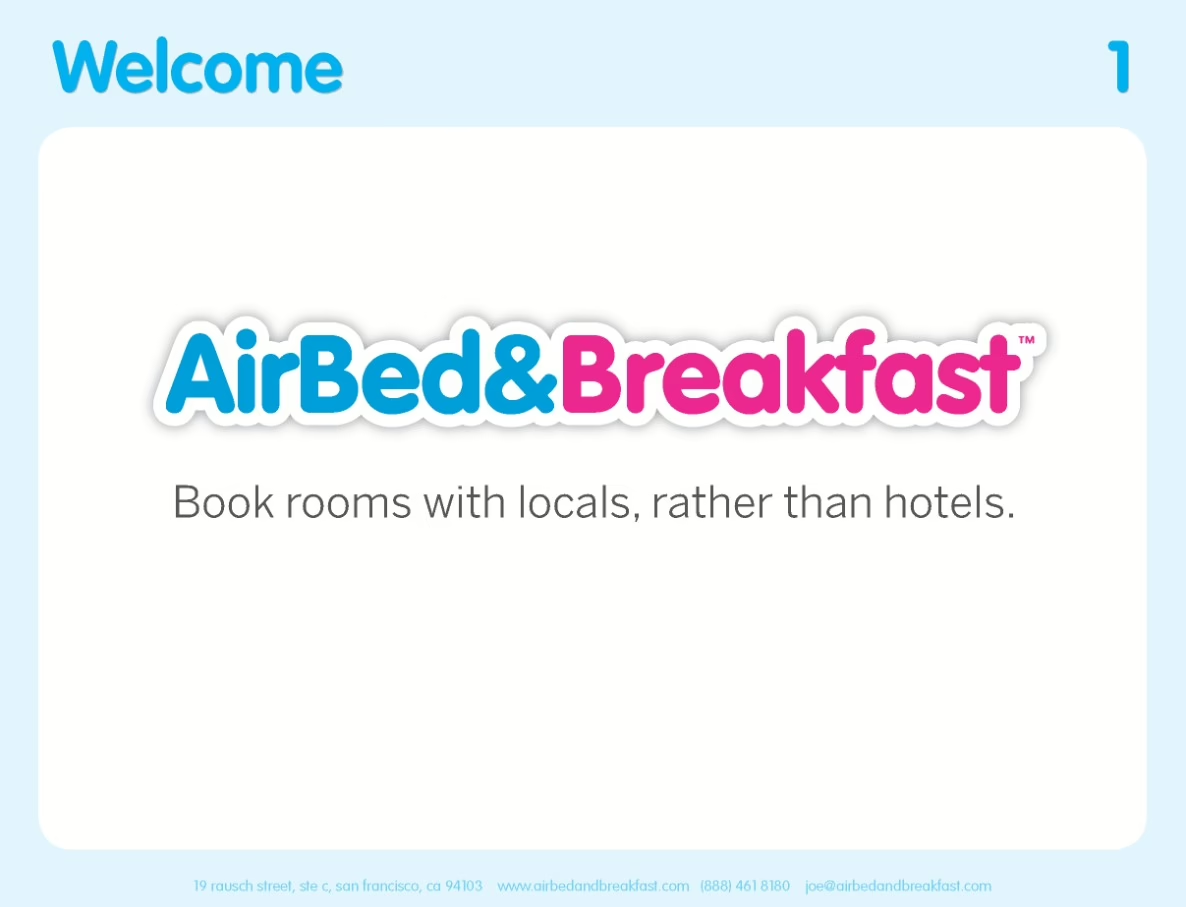
Airbnb’s Seed Deck
“Book rooms with locals, rather than hotels.”
In just one sentence, Airbnb reframes an entire industry. It’s a great first sentence because it:
Introduces a clear alternative worldview.
Shows the product’s function and benefit in the same breath.
Implies a social movement: connection over corporatism.
This opening line also answers a core investor question: “What do you actually do?” By starting with the solution—not the tech or business model—they focused on the reader’s context, not internal features.
The sentence works because it is direct, relatable, and framed for action. It lets the reader know exactly how this idea is different and better. It’s a masterclass in how to write a first sentence that sells.
“Call Me Ishmael” and Literary Genius
“Call me Ishmael.” — Moby-Dick by Herman Melville
This is arguably the most iconic first sentence of a book in literary history. Why? Because it’s abrupt, enigmatic, and instantly intimate. The reader isn’t just told a story—they’re invited into one.
Here’s what makes it timeless:
It establishes voice and mystery in just three words.
It creates a reader-writer contract: you’re being let into something personal.
It sets the tone for the entire first page and beyond.
The sentence is also an archetype of minimalism. It’s a favorite first for generations of writers and creatives who understand that a simple line can hold deep narrative gravity. In the context of business, the lesson is clear: if you can spark curiosity in just a few words, the reader into the story is emotionally committed—and more likely to keep reading.
The 12 slide pitch deck framework that got my clients $500m in funding.
I’ve developed 12 simple formulas that will save 40 hours of your time and show you how to craft content that makes investors invest.
Start using these formulas by downloading my detailed framework through the link below. Promo price available for the first 40 buyers. Few downloads remaining.
The Science of Engagement: Metrics that Matter
What the Data Shows
Crafting a great first sentence isn’t just an art—it’s increasingly a science. As digital attention spans shrink and pitch decks compete in inboxes, headlines and first paragraphs become critical leverage points. But does optimizing the first sentence really move the needle?
Yes—and here’s the data to prove it:
23% higher average view time was recorded in pitch decks that opened with a clear, benefit-led sentence, according to DocSend. This means the first page—specifically the first sentence—can determine whether a reader even gets to the second sentence.
Bounce rates drop by 18% when the opening sentence elicits emotional response (curiosity, surprise, empathy) versus neutral, data-heavy intros. In other words, a perfect first sentence should make the reader feel before it makes them think.
Top-performing sentences—as measured by NLP tools—show high scores in perplexity (unpredictability) and burstiness (variation in sentence length and rhythm). This aligns with what makes readers keep reading a story: they’re hooked by pacing, tension, and voice.
Why does this matter? Because a well-optimized first sentence becomes the trigger that initiates deeper engagement. Without it, even the best product slides or financials may never be seen. The importance of the first sentence lies not just in its words, but in its behavioral impact.
Tools and Tests
Writing a great first sentence starts with creativity—but it ends with testing. You don’t have to guess whether your opening paragraph is working; you can measure it.
Readability & Flow Tools
Hemingway App: Grades the readability of your first sentence and second sentence, helping you tighten language and avoid passive voice.
Grammarly: Offers clarity and engagement scores—ideal for refining sentence tone and punch.
SurferSEO: Analyzes keyword density and semantic relevance, ensuring your sentence aligns with user intent and search algorithms.
NLP & Behavioral Analysis Tools
ChatGPT and Claude AI: Evaluate sentence perplexity and burstiness to mimic high-performing narrative styles.
Copy.ai or Jarvis (Jasper): A/B test different variations of your first sentence to see which format performs best for specific audiences.
The Ultimate Test? Human Reaction
After the tools comes the real-world gauntlet. Read this sentence to an investor. Pitch it to a startup founder. Say it to your Uber driver. If they lean in—or ask a follow-up question—you’re onto something. If they nod and change the subject? Back to the whiteboard.
The best signal of a great first sentence is simple: does it make people want to hear the story that’s going to follow?
You might like: Best AI Pitch Deck Tools
Crafting Your First Sentence: A Practical Formula
Every powerful pitch, story, or brand message begins with a single moment: the first sentence. Yet too many creators treat it like an afterthought. Don’t. Your opening sentence is the bridge between obscurity and interest, between skimmed content and a reader who leans in.
To help you write a great first sentence that resonates, converts, and sets the story going, I’ve developed a proprietary four-step method, used across hundreds of high-performing pitch decks.
The Pitcherman’s First Sentence Formula
Whether you’re writing the first paragraph of a startup deck or crafting the perfect first sentence for a blog or brand, follow this framework:
1. Start with the Enemy
Who or what is the problem?
Every compelling narrative begins with tension. Just like the first page of a novel, your opening line should signal a conflict or barrier. Don’t be vague—name the villain.
Weak: “We help people live better.”
Strong: “Medical debt is the #1 reason Americans file for bankruptcy.”
This first move positions your message as a solution story, not a feature dump. It gives your first sentence teeth.

2. Agitate the Impact
Why should we care now?
It’s not enough to name the problem—you need to make the pain felt. Use urgency, scale, or data to highlight the stakes. This is where the sentence is also a motivator.
“Every 11 minutes, someone dies waiting for an organ transplant.”
This makes the reader know why this matters. You’re not just describing a scenario; you’re framing a crisis.
3. Introduce the Vision
What better future do you offer?
Now that the problem is real and visceral, unveil the change you’re here to make. But keep it succinct. The first sentence becomes a doorway into possibility.
“We’ve built the tech to change that.”
In just one sentence, you’ve moved from threat to hope—an emotional swing that makes people want to hear the rest of the story going forward.
4. Hook Emotionally
Use metaphor, contrast, or curiosity.
To truly write a great first sentence, you must stir emotion. Tap into the psychology of storytelling—use vivid language, shock, or a moral twist.
Example with metaphor: “Organ matching today is like playing roulette with lives—we turned it into chess.”
Your great first sentence should be memorable. It should live in the back of someone’s mind, like the first line of a beloved novel or the first paragraph of a speech that moves nations.
Example in Action:
“Every 11 minutes, someone dies waiting for an organ transplant—we’ve built the tech to change that.”
Let’s break it down:
Enemy: long wait times and system inefficiency.
Impact: someone dies every 11 minutes—real urgency.
Vision: there’s now a solution.
Emotion: loss and hope delivered in a single, emotional stroke.
Common Mistakes to Avoid
Crafting a great first sentence is as much about what you don’t say as what you do. Even the most promising startup idea or innovative solution can get buried beneath a first paragraph that falls flat.
These common pitfalls can drain the power from your first page, confuse your message, and stop the story from going anywhere. Let’s break them down:
Don’t Start with Jargon
Nothing says “skip this deck” faster than a string of industry buzzwords. Your first sentence should invite the reader in—not require a glossary.
“Blockchain-enabled decentralized finance platform revolutionizing liquidity protocols…”
This is a classic case of burying clarity beneath complexity. It might sound impressive, but it lacks emotional resonance and immediate meaning.
Better: “We help freelancers get paid instantly—with no middlemen or banks.”
This version uses conversational language and focuses on a real-world benefit, which is key to writing a great first sentence that sticks.
Remember: if your reader doesn’t understand your first few words, they won’t care about the next hundred.
Avoid Passive Voice
Your perfect first sentence should feel alive—assertive, active, and clear. Passive voice often weakens the impact and slows the reader’s momentum.
“Our solution was developed to serve users.”
This sentence is vague, generic, and lacks a compelling subject. It feels like it was written by committee.
“We help creators earn without platforms taking a cut.”
This version has a clear actor (“we”), a specific audience (“creators”), and a tangible benefit. It’s how you write a first sentence that gets to the point and keeps the story going.
Don’t Hide the Lead
The importance of the first sentence lies in its ability to immediately make the reader care. If you bury the good stuff, your audience may never see it.
Avoid meandering build-up or abstract intros. Get to the hook.
“Our team has spent years developing a solution based on extensive research…”
By the time the reader finishes this sentence, they’ve already mentally checked out.
“We cut warehouse costs by 62%—with software any manager can use in 10 minutes.”
Now that’s a first sentence that gets attention. It sparks interest, builds credibility, and makes the reader want to turn the first page.
Bottom Line: If the reader doesn’t feel something—curiosity, urgency, alignment—or want something after your opening, the first paragraph has failed.
You might like:
Your First Sentence Is Your First Impression
In today’s attention-deficient world, crafting a great first sentence is not optional—it’s your access pass to relevance, resonance, and results. Whether you’re building a pitch deck, a landing page, or a first page of a book, the importance of the first sentence lies in its ability to serve three vital functions:
Hook the reader before distractions take over.
Frame expectations for what the reader should feel, learn, or believe.
Set the emotional tone and narrative rhythm for the entire experience.
Think of your first sentence as your startup’s handshake. Your brand’s “Hello, this matters.” If that first paragraph feels vague, robotic, or cold, your reader may never stay long enough to see how amazing your product or pitch actually is.
When executed well, a great first sentence is a story in miniature—one that contains tension, urgency, and a path forward. It’s the spark that sets the entire story going, guiding your audience not just to listen, but to care.
So, whether you’re writing a first sentence to attract investors, introduce a new market insight, or invite users into a vision, remember this truth:
Hook hard, or risk losing the room.
Book a 30-minute diagnostic session to test your current deck’s opening line, rework your narrative flow, and make sure your first impression is unforgettable.
Slide by Slide Guides







Viktori. Pitching your way to your next funding.
Locations
Office 1: 633 North Wells Street Chicago, IL, United States, 60654
HQ: Boulevard P.O. 10000 Skopje, North Macedonia
Pitch Deck Resources
Case Studies
Client Reviews