


Choosing between a pitch deck vs pitchbook matters because each format reflects a different evaluation environment. One is built for fast pattern recognition (people scanning for the “shape” of a story). The other is built for documentation (people checking assumptions, numbers, and deal logic).
A pitch deck is a short, story-driven investor presentation—a visual presentation where every slide carries one clear idea.
A pitch book / pitchbook is a longer, evidence-heavy document (often associated with an investment bank) that behaves more like a transaction memo with charts, tables, exhibits, and detailed financial data.
When people confuse the two, they usually don’t “lose attention” — they trigger the wrong reading mode. This is the same dynamic that shows up in the fundraising process, where the material has to match the stage and the audience’s patience budget.
This outline is for founders, bankers, investors, and advisors who need the right tool for the right objective—without turning a clean conversation into a 70-page PDF hostage situation.
What is a pitch deck?
A pitch deck is a concise slide narrative (PowerPoint or PDF) used to communicate the key points of a startup pitch: what it is, why now, why it matters, why the team can execute, and what the ask is.
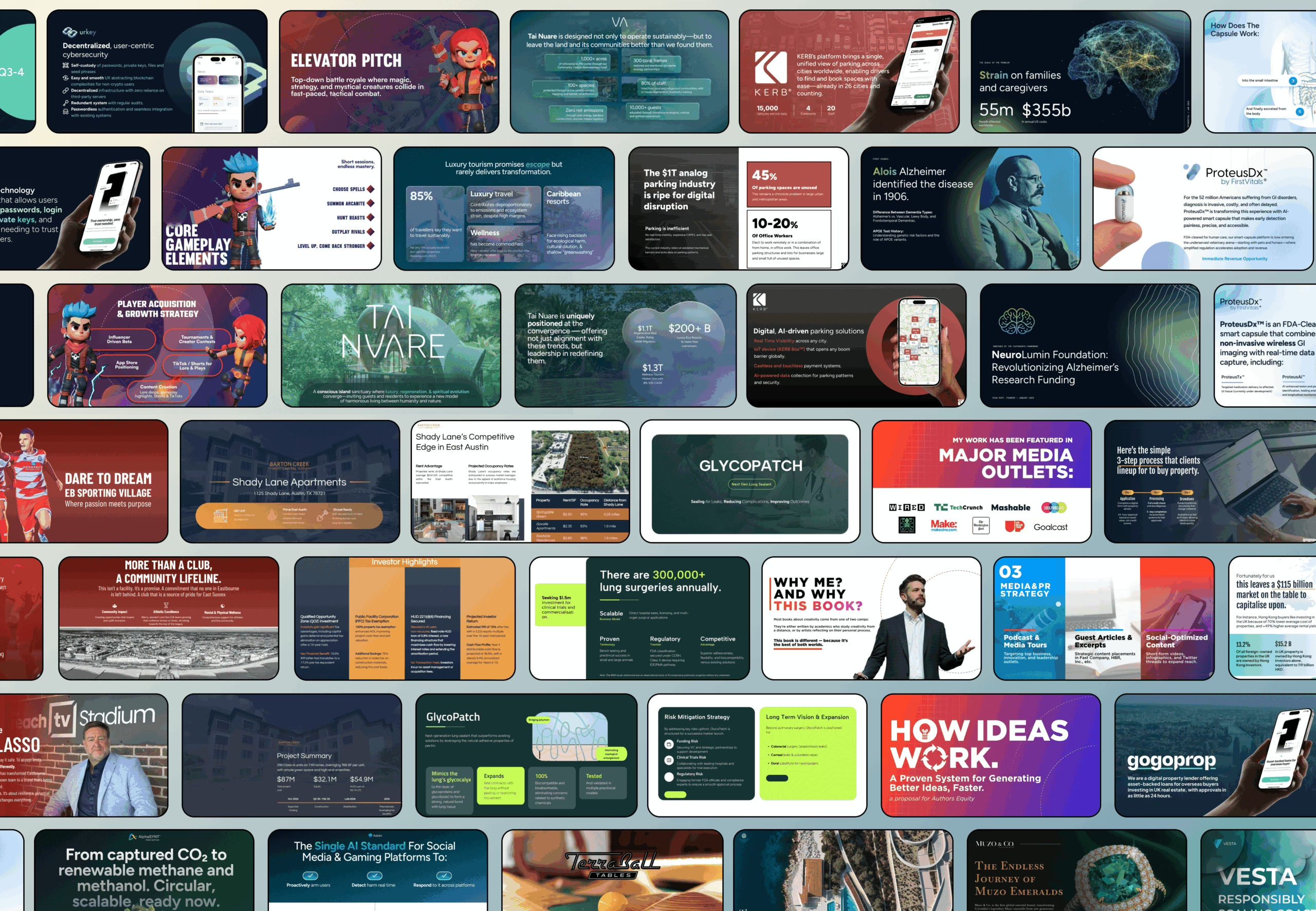
This format aligns with “summary-first” reading, which is why “short vs long” expectations show up as a recurring pattern in short vs long pitch deck discussions.
What is a pitchbook?
A pitch book (pitchbook) is a heavier document used in transaction contexts—M&A, strategic alternatives, structured raises—where a reader expects supporting evidence: comps, valuation framing, analysis, and exhibits. This is also why “what is this person’s job?” questions show up around the role of an advisor in what a pitch deck expert is—because the deliverable changes with the evaluation environment.
High-level comparison (pitch deck vs pitch book)
| Dimension | Pitch deck | Pitch book / pitchbook |
|---|---|---|
| Format | Slides, visual narrative | Document-like deck with exhibits |
| Typical length | 10–20 slides | 20–100+ pages (sometimes more) |
| Detail level | Summary + signals | Full context + supporting proof |
| Primary users | Founders, startups, investors | Investment bankers, corp dev, PE firms |
| Main job | Establish understanding + interest | Support transaction logic + diligence |
This difference becomes very obvious when the environment is banking-led, where the expectations “show up as” stricter documentation and process tone in the banking pitch deck guide.
When to use a pitch deck
A pitch deck fits moments where the goal is fast comprehension and a next-step conversation: demo days, first meetings, and typical investor intros. The deck is doing triage—so headline clarity matters because it’s the first filter, a dynamic that shows up in pitch deck headlines that hook.
When to use a pitchbook
A pitchbook fits transaction moments where the goal is documented reasoning: sell-side and buy-side processes, M&A outreach, platform roll-ups, refinancing, or situations involving multiple stakeholders and formal approval steps. In these settings, persuasion language tends to backfire, which is why “persuasion” is treated as an environment-driven response pattern in persuasion in pitch decks rather than a tactics menu.
Overlap and hybrid scenarios
Hybrids show up when a startup is late-stage, operating like an established business, or running a process with multiple bidders/strategics. The common flow is: deck for initial classification → pitchbook depth once diligence begins. That transition often becomes visible first in financial expectations, which “show up as” different disclosure depth in presenting financials in a pitch deck.
Audiences and Stakeholders
Investors (angels, VCs) and their expectations
Most investors start with pattern matching: “What is it? Why now? What proof exists?” They expect signal density without needless bulk—exactly why the “one-page mental model” shows up as a stable preference in the one-pager pitch deck conversation.
Investment bankers and advisors
Bankers operate inside process-heavy environments. Materials have to survive internal review, client review, and counterparty scrutiny—so pitchbooks lean on consistent framing, charts, and exhibits (and less on vibes).

Corporate development, acquirers, and strategic partners
Corp dev sits between VC scanning and banker documentation. They may start with a deck, but they quickly look for rationale and risk. Competitive framing becomes a reading trigger here, which is why this audience reacts strongly to how “alternatives” are positioned—something that maps cleanly to competitive analysis for startups as a pattern, not a checklist.
Internal stakeholders (board, executive team)
Boards and exec teams often need both: a deck for alignment and a pitchbook-like pack when decisions require formal backup. The more irreversible the decision, the more they seek documented detail.
Essential sections of a pitch deck
A pitch deck typically expresses:
- Problem (or context tension)
- Solution / product
- Market
- Traction / proof
- Business model
- Go-to-market
- Team
- Ask / next step
The emphasis is coherence and signal density. Even at this level, certain slides behave like “pressure valves” for skepticism—like the value proposition—so this dynamic “shows up as” focused framing in the value proposition slide.
Essential sections of a pitchbook
A pitchbook typically expresses:
- Transaction overview (what’s proposed and why)
- Market framing (comps, insights)
- Company analysis
- Valuation discussion (ranges, methods)
- Financials (historical + projections, often deeper assumptions)
- Deal rationale (fit, synergies, risk mitigation)
- Appendices (exhibits, definitions, assumptions, confidentiality/legal)
This format exists because the reader expects to test logic—not just understand it.
Depth of financials: summary vs detailed models
Decks summarize the shape (growth, unit economics, key drivers). Pitchbooks support the underlying assumptions and sensitivity. When teams try to force pitchbook depth into a deck, it usually “shows up as” diluted clarity—one of the recurring failure modes in content mistakes in pitch decks.

Data sources, exhibits, and appendices
Pitchbooks rely on exhibits because they’re designed to be forwarded and re-read. Decks can include an appendix, but when it becomes the main event, the format stops behaving like a pitch deck—more like a document trying to cosplay as one. If you want a clean “constraint signal” for what belongs where, it “shows up as” rules-of-thumb like the 10/20/30 rule being referenced so often.
Design and Presentation
Design principles for pitch decks (clarity, storytelling, visuals, slide count)
Pitch decks are judged on read-speed. The design has to support a reader who’s skimming, scanning, and trying to “get it” before their next meeting starts. This dynamic shows up as aggressive simplification (one idea per slide, obvious hierarchy) and a deliberate use of visual variety so attention doesn’t decay mid-deck—something that’s easy to see in how diverse visuals are used in pitch decks when the goal is comprehension under time pressure.
Storytelling in decks isn’t “movie script” storytelling—it’s evaluation storytelling: sequence, tension, and resolution that still respects evidence. That relationship between story and structure is typically expressed through repeatable narrative frameworks like the ones mapped in storytelling frameworks and audience-safe narrative arcs such as the Hero’s Journey in pitching (useful as a lens, not a costume).
Design principles for pitchbooks (professional layout, charts/tables, appendices)
Pitchbooks are judged on trust density. The visual system needs to behave like documentation: consistent grids, conservative typography, chart hygiene, and a layout that supports re-reading. Charts and tables aren’t “decoration,” they’re the container for reasoning—so the document’s professionalism shows up as rhythm and consistency rather than visual flair.
Branding, tone, and visual consistency
Deck branding tends to prioritize memorability without looking like a festival poster. Pitchbooks prioritize neutrality (so the content feels like the authority, not the designer). This is where design psychology quietly matters: the same reader reacts differently to typography choices and color signals depending on whether they’re in “first pass” or “verification” mode—something that’s easy to frame through font psychology in pitch decks and pitch deck color psychology when you’re thinking about what the format is supposed to communicate.
Length, Format, and File Types
Typical length: pitch deck (10–20 slides) vs pitchbook (20–100+ pages)
The length difference isn’t just “more pages.” It reflects different approval mechanics. A pitch deck stays short because it’s meant to trigger a next step. A pitchbook grows because it’s meant to survive internal circulation, multiple reviewers, and detailed cross-checking.
Preferred file types (PDF, PowerPoint) and print vs digital considerations
Decks often live as PowerPoint during iteration and as PDF when shared externally. Pitchbooks commonly ship as PDF because pagination, layout, and exhibits matter more than editability. The “what file do we send?” question is basically a proxy for “how much rework do we expect?”—a reality that shows up when teams start thinking about tooling ecosystems and workflow, like what’s covered in tools used for creating pitch decks.
Preparation Process and Best Practices
Research and data collection
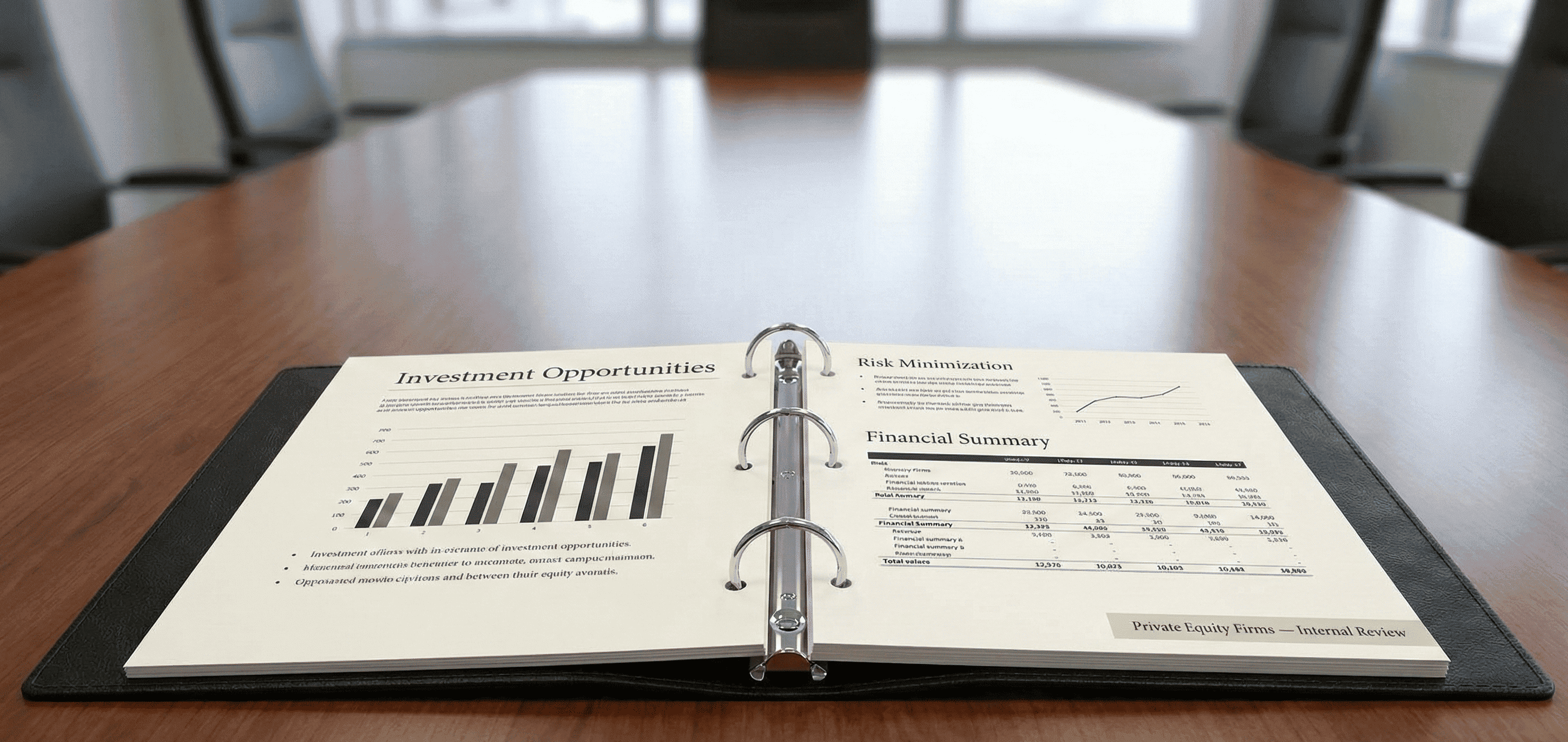
Deck research is about choosing the right few data points to signal credibility. Pitchbook research is about capturing the full context needed for a transaction narrative: market data, comps, assumptions, and the “why this deal exists” logic.
Tailoring content to the audience
Pitch decks shift based on who’s reading—some investors want product clarity first, others want traction first, others want risk framing first. That tailoring pressure shows up as format decisions (what gets surfaced early vs pushed later), which is typically expressed through audience adaptation like tailoring a pitch deck for different investors rather than rewriting the entire story every time.
Review, legal checks, and confidentiality
Pitchbooks usually trigger more formal review cycles because they’re closer to transaction messaging and can include sensitive disclosures. Even decks can require caution once they contain specifics (customer names, pricing, contracts, technical details). The “what can we safely show?” problem tends to show up earlier for technical teams, which is why reading patterns around omission vs disclosure are visible in pitch deck mistakes technical founders make.
Rehearsal and Q&A preparation
Deck rehearsal is about delivery and sequencing: whether the audience follows your logic in real time. Pitchbook rehearsal is often about anticipating objections to assumptions: “why this comp set,” “why this multiple,” “why these projections.” That difference shows up as two different Q&A styles: narrative questions vs diligence questions.
Pros and Cons
Advantages of pitch decks (concise, persuasive, quick to update)
Pitch decks are fast to consume and fast to iterate. Their strength is clarity under time pressure, especially when the slide system is built to reduce cognitive load—something that’s typically expressed through ruthless trimming and framing choices like the ones discussed in the art of simplification.
Limitations of pitch decks (limited detail, surface-level due diligence)
They can’t carry deep diligence without turning into a bloated document. Overloading a deck tends to dilute signal and create scanning fatigue.
Advantages of pitchbooks (comprehensive, credibility, transaction-ready)
Pitchbooks support credibility because they behave like documentation. They’re also easier to circulate internally because the reasoning is embedded in exhibits and supporting pages.
Limitations of pitchbooks (time-consuming, heavy to digest)
They take longer to build, longer to read, and longer to align internally. They also create a higher “commitment signal” when shared—people assume you’re already in a serious process.
Examples and Templates
Sample pitch deck outline and slide-by-slide guide
A deck’s “example” isn’t best expressed as a static template—it’s best expressed as a repeatable slide logic. You can see that slide logic show up in the way single slides are framed as evaluation containers, like the go-to-market slide or the elevator pitch slide (each is a compact unit designed for fast interpretation).
Sample pitchbook table of contents and key exhibits
Pitchbooks typically express a table-of-contents rhythm that mirrors a deal process: overview → market → company → valuation → financials → risks → appendices/exhibits. The “key exhibits” are usually comps, valuation ranges, cohort/segmentation charts, and financial tables that let readers test assumptions.

When to convert one into the other and how
The conversion usually happens when the reader’s behavior changes. If the questions shift from “what is it?” to “prove it,” you move from deck logic to pitchbook logic. That change often shows up as deeper scrutiny around business model math—especially revenue quality—which is why issues become visible through patterns like those described in revenue mistakes in pitch decks once investors start stress-testing the story.
FAQ: Pitch Deck vs Pitchbook
What is the difference between a pitch deck and a pitch book?
The key difference between a pitch deck and a pitch book (pitchbook) is how and why they are read.
A pitch deck is a visual way to communicate business ideas quickly to potential investors—it’s designed to spark investor interest, explain the unique value proposition, and move the conversation forward. A pitch book, by contrast, is built to document logic, support a deal pitch, and enable risk minimization through data, analysis, and exhibits.
In short: a pitch deck helps you make a pitch; a pitchbook helps others verify it. Knowing the difference is critical when choosing the right format.
Is a pitch deck the same as a pitch?
No—and this is a common source of confusion.
A pitch is the act of presenting: spoken, in-person or virtual, often adaptive in real time. A pitch deck is the supporting investor presentation—the artifact that structures the conversation. You can pitch without a deck, but you can’t send a pitch without one.
This distinction matters when founders try to “overload” decks with everything they might say aloud. A pitch deck and a pitch serve different purposes, even though they work together.
Can a startup use a pitchbook?
Yes—but only in specific situations.
For early-stage startups, a pitchbook is usually overkill. Most early-stage fundraising is about testing investment opportunities, market position, and team credibility—jobs better handled by a pitch deck (often ~10 slides).
A startup might use a pitchbook when:
- Engaged in a merger or acquisition discussion
- Running a structured, late-stage process
- Working with investment banks or private equity firms
- Speaking to senior bankers or strategic acquirers
In these cases, pitch books and pitch decks may coexist, with the deck opening doors and the pitchbook supporting diligence.
What is an investment banking pitch book?
An investment banking pitch book is a specific type of pitchbook used by investment banks to advise current and potential clients. It typically includes:
- Market insights and industry analysis
- Comparable companies and transactions
- Valuation frameworks
- Deal rationale and strategic options
- Financial tables, charts, and graphs
These documents are built for senior bankers, corporate boards, and decision-makers evaluating potential targets or market opportunities—not for general investor outreach.
How detailed should financials be in a pitch deck vs a pitchbook?
In a pitch deck, financials summarize the story: growth, margins, unit economics, and key drivers—enough to show direction and credibility.
In a pitchbook, financials are detailed: assumptions, scenarios, sensitivities, historicals, projections, and supporting data and insights.
If you’re trying to explain why the business works → deck.
If you’re trying to prove how the numbers hold up → pitchbook.
Who is each format meant for: investors or banks?
Both—but in different ways.
- Pitch decks are built for right investors: angels, VCs, strategic partners, and anyone scanning for fit, vision, and upside.
- Pitchbooks are built for investment banks, private equity firms, corp dev teams, and committees evaluating transactions, acquisitions, or structured deals.
This is why pitchbook vs pitch deck isn’t about quality—it’s about audience behavior and expectations.
Can one document serve as both a pitch deck and a pitchbook?
Rarely, and usually badly.
Trying to combine them often results in a document that’s too dense for a deck and too shallow for a pitchbook. Powerful tools work because they respect constraints.
A better approach:
- Start with a pitch deck to promote a business and test interest
- Expand into a pitchbook once the process becomes formal
This staged approach helps founders effectively communicate without overwhelming the reader.
How do I choose the right tool: pitch deck or pitchbook?
Ask three questions:
- Who am I presenting to—potential investors, senior bankers, or internal decision-makers?
- What’s the objective—spark interest or support a deal decision?
- What stage am I at—general pitch or transaction process?
Answering these clarifies whether you need a pitch deck, a pitch book, or both. Choosing the right format is less about preference and more about understanding pitch context.
Are pitch decks and pitchbooks used differently in-person vs virtual?
Yes.
Pitch decks perform best in in-person or virtual meetings where the presenter controls pacing and narration. Pitchbooks are designed to be read asynchronously, forwarded internally, and revisited multiple times.
This is why pitchbooks lean on structure, while decks lean on flow.
Why does knowing the difference matter so much?
Because mixing formats creates friction.
When founders send pitchbooks to early investors, they slow momentum. When they send lightweight decks into banking or M&A contexts, they lose credibility.
Knowing the difference between a pitch deck and a pitchbook helps founders:
- Serve different purposes with the right tool
- Match expectations of investors vs institutions
- Increase chances of engaging the right investors
- Avoid undermining strong business concepts with the wrong format
In short: pitch decks and pitch books are different types of pitch tools, and understanding that difference is a quiet advantage most people overlook.
