


This guide explains how to structure, assemble, and present a TV show pitch deck.
It is not a guide on how decisions are made, how funding is approved, or what networks “look for.” It focuses purely on mechanics: what goes into a deck, how those elements are arranged, and how to present them clearly and coherently.
If you are developing a scripted series, reality format, documentary, or animation project and need a practical reference for building a pitch presentation, this page walks through the standard structure used in most TV development conversations.
For the upstream context that shapes how projects are typically reviewed at a brand and concept level, see Hub 2: Consumer Brand Capital Framework.
What is a TV Show Pitch Deck?
A TV show pitch deck is a structured presentation that outlines the core components of a television project in a visual, reviewable format.
It is used to communicate:
- the concept and format of the show
- the narrative engine and character structure
- the intended tone and visual direction
- the scope of the season or series
- and, where relevant, production and budget considerations
The pitch deck is not a script and not a business plan. It is a summary artifact designed to support development, discussion, and evaluation.
In practical terms, it allows other parties to understand the project without having to infer or imagine critical elements.
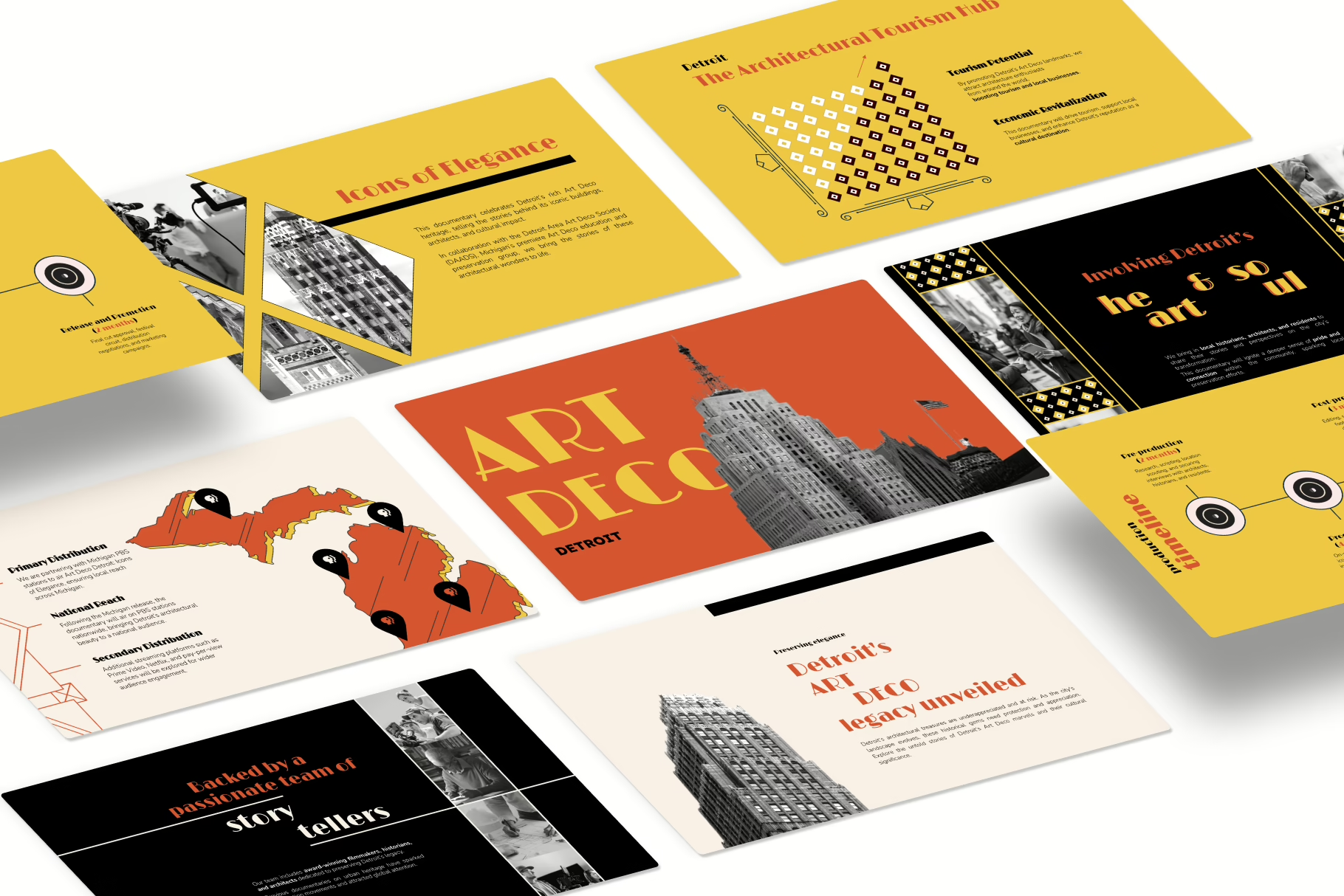
Why a TV Show Pitch Deck Matters
In TV development, most early conversations happen before scripts are commissioned, budgets are finalized, or talent is attached. At that stage, the pitch deck is the primary reference document.
A well-structured deck serves three functional purposes:
1. It standardizes the concept
By placing the premise, format, characters, and season shape into a fixed structure, the deck prevents misinterpretation. Everyone is reacting to the same version of the idea.
2. It makes the project reviewable
Without a deck, feedback becomes abstract. With a deck, reviewers can comment on:
- tone
- structure
- character dynamics
- scope
- and coherence
This is not about “selling” — it is about making the project legible.
3. It supports development continuity
As a project evolves, the pitch deck becomes a reference point. It helps align writers, producers, partners, and stakeholders around the same creative direction.
In short:
a pitch deck does not create demand — it creates clarity.
And clarity is what allows any further conversation to happen.
How to Build a TV Show Pitch Deck (Step-by-Step – With Real Hub 4 Links)
This is the execution sequence for assembling a TV show pitch deck. Each step includes anchored keywords you can link and the exact verified URLs from your doc.
Step 1: Lock the Core Concept
Before slides, define:
- your one-sentence premise
- your format
- your episode engine
This prevents structural rewrites later.
Step 2: Decide Deck Length and Density
Choose:
- short deck (10–12 slides)
- long deck (15–20+ slides)
This controls pacing, text density, and visual hierarchy.
Step 3: Build the Slide Skeleton (No Copy Yet)
Create placeholders only:
Title, Overview, Concept, Tone, World, Characters, Season, Engine, Visuals, Scope, Financials, Next Steps.
This avoids layout chaos.
Step 4: Write the Title + Hook Slide
Add:
- show title
- one-line hook
- 1–2 sentence description
No lore. No backstory.
Step 5: Write the Series Overview Slide
Define:
- genre
- format
- narrative scope
Classification, not persuasion.
Step 6: Define the World / Setting
Explain:
- where it takes place
- why it’s usable episodically
- how it supports the engine
Step 7: Build the Character Slides
Cover:
- protagonist
- key supports
- antagonistic force (if any)
Focus on function, not biography.
Step 8: Write the Season Overview
Show:
- where the season starts
- where it ends
- what changes
Trajectory, not episode summaries.
- the art of simplification
→ https://viktori.co/the-art-of-simplification/ Hub 4 tv show pitch deck guide
Step 9: Define the Episode Engine
Explain:
- what repeats
- what escalates
- what resets
This is the series machine.
Step 10: Add the Visual Style Slide
Use:
- mood boards
- stills
- color direction
- tone references
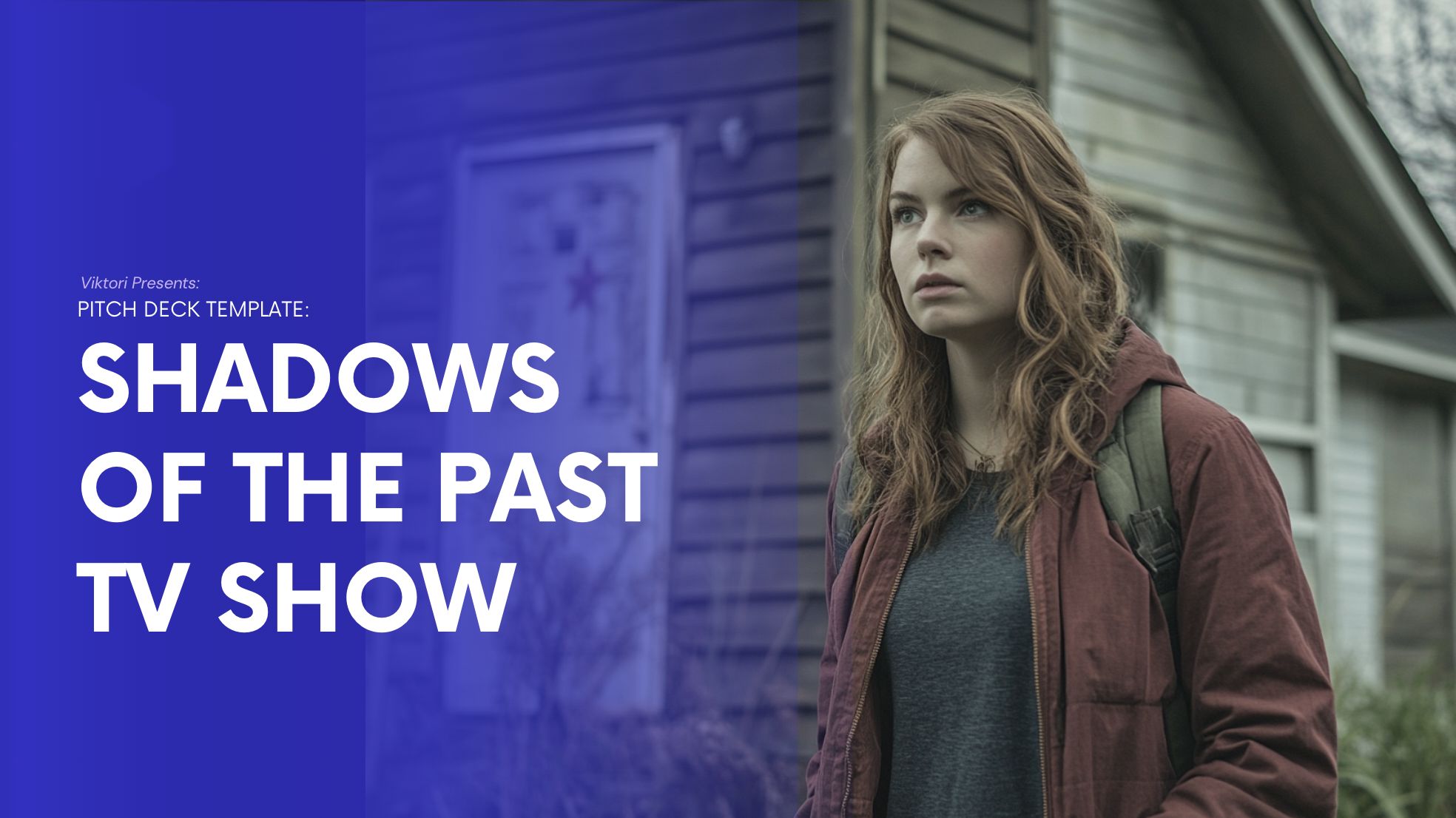
Let images do the work.
Step 11: Add the Production Scope Slide
Define:
- live-action vs animation
- contained vs large-scale
- location approach
Scope signaling, not budgeting.
Step 12: Add Financials (If Applicable)
Present:
- high-level costs
- basic revenue logic
- no spreadsheets on slides
Step 13: Add the Next Steps Slide
Clarify:
- current stage
- what’s being sought
- what happens next
No pressure language.
Step 14: Apply Layout and Readability Rules
Check:
- one idea per slide
- no dense paragraphs
- consistent spacing
- clean hierarchy
- pitch deck layout mistakes
- pitch deck design mistakes
- visual design errors founders make in pitch decks
Step 15: Final Execution Review
Before sharing:
- can someone understand the show without you?
- does each slide answer one question?
- is anything decorative or indulgent?
- content mistakes in pitch decks (too much, too little, too vague)
- rookie storytelling mistakes in pitch decks
How to Adapt the Same Pitch Deck for Different Formats
(Scripted, Reality, Documentary, Animation)
A TV show pitch deck uses the same structural skeleton across formats, but the content weight and emphasis change depending on what you’re building.
The goal is not to redesign the deck.
The goal is to rebalance what each slide is doing.
Scripted (Drama / Comedy)
For scripted projects, the deck should prioritize:
- story engine
- character arcs
- tone consistency
If your problem/solution slides start reading like product features, recalibrate using:
problem–solution slide structure→ https://viktori.co/problem-solution-slides-tips/
Tone should be expressed through narrative framing rather than exposition. Use:
emotional storytelling for pitch decks
Reality / Unscripted
For reality formats, shift weight toward:
- format mechanics
- repeatable episode structure
- cast dynamics
Your engine must be obvious. If it isn’t, the deck feels like a one-off concept.
To stress momentum without hard metrics, use:
traction without metrics
Documentary
For documentary projects, the emphasis shifts to:
- subject access
- story relevance
- structural journey
Your market sizing and scope framing should stay tight. If TAM slides start bloating the deck, reference:
TAM SAM SOM breakdown
Animation
For animation, the visual system is part of the product.
Increase weight on:
- world rules
- visual consistency
- character design logic
If tone and visual intent drift apart, return to:
emotional storytelling for pitch decks
What to Include in a TV Show Pitch Deck Appendix (And What to Keep Out)
The appendix is for depth, not discovery.
Anything essential to understanding the show belongs in the main deck.
Anything that supports it belongs in the appendix.
What Belongs in the Appendix
- Extended character bios
- Episode breakdowns
- World maps / lore expansions
- Research notes
- Reference material
If your appendix starts to replace the deck, you likely need a summary artifact.
Use:
one-pager pitch deck
What Does Not Belong in the Appendix
- Core premise
- Format explanation
- Engine definition
- Tone framing
Those must remain in the main flow.
If you’re unsure how to package extra material cleanly, review:
tools for creating pitch decks
Common Structural Mistakes in TV Show Pitch Decks (And How to Fix Them)
These are execution failures, not creative ones.
Mistake 1: Feature Listing Instead of Structure
If slides read like bullet-point summaries with no narrative movement, the deck has no spine.
Fix: Rebuild the flow around progression, not description.
If this happens often in technical or concept-heavy projects, review:
pitch deck mistakes technical founders make
Mistake 2: Templated Feel
If the deck feels generic, the structure may be intact but the framing is weak.
Fix: Strip decorative language. Re-anchor slides to function.
Use: deck mistakes that make your pitch look templated
Mistake 3: Overloaded Slides
Multiple ideas per slide = no hierarchy.
Fix: One question, one slide.
This is execution hygiene, not style preference.
How to Update a Pitch Deck After Feedback
(Version Control for Creative Decks)
Feedback cycles often break decks because changes are layered, not integrated.
The rule is simple:
Every revision must preserve structure.
Step 1: Classify Feedback
Sort feedback into:
- structural (flow, order, logic)
- content (copy, detail)
- visual (design, tone)
Only structural feedback should change slide order.
Step 2: Version, Don’t Overwrite
Always duplicate before editing.
If you’re using AI to iterate, do it in controlled passes.
Reference:
best AI pitch deck tools
and
ChatGPT pitch deck workflows
Step 3: Revalidate the Spine
After changes, re-check:
- engine still visible
- tone still consistent
- season logic still clear
If any of these collapse, roll back.
Checklist: TV Show Pitch Deck Readiness Review
This is the final execution gate before sharing.
Structure
- Is the episode engine visible by slide 3–4?
- Is the season movement clear?
If not, re-check:
pitch deck mistakes by stage
Market & Scope
- Is TAM realistic and proportional?
- Is scope signaled, not explained?
Common failure patterns here:
TAM slide mistakes
revenue mistakes in pitch decks
