1. The ‘Data Vomit’ Slide
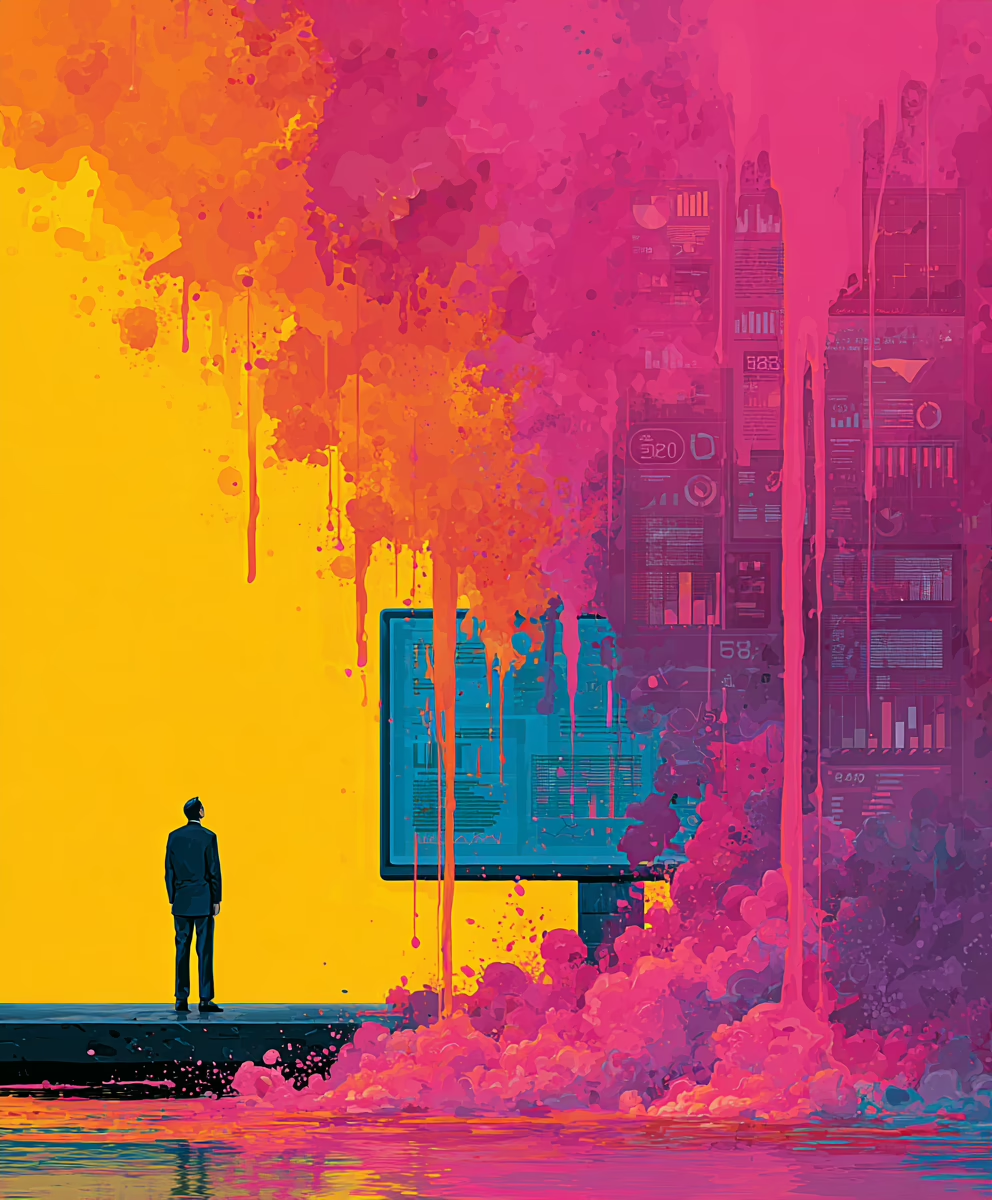
You’ve seen it: 12 charts, 3 tables, a jungle of font sizes. Founders think it looks “impressive.” Investors see chaos.
Why It Hurts:
- It overloads cognition. The brain freezes.
- It screams: “I don’t know what matters, so I dumped everything.”
Fix It:
- One idea per slide.
- Highlight the key metric with bold visuals and captions.
- Push all supporting data into an appendix.
Real Example:
One founder had 4 customer segments with CAC and LTV broken down per quarter in a grid. We ripped it down to a single bar chart: average CAC vs LTV across all segments, with a quote from their top client. Way stronger. And actually read.
2. The Font-Size Crime Scene
Fonts under 18pt belong in footnotes, not pitch decks. Investors are checking decks on their phones in Ubers—not dissecting academic PDFs.
Why It Hurts:
- Legibility = credibility.
- Small fonts kill your story before it begins.
Fix It:
- Minimum 24pt body, 36pt headers.
- Trim text. Aim for 5–7 words per bullet max.
- Think billboard, not brochure.
Real Fix:
One founder’s deck used 12pt text and had to be zoomed on every page. We bumped the font to 28pt, removed half the copy, and added icons. Result? Readable in 3 seconds. Memorable in 10.
3. The Broken Story Arc
You can have a unicorn idea and still lose investors if your narrative is scattered. Your pitch is a story, not a scavenger hunt.
Why It Hurts:
- Investors lose context. No context = no conviction.
- It creates confusion. Confusion does not convert.
Fix It:
Use the 5-beat structure:
Problem
Market Opportunity
Your Solution
Evidence (Traction, Team, Financials)
Ask & Vision
Pro Tip:
Label your slides accordingly—this gives investors mental waypoints as they move through your deck.
4. The Visual Desert
Text. More text. Maybe a stock photo if you’re lucky. If your slides look like wordy LinkedIn posts, you’re doing it wrong.
Why It Hurts:
- The human brain processes images 60,000x faster than text.
- Slides without visuals are forgettable.
Fix It:
Every slide should have 1 compelling visual:
- Product mockup
- Customer testimonial quote
- Graph or KPI chart
Don’t describe—show.
Example:
SaaS founder had 3 slides explaining onboarding flow. We replaced it with one animated GIF showing the actual UX + a stat: “Avg. setup time: 38s.” Nailed it.
5. The Consistency Meltdown
Helvetica on one slide. Arial on the next. Random color swaps. Layouts that look like five people built them. It’s not quirky—it’s messy.
Why It Hurts:
- Makes your brand feel unreliable.
- Sends a subliminal signal: “We don’t have our sht together.”*
Fix It:
Use a master slide template.
Lock in:
1 headline font + 1 body font
- 2-4 brand colors
- 1 layout grid
Visual Tip:
Anchor every slide with the same spacing, logo placement, and type hierarchy. Predictability = professionalism.
6. The “Investor Pitch Deck Soup” Slide
A slide that tries to be the business model, go-to-market, and traction slides all at once. You know the one. It’s a Frankenstein of arrows, icons, and vague headlines.
Why It Hurts:
- Cramming = clutter.
- Muddies key ideas instead of clarifying them.
Fix It:
Break it into modular slides.
- Slide 1: What’s your revenue model?
- Slide 2: How will you acquire customers?
- Slide 3: Proof it’s working.
Framework:
Think 1 slide = 1 conversation. If your slide tries to explain 3 things, it’s trying to be 3 slides.
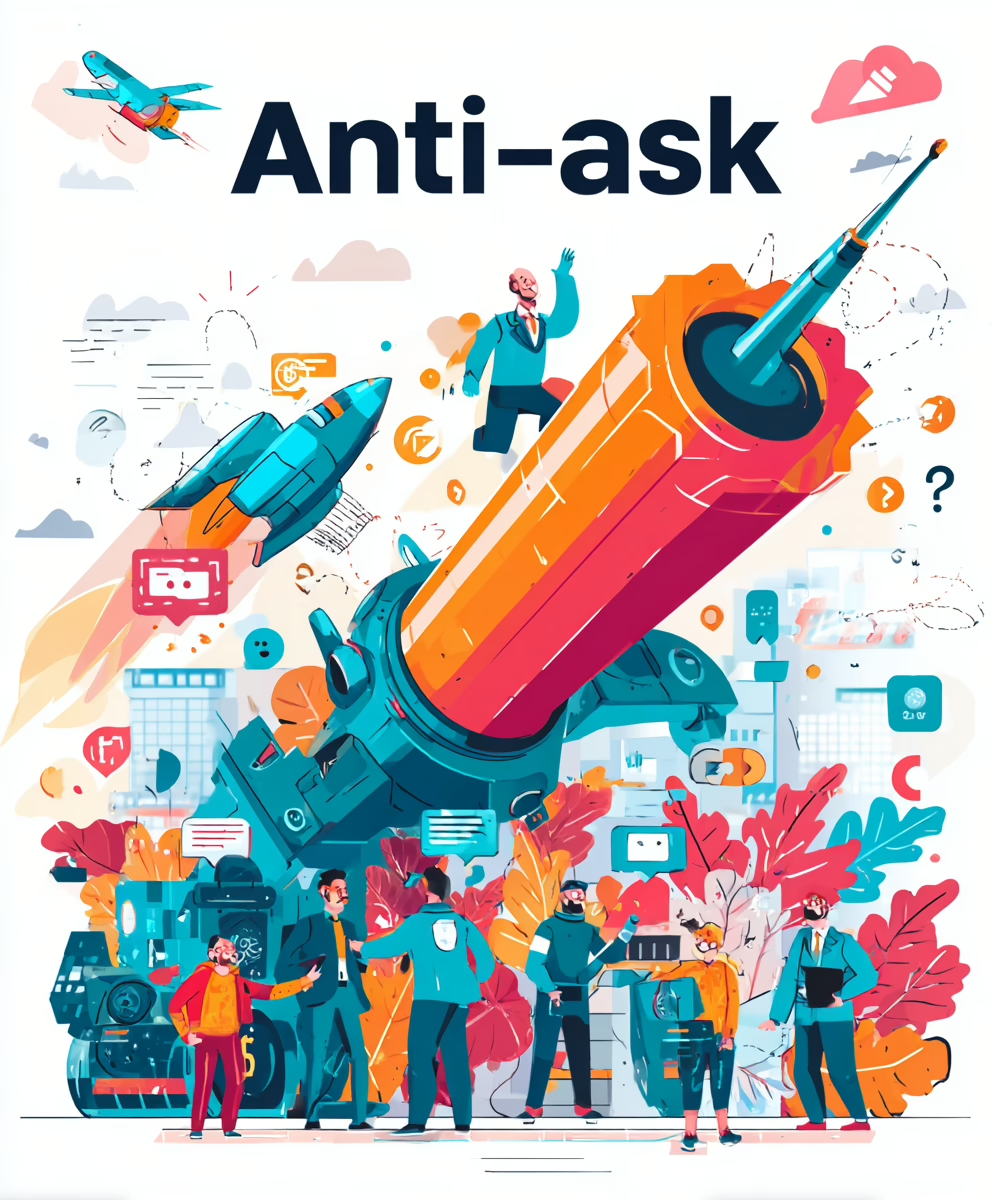
7. The Anti-Ask Slide
You get to the end of your deck and your “ask” is buried in the fine print—or missing entirely. This is the mic drop moment—don’t mumble it.
Why It Hurts:
- If I don’t know what you want from me, I won’t move forward.
- Investors don’t guess your needs. They pass.
Fix It:
Final slide = Clear, confident ask.
- “We’re raising $1.5M SAFE, $10M cap, 6 months runway.”
- Optional: use-of-funds pie chart (clean, not noisy)
Bonus:
Tie the ask to a bold vision: “This round gets us to $1M ARR and opens the door to Series A.”
Key Takeaways
- Every slide must earn its keep—no fluff, no filler.
- One idea per slide = maximum clarity and impact.
- Font size and consistency aren’t cosmetic—they’re credibility cues.
- Use visual storytelling to accelerate comprehension.
- Your “ask” should feel like a natural climax—not a hesitant footnote.