


Author: Viktor
Pitch Deck & Fundraising Consultant. Ex Advertising. Founder of Viktori. $500mill In Funding. Bald Since 2010.
The 12 Slide Cassava Processing Pitch Deck Template
Slide 1: Elevator Pitch – “Turning Roots into Riches”
The Problem:
Smallholder farmers and local agro-processors face significant post-harvest losses—up to 40%—due to cassava’s short shelf life and limited access to efficient processing.
Our Solution:
A scalable, modular cassava processing platform that transforms raw cassava into high-value products such as starch, animal feed, flour, and ethanol—while building an inclusive agro-industrial ecosystem.
The Benefit:
We reduce waste, increase farmer income by 2–3x, and unlock profitable, sustainable supply chains in food, energy, and industry.
Slide 2: Investor Highlights – “Why Now, Why Us?”
$8 Billion+ Global Market: Strong demand for cassava derivatives in food, industrial, and biofuel sectors.
Double-Digit EBITDA Margins: High-margin products with low-cost raw input from local suppliers.
Proven Tech & Scalable Ops: Modular processing units validated in pilot regions with 30% higher efficiency.
Strategic Partnerships: MOUs with farmer co-ops and agro-export buyers.
High-Impact Team: 30+ years combined in agri-processing, supply chains, and emerging markets.
Slide 3: The Problem – “Perishable Potential”
Cassava Spoils in 48–72 Hours Post-Harvest: Without quick processing, farmers lose revenue and buyers face quality issues.
Limited Rural Infrastructure: Most communities lack access to processing facilities or storage.
Missed Economic Opportunity: Billions in potential revenue lost annually due to under-processing.
Market Demand Unmet: Food and industrial markets continue to import starch and ethanol that could be produced locally.
Slide 4: The Opportunity – “The Cassava Goldmine”
Total Addressable Market (TAM): $8B+ across cassava derivatives globally.
Serviceable Available Market (SAM): $1.2B in regional processing hubs with high cassava yields.
Serviceable Obtainable Market (SOM): $100M in Phase 1 countries via targeted entry (Nigeria, Ghana, DRC, Brazil).
Demand Drivers:
Rising demand for gluten-free flour and plant-based alternatives.
Local sourcing mandates in manufacturing.
Green fuels and clean energy incentives.
Slide 5: Our Solution – “The Missing Link in Cassava’s Value Chain”
We deliver a vertically integrated cassava processing system designed for rural scalability.
Core Features:
Modular micro-factories (2–10 tons/day)
Solar-powered and off-grid compatible
Real-time IoT-based monitoring for quality control
Local workforce training included
What Makes Us Different:
High product yield through tech optimization
Plug-and-play scalability across multiple regions
End-to-end supply chain integration from farm to export
Slide 6: How It Works – “From Root to Revenue”
Farmer Partnerships: We engage and train local farmers through cooperatives, ensuring consistent supply.
Mobile/Fixed Units Deployed: Processing units are installed in high-yield clusters near farms.
Production & Packaging: Cassava is converted into starch, flour, ethanol, and feed using automated systems.
Sales Channels Activated: We distribute through B2B contracts, local retailers, and export buyers.
Efficiency Gains:
30% faster processing
2x yield vs. traditional methods
Reduced waste, optimized output
Slide 7: Product Line & Revenue Streams – “Multiple Outputs, One Root”
Product Portfolio:
Food-Grade Cassava Starch: For baking, confectionery, and processed foods.
Tapioca Flour (Gluten-Free): Used in niche health-conscious and celiac-friendly markets.
Ethanol (Biofuel & Industrial): Renewable alternative for fuel, cosmetics, and pharmaceuticals.
High-Protein Animal Feed: A byproduct optimized for poultry and livestock farmers.
Peel Briquettes or Compost: Sustainable byproducts for clean energy or organic fertilizer.
Revenue Streams:
Direct B2B product sales (processors, manufacturers)
White-label packaging for retailers
Strategic export contracts
Franchise/licensing of processing tech
Optional carbon credits for bio-waste utilization
Slide 8: Business Model – “Designed for Profit and Scale”
Revenue Model:
Process and sell cassava-derived products through long-term supply agreements.
Monetize IP via licensing the modular unit technology to regional partners.
Launch owned or franchised processing hubs in cassava-dense zones.
Cost Drivers:
Equipment and maintenance
Skilled labor training and retention
Logistics and packaging
Farmer incentives for consistent supply
Unit Economics:
Break-even per processing unit in 12–18 months
Average Gross Margin: 35–50% depending on product mix
LTV per processing zone: $1.2M over 5 years
Slide 9: Traction & Validation – “Proof, Not Promises”
Pilot Achievements:
150+ metric tons processed in first 6 months across 3 pilot locations
Product sold to 7+ local distributors and 2 regional manufacturers
Average farmer income increased by 2.7x
Partnerships:
MoUs with 5 co-ops covering 4,500+ cassava farmers
Early-stage distribution agreement with food conglomerate (pending finalization)
Technical validation from agri-research institution
Market Feedback:
92% positive feedback from pilot product buyers
Reorders from all three initial B2B clients
Slide 10: Market Entry & Go-to-Market Strategy – “Ground-Up Growth”
Phase 1 (0–12 months):
Focus on high-yield cassava regions in West and Central Africa
Leverage NGO and government programs to deploy 10 pilot units
Partner with local farming associations for supply and logistics
Phase 2 (12–24 months):
Expand into export-oriented markets (Brazil, Vietnam, Thailand)
Target large agro-industrial buyers and bulk product processors
Launch branded consumer-ready tapioca flour and starch SKUs
Channels:
B2B sales teams targeting manufacturers
Local distribution partnerships
Government tenders and donor programs
Slide 11: Financials – “A Sustainable, Profitable Engine”
Year 1 Projections:
Revenue: $1.6M
EBITDA: $310K
Units Deployed: 10
Year 3 Forecast:
Revenue: $8.4M
EBITDA: $2.1M
Processing Units in Operation: 50
Funding Ask:
$2.5M Seed Round
Use of Funds:40% CapEx (unit manufacturing and deployment)
25% Operations and talent
20% Market development and partnerships
15% R&D and tech improvements
Slide 12: Vision & Call to Action – “Feeding the Future with Cassava”
Our Vision:
To become the leading decentralized processor of cassava in the Global South—transforming a neglected crop into a catalyst for economic development, food resilience, and climate-smart innovation.
Impact Targets:
100,000 farmers empowered by 2028
1 million metric tons processed annually
5x local income increase in operational zones
Join Us:
We’re raising capital and partnerships to scale a profitable, proven model that lifts communities and unlocks value across continents. Let’s build the cassava economy together.
(Contact Details + Website + Optional QR Code)
Need a customized pitch deck template?
1000s of individuals like you asked for a tailored version of this template to help them craft a better pitch deck. Get yours for just $44. As soon as I get your request, I’ll follow up with one question to confirm what exactly is that are you pitching. This will help me nail the content for you.
What you’ll get is a 3+ page editable word document that contains a fully fleshed out slide by slide deck content for your pitch.
Alternatively, book a call and you’ll brief me on the specifics of your pitch.
Book The Free 30 Min Call
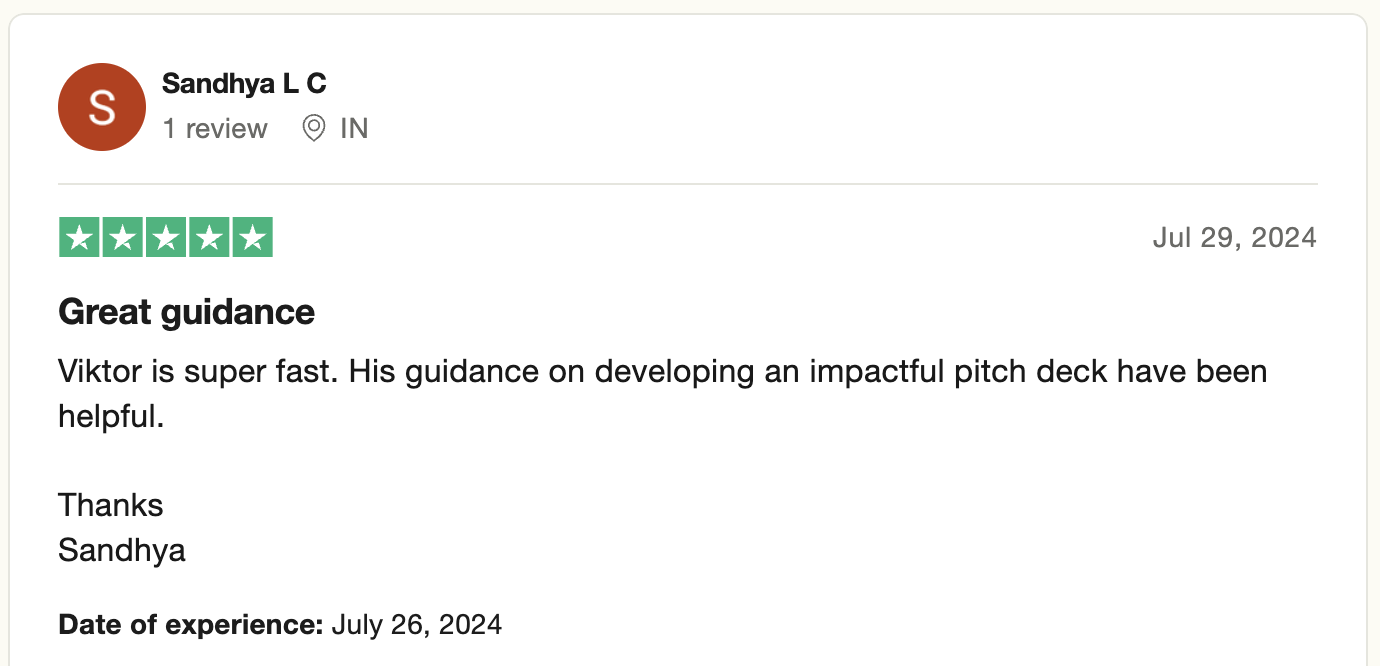
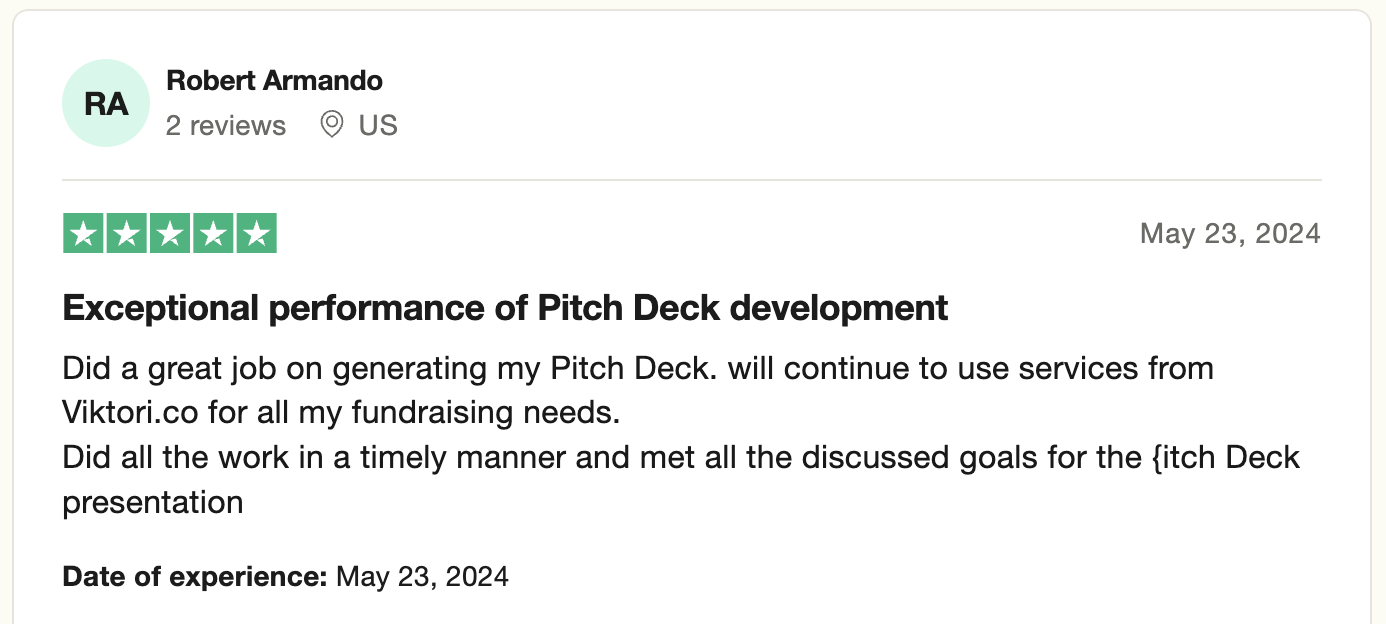
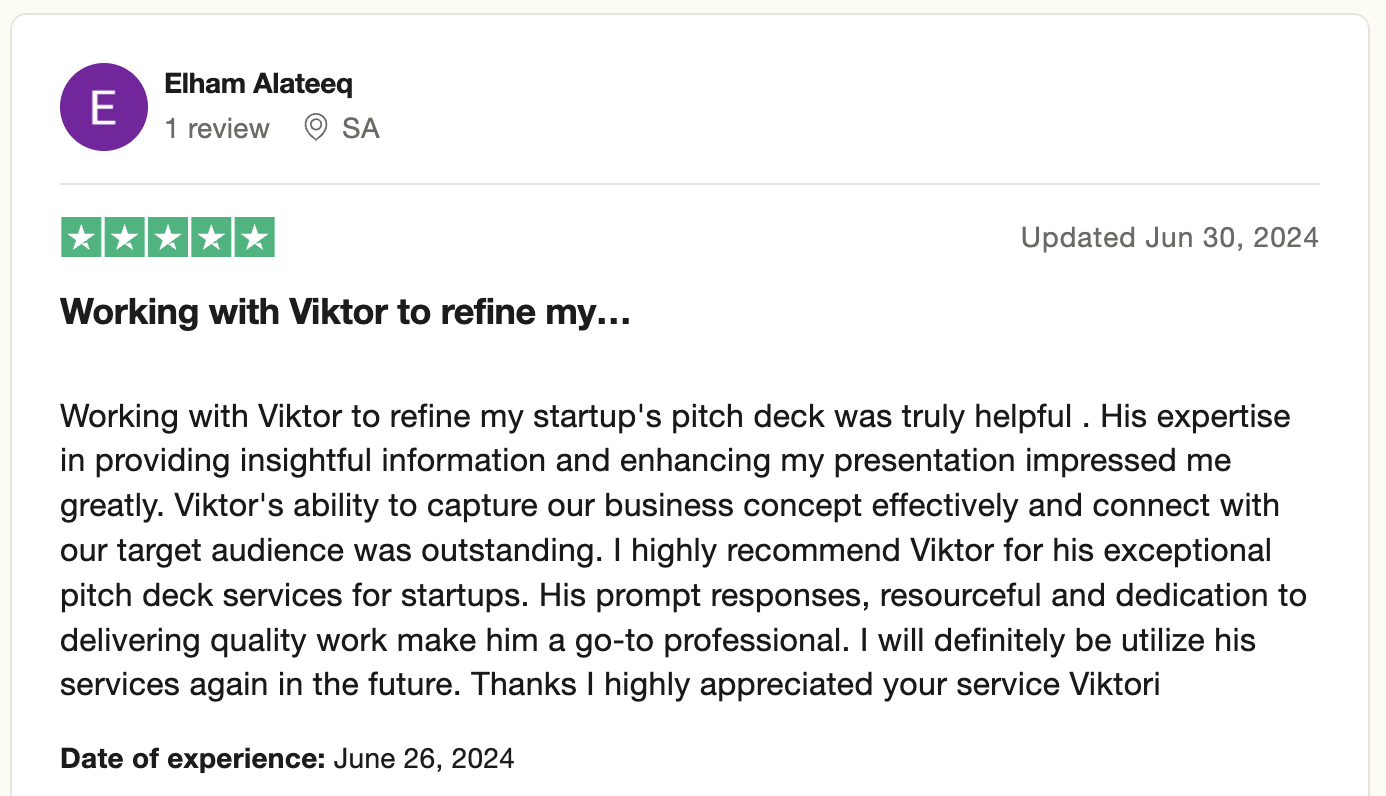
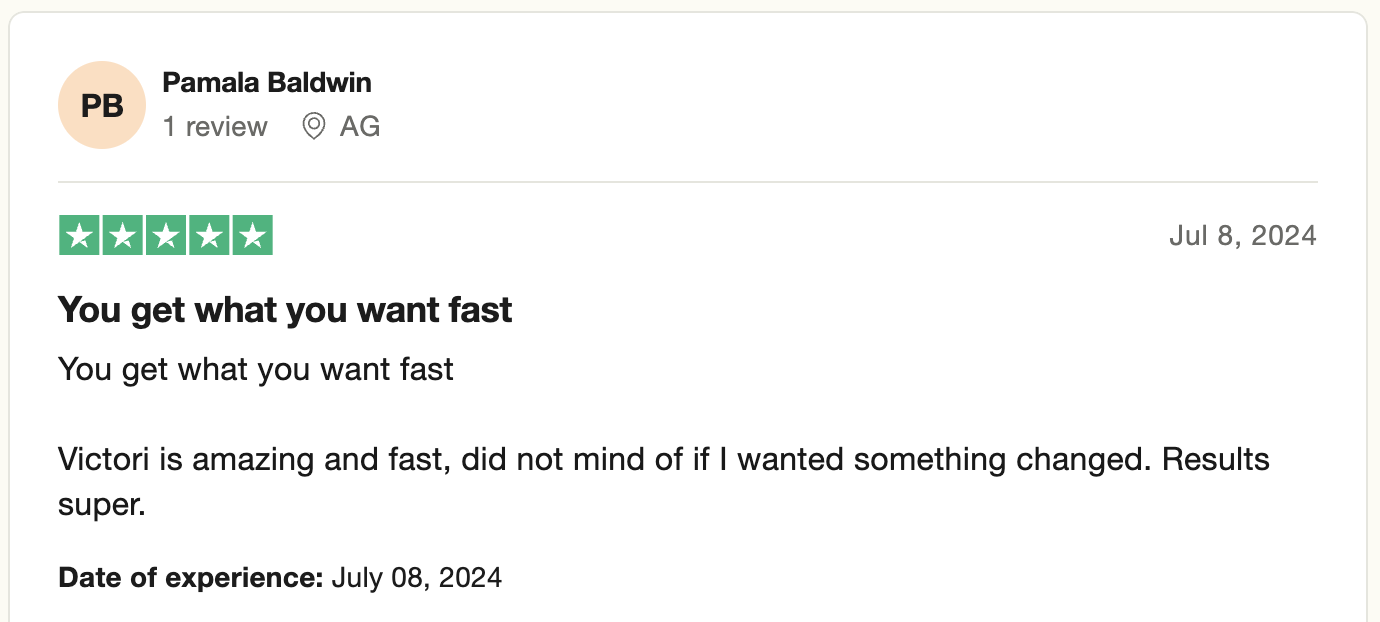
5/5 Upwork Rating | 100% TrustPilot

Plan on building the pitch deck yourself?
Option 1: Build with Gamma
Gamma is the preferred Ai presentation maker and if you’re strapped for resources, this tool will help you flesh out an ok pitch deck presentation. Here’s how it looks:
Option 2: Do It Yourself
If you’ve done a few presentation in the past, then this is the option you should take. Follow these simple steps:
- Pick one of the premium Envato templates by clicking on the image below,
- Answer the slide by slide questions I listed in the section below the image
- Follow the pitch deck guide I linked out to, next to the questions,
And build your own deck. It’s as easy as that.

Key Questions to Ask Yourself And Write The Cassava Processing Pitch Deck Slides
Slide 1: Elevator Pitch – “What’s Your One-Liner?”
What urgent, specific problem are we solving?
Who exactly is experiencing this problem?
What is our product or solution?
What’s the most important benefit our solution delivers?
What is the boldest way to frame this opportunity or threat?
Slide 2: Investor Highlights – “Why Should They Care, Fast?”
What is the total addressable market size?
What traction or validation do we already have?
What makes our business model financially attractive?
What makes our team experienced or uniquely positioned?
What strategic assets (tech, partnerships, IP) do we have?
Slide 3: Problem & Urgency – “Why Now?”
What is the current pain or inefficiency in cassava farming or processing?
Who suffers from this and how (economically, socially)?
What’s the data or evidence supporting the scale of this problem?
Why does this problem need urgent action now?
What is the consequence of not solving this?
Slide 4: Opportunity – “How Big Is the Prize?”
What is the size of the global cassava processing/derivatives market?
What is the projected growth over 5–10 years?
What portion of this market can we serve now (SAM)?
What is our realistic initial segment (SOM)?
What market trends are in our favor (health, climate, sustainability)?
Slide 5: Our Solution – “What’s the Game-Changer?”
What is our core product, service, or model?
How does our solution address the problem directly?
What is unique about our tech, design, or system?
What makes our model more efficient, inclusive, or scalable?
Can we articulate the transformation we enable clearly?
Slide 6: How It Works – “Explain It to a 10-Year-Old”
What are the major steps from raw cassava to final product?
How do we acquire or contract cassava supply?
How does our processing system function technically?
How do we sell the outputs and through which channels?
What partnerships or systems enable this process?
Slide 7: Product Line & Revenue Streams – “What Do We Sell, and How?”
What products do we extract or produce from cassava?
Who buys each product (industries, retailers, countries)?
What are our revenue streams (sales, licensing, etc.)?
Are there any secondary byproducts or upcycling opportunities?
What is our most profitable product or line?
Slide 8: Business Model – “Can This Scale and Make Money?”
What is our pricing model per product?
What are our fixed vs. variable cost drivers?
How long does it take to break even per processing unit?
What is our average customer lifetime value?
Can we franchise, license, or replicate the model easily?
Slide 9: Traction & Validation – “Show Me It Works”
What pilots or operational results can we showcase?
What measurable outcomes have we delivered (e.g. tons processed, income increased)?
Who are our early customers, partners, or funders?
Do we have customer testimonials or endorsements?
Any awards, research validations, or press?
Slide 10: Go-to-Market Strategy – “How Will You Win Customers?”
Which geographies or segments are we targeting first?
What partnerships or networks will help us grow?
What is our customer acquisition plan?
How do we build local or government relationships?
What distribution or sales channels are we prioritizing?
Slide 11: Financials – “Is This Worth Investing In?”
What are our projected revenues and profits (Y1–Y5)?
What are the key financial assumptions driving growth?
What are our expected margins across product lines?
How much funding are we raising and what will it be used for?
When do we expect to reach breakeven and profitability?
Slide 12: Vision & Call to Action – “What’s the Bigger Picture?”
What is our long-term mission or societal goal?
What change will we create in 5–10 years if we succeed?
What kind of investor or partner are we looking for?
What’s the next step we want from our audience?
How do we summarize our value proposition in one final, compelling statement?
Check out:
Follow My Food Processing Pitch Deck Guide
A detailed guide with the steps outlined to get to a investor ready deck.
Related F&B Pitch Deck Templates

Slide by Slide Guides




Viktori. Pitching your way to your next funding.
Locations
Office 1: 633 North Wells Street Chicago, IL, United States, 60654
HQ: Boulevard P.O. 10000 Skopje, North Macedonia
Pitch Deck Resources
Case Studies
Client Reviews