You’ve got a killer pitch deck. The startup idea is sharp, the slides are sleek, and you’ve rehearsed every word like your future depends on it—because, let’s be honest, it kind of does.
But then comes the investor Q&A session, and suddenly, things get murky. The questions hit harder. The confidence dips.
And what should have been your mic-drop moment starts to feel like a minefield.
Here’s the truth: the pitch might open the door, but it’s the Q&A that seals the deal. If you can’t handle investor questions with clarity, poise, and strategy, your million-dollar idea risks being left on read.
That’s where this guide comes in.
I’m Viktor—strategist, storyteller, and pitch deck specialist. Over the past 13 years, I’ve helped startups and global brands raise over $500 million, not just with flashy slides but by teaching founders how to own the room—especially when the spotlight turns to questions.
This isn’t about memorizing answers.
It’s about mastering investor psychology, framing your responses like a pro, and using every Q&A session as a chance to build trust, highlight opportunity, and showcase strategic depth.
Whether you’re prepping for a VC pitch, an earnings call, or a Series A showdown, this guide will arm you with the tools to navigate investor Q&A with confidence, clarity, and impact.
Let’s dive in—and turn every question mark into your biggest advantage.
Why Q&A Sessions Make or Break Startup Funding
When the pitch ends and the floor opens for questions, that’s not your time to relax—it’s your opportunity to rise. For investors, the Q&A isn’t just an add-on; it’s the real audition. This is where they move from being impressed by your pitch deck to making serious considerations about adding your company to their investment account.
Investor Psychology: What They’re Really Listening For
Behind every sharp question is an investor trying to validate three things:
Clarity – Do you truly understand your business strategy, or are you just reciting a script?
Traction – Do your key metrics reflect actual market penetration, not just hopeful projections?
Fit – Are you the right founder with the right insight to grow and scale this business?
They’re not just scanning your numbers—they’re reading you. Every response reveals your core value, your grasp of customer acquisition costs, and your ability to respond with confidence under pressure. In other words, investors aren’t just asking questions—they’re testing conviction.
Investor Expectations: From High-Level Vision to Operational Granularity
Today’s savvy investor doesn’t stop at, “What’s your TAM?” They’ll drill into your pro forma, asking about underlying assumptions. They’ll test your understanding of market trends, challenge your KPIs, and question your rationale behind pricing models or customer acquisition rates.
They want to hear you speak fluently about:
Strategic priorities – Where are you placing your next big bet?
Financial expectations – Can you justify your burn, your margins, and your path to profitability?
Roles and responsibilities – Does your team have the DNA to execute?
They’ll also look for alignment with stakeholder interests—especially in environments like investor conferences or M&A roadshows where polished communication and clarity are table stakes.
Frame the Stakes: Why Q&A Can Make or Break the Deal
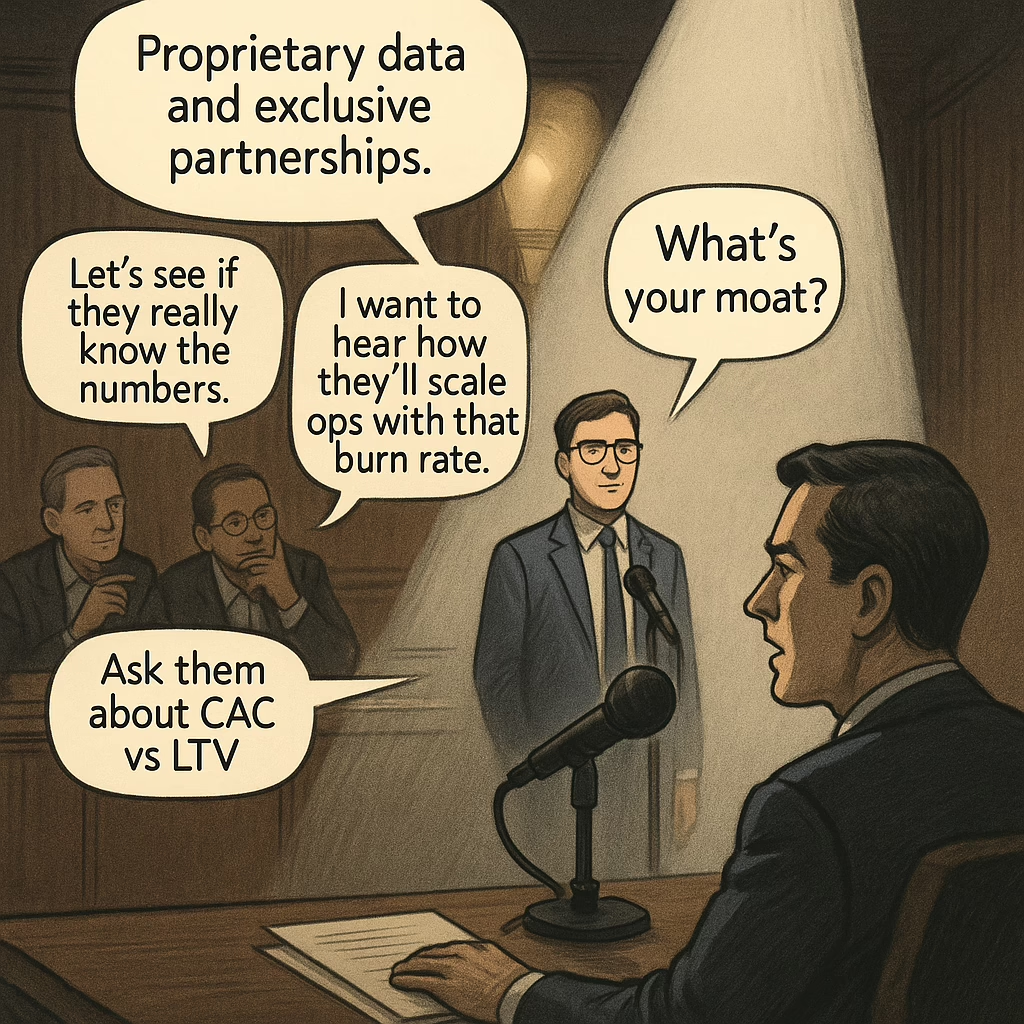
Here’s the kicker: if you fumble a question—especially one of the frequently asked questions like “How do you plan to achieve scale?” or “What’s your moat?”—you risk more than embarrassment. You risk trust.
Investors are human. Hesitation, defensiveness, or evasion can instantly downgrade your perceived credibility. It introduces doubt about your leadership, your business growth prospects, and your overall ability to navigate high-pressure situations.
But flip that.
If you handle tough questions like a pro, not only do you neutralize objections—you turn them into belief-builders. The Q&A becomes your platform to empower investors with valuable insights, reinforce your value proposition, and leave them thinking, “This founder has it dialed in.”
It’s not about knowing every answer. It’s about showing you have a strong foundation, that you’ve anticipated the list of questions serious investors ask, and that you can connect the dots from market size and growth to execution with strategic clarity.
Before You Walk In: Preparation is Your Superpower
Winning a Q&A session isn’t about being a walking spreadsheet—it’s about preparation so precise it feels instinctive.
Great founders don’t just answer questions like a pro—they anticipate them, structure them, and turn each one into a micro-pitch of its own. Preparation isn’t optional—it’s the power play that separates those who pitch from those who raise.
Thorough Preparation: Borrowing from the Scientific Playbook
In “The Scientific Approach to Creating an Investor Ready Pitch Deck”, we learn that an effective pitch deck is more than compelling slides—it’s a narrative weapon designed to survive intense scrutiny.
The same goes for the Q&A.
Investors don’t just want clarity—they want clarity under pressure. They expect you to move seamlessly from strategy to metrics, from key performance indicators to pro forma assumptions. And they can smell bluffing a mile away.
Use tools like SWOT maps, due diligence checklists, and decision-tree scripts to reinforce your mental prep. Investors don’t just ask about the potential market—they want to know why now, why you, and how it scales. It’s your job to know the questions to ask yourself before they ask you.
Frequently Asked Investor Questions: Your Tactical Foresight Map
If you’re not anticipating the tough stuff, you’re playing defense. Here are the kinds of questions from investors you should expect—and be ready to dominate:
Market Opportunity & Trends: How big is the addressable market, and what macroeconomic or industry dynamics support growth?
Growth Trajectory: Where are you headed in 6, 12, and 36 months? What milestones will define that progress?
Customer Acquisition Costs (CAC) / Lifetime Value (LTV): What’s your efficiency model? How do you balance spend vs. return?
Pro Forma Assumptions: What underpins your revenue, margin, and cash flow forecasts?
Financial Returns & Unit Economics: What’s the payback period? What’s your burn multiple?
Product-Market Fit Signals: What metrics indicate resonance with your audience?
Team & Execution: Do you have the right people in place to scale?
Bonus: Earnings call-style questions are increasingly common, especially when pitching retail investors or funds used to public companies. Practice answering as if you were live on CNBC.
Create Your Response Arsenal: Build the Q&A War Chest
Professional founders don’t walk into the room with guesswork. They walk in with a response arsenal—refined, rehearsed, and resilient.
Here’s how to build yours:
Create a Master Q&A Spreadsheet
Columns: Question Type, Sample Wording, Short Answer, Expanded Answer, Slide Reference, Data Source
Organize by themes: financials, go-to-market, team, product, M&A interest.
Prioritize the top 25 frequently asked questions every investor uses to evaluate risk, ROI, and resonance.
Map Answers to Your Pitch Deck
Add internal links from key answer themes to the corresponding slide.
Use footnotes to create optional deep dives for investors who ask follow-ups.
Bonus tip: Include “hidden slides” in your appendix for rapid visual proof during tough follow-up questions.
Role-Play Q&A With Brutal Honesty
Ask entrepreneurs in your network to grill you.
Use unbiased mock sessions—record them, review the footage, and identify areas where clarity falters.
Your goal? Walk into that Q&A room not just knowing your presentation helps tell your story—but having every response aligned with your investment advice, backed by credible data, and dripping with confidence.
Answering Investor Questions Like a Pro
You’ve made it through your pitch. The room is silent—until the first question hits. Now the spotlight’s tighter, the stakes higher, and your ability to think on your feet is being scrutinized. This is the real test. And if you want to handle Q&A sessions like a pro, your answers need to do more than inform—they need to resonate, redirect, and reinforce your vision.
Frame Control & Narrative Confidence
Oren Klaff’s Pitch Anything breaks down a simple truth: who controls the frame controls the conversation. In investor Q&A, your job isn’t just to answer—it’s to reassert narrative control every time you speak.
Investors are used to leading conversations. But pros flip the script by:
Controlling the tempo of the conversation.
Projecting high-status communication, not submission.
Embedding “intrigue pivots”—teasers that shift the question into a bigger opportunity narrative.
Example:
Investor: “What if a larger player replicates your model and undercuts your pricing?”
Pro Answer: “That’s a fair question—and it actually highlights one of our biggest advantages. Unlike incumbents who are constrained by legacy infrastructure, we’re built lean and natively digital, which means we move faster, adapt quicker, and scale without friction. That’s our moat.”
By introducing tension and resolving it with clarity, you demonstrate more than preparation—you show command. Use “hot cognition” phrasing (words that evoke emotion and urgency) to make your answers memorable and influential.
Respond with Confidence, Not Defense
Handling tough Q&A sessions requires more than data—it demands mental agility. When the questions sting, confidence—not defensiveness—is your shield.
Start with two powerhouse mental models:
Inversion: Flip the question. Instead of just answering what might go wrong, show how you’ve built to avoid it.
Second-Order Thinking: Show the cascading impact of your strategic decisions.
Example:
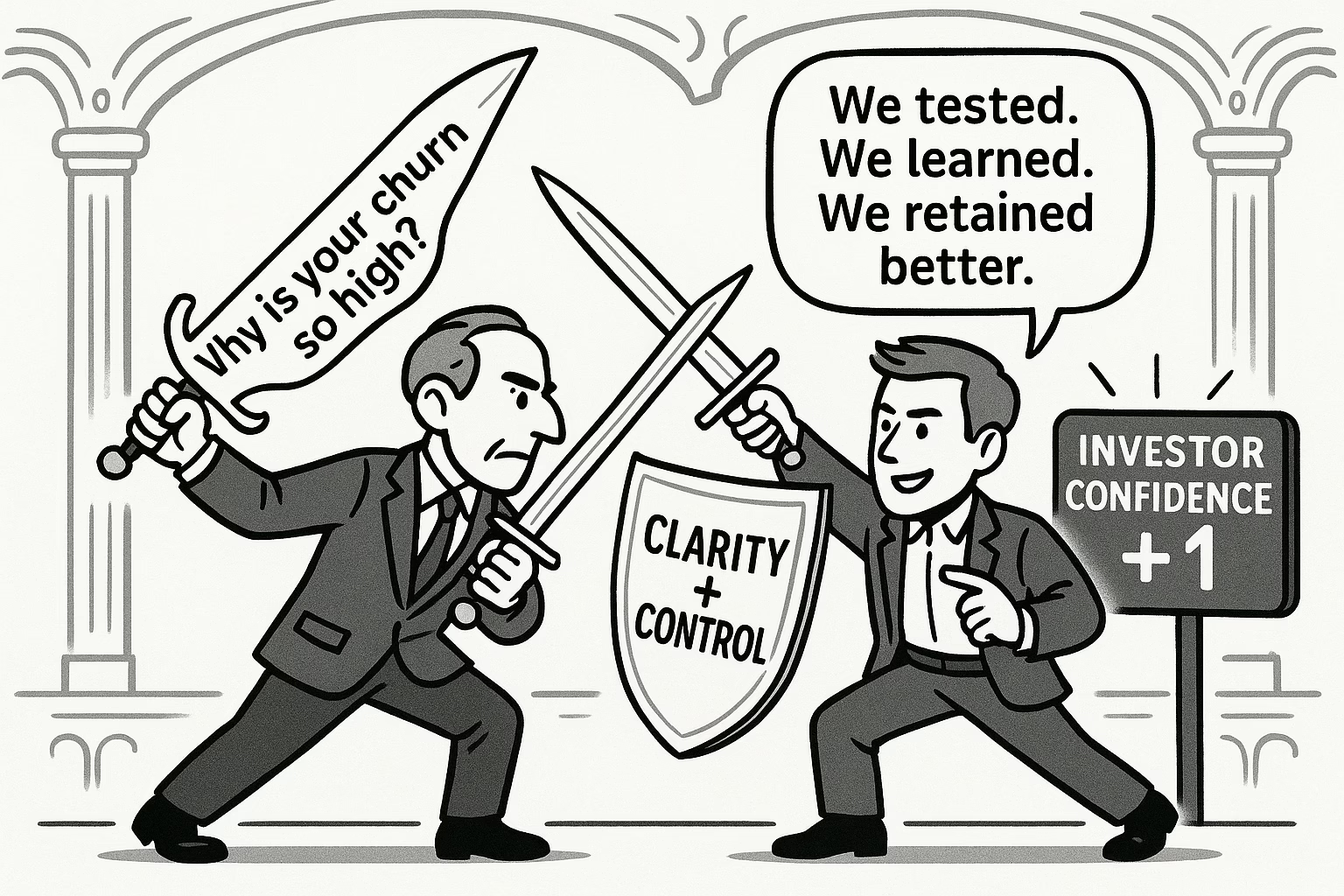
Investor: “Your churn seems high—what’s the story there?”
Pro Answer: “Absolutely. We saw early churn spike in Q2 because we aggressively tested three new user cohorts. But here’s the second-order effect: that data helped us refine onboarding, and Q3 saw a 40% improvement in activation-to-retention rates. It’s an intentional evolution.”
This technique works particularly well when addressing questions related to risk, financial performance, or key business dynamics. Always anchor your answer in data, then redirect to vision—because confidence builds when logic meets inspiration.
The 3-R Model: Repeat, Reframe, Reground
If you want to truly handle Q&A sessions like a pro, adopt the 3-R model. It helps you slow down, stay grounded, and turn curveballs into narrative wins.
Repeat
Confirm the question to ensure understanding and buy time.
Signals control and composure.
“Just to clarify, you’re asking how we plan to achieve 3x growth in the next 18 months—correct?”
Reframe
Shift the lens to your advantage.
Use reframing to turn questions from investors into strategic highlights.
“That’s actually where our modular tech stack gives us an edge—every product iteration builds on the last with zero downtime.”
Reground
Support your point with hard data, visuals, or references to pro forma projections in your pitch deck.
Align your response with long-term success metrics or market positioning.
“And if you look at Slide 9 in the deck, you’ll see how this directly ties into our CAC efficiency curve.”
By consistently applying this framework, you stay in control—even when the questions get uncomfortable. You’re not just answering—you’re advancing your investor relations narrative in real time.
The 12 slide pitch deck framework that got my clients $500m in funding.
I’ve developed 12 simple formulas that will save 40 hours of your time and show you how to craft content that makes investors invest.
Start using these formulas by downloading my detailed framework through the link below. Promo price available for the first 40 buyers. Few downloads remaining.
Key Investor Topics: What You Must Nail
Every investor Q&A session eventually zeroes in on a handful of critical domains—your financials, your market, and your traction. These aren’t just frequently asked questions—they’re the foundational pillars investors use to make investment decisions. If you want to handle investor questions like a pro, these areas must be watertight.
Financials and Forecasts: Show Me the Model
This is where your credibility lives or dies. Investors don’t expect perfection, but they do expect mastery of your revenue model, burn rate, and key performance indicators (KPIs). Your ability to speak fluently about financial returns, margin trends, and capital efficiency will be scrutinized line by line.
What you need to deliver:
Current Revenue & Run Rate: Be crystal clear. If pre-revenue, emphasize signed LOIs or pilot traction.
Burn Rate: Know your monthly spend and runway down to the dollar.
KPIs That Matter: Whether it’s MRR, churn, or contribution margin—be prepared to explain why each is a leading indicator of success.
You might like: Mastering the Financial Projections Slide
Defending Your Pro Forma with Confidence
Pro forma projections are not wishful thinking—they are models grounded in logic, market data, and execution capability. To defend them:
Break out the underlying assumptions: CAC, ramp time, sales velocity.
Use analogs: “Our projected LTV mirrors early-stage benchmarks from [industry peer].”
Anticipate questions to ask like: “What happens if growth slows by 30%?”—then show your downside mitigation plan.
Pro Tip: Include sensitivities in your pitch deck appendix. It shows foresight and professional rigor.
Market Opportunity & Competitive Landscape: Prove the Playing Field
Investors back startups that tackle potential markets with room to run. But the story must go beyond TAM/SAM/SOM slides. You need to articulate:
Market Size & Growth: Use trusted data sources—Gartner, CB Insights, or proprietary surveys.
Market Penetration Strategy: How will you carve out your niche and expand?
Trends & Timing: What tailwinds are driving urgency for your products or services?
Handling “Why You Over X Competitor?”
This is a classic challenge—and a golden opportunity. Nail this by:
Emphasizing your unique profile: proprietary tech, go-to-market moat, or founder insight.
Comparing apples to apples: “Competitor X focuses on enterprise. We’re purpose-built for mid-market—faster adoption, shorter cycles.”
Staying calm: Avoid defensive traps. Turn competition into validation of the problem.
This is also where you lean into investor relations—make them feel that you not only know the terrain but that you’ve already started mapping out domination.
Customer Acquisition & Retention: Traction That Scales
No growth story stands without proof you can attract and retain customers efficiently. This is where CAC, operational efficiencies, and customer success metrics do the heavy lifting.
Show them:
Customer Acquisition Cost (CAC): What are you spending and how fast do you recover it?
Retention Strategy: Beyond logos—what’s keeping users engaged, sticky, and expanding?
Operational Efficiencies: Highlight automation, self-serve flows, or low headcount leverage.
Aligning With Long-Term Growth
Every investor is scanning for a sustainable business that can scale without imploding. Make sure your answers reflect:
How acquisition costs decrease over time.
How customer lifetime value increases as features and adoption expand.
How your infrastructure supports rapid onboarding without losing quality.
Don’t forget to anchor this back to your pitch deck and close the loop with follow-up questions that invite deeper discussion on your opportunity to grow.
Common Pitfalls to Avoid in Investor Q&A
Even the sharpest pitch can be unraveled in the Q&A if founders fall into these all-too-common traps. Investors aren’t just evaluating your answers—they’re assessing your composure, your clarity, and your command of the moment. If you want to handle investor questions like a pro, avoid these fatal missteps.
Over-Answering or Under-Answering: Know When to Stop Talking
One of the most overlooked tips for startup founders is mastering answer length. Over-answering signals insecurity and often dilutes your message. You risk turning clean narratives into meandering monologues that lose investor interest.
Under-answering, on the other hand, leaves gaps that erode confidence. Investors may think you’re dodging—or worse, that you don’t know your numbers.
How to Stay Balanced:
Use the Repeat-Reframe-Reground technique to stay focused.
Watch for investor cues—if they’re nodding, wrap it.
Ask if more detail is needed: “Would you like me to unpack that further?”
Every answer should add value, not noise. Precision shows professionalism. Rambling screams unpreparedness.

Framing for Investor Types
Beyond structure, it’s how you say it that determines who gets bought in. This is where Oren Klaff’s legendary frame control theory comes into play. A pitch isn’t just a presentation—it’s a narrative battlefield, and Klaff teaches us that whoever owns the frame, owns the room.
How to Apply Frame Control in Your Pitch Deck:
Power Frame: Investors walk in thinking they hold all the cards. Flip the script by anchoring your startup as the opportunity. Start strong on slide one. Establish the market need and urgency fast.
Intrigue Frame: Don’t reveal everything at once. Tease outcomes. Leave space for curiosity. An interesting pitch deck leads investors to ask questions—not just nod silently.
Time Frame: Urgency drives action. Mention limited availability in your funding round or highlight traction velocity to convey momentum. Show that this isn’t an open-ended window.
Prize Frame: You’re not begging for capital—you’re inviting them to join something extraordinary. Use confident language, strong branding, and a clean, assertive deck template to position your startup as the prize, not the seeker.
Your pitch deck is a presentation, but your delivery is positioning. Frame the conversation so you lead, not follow.
Understanding investor psychology is as important as understanding your own product. When you design a pitch deck, always consider who’s on the other side of the table—and make sure your entire deck speaks their language, fuels their interests, and meets their expectations without overwhelming.
Showing Neediness: You’re the Prize, Not the Pauper
Few things tank investor confidence faster than a founder who seems desperate. When you frame yourself as the beggar, not the builder, your perceived leverage evaporates.
Investor relations are built on mutual value—not one-sided pleading. High-quality investors want to back strong operators, not founders who chase capital like oxygen.
Signal Strength Instead:
Talk about investor fit, not just funding needs: “We’re looking for partners aligned with our long-term vision.”
Reference traction and optionality: “We’ve had strong inbound interest and are being selective.”
Use language that reflects confidence, not dependency.
You’re not asking for charity—you’re offering a share in the upside of a business that’s solving a real problem in a compelling way. Own that.
Ducking Hard Questions: Don’t Dodge—Dissect
Some investor questions will be tough. That’s intentional. They’re designed to test your clarity, resilience, and ability to handle complexity.
The biggest mistake? Dodging them.
Whether it’s a probe on pro forma assumptions, a concern about team structure, or a query about the scalability of your pitch deck projections—avoidance sends a red flag.
What Pros Do Instead:
Acknowledge the weight of the question: “That’s a fair concern, and one we’ve modeled internally.”
Answer structurally: Break it into parts—what you know, what you’re testing, and what you’re planning.
Share how you’re identifying opportunities to address the challenge or de-risk it.
Hard questions are actually your moment to shine. They give you a platform to showcase strategic depth, data fluency, and forward thinking. Use them.
Advanced Investor Q&A Techniques
Once you’ve mastered the fundamentals, it’s time to elevate your game. Elite founders know that the investor Q&A isn’t just about responding—it’s about strategically managing the room, reading the energy, and influencing perception with subtle precision. These advanced techniques help you transform questions from investors into controlled, high-leverage exchanges that leave a lasting impression.
Turn Questions into Conversations
One of the most overlooked high-impact moves? Treat the Q&A not as an interrogation but as a strategic dialogue.
Investors aren’t adversaries—they’re potential partners. Building rapport by engaging conversationally turns tension into trust.
How to do it like a pro:
Use warm, open-body language and eye contact.
Acknowledge the intelligence of the question: “That’s a sharp observation. Can I ask what angle you’re thinking about it from?”
Invite back-and-forth: “We’ve approached it one way, but I’m curious—have you seen alternatives that worked better?”
This disarms intensity, positions you as collaborative, and shows that you’re already thinking like a boardroom peer—not just a founder seeking capital.
It’s one of the strongest investor relations tools you have: genuine conversation.
Strategic Redirection (The Zen of Silence)
When a question is especially tough or deliberately confrontational, the instinct is to react fast. That’s the rookie move. Pros know the power of the pause.
Here’s the play:
Take a brief pause. Breathe. Don’t rush.
Take a note. This shows diligence and control.
Redirect tactfully.
Example:
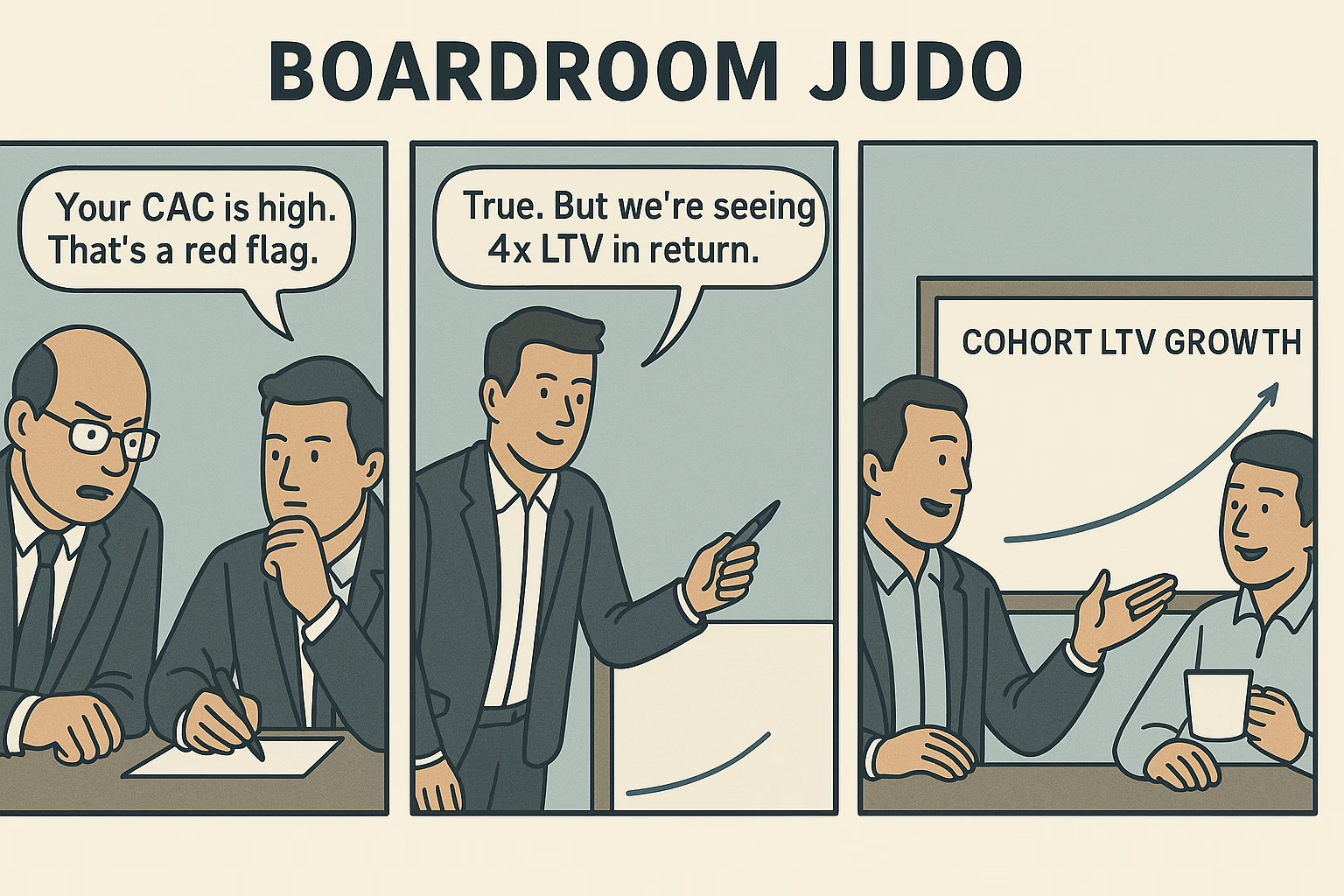
Investor: “Your CAC is high—doesn’t that worry you?”
You: “Great observation—yes, we’ve invested heavily in top-of-funnel growth early on. But what’s exciting is the 4x LTV ratio we’re already seeing. Let me show you.”
This technique redirects attention from threat to traction—and it calms the room. Silence, when used strategically, projects authority.
And for those more aggressive queries? Redirect them to the broader context of your pro forma vision or product roadmap—where you shine brightest.
Leverage Visual Aids in Real-Time
When your answer involves numbers, trends, or layered thinking—don’t just speak, show. Visual reinforcement does two powerful things:
Clarifies complexity.
Makes your pitch deck look like a living document, not a static PDF.
How to integrate visual support during Q&A:
Use appendix or backup slides to dive deeper into frequently asked questions (e.g. churn, market sizing, or growth curves).
Keep a few “fallback charts” ready—heatmaps, financial models, segment-specific case studies.
Use seamless transitions: “Let me pull up Slide 15—we mapped this scenario in detail.”
This feels including professional, well-prepared, and highly investor-friendly. It shows you came ready not just for applause—but for analysis.
After the Storm: Post-Q&A Follow-Up
You crushed the pitch. You handled the Q&A like a pro. But your work isn’t over—it’s only just beginning. The post-Q&A phase is where the smart founders separate themselves from the forgettable ones. In a sea of startups, those who master the investor follow-up game become the ones remembered, revisited, and funded.
Investor Relations Tactics: The Art of the Follow-Up
Too many founders treat Q&A sessions like one-and-done events. The pros? They turn every question into a thread—and every thread into a relationship.
Here’s how to do it with precision and polish:
Send a Personalized Follow-Up Email Within 24 Hours
Address specific investor concerns with gratitude and clarity. Include attachments or links to clarifying data, relevant pitch deck sections, or updated pro forma visuals.Example:
“You asked a great question about our retention metrics. I’ve attached a deeper breakdown by cohort that illustrates our improvement over the last two quarters.”Include New Value
Share a relevant article, industry trend, or product update—show you’re not just a founder, but a builder who’s constantly evolving.Keep it Human
Use natural, confident language. Be grateful, not needy. Be strategic, not salesy.
This level of engagement not only strengthens investor relations, it positions you as the kind of communicator they’d want in board meetings and future investor updates.
Build Trust Long-Term: Turn Feedback into Fuel
Every investor Q&A session is a goldmine of insight—if you know how to mine it. The best founders don’t just answer—they analyze. They look for patterns in the questions from investors, identify friction points, and use that feedback to tighten the next version of their pitch.
What to Track:
Frequently asked questions that pop up across pitches.
Investor reactions—what made them nod, what made them pause?
Which parts of your pitch deck triggered deeper inquiry?
Gaps in your pro forma logic that need clarifying.
Tools to Use:
Create a Q&A feedback doc with each session’s highlights.
Schedule regular internal reviews to integrate new learnings into future pitches.
Remember: every Q&A is an iteration. Every follow-up is a new bridge. Every interaction is a brand touchpoint.
In the long run, building trust doesn’t come from perfect answers—it comes from showing you’re the kind of founder who listens, learns, and leads with purpose.
Case Studies: Founders Who Nailed Investor Q&A
Behind every major funding round is a pivotal Q&A moment—one where a founder turns pressure into persuasion. These examples highlight what it means to answer investor questions like a pro, converting skepticism into commitment with clarity, conviction, and charisma.
Elon Musk: The Power of Urgency and Clarity
Elon Musk isn’t just a product visionary—he’s a master of the Q&A game. During Tesla’s early earnings calls and investor meetings, Musk repeatedly faced scrutiny over unrealistic timelines, cash burn, and ambitious targets.
His approach? Two core principles:
Urgency: Every answer was framed within a “why now” narrative. He made investors feel that hesitating meant missing out on a generational opportunity.
Clarity: He never over-explained. When questioned on pro forma burn assumptions or production bottlenecks, Musk would respond with structured clarity: short, confident, and data-anchored.
What founders can learn:
Clarity beats complexity.
Urgency creates momentum.
Confidence is a trust multiplier—even when plans are aggressive.
Startup Founders Who Flipped the Script
Many first-time founders face aggressive investor pushback—especially when pitching emerging markets or misunderstood models. But the ones who rise turn pressure into performance. Let’s look at a few standout moves from the pitch trenches:
The Underdog With Unshakable Metrics
One fintech founder was challenged on her high CAC. Instead of dodging, she broke down CAC by channel, showed LTV improvement through upsell flows, and tied it back to their product-led growth model. Her answer turned a perceived weakness into proof of scalable efficiency—and she walked out with term sheets.
Lesson: Be ready to unpack your numbers like a CFO, even if you’re a solo founder. It builds credibility instantly.
The Visionary Who Knew When to Say “I Don’t Know”
A healthtech founder fielded a highly technical question about data privacy compliance across international borders. Instead of fumbling, he said: “I’ll be transparent—I don’t have the exact legal clause at hand. But I’ve flagged this with our counsel, and I’ll follow up today with our risk strategy.”
The result? Respect. And a follow-up investor email within 48 hours requesting a deeper dive.
Lesson: You don’t need to know everything. You just need to handle not knowing with integrity and follow-through.
The B2B Founder Who Brought Slides to a Gunfight
In a high-stakes seed pitch, a founder was asked: “Why hasn’t anyone else done this already?” Instead of theorizing, he pulled up a hidden pitch deck appendix slide showing detailed competitive analysis and market white space.
The room changed. Investor eyes lit up.
Lesson: Anticipate questions to ask and arm yourself with visual proof. It transforms doubt into data-backed belief.
The Pro’s Mindset
Let’s set the record straight: the investor Q&A isn’t the obstacle—it’s your spotlight. It’s the part of the pitch where real belief is built. While others flinch, the pros lean in. They know that with the right preparation, sharp responses, and controlled presence, even the toughest questions from investors become stepping stones—not stumbling blocks.
Throughout this guide, you’ve seen how to anticipate frequently asked questions, structure answers like a strategist, handle curveballs like a closer, and turn data into dialogue. Whether you’re walking into a venture fund boardroom or an informal coffee chat, the principles remain the same:
Lead with clarity.
Anchor with data.
Speak with confidence.
Reframe every risk as an opportunity.
It’s not about perfection—it’s about preparation. And mindset.
Founders who approach Q&A like a pro don’t just survive—they win. They don’t just answer questions—they build relationships. They don’t chase capital—they attract it.
Ready to Pitch Like a Pro?
Don’t let uncertainty hold you back. Download my Investor Q&A Prep Worksheet—a proven framework designed to help startups craft powerful, pitch-aligned answers to any investor question.
Map your toughest questions
Connect answers directly to your pitch deck and pro forma
Show up ready to own the moment
It’s your time. Step into that Q&A session with confidence—and let your answers do the closing.
Slide by Slide Guides