
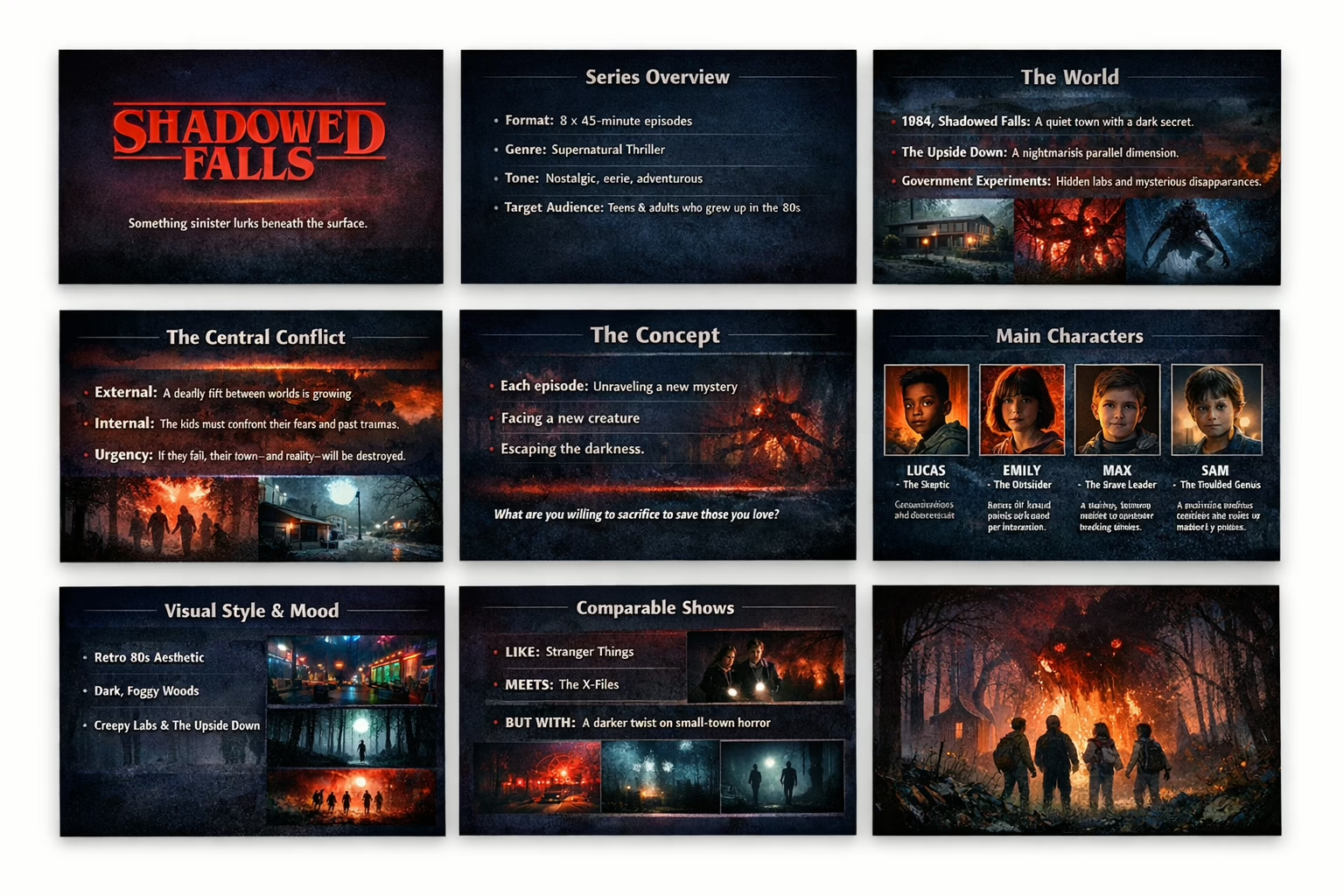
The 12 Slide 12 Episode Drama Pitch Deck Template

Author: Viktor
Pitch Deck & Fundraising Consultant. Ex Advertising. Founder of Viktori. $500mill In Funding. Bald Since 2010.
This page is a TV show pitch deck template — built for creators who already understand how TV pitching works and simply need a clear, professional structure to use.
If you’re pitching a scripted TV series, limited series, or streaming-first show, the 12-slide template below gives you the exact slide order, purpose, and questions to answer — without theory, examples, or long explanations.
This template is designed to help you:
- organize your story into a pitch-ready format
- communicate the core of your series quickly
- present your concept in a way that decision-makers can scan and evaluate
Each slide includes guidance on what to include and why it matters, so you can focus on the content — not the structure.
New to TV pitching? Read the full TV Show Pitch Deck Guide to understand how buyers evaluate series, what makes pitches sell, and how to avoid common mistakes.
Slide 1: Elevator Pitch
What this slide is for
This slide must pass the first-15-seconds test. If the reader doesn’t instantly understand what this show is and why it matters, the deck is dead on arrival.
Template
- Series Title
- Tagline (one sharp sentence that signals tone + stakes)
- Logline
In a [genre] world where [core disruption], a [protagonist archetype] must [primary objective] before [clear consequence].
Keep this brutally focused. One idea. One conflict. No subplots.
👉 Helpful reads (use sparingly when writing this slide):
- One-Sentence Elevator Pitch
https://viktori.co/one-sentence-elevator-pitch/ - The First 15 Seconds Test
https://viktori.co/the-first-15-seconds-test/
Example
Title: Fault Lines
Tagline: Every city is built on something unstable.
Logline:
In a rapidly modernizing European city, a disillusioned urban planner uncovers a hidden infrastructure failure tied to decades of political corruption, forcing her to choose between exposing the truth or preserving the system that protects her.
Slide 2: Series Overview
What this slide is for
This slide orients the reader instantly. It answers: What kind of show is this, in practical, programmable terms?
Template
- Format: Episodes × runtime
- Genre: Primary + secondary
- Tone: Emotional and stylistic feel
- Target Audience: Who this is for
Avoid vague adjectives. This slide should feel operational, not poetic.
👉 Keep this short and disciplined:
- Pitch Deck Length: How Long Is Too Long?
https://viktori.co/pitch-deck-length/ - Short vs Long Pitch Decks
https://viktori.co/how-to-create-a-short-vs-long-pitch-deck/
Example
- Format: 8 × 50-minute episodes
- Genre: Political drama / thriller
- Tone: Grounded, tense, morally complex
- Target Audience: Adult audiences drawn to prestige, contemporary drama
Slide 3: The World
What this slide is for
The setting must actively generate conflict. If the world doesn’t apply pressure, it’s just scenery.
Template
- Time & Place: Where and when the story unfolds
- Rules of the World: Social, political, or cultural forces
- Why This World Creates Tension: What makes conflict inevitable here
Think of the world as a silent antagonist.
👉 Useful framing when writing this slide:
- The Art of Simplification
https://viktori.co/the-art-of-simplification/ - Visual Storytelling Techniques for Pitching
https://viktori.co/visual-storytelling-techniques-pitching/
Example
Set in a capital city caught between aggressive redevelopment and decaying infrastructure, the world of Fault Lines is defined by quiet political deals, public optimism, and systems that only fail once it’s too late.
Slide 4: Central Conflict (The Problem)
What this slide is for
This is where you make the stakes unavoidable — externally and internally.
Template
- External Conflict: What is broken in the system or world
- Internal Conflict: What is broken inside the protagonist
- Urgency: Why this can’t remain unresolved
Strong TV drama lives where systems collide with human weakness.
👉 If this slide feels flat, revisit:
- Emotional Storytelling for Pitch Decks
https://viktori.co/emotional-storytelling-for-pitch-decks/ - Problem–Solution Slide Tips
https://viktori.co/problem-solution-slides-tips/
Example
Externally, the city faces a catastrophic infrastructure failure that officials are desperate to suppress.
Internally, the protagonist must confront her own role in enabling the system she now wants to expose. Solving the problem means destroying her professional safety.
Slide 5: The Concept (Dramatic Engine)
What this slide is for
This explains why the show sustains episodes. It’s the engine that repeats, escalates, and evolves.
Template
- Core Concept: What makes this series distinct
- Episode Question: What each episode explores or uncovers
- Series Promise: Why viewers keep coming back
If you can’t explain the engine, the show won’t survive a season.
👉 Strong framing tools for this slide:
- The Hook Slide
https://viktori.co/the-hook-slide/ - Framing Your Pitch Deck
https://viktori.co/framing-your-pitch-deck/
Example
Each episode uncovers a new institutional failure — legal, political, or personal — while forcing characters to choose between complicity and exposure. The series repeatedly asks: What does it cost to tell the truth when the system depends on silence?
Slide 6: Main Characters
What this slide is for
To prove this is a character-driven series, not a plot machine.
Template (repeat for 3–4 characters)
- Name / Role
- Want: What they think they want
- Need: What they actually need
- Flaw: What holds them back
- Season Arc: How pressure forces change
Avoid biographies. Focus on transformation.
👉 Helpful character-craft lenses:
- Hero’s Journey for Pitching
https://viktori.co/heros-journey-for-pitching/ - Cognitive Biases in Pitching
https://viktori.co/cognitive-biases-in-pitching/
Example
Mara Kovač — Urban Planner
- Want: To expose the truth without becoming collateral damage
- Need: To accept responsibility for past compromises
- Flaw: Believes neutrality equals safety
- Arc: Moves from passive insider to active disruptor, at increasing personal cost
Ivan Petrescu — Deputy Mayor
- Want: Stability and control
- Need: Moral accountability
- Flaw: Rationalizes corruption as necessity
Slide 7: Season Arc Overview
What this slide is for
This slide proves you can control a full season — not just a pilot. It answers: Does this story escalate, or does it wander?
Template
- Act I (Episodes 1–2): Setup + inciting incident
- Act II (Episodes 3–6): Escalation, reversals, pressure
- Act III (Episodes 7–8): Consequences and resolution
Avoid episode summaries. Think in acts and turning points.
👉 Useful framing when structuring this slide:
- Storytelling Frameworks
https://viktori.co/storytelling-frameworks/ - The Art of Simplification
https://viktori.co/the-art-of-simplification/
Example
- Act I: Discovery of the hidden infrastructure failure and its political implications
- Act II: Power struggles, cover-ups, betrayals, and rising personal cost
- Act III: Public exposure, irreversible fallout, and moral reckoning
Slide 8: Episode Engine
What this slide is for
This slide explains why viewers keep clicking “Next Episode.” It’s about momentum, not plot.
Template
- What resolves each episode
- What escalates across the season
- How cliffhangers are used
If this slide is weak, the show feels episodic instead of addictive.
👉 Helpful lenses for sustaining tension:
- Cognitive Biases in Pitching
https://viktori.co/cognitive-biases-in-pitching/ - The Spotlight Effect
https://viktori.co/the-spotlight-effect/
Example
Each episode resolves a specific investigation thread while revealing a larger truth that reframes everything seen so far, ending with a decision that raises the personal cost of continuing.
Slide 9: Visual Style & Mood
What this slide is for
This slide makes the show feel real. Buyers don’t just read decks — they imagine watching them.
Template
- Visual tone references
- Camera language
- Color, light, and texture
Avoid name-dropping directors unless it genuinely clarifies tone.
👉 Design choices that affect perception:
- Pitch Deck Color Psychology
https://viktori.co/pitch-deck-color-psychology/ - Font Psychology in Pitch Decks
https://viktori.co/font-psychology-pitch-decks/
Example
Muted urban palettes, restrained camera movement, and natural light dominate. The city feels heavy and enclosed, mirroring the moral weight carried by the characters.
Slide 10: Comparable Shows
What this slide is for
This slide reduces buyer risk. It answers: Where does this sit in the market — and why does it belong there?
Template
- Comparable A: tonal or structural similarity
- Comparable B: thematic overlap
- Key Differentiation: What this show does differently
Do not oversell. Precision beats ambition.
👉 Positioning guidance:
- How Investors Think
https://viktori.co/how-investors-think/ - Competitive Analysis for Startups
https://viktori.co/competitive-analysis-startups/
Example
Comparable to The Wire for systemic focus and Chernobyl for moral urgency — but grounded in a contemporary European setting rarely explored at this scale.
Slide 11: Longevity & Expansion
What this slide is for
This slide signals upside without promising the moon. It answers: Is this a dead end or a living world?
Template
- Future season direction
- World expansion possibilities
- Spin-offs or anthology potential (if relevant)
Overambition here raises red flags. Understatement builds trust.
👉 Helpful perspective:
- Short vs Long Pitch Decks
https://viktori.co/how-to-create-a-short-vs-long-pitch-deck/ - The IKEA Effect in Pitches
https://viktori.co/the-ikea-effect-in-pitches/
Example
Future seasons explore different institutions within the same city, allowing new protagonists while maintaining thematic continuity and narrative pressure.
Slide 12: The Ask
What this slide is for
This slide makes the next step obvious. No ambiguity. No soft landings.
Template
- Current project stage
- What you are seeking
- What happens next
This is not a sales pitch — it’s an invitation.
👉 Useful closing principles:
- Persuasion in Pitch Decks
https://viktori.co/persuasion-in-pitch-decks/ - Handling Investor Q&A
https://viktori.co/handle-investor-qa/
Example
The project is currently in development. We are seeking a commissioning platform or production partner to move into packaging and pre-production discussions.
TV Show Pitch Deck Prompt (2026)
If you prefer to use a tool like Gamma, ChatGPT, Claude or Pitch, to generate a pitch deck, use this prompt:
You are a professional TV development executive helping craft a TV show pitch deck for commissioners, streamers, and production partners.
Create a 12-slide TV show pitch deck using the structure below.
The tone should be clear, confident, and industry-appropriate — not academic, not startup-style.
Avoid theory. Focus on pitch-ready content that can be placed directly on slides.
Ask clarifying questions only if absolutely necessary. Otherwise, make reasonable creative assumptions.
Input details:
Series title: [insert]
Genre: [insert]
Format: [e.g. 8×50 min, 12×45 min]
Target platform (if known): [e.g. Netflix, HBO, Amazon, regional broadcaster]
One-sentence idea (rough is fine): [insert]
Generate the slides in this exact order:
Slide 1 — Elevator Pitch
Title, tagline, and a strong logline that clearly communicates the premise and stakes.
Slide 2 — Series Overview
Format, genre blend, tone, and target audience in concise bullet points.
Slide 3 — The World
Time and place, defining rules of the world, and why this setting sustains long-form storytelling.
Slide 4 — The Central Conflict
External conflict and internal emotional conflict driving the series.
Slide 5 — The Concept (Dramatic Engine)
What repeats every episode, what question the show keeps asking, and why this works as a series.
Slide 6 — Main Characters
Introduce 3–4 central characters with:
role
want vs need
flaw
season arc
Slide 7 — Season Arc Overview
High-level breakdown of Act I / Act II / Act III across the season.
Slide 8 — Episode Engine
How individual episodes resolve short-term threads while escalating the long-term arc.
Slide 9 — Visual Style & Mood
Cinematic tone, visual language, and emotional atmosphere.
Slide 10 — Comparable Shows
2–3 comparable series for positioning, plus a clear differentiation statement.
Slide 11 — Longevity & Expansion
Future season potential, world expansion, or anthology/spin-off possibilities (if applicable).
Slide 12 — The Ask
Project stage, what is being sought (development, partner, commissioning), and next steps.
Output rules:
Write slide-ready content, not explanations
Use short paragraphs or bullets
Keep each slide concise and scannable
Do not mention templates, frameworks, or instructions in the output
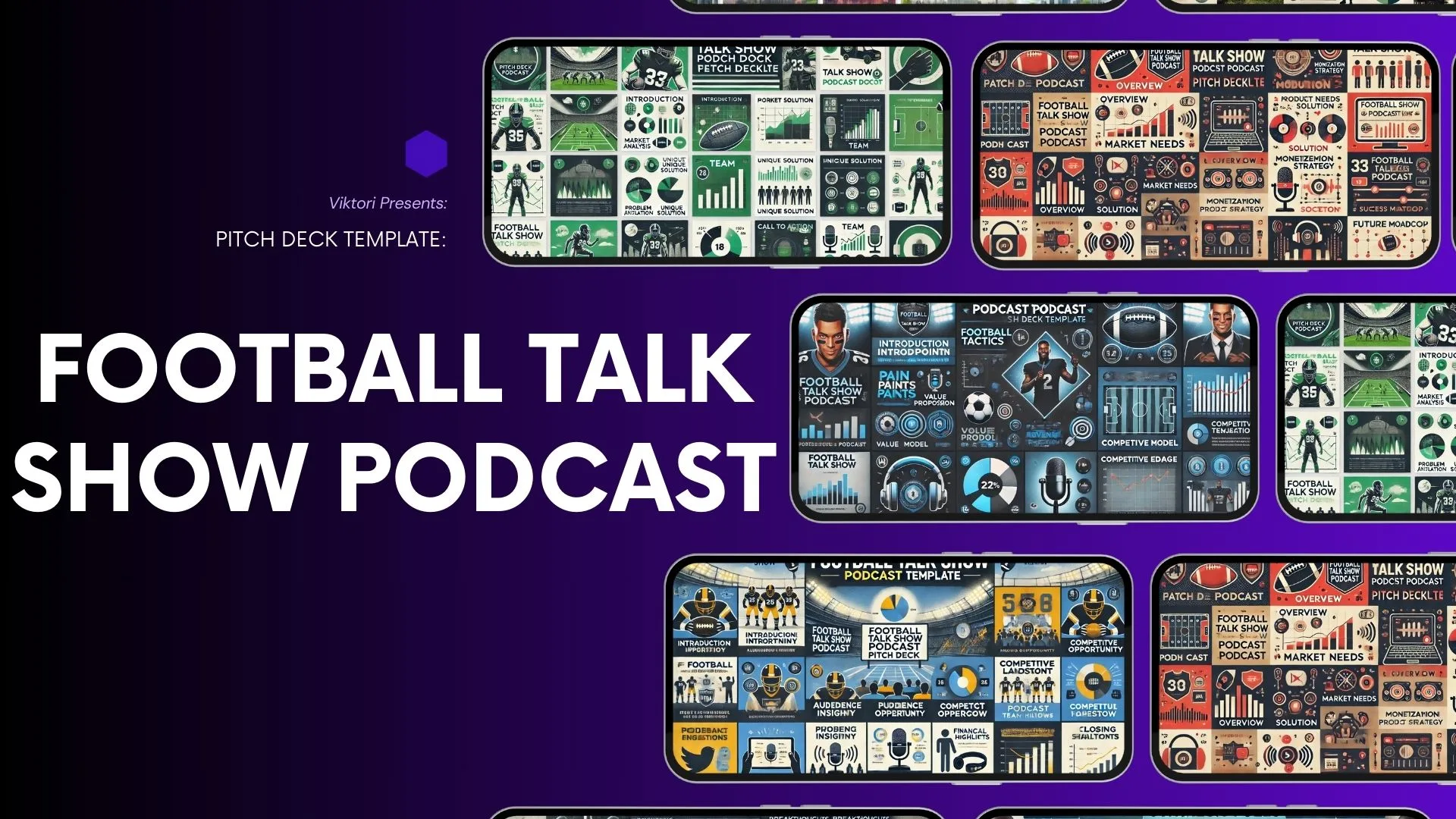
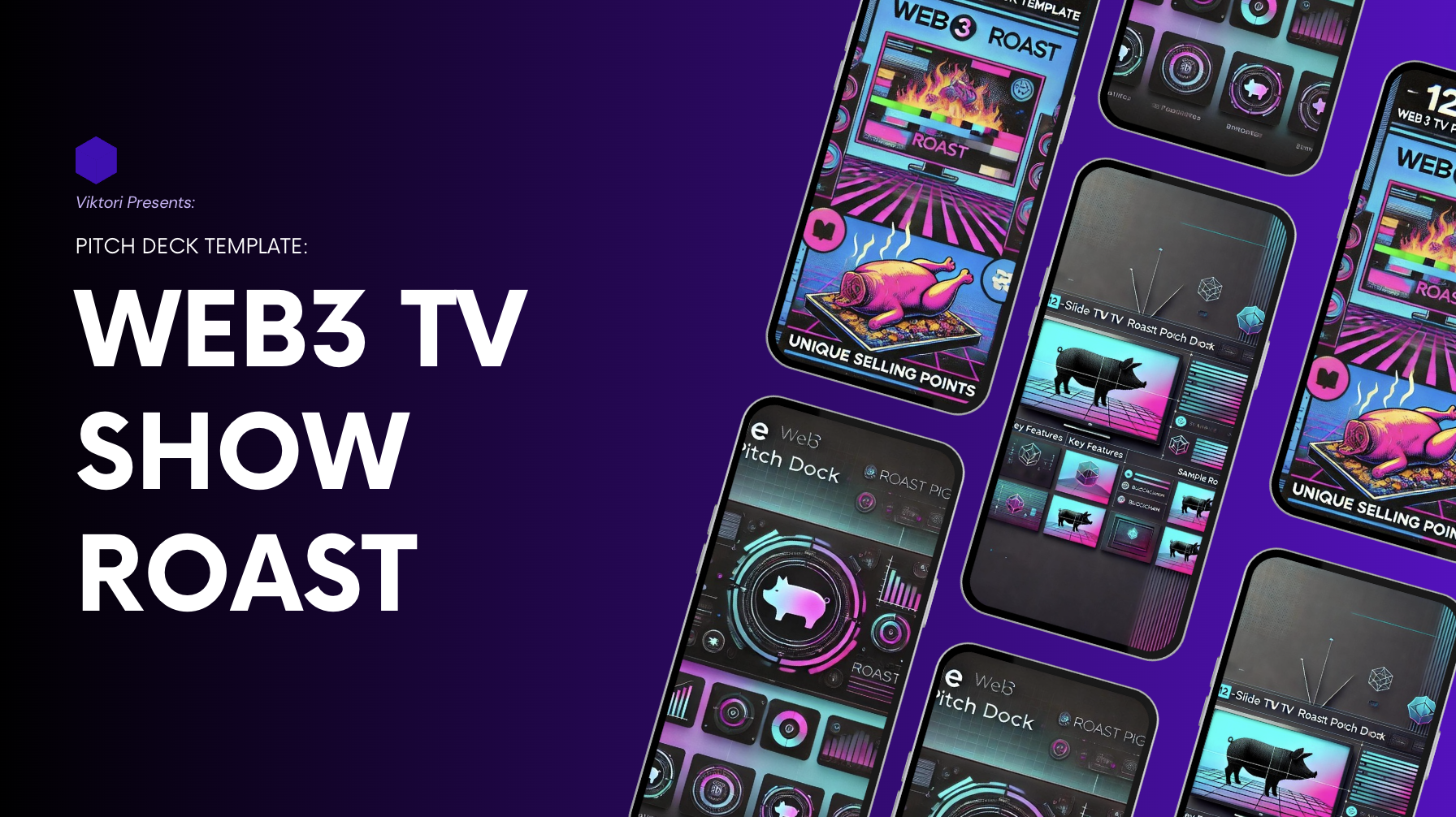
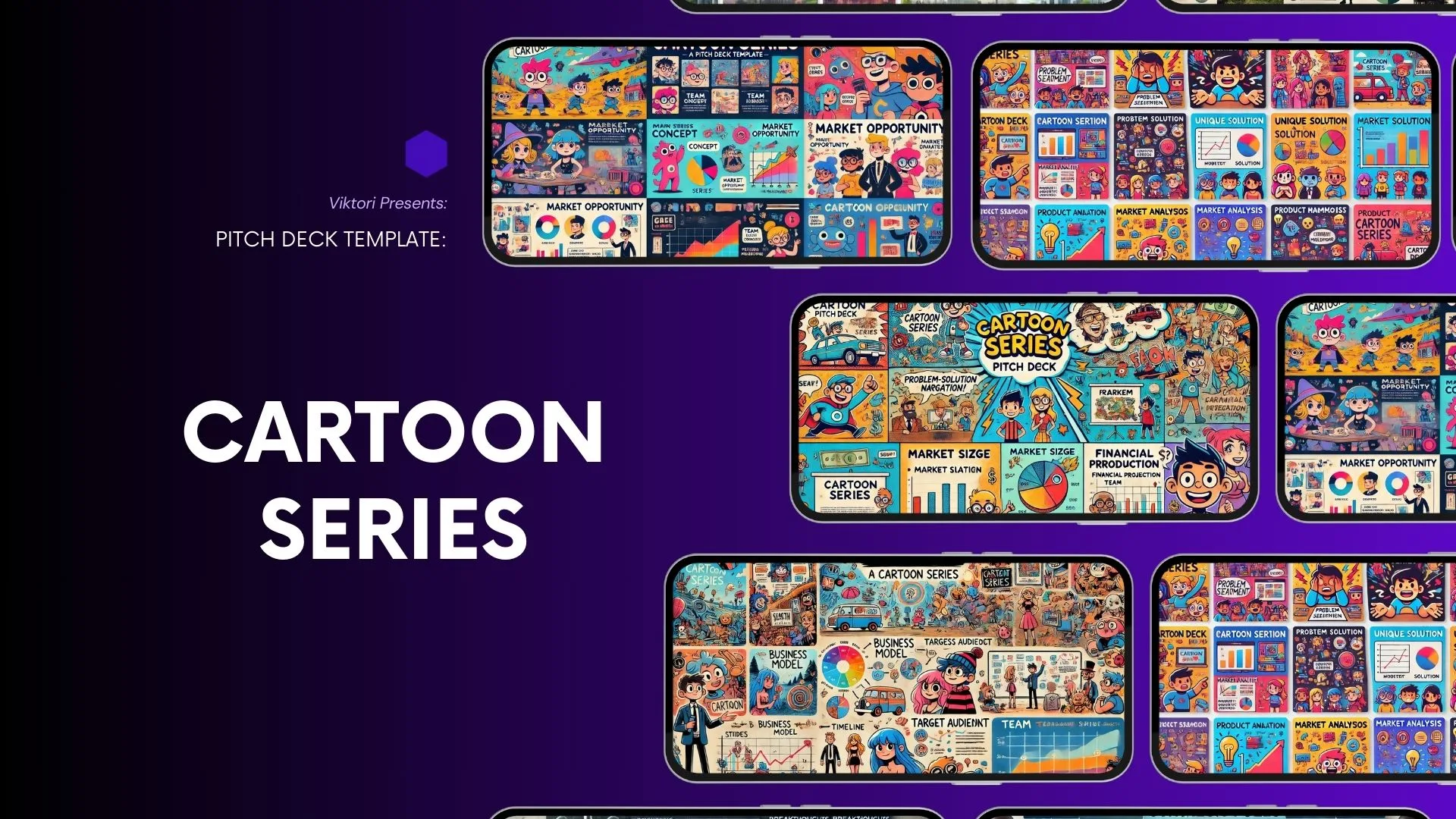
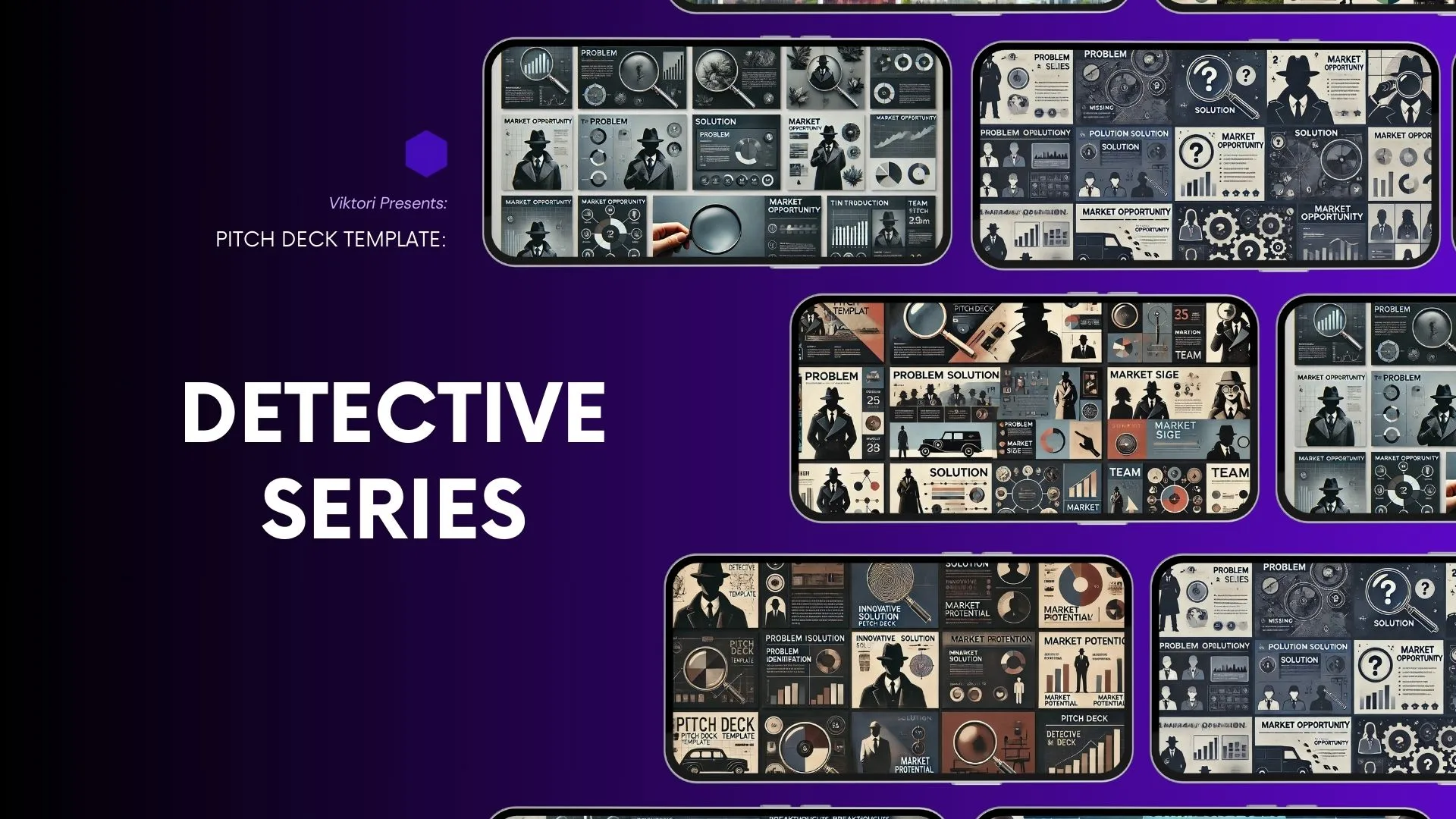
Related TV Show Pitch Deck Templates


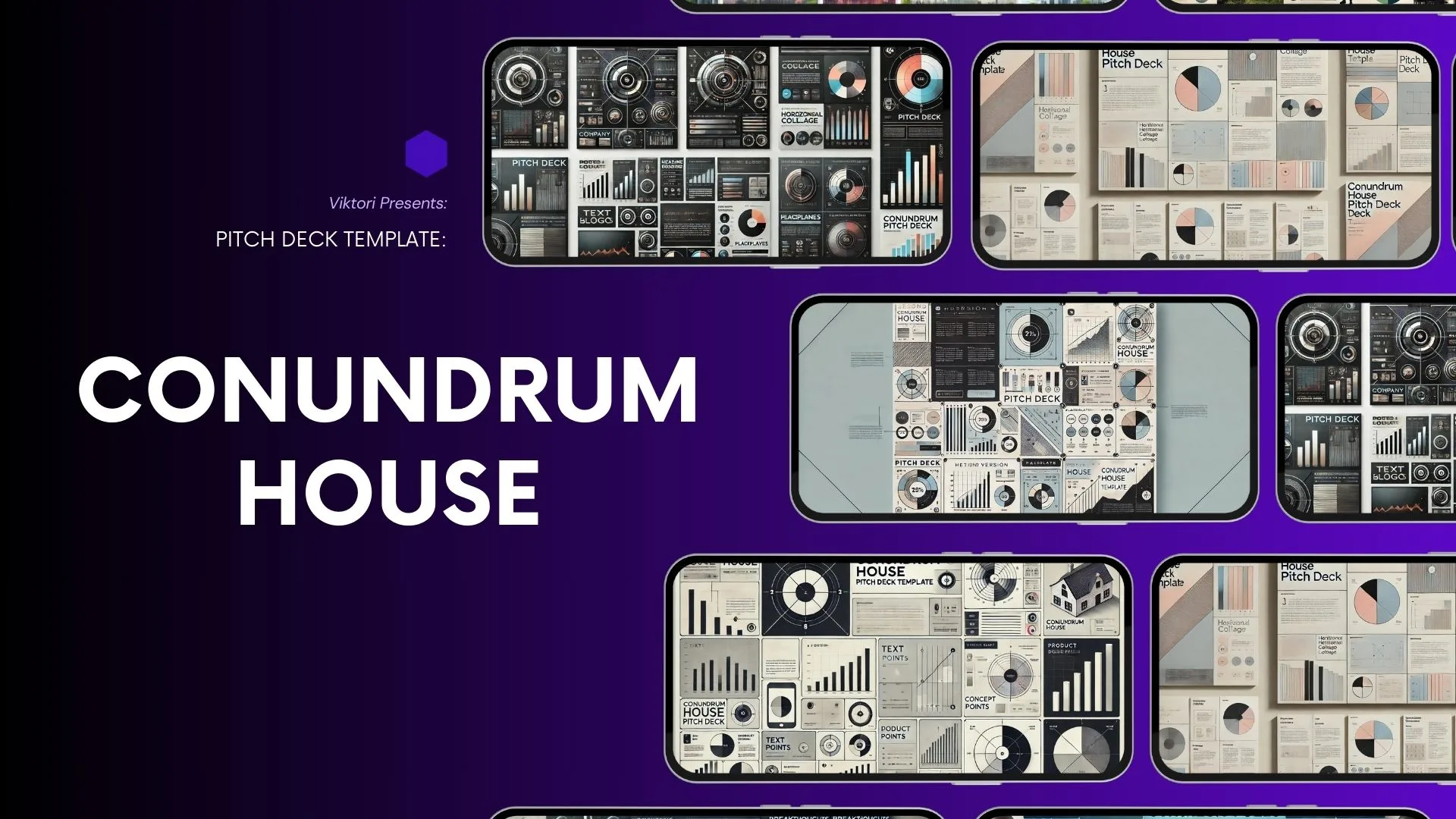
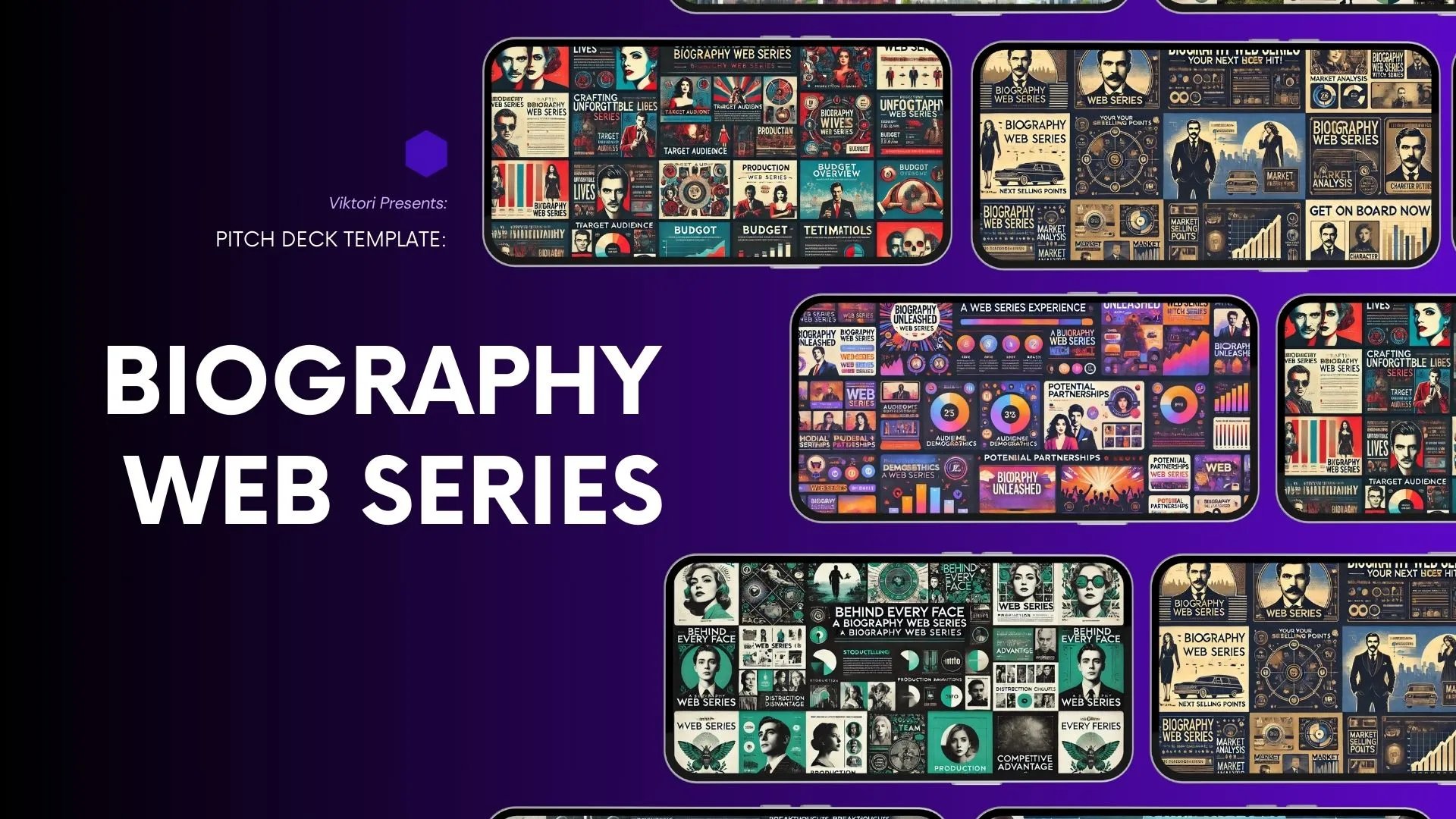
Slide by Slide Guides





Viktori. Pitching your way to your next funding.
Locations
Office 1: 633 North Wells Street Chicago, IL, United States, 60654
HQ: Boulevard P.O. 10000 Skopje, North Macedonia
Pitch Deck Resources
Case Studies
Client Reviews