


Burn rate is where a pitch deck stops being brave and starts being accountable.
Up to this point, the deck can talk about the market, the product, the team, the vision, and the size of the opportunity. All of that matters, but burn rate brings the conversation back to earth.
How much cash are you using every month?
How long does the money last?
What do you expect to prove before that time runs out?
That last question is the one that matters most.
I have seen decks where the founder says the round gives them 18 months of runway, then a few slides later the hiring plan quietly spends the money in nine. Investors catch that stuff. Maybe not on the first skim, but they catch it once they start thinking about the plan.
Runway sounds like comfort. In reality, runway is borrowed time. If the company does not use that time to reach a stronger position, the number does not mean much.
This is why burn rate and runway need to be explained carefully in a pitch deck. They shape how investors judge your capital discipline, your timing, and your ability to reach the next fundable milestone before the business needs more money.
What Burn Rate Means in a Pitch Deck
Burn rate is the amount of cash a company uses during a specific period, usually measured monthly.
If a startup spends $100,000 per month and brings in no revenue, the monthly burn is $100,000.
If the same startup spends $100,000 per month and earns $35,000 in revenue, the net burn is $65,000.
That difference matters.
Gross burn shows the size of the company’s spending base. Net burn shows how much cash the company is actually losing after revenue comes in.
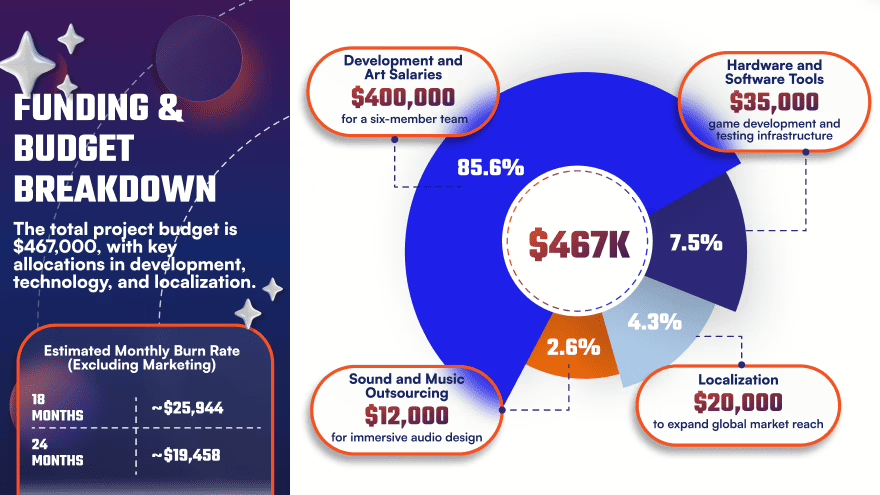
For most investor decks, net burn is the more useful number because it shows how quickly cash is disappearing from the bank. Gross burn still matters when investors want to understand cost structure, especially if the company has a heavy team, hardware costs, inventory, regulatory work, or a service delivery layer.
Do not overcomplicate this in the deck. Investors do not need a lecture on cash accounting. They need enough clarity to understand the pace of spending and whether that pace makes sense for the stage of the business.
What Runway Means in a Pitch Deck
Runway is how long the company can keep operating before it runs out of cash.
The basic calculation is simple:
Cash available divided by monthly net burn equals runway.
If the company has $1.2M in cash and burns $100K per month, it has about 12 months of runway.
That is the easy part.
The harder part is explaining what the company will do with those 12 months.
A founder can say they have 18 months of runway, but investors will immediately wonder what happens during those 18 months. More product development? More revenue? More pilots? A regulatory milestone? A larger customer base? Better margins? A stronger case for the next round?
A runway number without a milestone attached feels unfinished.
It tells investors the company can survive for a while, but it does not tell them why survival matters.
Why Investors Care About Burn Rate and Runway
Investors care about burn rate because it reveals how fast the company turns capital into time.
They care about runway because it reveals whether that time is enough.
This is where a lot of founders get too casual. They treat burn and runway like background financial details, when in reality they are part of the investment case.
A company with 20 months of runway and no clear milestone can still feel risky.
A company with 14 months of runway and a clear path to a meaningful proof point can feel more controlled.
That is my strong opinion here: the number of months matters less than the quality of the milestone attached to those months.
Eighteen months is not impressive by itself. Eighteen months to reach $100K MRR, finish a paid pilot program, complete a regulatory step, or get the business ready for Series A is much more useful.
Investors are trying to understand whether the company can become more valuable, more fundable, or less risky before it needs to raise again.
That is what burn rate and runway are really about.
Where Burn Rate and Runway Belong in a Pitch Deck
Burn rate and runway do not always need their own slide.
For most decks, they belong inside one of these places:
Financial projections
Use of funds
Fundraising ask
Financial summary
Cash flow section
Appendix
The right placement depends on how important cash timing is to the story.
If the deck is short, burn and runway can appear inside the ask slide.
Example:
Raising $2M to fund 18 months of runway and reach $100K MRR.
That might be enough for a simple seed deck.
If the company is more complex, the burn and runway logic may need to appear inside the financial projections or financial summary. For example, a healthcare company with long sales cycles, a hardware company with inventory needs, or an infrastructure project with staged capital requirements probably needs more context.
The mistake is forcing a dedicated burn rate slide because it sounds financially serious. That can make the deck feel clunky. Investors care about the information, not the existence of a formal slide title.
How Burn Rate Connects to Use of Funds
Burn rate and use of funds are closely connected.
Use of funds explains where the capital goes.
Burn rate explains how quickly that capital gets used.
Runway explains how much time the capital buys.
Those three things need to agree with each other.
If your use of funds says you are hiring aggressively, burn should increase.
If your use of funds says the round gives you 18 months of runway, the math should support that.
If the plan depends on enterprise sales, runway should be long enough for enterprise sales cycles.
If you say the money is going toward product development, but the hiring plan is mostly sales and marketing, investors will notice the mismatch.
For a deeper breakdown of how to structure the allocation side, read my guide on the use of funds slide.
That page handles where the money goes. This one handles whether the money gives the company enough time to make progress.
How Burn Rate Connects to Financial Projections
The financial projection slide shows how revenue, costs, margins, and cash needs may change over time.
Burn rate is part of that logic.
If the projection shows revenue growing quickly, the deck should show what it costs to create that growth.
If the projection shows the company hiring more people, burn should reflect the new salaries.
If the projection assumes a long sales cycle, the runway should be long enough to survive that delay.
This is where projections often break.
The revenue curve goes up beautifully, but the cost structure stays strangely calm. That makes the model look fake.
Real growth usually costs money before it produces efficiency. Sales teams need time. Product development takes people. Customer success costs money. Inventory absorbs cash. Regulatory work can drag on. Even a clean SaaS model gets messy once actual humans, sales cycles, and support needs enter the picture.
A good pitch deck does not hide that. It shows enough of the burn and runway logic for investors to understand the tradeoff.
How Burn Rate Connects to the Revenue Model
The revenue model slide explains how the business makes money.
Burn rate and runway explain how long the company can keep building before that revenue becomes strong enough to carry more of the business.
This depends heavily on the model.
A SaaS company selling annual contracts may need enough runway to survive long sales cycles and onboarding periods.
A consumer product company may need cash for inventory, packaging, distribution, and customer acquisition before repeat purchase behavior becomes visible.
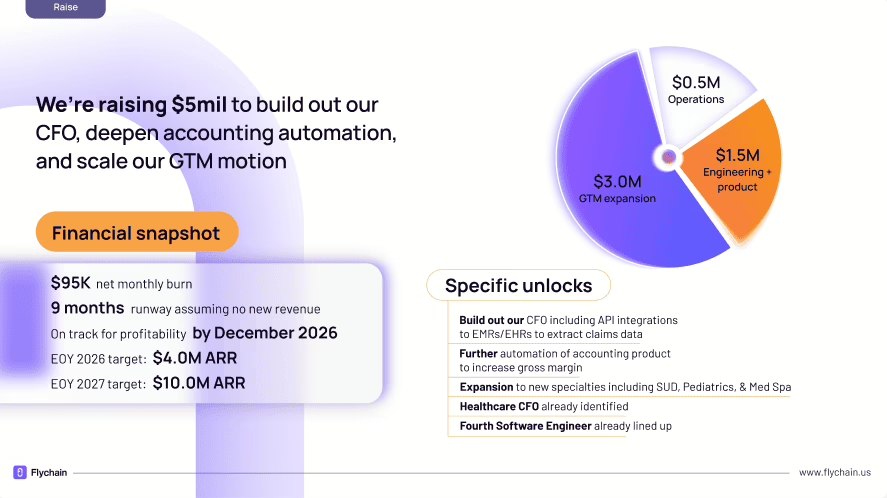
A marketplace may need to spend money building both supply and demand before transaction revenue becomes efficient.
A healthcare company may need patience because validation, procurement, compliance, and provider adoption rarely move as quickly as a founder wants them to.
Burn rate should make sense in the context of how money eventually enters the business.
When those pieces fit, the financial story feels controlled.
When they do not fit, investors start poking holes.
What to Show When You Mention Burn Rate and Runway
You do not need to show every line of the cash flow model inside the pitch deck.
That belongs in the spreadsheet or appendix.
The main deck should show the few numbers that help investors understand the capital plan.
Usually, that means current cash if relevant, current or expected monthly net burn, runway before or after the raise, the raise amount, and the milestone the company expects to reach.
A simple version might look like this:
Current net burn: $60K/month
Post-raise net burn: $110K/month
Raise amount: $2M
Runway after raise: 18 months
Milestone: reach $100K MRR and complete 5 paid pilots
That is enough to start a real conversation.
The investor can now challenge the sales timeline, the burn increase, the MRR target, or the hiring plan. That is fine. It is better to have a specific disagreement than a vague lack of trust.
A pitch deck should not try to avoid questions. It should make the right questions easier to ask.
A Weak Burn Rate Explanation
A weak version sounds like this:
Raising $2M for growth and operations.
Monthly burn: $150K
Runway: 13 months
This gives the investor numbers, but the plan is still foggy.
Growth could mean anything. Operations could mean anything. The runway number sits there without explaining what the company becomes after 13 months.
This kind of explanation makes investors do too much work. They have to infer the hiring plan, the revenue goal, the timing, and the reason the raise amount makes sense.
Most investors will not reward that. They will just assume the founder has not fully connected the plan.
A Stronger Burn Rate Explanation
A stronger version sounds like this:
Raising $2M to fund 18 months of runway and reach $100K MRR.
Current net burn is $60K per month. Post-raise burn increases to roughly $110K per month as the company hires two engineers and one sales lead. The capital supports a v2 product launch, five paid pilots, conversion of those pilots into annual contracts, and preparation for the next institutional round.
This version is better because the spending has a reason.
The burn increase is not random. It is tied to hiring. The hiring is tied to product and sales. Product and sales are tied to revenue. Revenue is tied to the next financing conversation.
That is the chain investors want to see.
They may still disagree with the assumptions, but at least the founder has shown the logic.
Burn Rate by Funding Stage
Burn rate should change as the company matures.
At pre-seed, the company is usually buying time to validate something basic. The burn should be controlled. Founder runway, MVP development, customer discovery, and early product work are normal. A bloated burn at this stage can make the company look reckless.
At seed, burn usually increases because the company is trying to move from validation to repeatability. This is where the spending often starts to support product development, first sales motion, customer success, and a more serious operating plan. The key question is whether the burn creates evidence that the next round will care about.
At Series A, burn should connect to scaling what has already started working. Sales capacity, customer success, product infrastructure, and market expansion become more important. The company should have enough data to justify why spending more can produce more growth.
At Series B, burn is judged against efficiency. A larger burn can be acceptable, but it needs to look like capital going into a machine with evidence behind it. If the business is still spending like it is experimenting, investors will treat it that way.
Burn Rate by Business Type
Every business burns cash differently.
A SaaS company usually burns through engineering, sales, marketing, and customer success. The investor will look at ARR growth, gross margin, churn, retention, CAC payback, and sales efficiency.
A marketplace burns through supply, demand, liquidity, trust, and transaction density. The real question is whether spending improves marketplace activity or just buys temporary traffic.
A consumer product company burns through inventory, packaging, production, distribution, marketing, and working capital. These companies can grow revenue and still get trapped by cash needs if inventory timing is poorly planned.
A healthcare company may burn through regulatory work, clinical validation, provider adoption, compliance, and long sales cycles. Runway matters a lot here because the market can move slowly even when the product is good.
A real estate, energy, or infrastructure company may have cash needs tied to permits, engineering, equipment, site control, development milestones, or project financing. Comparing this kind of company to a software startup is lazy analysis.
A service business burns through people, delivery capacity, sales, and operations. The question is whether spending creates better margins and recurring revenue, or simply adds overhead.
This is why generic advice about burn rate is often useless. The number only makes sense once you understand the model.
How to Present Burn Rate and Runway Visually
Keep the visual simple.
If burn and runway are not the main story, use a clean line inside the fundraising ask:
Raising $2M to fund 18 months of runway and reach $100K MRR.
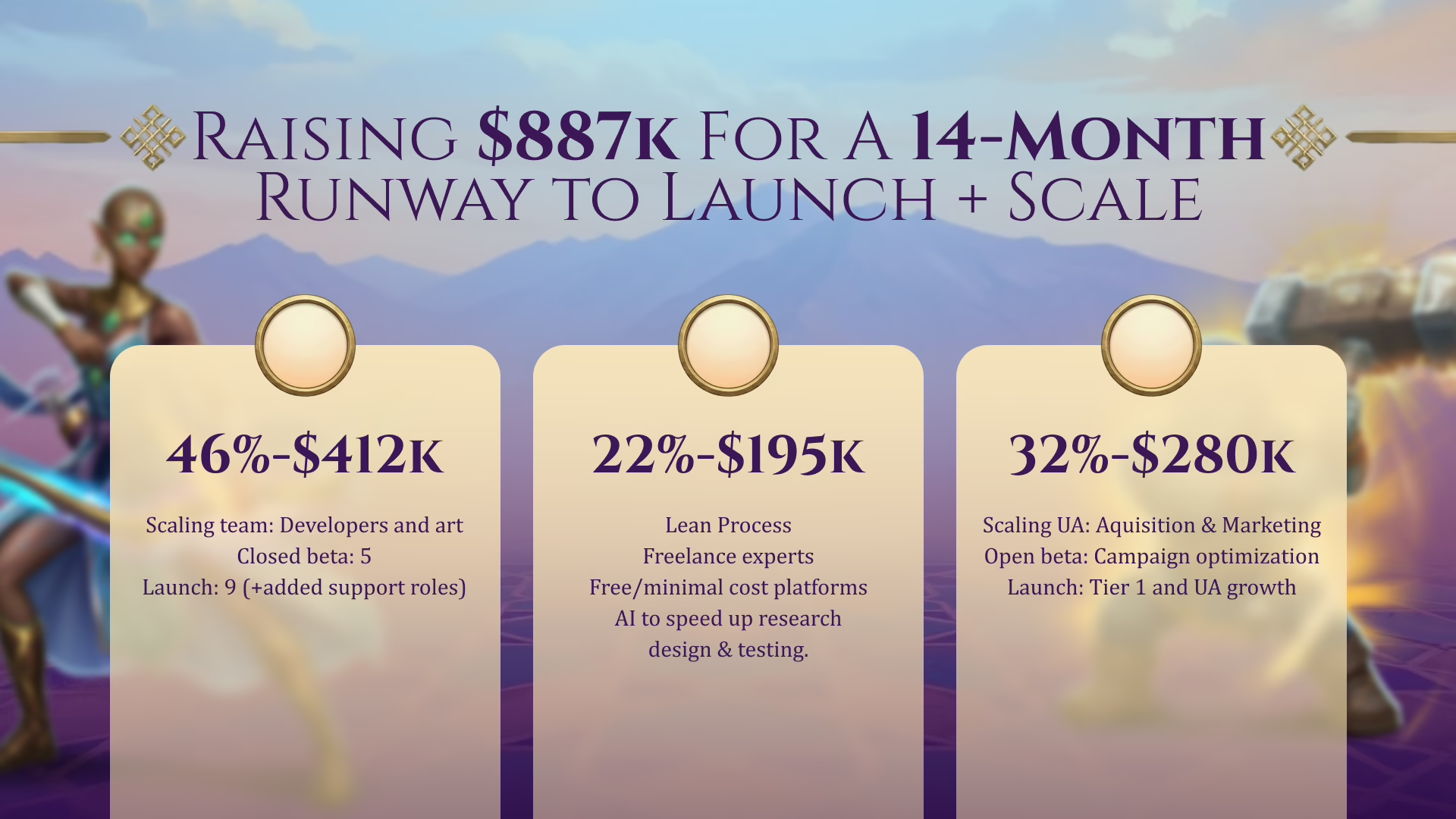
If the capital plan needs more explanation, use a small financial summary block with cash, net burn, runway, raise amount, and milestone.
If timing is the main risk, use a simple timeline:
Today
Raise closes
Product launch
Paid pilots
Revenue milestone
Next round readiness
That timeline can work better than a table because it shows how time, capital, and progress connect.
If the cash model is detailed, keep the detail in the appendix.
The main deck should make the investor understand the logic. The appendix can carry the heavier numbers.
Common Burn Rate and Runway Mistakes
The first mistake is hiding runway completely. If the deck asks for money and never says how long the money lasts, investors will assume the founder has not thought through capital timing.
Another mistake is showing runway without a milestone. Eighteen months of runway is only useful if those eighteen months lead somewhere.
A third mistake is pretending the hiring plan has no effect on burn. If the deck adds engineers, salespeople, customer success, operations, and compliance support, the cash burn should move.
The fourth mistake is ignoring revenue timing. Revenue does not always arrive when the spreadsheet says it will. Enterprise buyers delay. Pilots stretch. Retail orders slip. Clinics move slowly. Permits take longer than planned. This is where a little realism helps.
The last mistake is making the main deck look like a cash flow spreadsheet. Investors do need detail, but not all at once. Show the logic first. Keep the detailed model ready for diligence.
How Burn Rate and Runway Shape the Fundraising Narrative
Burn rate and runway are part of the fundraising story.
They explain why this amount of capital is needed now, how long it lasts, and what the company expects to prove before raising again.
A good capital story has a clear before and after.
Before the raise, the company has a current level of proof.
After the raise, the company should be in a stronger position.
That stronger position might mean more revenue, more customers, better margins, product readiness, regulatory progress, signed pilots, market expansion, or a clearer path to the next round.
If burn rate and runway do not support that before and after, the raise feels arbitrary.
If the capital story, investor logic, or funding path still feels unclear, you may need fundraising narrative strategy before turning the numbers into slides.
Burn Rate and Runway Template for a Pitch Deck
Use this when the deck needs a clear cash timing explanation.
Headline:
Raising $2M to fund 18 months of runway and reach $100K MRR.
Current position:
Current cash: $450K
Current net burn: $60K/month
Current runway: 7.5 months
Post-raise plan:
Raise amount: $2M
Expected post-raise net burn: $110K/month
Runway after raise: 18 months
Milestone logic:
The capital supports the v2 product launch, five paid pilots, the first sales hire, and conversion of early traction into repeatable revenue.
Assumption note:
Burn increases after the raise because the company is hiring product and sales capacity to support growth.
This is enough for the pitch deck. Put the detailed month-by-month cash flow in the model.
Burn Rate and Runway Copy Examples
SaaS:
Raising $2M to fund 18 months of runway, expand product and sales capacity, grow from $20K to $100K MRR, and prepare for Series A readiness.
Marketplace:
Raising $1.5M to fund 15 months of runway, increase supply and demand density, grow transaction volume, and validate repeat usage in the first two markets.
Consumer product:
Raising $750K to fund inventory, retail expansion, customer acquisition, and 12 months of runway while improving repeat purchase and gross margin.
Healthcare:
Raising $3M to fund 24 months of runway, complete regulatory preparation, expand provider partnerships, and validate the commercial model with early clinical customers.
Real estate or infrastructure:
Raising $4M to fund site control, permitting, engineering, and early development milestones before moving into project financing.
Service business:
Raising $500K to fund 12 months of runway, expand delivery capacity, build recurring client revenue, and improve operating margin.
Need Help Presenting Burn Rate and Runway Clearly?
Burn rate and runway shape how investors judge timing, risk, capital discipline, and whether the company can reach the next milestone before needing more money.
If you need help turning your burn rate, runway, revenue model, financial projections, use of funds, and fundraising story into a clearer investor-ready presentation, explore my pitch deck design services.
Burn Rate and Runway FAQ
What is burn rate in a pitch deck?
Burn rate is the amount of cash a company uses during a specific period, usually monthly. In a pitch deck, it helps investors understand how quickly the company is spending capital.
What is runway in a pitch deck?
Runway is the amount of time a company can keep operating before it runs out of cash. It is usually calculated by dividing available cash by monthly net burn.
Should I include burn rate in my pitch deck?
Include it when it helps explain the capital plan. It is especially useful for startups that are raising money to reach a specific milestone before the next financing conversation.
Should burn rate and runway have their own slide?
Usually no. They can appear inside the financial projections, use of funds, fundraising ask, cash flow section, or appendix. Create a dedicated slide only when cash timing is central to the investment case.
How much runway should a startup show after a raise?
Many startups raise for 12 to 24 months of runway, but the better answer depends on the stage, business model, market conditions, and milestone. The runway should be long enough to reach a proof point investors will care about.
What is the difference between gross burn and net burn?
Gross burn is total monthly spending before revenue. Net burn is monthly cash loss after revenue. Investors often care more about net burn because it shows how quickly cash is actually being consumed.
How does runway connect to use of funds?
Use of funds explains where the money goes. Runway explains how long the money lasts. The strongest decks connect both to milestones.
What is the biggest mistake founders make with runway?
The biggest mistake is treating runway as a comfort metric instead of a progress metric. The question is not only how long the company survives. The question is what the company proves during that time.
How does burn rate connect to financial projections?
Burn rate is part of the financial projection logic. If revenue, hiring, market expansion, or product development changes over time, the burn rate should reflect that plan.
Can a high burn rate be acceptable?
Yes, if the burn is intentional, controlled, and tied to meaningful progress. High burn becomes dangerous when it is disconnected from revenue, milestones, operating discipline, or the next financing plan.
