

Author: Viktor
Pitch Deck & Fundraising Consultant. Ex Advertising. Founder of Viktori. $500mill In Funding. Bald Since 2010.
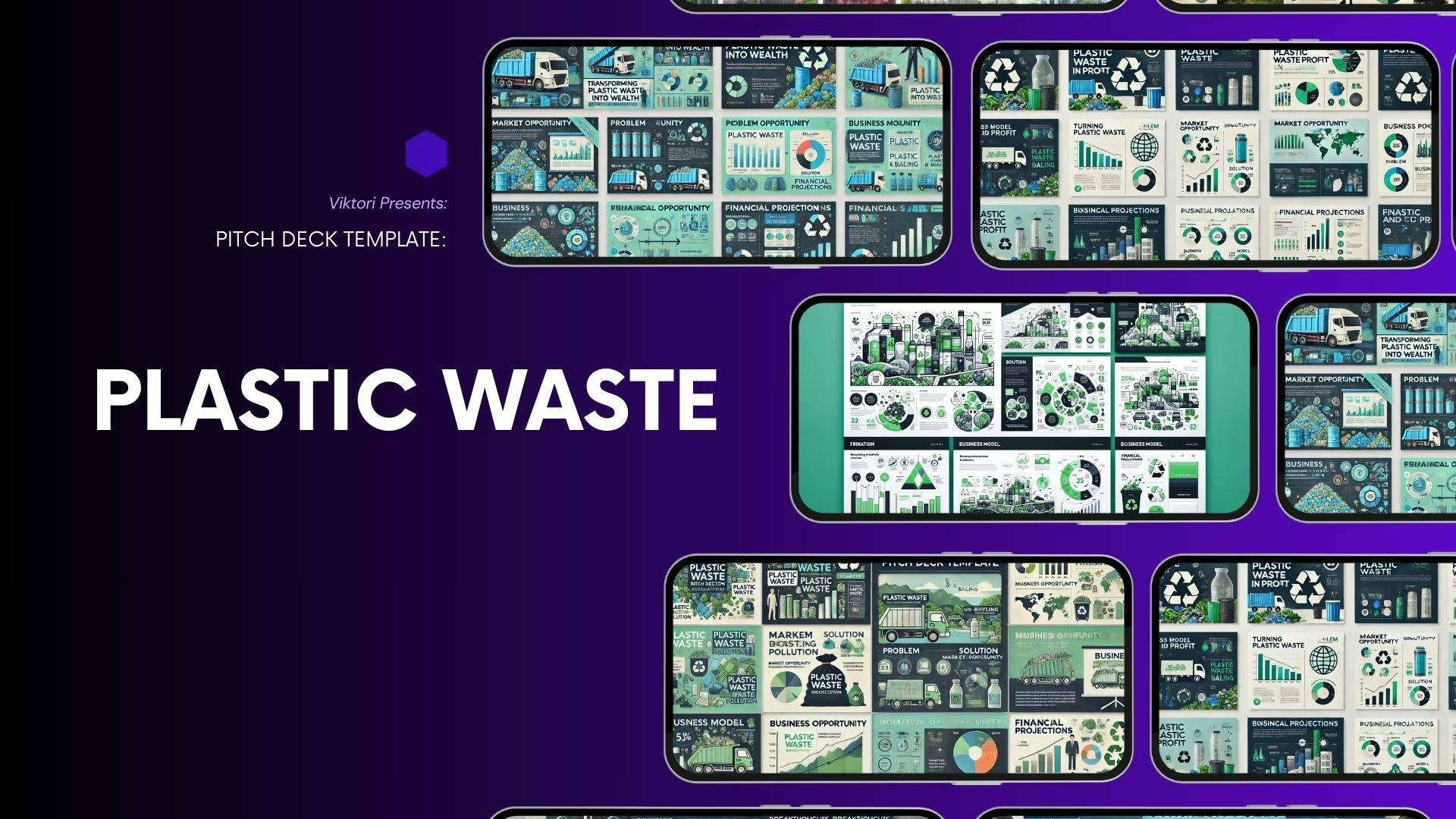
The 12 Slide Plastics Waste Pitch Deck Template
Slide 1 – Elevator Pitch (The Big Picture)
Headline: Turning Plastic Waste Into Profitable Resources
Subhead: A scalable solution to eliminate plastic pollution while creating high-value recycled materials.
Key Elements:
Problem in one sentence: “Over 400 million tons of plastic are produced annually, but less than 10% is recycled.”
Solution in one sentence: “We convert plastic waste into high-quality raw materials for industries seeking sustainable alternatives.”
Market Impact: “Tapping into a $60B+ circular plastics economy projected to grow at 12% CAGR.”
Visuals/Design Tip:
Use a single, bold background image of a landfill or ocean waste transforming into clean, recycled plastic pellets or finished goods. Keep text limited to 3 concise bullet points.
Slide 2 – Investor Highlights (Why This Opportunity is Hot)
Headline: A Compelling ESG & Economic Opportunity
Highlights:
Massive Market Demand: Global brands & governments committing to 25-50% recycled content by 2030.
Proven Traction (Customizable): Early pilots show 40% cost savings vs virgin plastics and 2x higher recycling efficiency.
Scalable Tech/Model: Adaptable to municipal, industrial, and consumer waste streams.
ESG Alignment: Contributes directly to SDG 12 (Responsible Consumption) & SDG 14 (Life Below Water).
High ROI Potential: Revenue streams from recycling fees, sale of recycled materials, and carbon credits.
Visuals/Design Tip:
Investor-friendly icons (market size, cost savings, ESG) laid out in a clean 2×3 grid.
Slide 3 – Problem & Urgency (Name the Enemy)
Headline: Plastic Waste Is Choking Our Planet and Profits
The Problem:
8 million tons of plastic enter oceans every year.
Landfills are overrun, and incineration releases toxic emissions.
Companies face regulatory penalties and consumer backlash for unsustainable packaging.
Urgency:
By 2030, non-compliance with plastics regulations could cost corporations $100B annually in fines and lost market share.
Visuals/Design Tip:
Split-screen image: Left = polluted ocean and landfill, Right = corporate logos facing “ESG Failure” headlines.
Slide 4 – Unique Solution (The Missing Puzzle Piece)
Headline: Turning Waste Into Wealth With Circular Plastics
Key Points:
Our Approach: Advanced recycling and processing technology that transforms mixed plastic waste into high-grade raw materials.
Differentiation: Works on contaminated/mixed plastics where traditional recycling fails.
Impact: Reduces landfill dependency by 70% and cuts virgin plastic demand significantly.
Visuals/Design Tip:
A “Before → After” flow: Mixed waste → Process → Clean recycled materials → End-use products.
Slide 5 – Market Opportunity
Headline: A $60B+ Circular Plastics Economy Waiting to Be Captured
Data Points:
TAM (Total Addressable Market): $60B global recycled plastics market (projected 12% CAGR through 2030).
SAM (Serviceable Available Market): Municipal & industrial waste streams worth $15B in accessible contracts.
Trends Driving Growth:
Regulatory bans on single-use plastics in 120+ countries.
Corporate pledges: Coca-Cola, Unilever, and Nestlé committing to 50% recycled content.
Consumer demand for sustainable products.
Visuals/Design Tip:
Use a clean market size chart (TAM/SAM/SOM pyramid) and highlight top 3 growth drivers.
Slide 6 – Business Model
Headline: Multiple Revenue Streams Across the Value Chain
Revenue Streams:
Recycling Contracts: Municipalities and industrial players pay for waste processing.
Material Sales: High-quality recycled plastics sold to packaging, textiles, and automotive industries.
Licensing & Tech Partnerships: Licensing recycling tech to local operators.
Carbon Credits: Monetizing CO2 savings in ESG markets.
Unit Economics (Generic Example):
Processing cost: $300/ton → Resale price: $600/ton = 2x margin potential.
Visuals/Design Tip:
Use a simple diagram showing “Input (waste) → Processing → Revenue Channels.”
Slide 7 – Customer Benefits (Sell Benefits, Not Features)
Headline: Clear Benefits for Every Stakeholder
Corporations & Brands
Reduce virgin plastic procurement costs by up to 40%.
Meet regulatory and ESG compliance with certified recycled content.
Strengthen brand perception as a sustainability leader.
Governments & Municipalities
Lower landfill pressure and waste management costs.
Achieve national recycling and zero-waste targets faster.
Consumers
Access to sustainable products with lower environmental impact.
Increased brand trust in companies using recycled materials.
Visuals/Design Tip:
Use a 3-column layout (Corporations / Governments / Consumers) with short benefit statements.
Slide 8 – Competitive Advantage (Show, Don’t Tell)
Headline: A Step Ahead of Conventional Recycling Solutions
Comparison Table:
| Factor | Traditional Recycling | Our Solution |
|---|---|---|
| Waste Type | Limited to clean, sorted plastics | Works with mixed, contaminated plastics |
| Cost Efficiency | High processing costs | 30-50% lower operational costs |
| Product Quality | Lower-grade recycled output | High-grade, industry-standard recycled pellets |
| Scalability | Location-specific | Modular and scalable across geographies |
Moat Elements:
Proprietary processing technology.
Early partnerships with major brands and municipalities.
Data-driven sorting & tracking system for transparency.
Visuals/Design Tip:
Side-by-side table or a “Leader Quadrant” positioning your company as high-tech and high-impact.
Slide 9 – Go-To-Market Strategy
Headline: Rapid Expansion Through Strategic Partnerships
Phase 1: Pilot Programs (0-12 months)
Secure contracts with 2–3 municipalities and key industrial partners.
Showcase successful case studies to attract corporate buyers.
Phase 2: Regional Scale-Up (12-24 months)
Build modular facilities in high-waste urban centers.
Partner with FMCG brands to secure long-term offtake agreements.
Phase 3: Global Licensing & Tech Transfer (24+ months)
License technology to local operators in Asia, Africa, and LATAM.
Customer Acquisition Channels:
Direct government contracts.
Corporate sustainability initiatives.
ESG investor networks.
Visuals/Design Tip:
A simple 3-stage timeline with key milestones and logos of target partners.
Slide 10 – Traction & Case Studies (Build Trust)
Headline: Proven Results in Early Pilots
Sample Metrics (Replace with Real Data):
Processed 5,000 tons of plastic waste in pilot phase.
Achieved 85% recycling efficiency vs. 40% industry average.
Generated $1.2M revenue from recycled pellet sales in Year 1.
Case Study Snapshot:
Partner: Mid-sized packaging company.
Result: Reduced virgin plastic procurement by 30% and saved $200K annually.
Third-Party Validation:
Certification from recognized environmental standard bodies.
Positive testimonials from early corporate and municipal partners.
Visuals/Design Tip:
Photos of pilot facilities, charts of performance metrics, or testimonial quotes.
Slide 11 – Financials & Scalability (Demonstrate Potential)
Headline: Strong Unit Economics and Rapid Scalability
3-Year Projections (Example):
Year 1: $2M revenue, breakeven operations.
Year 2: $8M revenue, 20% EBITDA margin.
Year 3: $25M revenue, 35% EBITDA margin.
Scalability Drivers:
Modular facility design reduces setup time to 6 months per site.
Expanding into high-demand markets with existing waste challenges.
Unit Economics Example:
Processing cost per ton: $300 → Sale price per ton: $600 → Gross margin ~50%.
Visuals/Design Tip:
Bar chart for revenue projections + map showing planned geographic expansion.
Slide 12 – Vision & Ask (Future Impact + Call to Action)
Headline: Building a Circular Plastics Economy at Global Scale
Vision Statement:
“A world where plastic waste is no longer pollution, but a valuable resource fueling sustainable industries.”
The Ask:
Funding Required: $5M (or appropriate amount).
Use of Funds: 40% facility expansion, 30% technology optimization, 20% market development, 10% team growth.
Investor Return Potential: Projected 3-5x return in 5 years.
Closing Note:
“We’re not just solving the plastics crisis — we’re transforming waste into profit and creating long-term environmental and economic impact.”
Visuals/Design Tip:
End with a powerful image (clean ocean or recycled products) and your contact information.
Need a customized pitch deck template?
1000s of individuals like you asked for a tailored version of this template to help them craft a better pitch deck. Get yours for just $44. As soon as I get your request, I’ll follow up with one question to confirm what exactly is that are you pitching. This will help me nail the content for you.
What you’ll get is a 3+ page editable word document that contains a fully fleshed out slide by slide deck content for your pitch.
Alternatively, book a call and you’ll brief me on the specifics of your pitch.
Book The Free 30 Min Call
5/5 Upwork Rating | 100% TrustPilot

Plan on building the pitch deck yourself?
Option 1: Build with Gamma
Gamma is the preferred Ai presentation maker and if you’re strapped for resources, this tool will help you flesh out an ok pitch deck presentation. Here’s how it looks:
Option 2: Do It Yourself
If you’ve done a few presentation in the past, then this is the option you should take. Follow these simple steps:
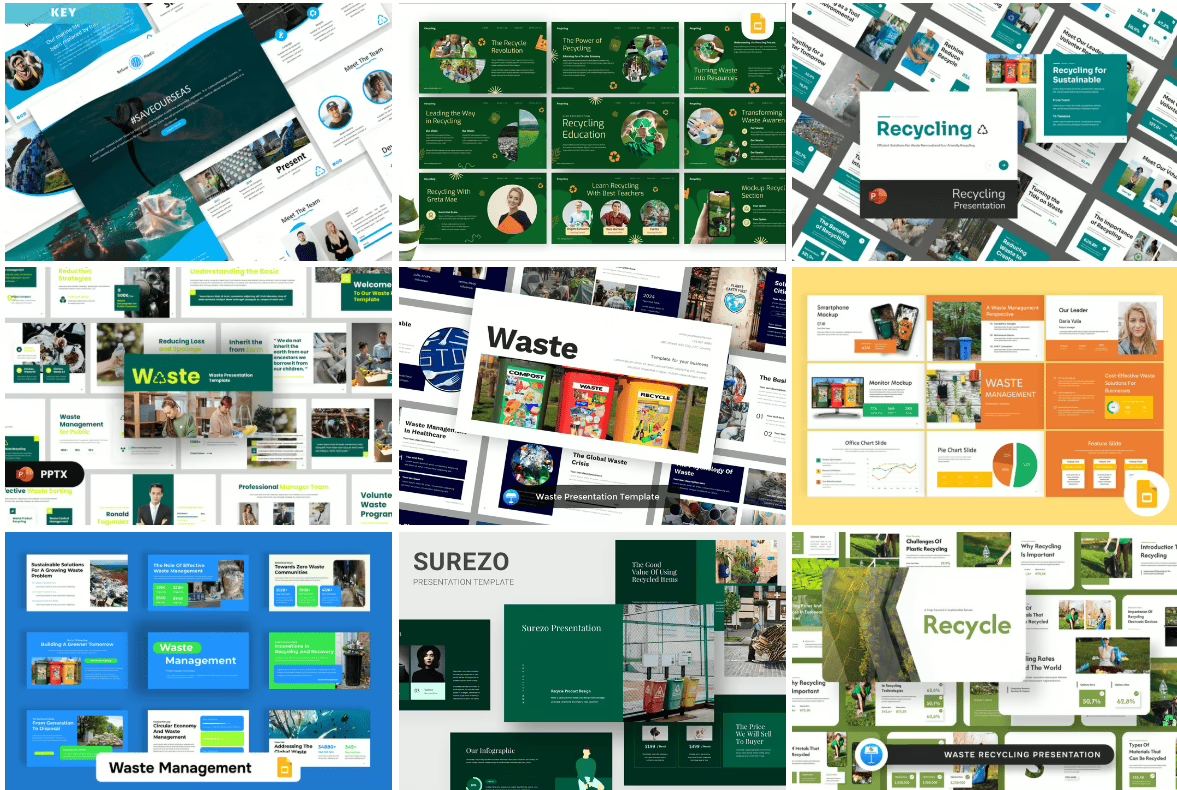
- Pick one of the premium Envato templates by clicking on the image below,
- Answer the slide by slide questions I listed in the section below the image
- Follow the pitch deck guide I linked out to, next to the questions,
And build your own deck. It’s as easy as that.
Key Questions to Ask Yourself And Write The Plastics Waste Pitch Deck Slides
Slide 1 – Elevator Pitch
What single sentence best describes your business?
What major problem are you solving, and why is it urgent?
Who is your primary target customer?
What is your unique approach or technology in one sentence?
What measurable impact do you create (economic, environmental, or social)?
Slide 2 – Investor Highlights
What are your top 3–5 impressive achievements or traction points so far?
What is your total addressable market size (TAM)?
Why is now the right time to invest in this solution?
What differentiates you from competitors (in one line each)?
What ESG or sustainability impact metrics can you share?
Slide 3 – Problem & Urgency
What are the biggest pain points caused by plastic waste (economic, regulatory, environmental)?
Who suffers the most from this problem (governments, corporations, consumers)?
What happens if this problem remains unsolved in 5–10 years?
Are there any strong data points or statistics to illustrate the scale of the problem?
What regulations or trends are creating urgency for action?
Slide 4 – Unique Solution
What exactly does your solution do?
What makes it different or better than existing solutions?
What technologies or methods do you use?
What results or benefits have you already proven (efficiency, cost, quality)?
Can you describe the “before vs after” impact for customers or the environment?
Slide 5 – Market Opportunity
What is the estimated global market size for recycled plastics or waste processing?
What segment of this market are you targeting first (TAM, SAM, SOM breakdown)?
What key trends (regulatory, consumer, corporate) are driving demand?
Who are your top 3–5 target customer segments (and why them first)?
Are there specific high-value geographies or industries you are focusing on?
Slide 6 – Business Model
How do you make money?
What are your different revenue streams (contracts, sales, licensing, carbon credits)?
What are your unit economics (cost per ton processed, revenue per ton)?
How scalable is this model (new sites, tech licensing, partnerships)?
What is the expected payback period or gross margin?
Slide 7 – Customer Benefits
What are the top 3 benefits for each key stakeholder (corporations, governments, consumers)?
How much cost savings or efficiency can you deliver for customers?
What ESG or compliance goals do you help customers meet?
Do you have customer testimonials or proof points?
Slide 8 – Competitive Advantage
Who are your top 3 competitors?
How do you compare to them (cost, efficiency, scalability, product quality)?
What unique intellectual property or partnerships do you have?
What are your main barriers to entry for competitors (patents, tech, partnerships)?
Slide 9 – Go-To-Market Strategy
Who are your first customers or pilot partners?
What partnerships are key to scaling?
What is your rollout timeline (pilot → regional scale → global expansion)?
What channels are you using to acquire customers (direct sales, government tenders, B2B ESG networks)?
Slide 10 – Traction & Case Studies
What measurable traction have you achieved (processed tons, revenue, clients)?
What successful pilot case studies can you share (name, results, savings)?
Who are your early adopters or partners?
What third-party certifications, awards, or media coverage can you cite?
Slide 11 – Financials & Scalability
What are your 3–5 year revenue and profit projections?
What are your current unit economics (cost vs revenue per ton)?
How fast can you expand operations (time to build new facilities)?
What markets or industries will you enter next?
Slide 12 – Vision & Ask
What is your long-term vision (10 years from now)?
What funding are you asking for, and what will it be used for (allocation breakdown)?
What is your projected ROI for investors?
What is the big-picture impact (environmental, economic, societal)?
What’s the best call to action for investors right now (pilot, funding, partnerships)?

Follow My Plastics Pitch Deck Guide
A detailed guide with the steps outlined to get to a investor ready deck.
Related Plastics Pitch Deck Templates

Slide by Slide Guides





Viktori. Pitching your way to your next funding.
Locations
Office 1: 633 North Wells Street Chicago, IL, United States, 60654
HQ: Boulevard P.O. 10000 Skopje, North Macedonia
Pitch Deck Resources
Case Studies
Client Reviews