



Author: Viktor
Pitch Deck & Fundraising Consultant. Ex Advertising. Founder of Viktori. $500mill In Funding. Bald Since 2010.
The 12 Slide Community Living Pitch Deck Template
Slide 1. Elevator Pitch
Purpose: Capture attention instantly with a one-line value proposition.
Structure: Who + Problem + Unique Solution + Impact
Template Copy (replaceable):
“We provide affordable, connected, and flexible community living for urban professionals, solving the crisis of loneliness, rising rents, and inflexible housing — creating scalable, sustainable living spaces for the future.”
Visuals:
Full-bleed photo of residents in a shared living space.
Overlay tagline: “Not just housing. Belonging.”
Slide 2. Investor Highlights
Purpose: Hook investors with traction and credibility before diving into details.
Template Copy:
90% Occupancy across pilot properties
3x YoY Revenue Growth
40% Lower Churn vs. traditional rentals
$X ARR with scalable pipeline
Y Cities in expansion roadmap
Visuals:
Clean layout with icons or bold numbers.
Consistent color scheme to highlight metrics.
Slide 3. The Problem
Purpose: Define the enemy and create urgency.
Template Copy:
Housing affordability crisis: Rent up X% in the past 5 years.
Urban loneliness epidemic: 60% of young adults report isolation.
Rigid leases don’t fit modern lifestyles (remote work, mobility).
Agitate (Investor Psychology):
“If we fail to solve this, millions will remain priced out, disconnected, and underserved.”
Visuals:
Split-screen image: stressed renter vs. vibrant community living scene.
Infographic with bold statistics.
Slide 4. The Opportunity
Purpose: Show the scale and inevitability of the market shift.
Template Copy:
$X Billion Total Addressable Market (urban rentals + co-living).
Demand growth: Millennials & Gen Z seek affordability and connection.
Macro trends driving adoption: remote work, rising rents, sustainability.
Visuals:
Market sizing pyramid (TAM → SAM → SOM).
Trend icons or photos that represent demographic shifts.
Slide 5. The Solution
Purpose: Present your model as the missing piece of the puzzle.
Template Copy:
Flexible leases (from 1 month to 1 year).
Affordable pricing through shared amenities and optimized space.
Built-in community: events, coworking, shared kitchens.
Tech-enabled platform for booking, managing, and connecting.
Visuals:
“Before vs. After” lifestyle comparison graphic.
Flow diagram showing resident journey: Discover → Join → Engage → Stay.
Slide 6. Business Model
Purpose: Demonstrate financial sustainability and scalability.
Template Copy:
Revenue streams:
Core rent (recurring)
Membership fees (premium access)
Value-added services (cleaning, events, food delivery)
Unit Economics:
Avg. monthly rent: $X
CAC: $Y → LTV: $Z
Payback period: X months
Visuals:
Simple flow diagram: Residents → Rent/Memberships → Revenue.
Table or chart comparing CAC vs. LTV.
Slide 7. Customer Benefits
Purpose: Show the tangible value created for all stakeholders.
Template Copy:
For Residents: Affordable rent, flexible living, built-in social network, improved well-being.
For Investors: Strong yield, predictable recurring revenue, scalable growth potential.
For Cities/Communities: Urban revitalization, sustainable use of housing stock, reduced isolation.
Visuals:
3-column layout (Residents, Investors, Cities).
Icons or photos illustrating benefits (smiling tenants, financial chart, sustainable housing).
Slide 8. Traction / Case Studies
Purpose: Build trust by showing real-world results.
Template Copy:
Pilot property results: 90%+ occupancy within X months.
Resident retention rate: Y%.
Testimonials: Short quotes highlighting community and affordability.
Press coverage or awards.
Visuals:
Photos of actual properties or staged community spaces.
Before/after numbers in infographic format.
Logos of press outlets, if applicable.
Slide 9. Go-to-Market Strategy
Purpose: Demonstrate a clear, scalable plan to attract residents and expand.
Template Copy:
Acquisition Channels: Digital marketing, employer partnerships, relocation services, influencers.
Community Engagement: Resident referral programs, curated events, loyalty programs.
Expansion Roadmap: Initial focus on X cities, followed by regional/national rollout.
Visuals:
Funnel diagram (Awareness → Interest → Move-In → Retention).
Map with highlighted expansion cities.
Slide 10. Competitive Landscape
Purpose: Position yourself as the differentiated leader.
Template Copy:
Traditional rentals: Affordable but isolating and rigid.
Other co-living startups: Flexible but lack community focus or scalability.
Your model: Affordable, connected, tech-enabled, scalable.
Visuals:
2×2 Matrix (Price vs. Community, or Flexibility vs. Scalability).
Competitive comparison table with checkmarks showing your advantages.
Slide 11. Financial Projections
Purpose: Showcase growth potential and path to profitability.
Template Copy:
3–5 Year Forecast:
Units under management
Occupancy rate
Revenue projections
EBITDA margin
Key assumptions: market growth rate, retention, expansion costs.
Visuals:
Line or bar chart for revenue and units growth.
Table for high-level financials.
Clean, conservative design to build credibility.
Slide 12. Vision & Impact
Purpose: End with inspiration and long-term mission.
Template Copy:
“We are redefining urban housing for the 21st century — creating sustainable, connected, and inclusive communities that improve lives and generate strong financial returns.”
Long-term impact: reduce housing insecurity, combat loneliness, promote sustainable living.
Vision beyond profit: “Homes that connect people, not just house them.”
Visuals:
Lifestyle photo collage showing community life.
Visionary tagline overlay in large font.
Need a customized pitch deck template?
1000s of individuals like you asked for a tailored version of this template to help them craft a better pitch deck. Get yours for just $44. As soon as I get your request, I’ll follow up with one question to confirm what exactly is that are you pitching. This will help me nail the content for you.
What you’ll get is a 3+ page editable word document that contains a fully fleshed out slide by slide deck content for your pitch.
Alternatively, book a call and you’ll brief me on the specifics of your pitch.
Book The Free 30 Min Call
5/5 Upwork Rating | 100% TrustPilot

Plan on building the pitch deck yourself?
Option 1: Do It Yourself
If you’ve done a few presentation in the past, then this is the option you should take. Follow these simple steps:
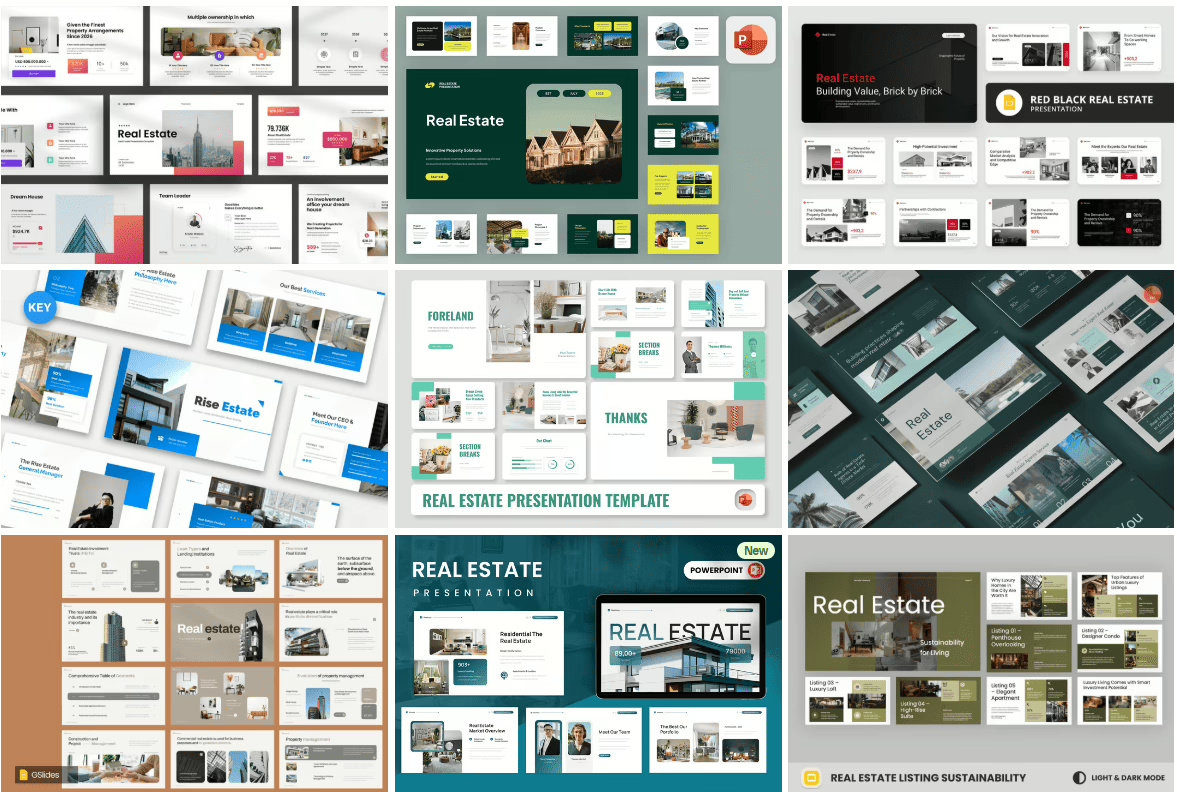
- Pick one of the premium Envato templates by clicking on the image below,
- Answer the slide by slide questions I listed in the section below the image
- Follow the pitch deck guide I linked out to, next to the questions,
And build your own deck. It’s as easy as that.
Key Questions to Ask Yourself And Write The Community Living Pitch Deck Slides
Slide 1. Elevator Pitch
Who exactly are we serving (target market: young professionals, digital nomads, students, retirees)?
What is the single biggest problem they face today in housing?
What is our one-line solution in plain English?
How is our model different from traditional rentals or co-living?
What’s the emotional benefit (not just functional) we deliver?
Slide 2. Investor Highlights
What are our top 3–5 most impressive metrics?
What is our occupancy rate or retention rate?
What is our current revenue, ARR, or YoY growth rate?
How many cities or units are we operating in?
Do we have strategic partnerships, awards, or press features worth mentioning?
Slide 3. The Problem
What pain points are renters currently facing (affordability, loneliness, inflexible leases)?
Do we have supporting data or stats (rent increases, loneliness surveys, market reports)?
What happens if these problems are not solved (economic, social, emotional impact)?
Can we humanize the problem with resident stories?
Slide 4. The Opportunity
What is the size of the housing/co-living market (TAM, SAM, SOM)?
What demographic or macro trends support growth (urbanization, remote work, generational preferences)?
Who is actively looking for alternatives to traditional housing?
What makes this market “ripe” for disruption right now?
Slide 5. The Solution
What is our exact offering (leases, amenities, community programming, tech platform)?
How does our model solve each pain point identified in the Problem slide?
What is our “before vs. after” story for residents?
What makes our approach unique compared to competitors?
Slide 6. Business Model
What are our main revenue streams (rent, memberships, services)?
What is our average revenue per resident or per unit?
What is our CAC (customer acquisition cost)?
What is our LTV (lifetime value of a customer)?
What is our gross margin or path to profitability?
Slide 7. Customer Benefits
How do residents benefit emotionally and financially?
How do investors benefit financially and strategically?
How do cities and communities benefit socially and economically?
Can we provide short testimonials or anecdotes to support these benefits?
Slide 8. Traction / Case Studies
What are our pilot or current project results (occupancy, retention, revenue)?
Do we have strong testimonials from residents?
What partnerships, awards, or recognition have we secured?
Are there any before-and-after case studies we can highlight?
Slide 9. Go-to-Market Strategy
How do we currently acquire residents?
What is our sales and marketing strategy (digital ads, partnerships, referrals)?
What is our customer journey from awareness to move-in?
What cities or regions are we targeting next, and why?
Do we have a timeline or roadmap for expansion?
Slide 10. Competitive Landscape
Who are our main competitors (co-living startups, traditional rentals, short-term housing)?
What are their strengths and weaknesses?
How do we differentiate (price, community, tech, scale, brand)?
Can we visualize this differentiation in a 2×2 matrix or comparison table?
Slide 11. Financial Projections
What is our 3–5 year forecast for revenue, units, and occupancy?
What assumptions are we making (market growth, retention, expansion costs)?
What is our projected EBITDA or profitability timeline?
How much funding do we need, and how will it be used?
Slide 12. Vision & Impact
What is our long-term vision beyond financials?
What social or environmental impact do we aim to achieve (affordable housing, sustainability, community well-being)?
How does this tie into broader housing or urban living trends?
What legacy do we want to create in the housing market?
Related Real Estate Pitch Deck Templates



Slide by Slide Guides





Viktori. Pitching your way to your next funding.
Locations
Office 1: 633 North Wells Street Chicago, IL, United States, 60654
HQ: Boulevard P.O. 10000 Skopje, North Macedonia
Pitch Deck Resources
Case Studies
Client Reviews
Presentation Resources
Pitch Deck Services
Industry Specific Pitch Deck Services:
Additional Services
About Viktori