


Raising capital for a technical startup is not only about having a smart product. That is the part many founders get wrong.
The product matters, obviously. Nobody is saying you can walk into a fundraise with a beautiful logo, three buzzwords, and the confidence of a man selling airport cologne. But in complex categories like AI infrastructure, data center cooling, liquid cooling operations, and thermal monitoring, the product is only one piece of the fundraising story.
The bigger challenge is helping investors understand why the market is moving, why this problem is becoming urgent, why your company belongs in the middle of that shift, and why capital now can create a defensible position before the market becomes obvious to everyone else.
That is where the capital narrative comes in.
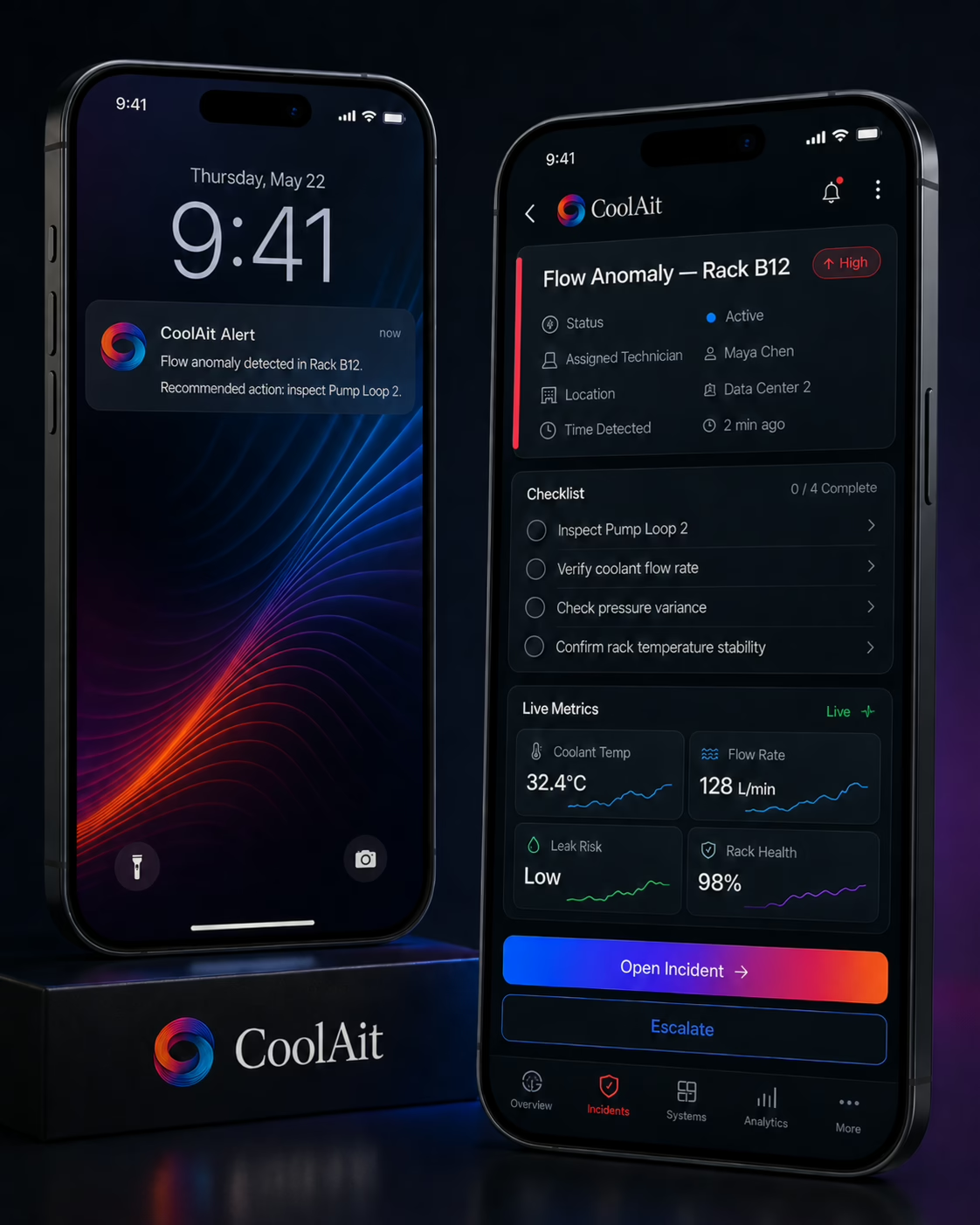
CoolAit is a useful example. It is a pre-built AI infrastructure brand concept built around liquid cooling operations for AI data centers (available for purchase). The platform concept monitors coolant health, rack performance, flow anomalies, leak risk, thermal efficiency, incident response, and operator workflows.
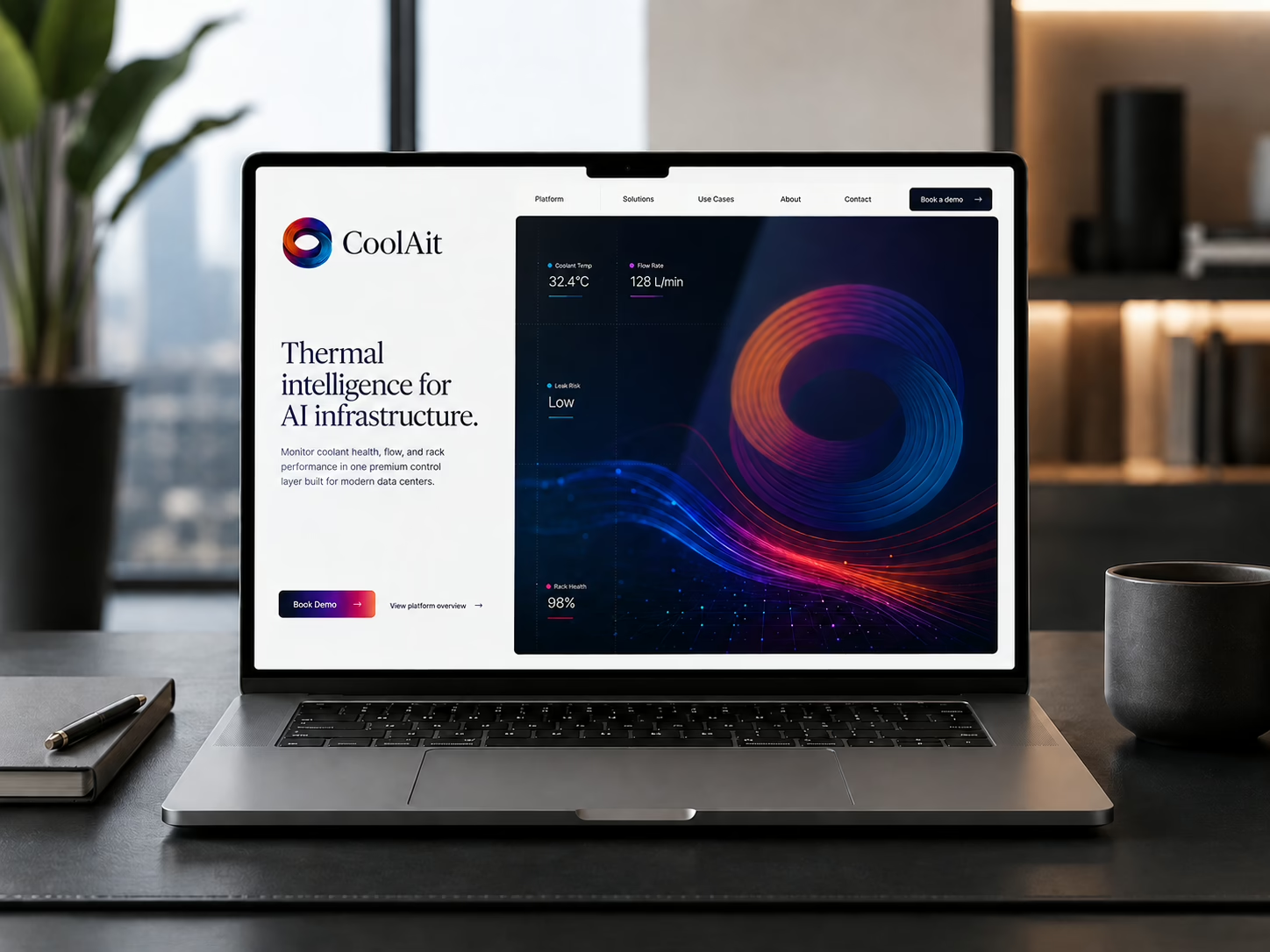
But if we were preparing CoolAit for a serious fundraise, we would not lead with “we made cooling software.”
That is too small.
The stronger fundraising narrative would be:
AI compute growth is creating a thermal operations bottleneck, and CoolAit is building the intelligence layer for liquid-cooled data centers.
That is the difference between describing a product and pitching a venture-scale opportunity.
The Fundraising Problem in Technical Infrastructure
Technical founders often assume that investors will understand the importance of the product because the technical problem is obvious to them.
It usually is not.
A founder might spend years thinking about coolant flow, rack density, leak risk, server health, edge compute, direct-to-chip cooling, predictive maintenance, or data center operations. An investor may understand the broader AI infrastructure wave, but they may not immediately understand why liquid cooling operations needs its own software layer.
That gap is where many fundraises become painful.
The founder explains features.
The investor waits for the market story.
The founder shows diagrams.
The investor asks about timing, wedge, buyer urgency, and scale.
The founder gets frustrated because “they don’t get it.”
But investors are not supposed to do all the narrative work themselves. The founder has to create the bridge.
For a niche like AI data center liquid cooling operations, the fundraise has to answer a few very specific questions:
Why is this market opening now?
Why will AI data centers need better cooling operations?
Who has the budget for this?
Is this a software opportunity, hardware opportunity, services opportunity, or infrastructure platform opportunity?
How does the company enter the market?
What proof can be shown before wide adoption?
Why is this not just a feature inside existing data center infrastructure management tools?
Why does this team deserve the capital to build it?
A strong pitch deck helps answer these questions, but the pitch deck should not work alone. For this kind of industry, the fundraising package needs more than slides.
Start With the Capital Narrative
The capital narrative is the core story behind the raise. It explains why the company should exist, why the timing is right, and why capital can accelerate the opportunity.
For CoolAit, the weak version would be:
CoolAit monitors liquid cooling systems for data centers.
That is technically clear, but it does not sound like a fundable company yet.
A stronger version would be:
CoolAit helps AI data centers prevent thermal incidents by turning liquid cooling data into real-time operational intelligence.
Better. Now we have the customer, the risk, and the outcome.
The strongest fundraising version would be:
As AI data centers become hotter, denser, and more expensive to operate, liquid cooling is becoming a critical infrastructure layer. CoolAit is building the operational intelligence platform that helps data center teams monitor coolant health, detect anomalies, reduce cooling risk, and protect uptime across high-density AI environments.
That version does more work. It explains the market shift, the problem, the buyer environment, the category, and the company’s role inside the opportunity.
That is what a capital narrative should do.
It should move the company from “we built a tool” to “we are positioned inside an unavoidable market shift.”
What You Need Before Raising in This Industry
For an AI infrastructure or liquid cooling operations startup, the fundraising process should not begin with only a pitch deck. The deck is important, but it is one asset inside a larger investor-readiness system.
At minimum, a company in this space should prepare:
1. Investor Memo
The investor memo is where the deeper logic lives. It should explain the market shift, the cooling operations problem, the wedge, the buyer, the product architecture, the business model, the competitive landscape, and the fundraising use of proceeds.
For CoolAit, the investor memo would need to cover:
- why AI data centers are creating new cooling demands
- why liquid cooling creates a new operations layer
- why monitoring, workflow, and predictive alerts matter
- who buys the product and why they would care now
- how the company enters the market through pilots, audits, or partnerships
- how it expands from monitoring into intelligence, reporting, integrations, and workflow
- why this can become a meaningful infrastructure software business
The memo is especially important in technical categories because investors may need more context than a 12-slide deck can provide.
2. One-Pager
The one-pager is the fast-read version of the opportunity. It should be clean, visual, and direct.
For a CoolAit-style company, the one-pager should include:
- one-line description
- market shift
- problem
- solution
- target buyers
- product modules
- business model
- traction or pilot plan
- fundraising ask
- contact information
This is useful for warm intros, investor follow-ups, strategic partners, and initial conversations.
3. Pitch Deck
The pitch deck still matters, but it should be kept sharp. For this kind of company, the structure can be simple:
- Market shift: AI infrastructure is creating new cooling and operations demands
- Problem: high-density AI racks create thermal risk, fragmented monitoring, and operational pressure
- Solution: CoolAit turns liquid cooling data into real-time operational intelligence
- Product: dashboard, alerts, rack health, coolant metrics, leak risk, reports, workflows
- Market and buyer: AI data centers, colocation providers, HPC facilities, edge compute, enterprise infrastructure teams
- Business model: SaaS, monitoring plans, audits, integrations, partner programs
- Go-to-market: pilots, cooling audits, hardware partnerships, data center operators
- Competitive position: purpose-built for liquid-cooled AI infrastructure
- Fundraise: amount, milestones, use of funds
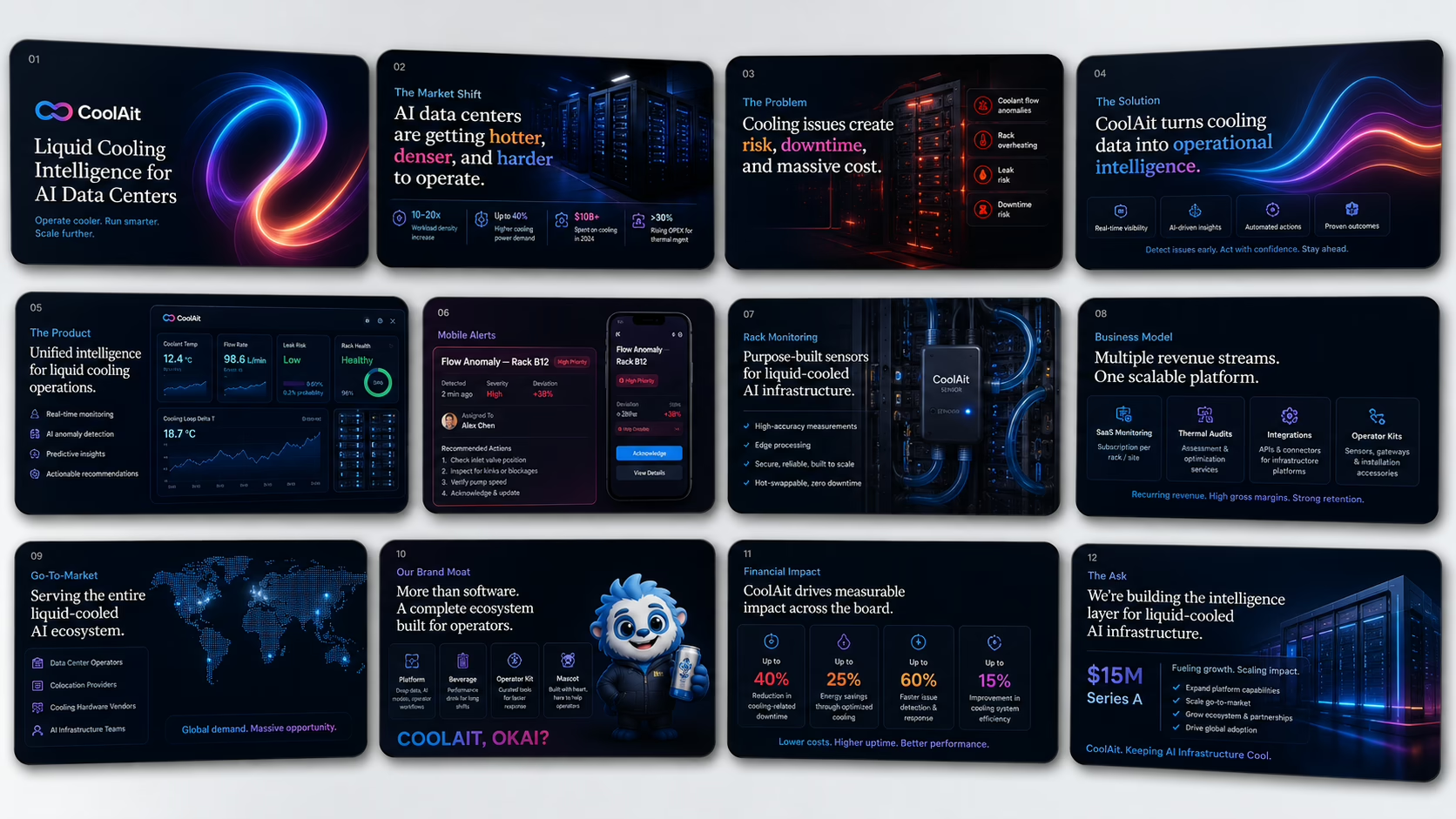
That is enough. The deck does not need to become a 38-slide museum exhibit.
4. Technical Architecture Overview
Investors in this niche will want to understand how the product works without needing a PhD in coolant drama.
The technical overview should explain:
- what data is collected
- where the data comes from
- whether the product integrates with sensors, CDUs, cooling systems, rack monitoring, or DCIM tools
- how alerts are generated
- how predictive maintenance may work
- what security and reliability standards are required
- how the product fits into existing data center operations
This does not need to reveal proprietary details, but it should show that the company is technically grounded.
5. Pilot Plan
For AI infrastructure and data center operations, pilots matter because buyers are cautious. Nobody wants to install random software into a critical infrastructure environment because the landing page looked cool.
The pilot plan should explain:
- what a 30, 60, or 90-day pilot looks like
- what systems are monitored
- what success metrics are tracked
- what data is needed
- what reports are delivered
- what operational improvements are expected
- how the pilot converts into a paid contract
For CoolAit, a pilot could start with a thermal risk audit and a limited monitoring deployment across selected racks or cooling loops.
6. ROI Model
The financial argument is critical.
A CoolAit-style company should not only say “we improve cooling operations.” It should show how that improvement might affect:
- downtime risk
- energy efficiency
- maintenance costs
- incident response time
- equipment lifespan
- operator workload
- insurance or compliance reporting
- expansion readiness for high-density racks
Even if early numbers are assumptions, the model helps investors understand how buyers will justify the purchase.
7. Data Room
A serious raise needs a clean data room. For this industry, that could include:
- pitch deck
- investor memo
- one-pager
- financial model
- product roadmap
- technical architecture overview
- market research
- competitive landscape
- pilot plan
- founder bios
- customer discovery notes
- letters of intent or pilot conversations, if available
- use of funds
- legal documents
It does not need to be overcomplicated, but it should feel organized. Fundraising is already difficult. Do not make investors feel like they are digging through a junk drawer with a valuation cap.
Where to Find Investors for This Kind of Company
For a liquid cooling operations or AI infrastructure startup, the investor list should be more targeted than generic SaaS investors.
The best investor categories would include:
AI Infrastructure Investors
These investors are already looking at compute, cloud infrastructure, AI tooling, data center demand, GPU infrastructure, and the operational layers around AI deployment.
CoolAit fits here because it supports the infrastructure required to keep AI systems running.
Climate Tech and Energy Efficiency Investors
Cooling operations connects directly to energy efficiency, waste reduction, and data center sustainability. If the product can show meaningful cooling efficiency gains or reduced energy waste, climate-oriented investors may be relevant.
Industrial Tech Investors
This category is useful because liquid cooling operations is not just software. It touches physical infrastructure, sensors, hardware integrations, facilities, and operational workflows.
Deep Tech Investors
If the product has a meaningful technical advantage in predictive monitoring, sensor integration, thermal intelligence, or infrastructure analytics, deep tech investors may be a fit.
Data Center and Infrastructure Funds
Some investors focus on digital infrastructure, real estate infrastructure, data centers, cloud infrastructure, and mission-critical systems. These may be especially relevant if the company has partnerships or pilots with operators.
Strategic Investors
This may be one of the most important categories.
Potential strategic investors or partners could include:
- liquid cooling hardware companies
- data center infrastructure providers
- CDU manufacturers
- rack and server infrastructure companies
- facilities management platforms
- DCIM software providers
- colocation operators
- cloud infrastructure companies
- energy optimization companies
Strategics may care because CoolAit could make their hardware or infrastructure offerings more intelligent, more measurable, and more valuable.
Corporate Venture Arms
Corporate venture groups connected to energy, infrastructure, industrial automation, cloud, data centers, semiconductors, or enterprise IT may be relevant, especially if the company can support their broader ecosystem.
Operators and Angels
The best angels would not be generic startup people. They would be former data center executives, infrastructure operators, enterprise IT leaders, cloud infrastructure veterans, cooling engineers, or founders who have sold into critical infrastructure markets.
In a niche like this, industry credibility matters. A small number of relevant operator-angels can be more useful than a long list of random investors who “love AI” because they saw one chart on LinkedIn.
How to Build the Investor List
The investor list should be built around thesis fit, not vanity.
For a CoolAit-style raise, I would search for investors using terms like:
- AI infrastructure
- data center infrastructure
- digital infrastructure
- climate tech infrastructure
- energy efficiency software
- industrial IoT
- deep tech infrastructure
- data center cooling
- enterprise infrastructure software
- hardware-enabled SaaS
- mission-critical infrastructure
- thermal management
- high-performance computing
The goal is to find investors who already understand at least one side of the opportunity: AI infrastructure, physical infrastructure, energy efficiency, data centers, or industrial operations.
Then the outreach should be personalized around their thesis.
Not:
We are raising for our AI platform.
Everyone is raising for an AI platform. The phrase has been turned into wallpaper.
Better:
We are building the operational intelligence layer for liquid-cooled AI data centers, starting with coolant health, rack-level thermal risk, and incident response workflows.
That is much more specific and far more likely to attract the right investor.
The Fundraising Story for CoolAit
The capital narrative for CoolAit can be framed around four connected ideas.
First, AI infrastructure growth is increasing pressure on data centers. More compute means more power, more heat, and more operational complexity.
Second, liquid cooling is becoming more important as high-density racks push beyond what traditional cooling approaches can handle efficiently.
Third, the hardware layer alone is not enough. Operators need visibility, alerts, reporting, workflow, and predictive intelligence around liquid cooling systems.
Fourth, CoolAit becomes the software and brand layer that helps operators manage this environment with more confidence.
That is the fundraising story.
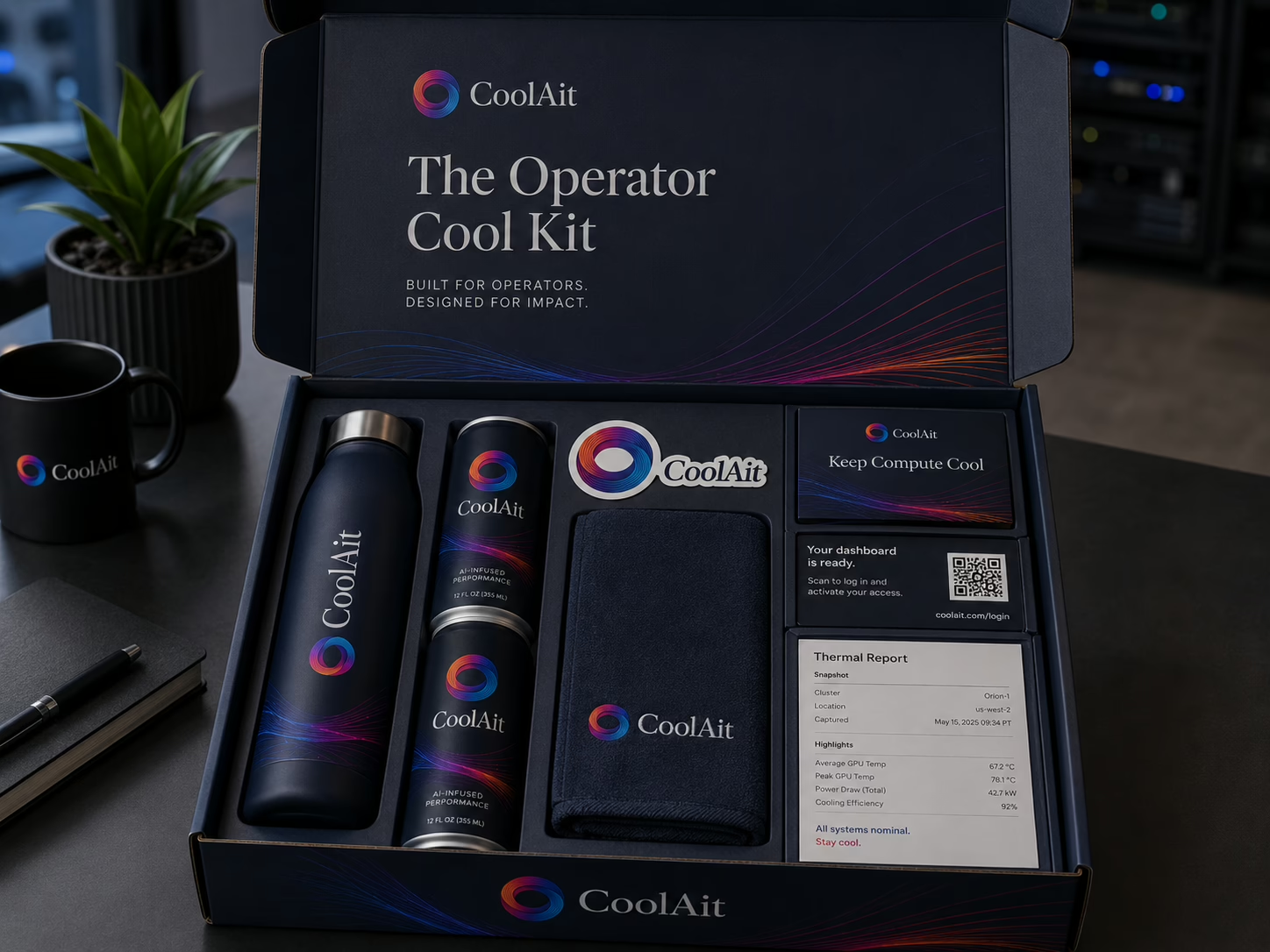
The beverage, operator kits, and mascot are not the core business model. They are brand assets that make the company more memorable, more human, and more campaignable.
That matters, but it should not confuse the raise.
The raise is for an AI infrastructure software company.
The brand extension helps it stand out.

What the Fundraise Could Be Used For
For a company like CoolAit, the use of funds should be tied to milestones. Investors do not want to hear that capital will be used for “growth” in the abstract. That sounds like saying the money will be thrown into a hole and wished upon.
A clearer use of funds could include:
- building the MVP monitoring platform
- developing integrations with cooling hardware and sensor systems
- hiring engineering talent
- running pilot deployments with data center operators
- building reporting and alerting modules
- validating the ROI model
- developing security and compliance foundations
- creating technical documentation
- building partnerships with cooling infrastructure companies
- hiring early sales or solutions engineering support
The milestones should be practical:
- complete MVP
- secure pilot customers
- validate key cooling metrics
- convert pilots into paid contracts
- establish hardware or infrastructure partnerships
- prove repeatable sales motion
This makes the fundraise feel grounded.
Why the Brand Still Matters in the Raise
In serious technical categories, some founders underestimate branding because they assume investors only care about the technology.
That is a mistake.
Investors care about the company’s ability to win a market. Brand affects that.

A strong brand helps with:
- investor memorability
- customer trust
- enterprise sales conversations
- category creation
- recruiting
- partnership discussions
- press and content
- conference presence
- strategic acquisition interest
CoolAit is intentionally designed to be memorable in a category where most companies will default to generic infrastructure language.
The name explains the market.
The identity makes the company feel premium.
The product visuals make the platform feel real.
The operator kits make the brand tangible.
The phrase COOLAIT, OKAI? gives it a hook.
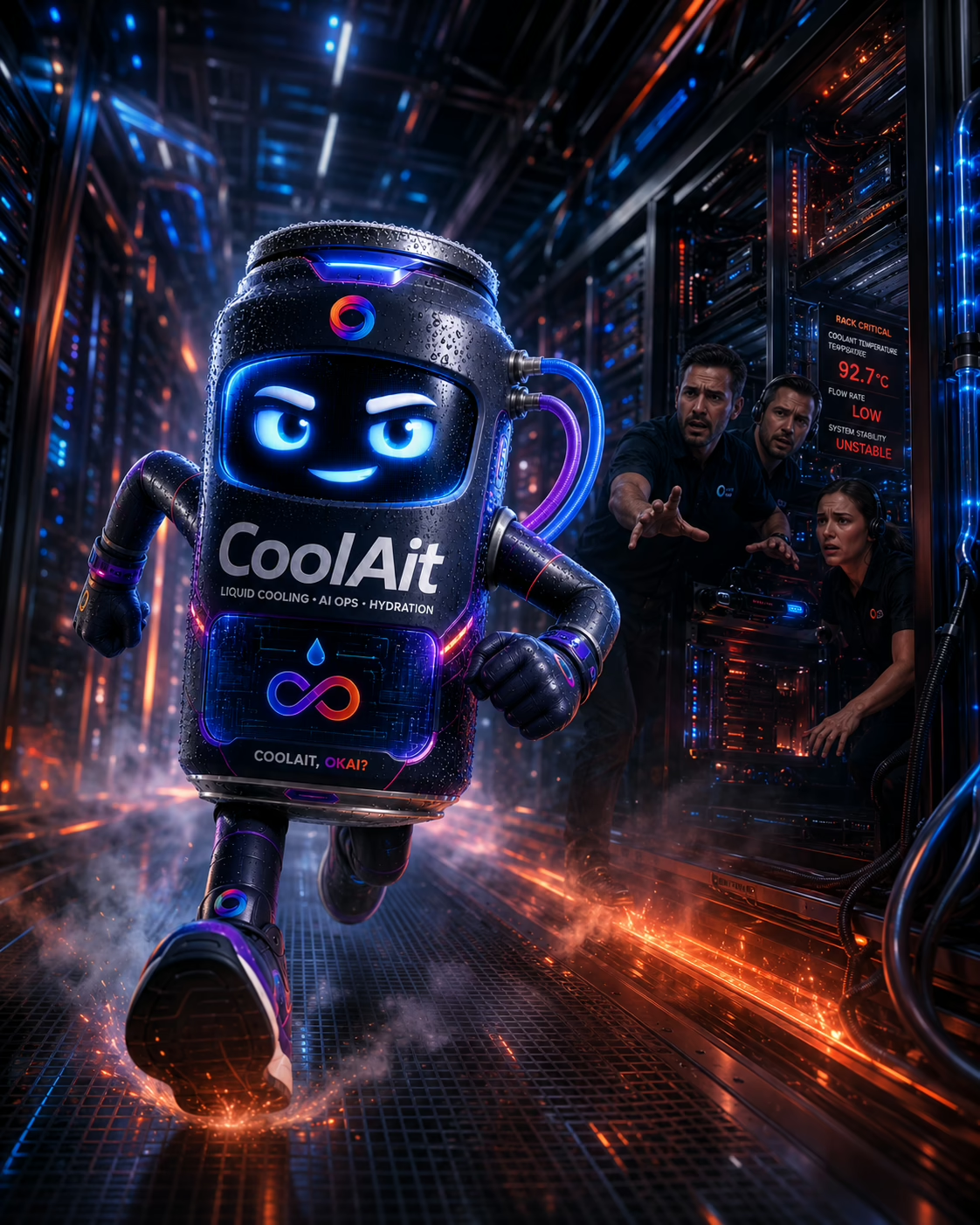
That does not replace product execution, but it does make the company easier to pitch.
And in fundraising, being easier to understand and remember is a real advantage.
What Founders Should Prepare Before Investor Outreach
Before reaching out to investors in this niche, founders should have:
- a clear capital narrative
- a sharp one-liner
- investor memo
- 10–12 slide pitch deck
- one-pager
- financial model
- use of funds
- pilot plan
- technical overview
- market map
- buyer persona map
- competitive landscape
- outreach email
- investor target list
- follow-up materials
- data room
This does not mean everything has to be perfect. It means the fundraising story has to be coherent.
Investors can forgive early execution.
They are less forgiving when the story is messy, the buyer is unclear, the market is vague, and the founder cannot explain why now.
The Real Lesson
The real lesson behind CoolAit is not that every technical startup needs a beverage line or a mascot. Please do not read that sentence and go build “CyberJuice” for SOC analysts unless there is a real idea behind it.
The lesson is that complex industries need clearer capital narratives.
If you are raising money for an AI infrastructure, data center cooling, thermal monitoring, energy efficiency, or industrial technology company, the pitch has to do more than describe the product.
It has to show:
why the market is changing
why the pain is urgent
why the buyer will act
why your wedge is specific
why your timing is right
why the company can expand
why capital now creates advantage
That is the job of the fundraising process.
The pitch deck is only one part of it.
The full system matters: narrative, memo, one-pager, deck, investor list, outreach, data room, and follow-up.
Need Help Building the Full Fundraising Process?
At Viktori, we help founders turn complex technical businesses into clear, fundable capital narratives.
That includes the full fundraising preparation process:
capital narrative
investor memo
pitch deck
one-pager
financial model structure
investor targeting
outreach messaging
data room preparation
follow-up materials
visual storytelling
fundraising strategy
If you are building in AI infrastructure, data centers, energy, industrial technology, deep tech, SaaS, or another complex category where the story needs to be sharper before investors will care, we can help package the opportunity properly.
