


Picture this: you’ve designed a resort experience that belongs on a postcard—then you show it in a deck that reads like a spreadsheet got into hospitality. The problem usually isn’t the concept. It’s the presentation mechanics: slide order, proof placement, and the “so what?” thread that makes the whole thing easy to evaluate.
This page is a build guide. It shows you what slides to include, what each slide needs to say, and how to present the numbers without triggering a Q&A ambush. If you want the evaluation context behind why certain items get scrutinized (and how real estate opportunities are typically screened), start with [how real-estate deals get screened] and come back here to execute.
What is a luxury hotel & resort pitch deck?
A luxury hotel or resort pitch deck is a structured presentation that explains a hospitality project in a way that can be reviewed quickly and consistently. It typically covers the concept, location logic, guest experience, positioning, go-to-market, operations, and—most importantly—an auditable financial model with clear assumptions.
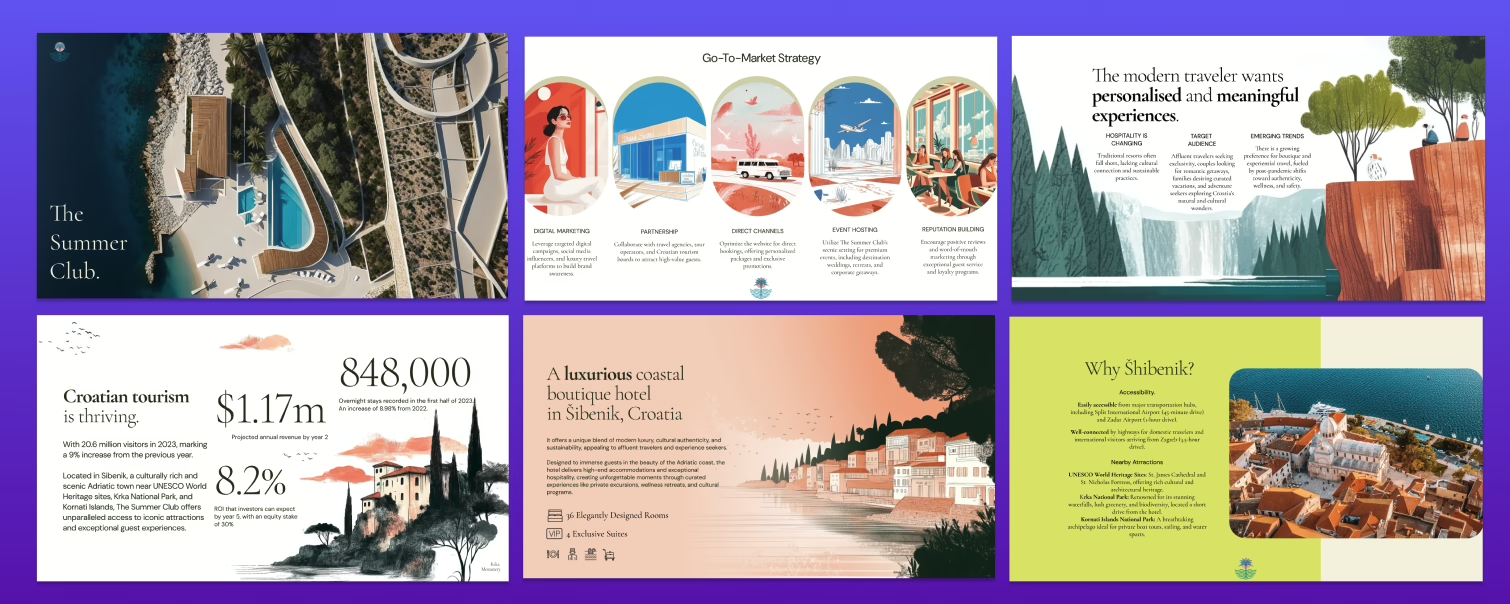
In plain terms: it’s not a moodboard. It’s a decision-ready narrative with proof. Great decks make it easy to understand what you’re building, who it’s for, why it wins, how it makes money, and what needs to happen next—without burying the reviewer in filler slides or vague optimism.
Step-by-step: how to build a luxury hotel & resort pitch deck (the execution process)
1) Lock the deck length and format (so you don’t build the wrong thing)
Pick your “container” first: short deck, long deck, or a two-version setup (teaser + full). The slide plan changes massively once you commit to length.
- Use pitch deck length benchmarks to decide your target slide count.
- If you’re debating teaser vs full, map it using short vs long deck format.
Output: slide count target + whether you’re building a teaser, full deck, or both.
2) Write the one-sentence spine (the deck’s “north star”)
If you can’t express the resort in one sentence, the deck will ramble.
- Draft it using this structure: who it’s for + where it is + what makes it different + how it makes money.
- If you want a clean pattern, use one-sentence elevator pitch framework.
Output: one sentence you can paste into your cover and executive summary.
3) Build a proof-first outline (slides as questions, not as “sections”)
Instead of “Market slide / Team slide / Financials slide,” treat each slide as a question the reviewer will ask.
- Start with 10–14 slide questions (teaser) or 16–22 (full).
- Keep the opening tight by borrowing the logic behind the hook slide and the sequencing principles in framing your pitch deck.
Output: a slide list written as questions (e.g., “Why this location?” “Why now?” “What is the unit economics logic?”).
4) Assemble your inputs before design (so you don’t redesign the deck 4 times)
A resort deck falls apart when the visuals and numbers arrive late. Collect your assets up front:
- Location: map, access, demand drivers, seasonality notes
- Product: room mix, amenities, guest journey, renders
- Ops: management approach, staffing model, systems
- Financials: assumptions, ADR, occupancy, RevPAR logic, capex/opex
- Evidence: comps, LOIs, pipeline, partners, permits timeline
If you’re using tools to speed up the build, start with a sane stack from tools for creating pitch decks (not 12 apps duct-taped together).
Output: one folder containing all source inputs (visual + financial + evidence).
5) Create your slide system (layout rules before you place content)
This is where a “luxury” story either looks premium or looks like a free template wearing a tuxedo.
- Set typography, grid, spacing, and hierarchy using how to design a pitch deck.
- Choose palette intentionally (not “blue because trust”) using pitch deck color psychology.
- If you keep stumbling on typography choices, use font psychology for pitch decks.
Output: 2–3 master slide layouts (title, split layout, full-bleed) + type + color rules.
6) Build the opening sequence (first 4 slides) to prevent “where is this going?” confusion
This category needs clarity fast: what it is, where it is, why it wins.
Recommended first sequence:
- Cover (name + location + a single strong visual)
- Executive snapshot (what you’re building + stage + capital need in one frame)
- Location logic (why here, demand drivers, access, seasonality)
- Concept / guest experience (what makes the experience distinct)
Keep copy tight. If you’re unsure how text density should feel, sanity-check against text-heavy vs image-heavy decks.
Output: first 4 slides that can be presented without explaining the obvious.
7) Build the “market + positioning” block (don’t over-theorize, just make it auditable)
For hospitality, market slides fail when they’re generic (“luxury travel is growing”) or when they dodge the real comparison set.
- If you need a clean market sizing mechanic (without turning it into an academic paper), use TAM/SAM/SOM in a pitch deck.
- For competitor framing that doesn’t look childish, use competitive analysis mechanics.
Output: market slide(s) + competitive set slide with crisp positioning.
8) Build the business model slide(s) like a hotel operator, not a SaaS founder
A resort deck needs revenue logic that maps to hospitality reality:
- Room revenue (ADR, occupancy, seasonality)
- Ancillary revenue (F&B, spa, experiences, events)
- Mix logic (room types, suites, villas, packages)
- Distribution (direct vs OTAs, partnerships, groups)
When you present the numbers, do it using the mechanics in how to present financials in a pitch deck.
Output: revenue model slide + assumptions table (the part reviewers actually use).
9) Build the financial section as a set of “auditable views,” not one scary spreadsheet screenshot
For most decks, credibility breaks on projections—not because the model is wrong, but because the slides hide assumptions.
Use a simple, repeatable set:
- Assumptions (ADR, occupancy, ramp, cost drivers)
- 3–5 year P&L summary
- Cashflow + capex timing
- Sensitivity (ADR/occupancy swing)
- Funding use + timeline tied to milestones
If you need a deeper build pattern for projections, align it with financial projections guide.
Output: a financial “mini-model” inside slides + a full spreadsheet model behind it.
10) Add proof slides and remove fluff (this is where most decks lie to themselves)
Luxury decks often over-index on vibes and under-index on evidence.
Proof can be:
- Demand indicators (pipeline, waitlist, partnerships)
- Brand/experience proof (render set, operator references)
- Delivery proof (permits, land status, consultants, timeline realism)
- Team proof (hospitality + development experience)
Before you finalize, scan for the classic traps in 10 pitch deck mistakes and especially layout issues from pitch deck layout mistakes.
Output: a tighter deck where every slide earns its place.
11) Create a lean appendix + a Q&A defense pack (so the live call doesn’t turn into improv theater)
Your main deck should stay clean; your appendix can carry the heavy items.
Good appendix items:
- full unit mix + floor plans
- capex breakdown detail
- permits / legal status summary
- operator plan and staffing detail
- comps table
- risk register + mitigations
Then prep for live review using handle investor Q&A as a formatting guide for backup slide organization.
Output: appendix PDF + a “backup slides” section you can jump to quickly.
12) Final polish pass (make it feel premium without becoming decorative)
This is where you fix what people feel but can’t articulate.
- Check visual hierarchy using visual design errors founders make.
- Tighten the narrative rhythm with storytelling frameworks
Output: a deck that reads fast, presents clean, and doesn’t rely on you narrating every slide.
Let’s see some additional tips and structured proof for these artifacts.
1. Slide-by-Slide Content Checklist (Quick Reference)
This is the practical “did I actually cover everything?” layer. If a slide doesn’t answer a concrete question, it probably shouldn’t exist.
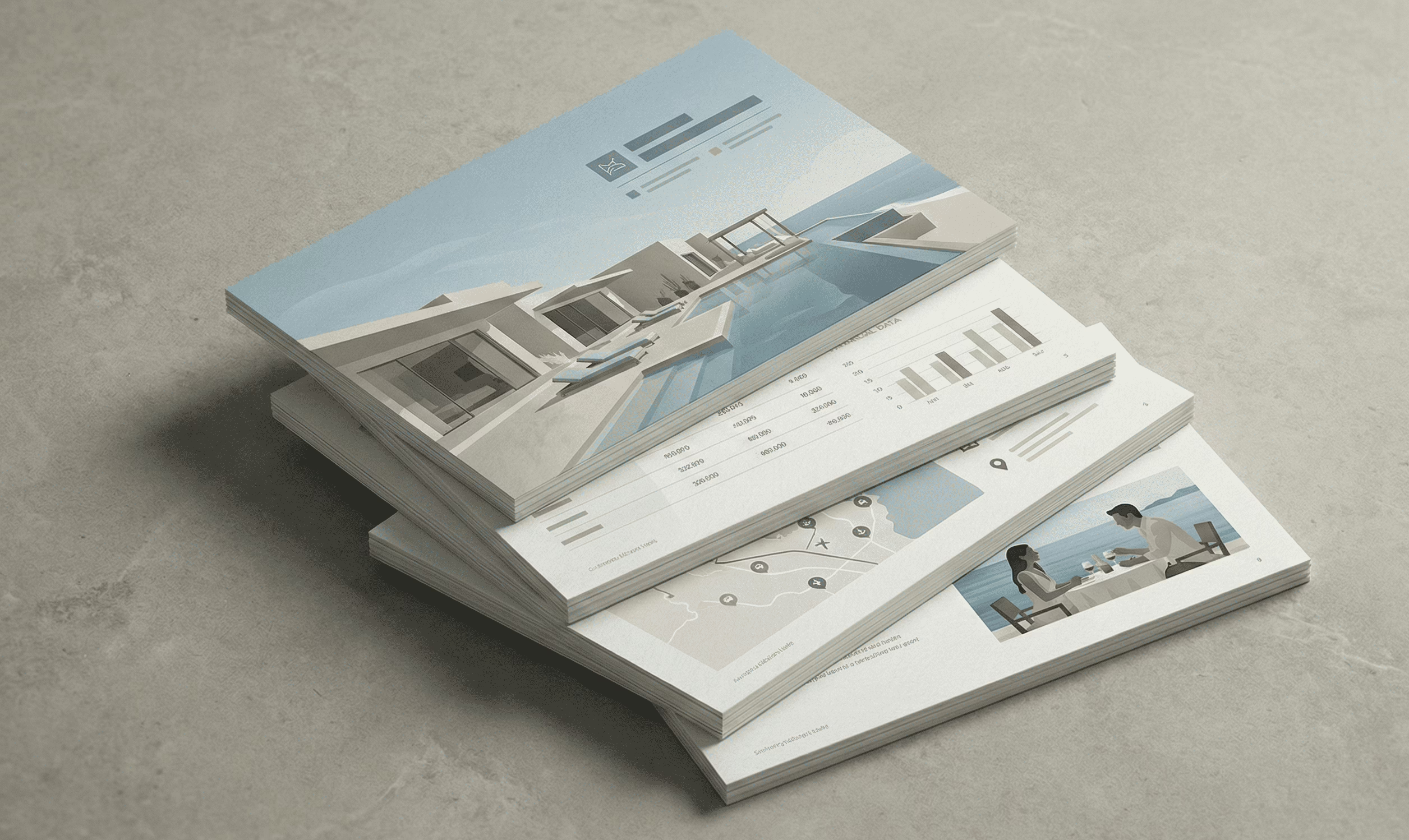
Cover
- Project name
- Location (city + country, not just brand name)
- One strong visual (not a collage)
Executive Snapshot
- One-line concept
- Stage (concept, land secured, design phase, etc.)
- Capital need (range, not marketing number)
Location Logic
- Access (airports, roads, ports)
- Demand drivers (tourism flows, business travel, seasonality)
- Why this site, not just why this country
Concept & Guest Experience
- What the guest actually does here
- Room mix logic (not just “luxury rooms”)
- Experience differentiation
Market Context
- Target segment (not “everyone who travels”)
- Comparable destinations
- Growth or demand logic
Competitive Set
- 4–6 real comparables
- Where you sit relative to them
- What you do differently
Business Model
- ADR logic
- Occupancy assumptions
- Ancillary revenue streams (F&B, spa, experiences)
Operations
- Who runs it
- How staffing scales
- What systems are used
Financials
- Assumptions table
- 3–5 year projection summary
- Capex overview
Timeline & Milestones
- Design → permits → build → launch
- Realistic phases
Use of Funds
- Where money actually goes
- Linked to timeline
Team
- Relevant experience only
- Hospitality + development, not just “entrepreneur”
Appendix
- Deep data, not core story
If you’re unsure how many of these should make the main deck vs appendix, use pitch deck length benchmarks as your guardrail.
2. Common Structural Variants (Boutique, Eco, Urban, Island, Branded)
The category “luxury resort” hides very different structural needs. The deck architecture should shift based on the model.
Boutique Luxury Hotel
- Heavier design + experience section
- Tighter market + financials
- Strong emphasis on positioning vs nearby competitors
Eco / Wellness Resort
- Expanded sustainability + wellness mechanics
- Clear operational translation (not ideology)
- Strong cost structure explanation (eco ≠ cheap)
Urban Luxury Hotel
- Compressed location logic (city already known)
- Heavier demand segmentation (business, leisure, events)
- More focus on ADR mix + RevPAR logic
Private Island / Remote Resort
- Expanded access + logistics slides
- Strong infrastructure explanation
- Clear seasonality and risk handling
Branded Residence / Resort Hybrid
- Dedicated product mix slide (hotel vs residences)
- Separate revenue logic per stream
- Clear operational split
If you’re building multiple versions, align them using short vs long deck format so the structure stays coherent.
3. What Goes in the Appendix (and What Should Never Be There)
The appendix is not a storage unit. It’s a support layer.
What belongs in the appendix
- Detailed capex breakdown
- Unit mix tables + floor plans
- Permits & land status summary
- Operator plan & staffing tables
- Market comps tables
- Risk register + mitigations
What should NOT be in the appendix
- Core concept explanation
- Guest experience story
- Location logic
- Value proposition slides
- Anything you’d need to explain verbally in the main flow
If it’s essential to understanding the project, it goes in the main deck.
If it’s essential to verifying the project, it goes in the appendix.
For layout discipline, cross-check with pitch deck layout mistakes so you don’t bury important information where no one will find it.
4. Data & Proof Artifacts to Prepare Before Building Slides
Before you even open PowerPoint, Figma, or Keynote, collect the following. This prevents 80% of rework.
Location & Market
- Tourism flow data
- Access routes
- Seasonality indicators
- Comparable destinations
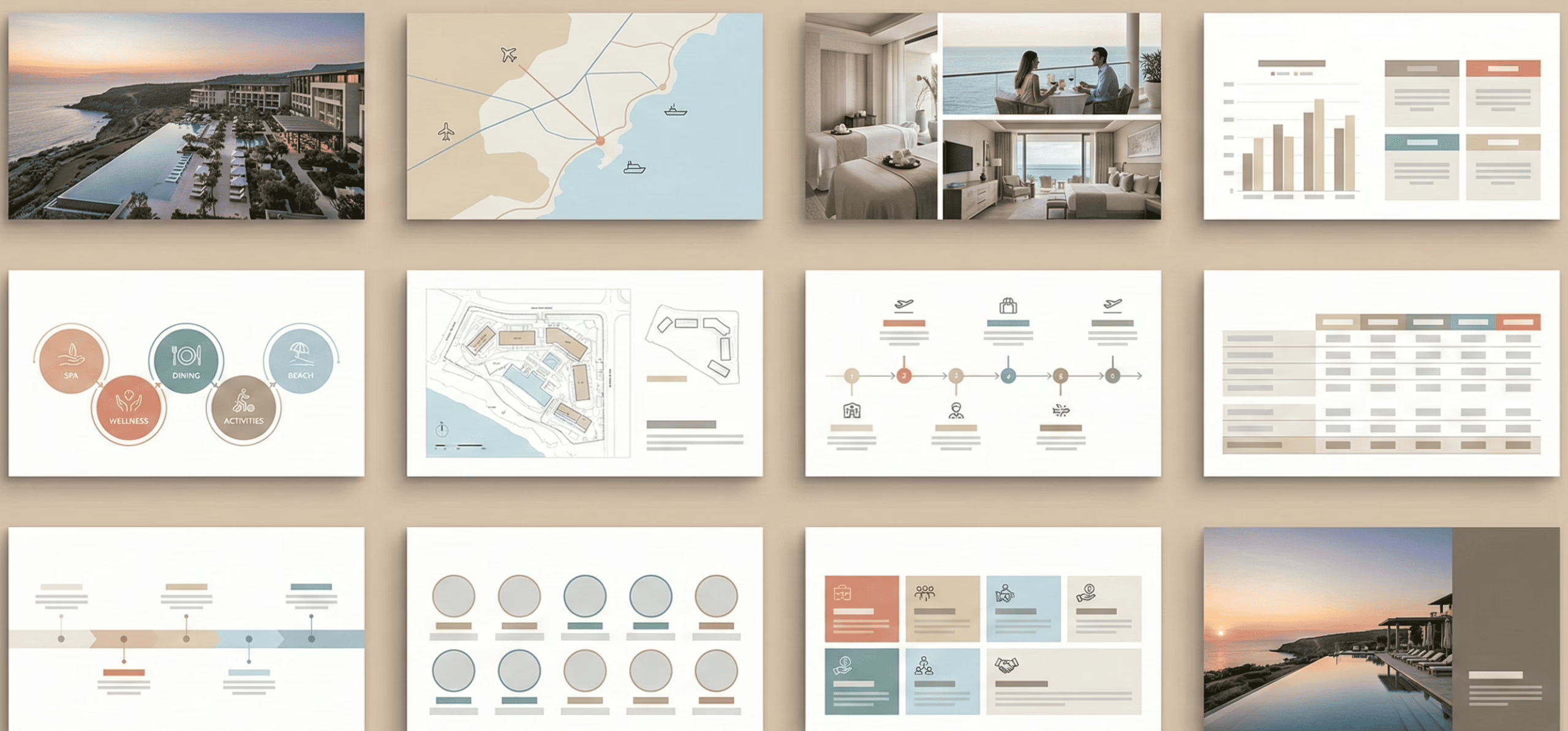
Product
- Room mix plan
- Amenity list
- Experience map
- Design renders (even rough)
Operations
- Operator profile (if known)
- Staffing model outline
- System stack (PMS, CRM, etc.)
Financial
- ADR assumptions
- Occupancy ramp
- Capex range
- Opex structure
Proof
- LOIs or partnerships
- Consultant list
- Land status
- Permits timeline
This is the same discipline used in how to prepare for a pitch deck, just applied to hospitality specifically.
5. Visual Hierarchy Rules for Hospitality Decks
Hospitality decks fail when they look like brochures. Or worse—Pinterest boards.
Rule 1: One idea per slide.
If you need three headlines, you need three slides.
Rule 2: Images are supporting actors, not the story.
Full-bleed visuals are for:
- concept
- location
- experience
Tables are for:
- financials
- comparisons
- assumptions
Rule 3: Text density should match the question being answered.
- “What is it?” → visual + short copy
- “How does it work?” → diagram + labels
- “How does it make money?” → table + numbers
Rule 4: Never mix mood and math.
Do not put financials on top of sunsets. Ever.
If you need a clean baseline, use the mechanics in how to design a pitch deck and refine color decisions using pitch deck color psychology (as structure, not as “emotion hacking”).
6. Financial Slides: Standard Table Structures (How to Lay Them Out)
Most resort decks lose credibility not because the numbers are wrong, but because they are unreadable.
Assumptions Table
Simple, single slide:
- ADR
- Occupancy
- Ramp period
- Seasonality factor
- Key cost drivers
This is the slide reviewers actually use.
Revenue Summary Table
- Rooms revenue
- F&B revenue
- Spa / experiences
- Other
- Total
3–5 Year P&L Snapshot
- Revenue
- Opex
- EBITDA
- Margin
Capex Table
- Land
- Construction
- FF&E
- Pre-opening
- Contingency
Sensitivity Matrix
- ADR vs occupancy grid
- Not a narrative, just numbers
For formatting logic, align with how to present financials in a pitch deck and, if needed, expand using financial projections guide.
7. Deck Versioning: Teaser vs Full vs Data Room Pack
Not every audience should see the same deck. Versioning is not about hiding information—it’s about controlling density.
Teaser Deck (8–12 slides)
Purpose: create interest and open a conversation.
Structure:
- Cover
- Executive snapshot
- Location logic
- Concept / experience
- Market positioning
- High-level financial logic (no deep tables)
- Capital ask (range)
- Contact
What to remove:
- Detailed capex
- Staffing plans
- Permits
- Full projections
Full Deck (16–22 slides)
Purpose: enable real review.
Includes:
- Full market context
- Competitive set
- Business model breakdown
- Assumptions table
- 3–5 year financials
- Timeline
- Use of funds
- Team
This is your core asset.
Data Room Pack (PDF bundle or folder)
Purpose: validation.
Includes:
- Detailed capex sheets
- Permits & legal status
- Operator profiles
- Technical drawings
- Full financial model
- Risk register
If you try to merge all three into one monster deck, you get something that’s hard to read and easy to ignore. Use short vs long deck format to decide what lives where.
8. Red Flags Reviewers Pick Up Instantly (Structural, Not Strategic)
These are not “investor psychology” issues. These are mechanical signals that something is off.
No location logic slide
If you jump straight into concept without explaining why this place, credibility drops.
Concept with no operational translation
Pretty render, zero explanation of how it actually functions.
Financials without assumptions
A projection table with no inputs is decoration, not information.
Timeline that skips phases
If it jumps from “design” to “opening,” it reads as naïve.
Inconsistent numbers across slides
ADR on one slide, different ADR on another. This gets noticed immediately.
Team slide with generic titles
“CEO / COO / CMO” means nothing in hospitality. Experience is what matters.
Before final export, run the deck through 10 pitch deck mistakes and visual design errors founders make. These catch 90% of preventable damage.
9. How to Adapt This Deck for Different Audiences (Structurally)
This is not about changing the story. It’s about changing emphasis and depth.
For Banks / Lenders
Expand:
- Cashflow stability
- Debt service logic
- Timeline certainty
- Risk mitigation
Compress:
- Brand story
- Experience narrative
For Equity Funds
Expand:
- Upside scenarios
- Scalability logic
- Exit mechanics (without fantasy)
- Market expansion potential
Compress:
- Technical construction detail
For Strategic Partners / Operators
Expand:
- Operational model
- Staffing
- Systems
- Guest journey mechanics
Compress:
- Capital structure detail
Same deck. Different weighting.
This is how you avoid building three separate decks from scratch.
10. File Setup & Delivery Format (PDF, PPT, Data Room)
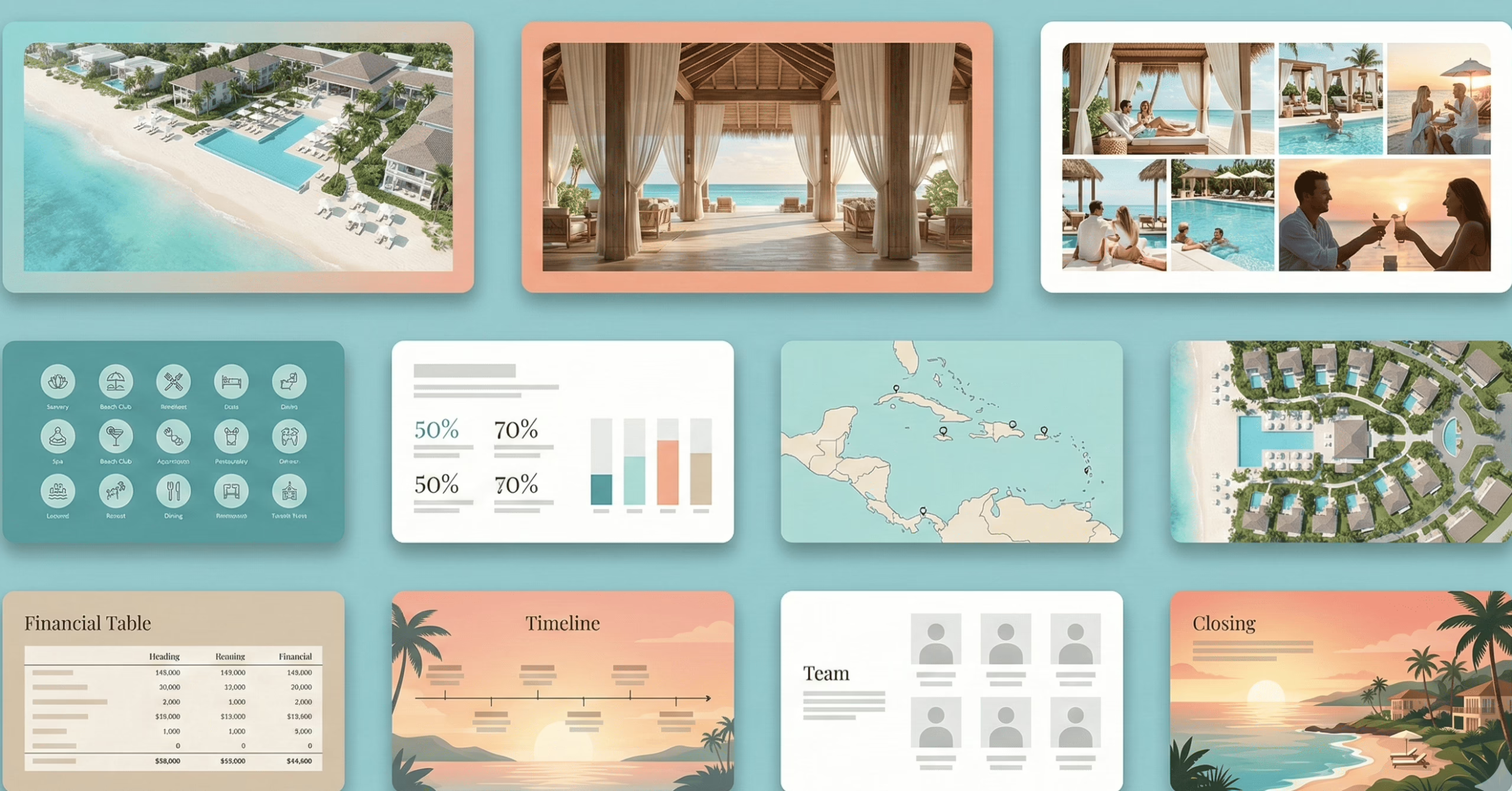
This sounds trivial. It isn’t.
Main Deck
- Format: PDF
- Naming:
ProjectName_Deck_MMYYYY.pdf - Why: universal, stable, no layout shifts
Working Version
- Format: PPT / Keynote / Figma
- Used internally, never sent as-is
Financial Model
- Format: Excel / Sheets
- Named clearly, versioned properly
Data Room
- Structure:
- 01_Legal
- 02_Financials
- 03_Design
- 04_Market
- 05_Operations
Avoid:
- “final_final_v3_REALfinal.pdf”
- Mixed file formats in one folder
- Deck + model in one file
If you’re unsure how to package assets cleanly, align with how to send a pitch deck.
11. AI & Automation in Building Resort Decks (Where It Helps, Where It Hurts)
Used correctly, AI speeds up execution. Used lazily, it creates generic nonsense.
Where AI helps
- First-pass outlines
- Market summaries
- Draft narrative blocks
- Slide structure suggestions
Where AI hurts
- Financial logic
- Differentiation
- Positioning
- Guest experience definition
AI is good at language, bad at judgment.
Use it for scaffolding, not for decisions.
If you’re experimenting here, keep it aligned with AI for pitch decks and sanity-check against your real inputs.
12. Maintenance: How to Keep the Deck Updated Post-Build
A deck is not a one-time artifact. It’s a living document.
Update quarterly
- Market data
- Pipeline / demand indicators
- Timeline status
- Capex estimates
Update on milestones
- Permits secured
- Operator signed
- Design phase complete
- Construction start
Rarely change
- Core concept
- Positioning
- Experience narrative
Keep one master file, versioned cleanly. Do not branch into chaos.
For process discipline, follow the same logic as updating your pitch deck so you don’t end up rewriting the entire thing every time something moves.
Closing: How to use this guide in practice
This guide is designed to be used as a build system.
Start at the top, lock your structure, prepare your inputs, and work through each section methodically. If a slide doesn’t clearly answer a question, remove it. If a number can’t be traced back to an assumption, fix it. If a visual doesn’t add clarity, it doesn’t belong.
Luxury hospitality decks don’t win on style alone. They work when concept, operations, and financial logic line up cleanly on the page. That’s the standard this process is built around.
Build the deck so it can be reviewed, not defended.
