


A video game pitch deck is the fastest way to turn “trust me bro, it’s gonna be sick” into something a publisher or investor can actually evaluate.
This guide gives you the exact slide structure, what to put on each slide, and what publishers/investors are actually scanning for when they decide whether to keep reading… or hit archive.
I’m Viktor — pitch deck consultant, ex-advertising, bald since 2010. I’ve helped founders turn messy ideas into funding-ready decks for years. I’ve also always wanted to make my own game, but instead I became the guy who helps other people ship theirs. Tragic, noble, very Geralt-coded.
If you’re pitching a game, you don’t need more inspiration. You need a deck that makes people believe the game can be built, sold, and funded without a miracle.
Just In: Digital Trading Cards Pitch Deck Case Study. Find out how we helped Verses build an investor ready deck.
What is a video game pitch deck? (Quick answer)
A video game pitch deck is a short presentation used to pitch your game to publishers, investors, platform programs, or partners.
It usually explains:
- what the game is (genre + core loop + hook)
- what it looks and feels like (art direction + visuals)
- who it’s for (target players + comparable games)
- how it will make money (business model + pricing)
- how you’ll build it (team + timeline + milestones)
- what you need (funding ask + use of funds)
- what proof you have (prototype/vertical slice, wishlists, community, traction)
Most strong decks are 10–15 slides and are designed to be scanned in 2–3 minutes.
Publisher deck vs Investor deck vs Platform/Grant deck
Not all “game pitch decks” are the same. The audience changes what you should emphasize — and what you should shut up about.
| Deck Type | Who it’s for | What they care about most | What you must prove | What kills you fast |
|---|---|---|---|---|
| Publisher Pitch Deck | Game publishers / labels | The hook, market fit, production realism, launch plan | Vertical slice/prototype, team capability, milestones + budget sanity | Vague scope, “we’ll figure it out,” no plan to sell it |
| Investor Pitch Deck | Angels / VCs / strategic investors | Scalable business, revenue model, distribution, upside | Market + business model logic, traction signals, clear use of funds | “We just need money to finish,” no commercial plan |
| Platform / Grant Deck | Platform funds, grants, accelerators | Innovation, feasibility, audience impact, delivery confidence | Clear scope + milestones, team competence, why it matters | Overpromising tech, fuzzy outcomes, no timeline |
Rule of thumb:
If you’re pitching a publisher, your deck is a greenlight document.
If you’re pitching an investor, your deck is a business case.
If you’re pitching a platform/grant, your deck is a delivery plan with a purpose.
Do you know what type of deck you need? Different types of video gaming pitch decks
Partnership / Licensing Deck (IP-based games)
For pitching an IP holder or licensing partner (brand fit, audience overlap, deal logic).
Publisher Pitch Deck
For getting a publisher to greenlight the game (often tied to milestone funding).
Investor Pitch Deck (Game Startup Deck)
For angels/VCs funding the studio/company (more business model + scalability).
Platform / Grant / Program Deck
For platform funds, grants, incubators (feasibility + impact + delivery plan).
Co-Development / Outsourcing Deck
For studios pitching services to a bigger studio/publisher (capabilities, pipeline, past work).
Work-for-Hire / Client Game Proposal Deck
For brands/agencies commissioning a game (scope, creative, timeline, budget, approvals).
Internal Greenlight Deck (Studio)
For pitching inside a studio to get resources headcount/budget (risk + ROI + roadmap).
Crowdfunding Deck (Kickstarter/Indiegogo)
For backers (story, vision, rewards, trust signals, community pull).
Trailer-First “Sizzle” Deck
A deck built to support a short trailer/video pitch (minimal text, maximum vibe).
Steam / Storefront Pitch Pack
Not exactly a deck, but a pitch package for conversion: capsule art, tags, short pitch, screenshots, trailer, key beats.
The goal of the deck is to get funding for the game idea, by providing enough information to convince investors that it is worth their investment.
Check out some of the essential 101 guides:
Burn Rate and Runway in a Pitch Deck: How to Show Investors Survival Math
Burn rate is where a pitch deck stops being brave and starts being accountable. Up…
Financial Projection Slide: How to Show Investors the Numbers Behind the Story
A financial projection slide shows investors how your business could grow over time. It usually…
Revenue Model Slide: How to Show Investors How You Make Money
A revenue model slide explains how your business makes money. That sounds simple, but this…
Use of Funds Slide: How to Show Investors Where the Money Goes
Use Of Funds Slide Quick Summary A use of funds slide explains how the capital…
Top Pitch Deck Design Agencies for Investor-Ready Presentations
Quick Summary A pitch deck design agency helps startups turn complex business ideas into clear,…
How to Create a High-Impact Investment Highlights Slide For Your Pitch Deck
An investment highlights slide is often the moment in a pitch deck when investors decide…
12 slide video game pitch deck slide structure (copy/paste)
Option A: Publisher-ready (12 slides)
Slide 1 — Title + Hook
Purpose: Make them instantly understand the game and why it belongs on shelves.
What to show:
- Game title + tagline (1 line)
- Genre + platform(s)
- One key image (concept art or in-game)
- Contact + studio name
Common mistake: A generic title slide with zero hook (your deck dies before Slide 2).
Slide 2 — Elevator Pitch (The “What is it?” slide)
Purpose: Explain the game in 10 seconds.
What to show:
- 1–2 sentence concept
- Core fantasy (“You are…” / “You do…”)
- The unique twist (the differentiator)
Common mistake: Describing lore instead of the playable experience.
If you need more tips on how to build this slide, check out my elevator pitch article.
Slide 3 — Gameplay Loop (Core loop)
Purpose: Prove it’s a real game, not a moodboard.
What to show:
- 3–6 step loop (Explore → Fight → Loot → Upgrade → Repeat)
- 1 screenshot/diagram
- What makes it addictive/replayable
Common mistake: Listing features without showing the loop.
Slide 4 — Genre, Audience, and Player Promise
Purpose: Show who this is for and why they’ll care.
What to show:
- Target player profile(s)
- “Players who love X will love this because Y”
- Rating/positioning if relevant (cozy/hardcore, etc.)
Common mistake: “Everyone is our audience.”
Slide 5 — Comparable Games + Differentiation
Purpose: Anchor expectations and prove market awareness.
What to show:
- 3–5 comps (recent, relevant)
- One-line “what we share” + “what we do better/different”
- Optional: simple 2×2 positioning grid
Common mistake: Using only the biggest AAA titles as comps.
Slide 6 — World, Story, and Progression
Purpose: Sell the “why I’ll stick with it” factor (especially for narrative games).
What to show:
- 3–5 story beats or world pillars
- Progression system summary (chapters/levels/acts)
- Character/faction highlights (visuals)
Common mistake: A novel-length plot dump.
Slide 7 — Art Direction + Visual Identity
Purpose: Make the game instantly “seeable.”
What to show:
- Art pillars (style, palette, reference points)
- 4–8 images: concept, UI vibe, characters, environments
- “What makes it distinct”
Common mistake: Random Pinterest collage with no consistency.
Slide 8 — Production Plan + Milestones
Purpose: Show the game can ship on planet Earth’s calendar.
What to show:
- Milestones: Prototype → Vertical Slice → Alpha → Beta → Launch
- Timeline with dates/quarters
- What’s done vs what’s next
Common mistake: A vague roadmap with no deliverables.
Slide 9 — Budget + Funding Ask
Purpose: State what you need and where it goes.
What to show:
- Total budget + ask amount
- Budget buckets (dev/art/audio/QA/marketing)
- Burn/month + runway (simple)
Common mistake: One big number with no breakdown.
Slide 10 — Monetization + Business Terms (Publisher lens)
Purpose: Show commercial logic without pretending you’re a banker.
What to show:
- Premium / F2P / DLC / cosmetics (whatever fits)
- Pricing assumption + revenue drivers
- If publisher deal: what you’re seeking (milestone funding, MG, marketing support)
Common mistake: Choosing a model that fights the game design.
Slide 11 — Go-to-Market + Community
Purpose: Prove you can create demand, not just “release and pray.”
What to show:
- Store strategy (Steam page, wishlists, demo timing)
- Community channels (Discord, TikTok, creators)
- Key beats: announcement → playtest → demo → launch
Common mistake: “We’ll go viral” as the plan.
Slide 12 — Team + Credibility + CTA
Purpose: Answer: “Why you?” and tell them the next step.
What to show:
- 3–6 key people + relevant shipped work
- Advisors/partners (if real)
- Links: trailer, build, presskit
- Clear ask: meeting + what you’re sending next
Common mistake: A team slide that’s just titles, no proof.
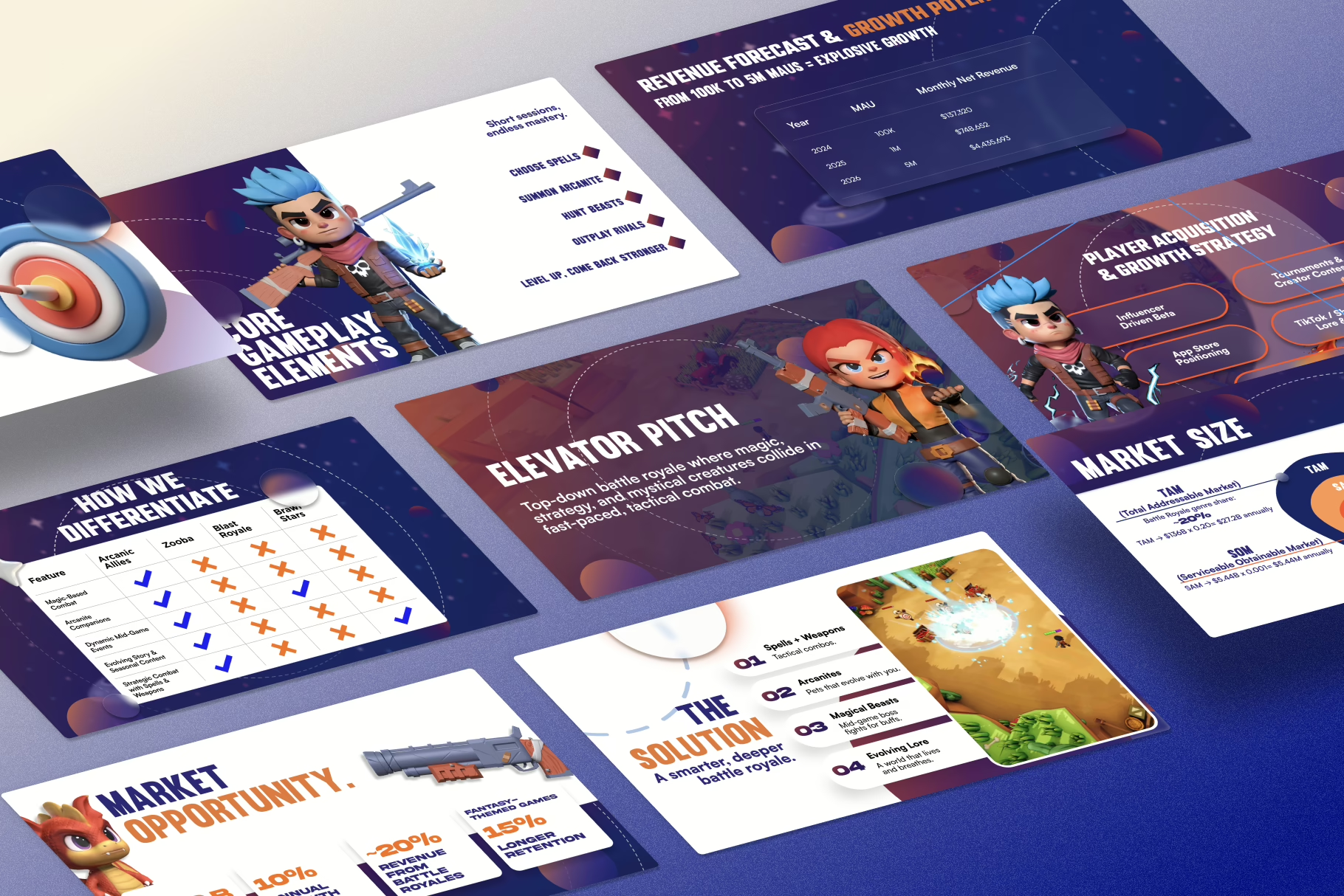
Option B: Investor-ready (10 slides)
Slide 1 — Title + One-line thesis
Purpose: Frame the company + the opportunity fast.
What to show: Game + studio name, one-liner, platform, hook visual.
Common mistake: Making it look like a school presentation.
Slide 2 — Problem / Opportunity
Purpose: Explain the market gap you’re exploiting.
What to show: Audience pain, genre trend, market shift, why now.
Common mistake: Abstract “gaming is big” statements with no angle.
Check out the problem slide article for more tips.
Slide 3 — Solution (The game) + Hook
Purpose: Show what you’re building and why it wins attention.
What to show: Core fantasy, loop snapshot, differentiator.
Common mistake: Over-indexing on lore and under-indexing on gameplay.
Check out the solution slide article for more tips.
Slide 4 — Market + Audience
Purpose: Prove there’s a reachable, monetizable audience.
What to show: Genre audience, comps, TAM/SAM/SOM (light), pricing logic.
Common mistake: Fake precision (wild numbers, no assumptions).
Slide 5 — Traction / Proof
Purpose: Show signals that reduce risk.
What to show: Wishlists, demo stats, community growth, playtest feedback, waitlist.
Common mistake: Calling “we have an idea” traction.
Check out the traction slide article for more tips.
Slide 6 — Business Model
Purpose: Show how the studio makes money now and later.
What to show: Premium vs F2P logic, DLC cadence, IP expansion possibilities.
Common mistake: Cramming 6 monetization models into one game.
Slide 7 — Go-to-Market
Purpose: Show distribution and demand creation strategy.
What to show: Steam/console/mobile approach, creator strategy, launch beats.
Common mistake: “Marketing later.”
Slide 8 — Roadmap
Purpose: Show the path from today → revenue.
What to show: Milestones, timelines, key hiring, deliverables.
Common mistake: No link between milestones and spending.
Slide 9 — Team
Purpose: Prove execution capability.
What to show: Shipped titles, relevant roles, why this team works.
Common mistake: Inflated titles, zero shipped proof.
Slide 10 — The Ask + Use of Funds
Purpose: Make the investment decision easy.
What to show: Raise amount, runway, allocation, targets by milestone.
Common mistake: Asking for money without stating what success looks like.
Option C: One-pager (for warm intros)
Section 1 — Game in one breath
Purpose: Instant comprehension.
What to show: Title + genre + platform + 1-line hook.
Common mistake: A vague “innovative experience.”
Section 2 — The hook + core loop
Purpose: Show it’s playable and addictive.
What to show: 3–5 step loop + differentiator.
Common mistake: Feature soup.
Section 3 — Visual identity
Purpose: Make it memorable.
What to show: 2–4 strong visuals + art pillars.
Common mistake: Low-quality placeholder art.
Section 4 — Audience + comps
Purpose: Market anchoring.
What to show: 3 comps + “why we win.”
Common mistake: Only AAA comps.
Section 5 — Status + what you want
Purpose: Clear next step.
What to show: Current stage, next milestone, ask (meeting, funding, intro).
Common mistake: No ask… so they do nothing.
BONUS: Publisher deck mini-variant (Indie PC / Steam) — the “wishlists or it didn’t happen” edition
Use this when your main path to traction is Steam, festivals, demos, creators, and community. It keeps the classic 12-slide flow, but tweaks what publishers actually want to see for PC indie.
Slide 1 — Title + Steam-first Hook
Purpose: Make them instantly picture the store page and the player fantasy.
What to show:
- Title + genre + platform: PC (Steam)
- One-liner hook (“X meets Y, but with Z”)
- Key art that would work as a capsule image
Common mistake: Pretty art, zero clarity on what the player does.
Slide 2 — The Steam Store Pitch (2–3 lines max)
Purpose: Give them the exact copy they could paste into Steam.
What to show:
- 1 sentence fantasy (“You are…”)
- 1 sentence loop (“You… to…”)
- 1 sentence differentiator (“Unlike…”)
Common mistake: Vague mood writing (“an emotional journey”) with no mechanics.
Slide 3 — Core Loop + Session Feel
Purpose: Show it’s addictive, not just “cool.”
What to show:
- Loop diagram (3–6 steps)
- Session length expectation (5–10 min / 30–60 min)
- Progression driver (gear, story beats, base, unlocks)
Common mistake: Listing features instead of showing repeatability.
Slide 4 — Player Segment + Tag Stack
Purpose: Prove you understand Steam discovery.
What to show:
- Target player types (2 max)
- Steam tags you’re aiming for (10–15)
- “Why they buy” bullets (3)
Common mistake: “Everyone” and random tags that don’t match gameplay.
Slide 5 — Comparable Titles (Steam Reality Check)
Purpose: Anchor expectations and pricing power.
What to show:
- 5 comps (recent Steam indies, not only AAA)
- Price points (range is fine)
- What you copy vs what you improve
Common mistake: Only using megahits that distort expectations.
Slide 6 — Differentiation (The 3 Pillars)
Purpose: Make the game feel defensible.
What to show:
- 3 pillars: mechanic / theme / style
- Proof visuals for each pillar
Common mistake: “Unique” with nothing concrete.
Slide 7 — Visuals + UX (Steam screenshot test)
Purpose: Show screenshots that sell.
What to show:
- 6–10 screenshot-quality frames (or concept equivalents)
- UI vibe, readability, silhouette clarity
- One “wow” scene + one “moment-to-moment” scene
Common mistake: Only cinematic art; no real gameplay readability.
Slide 8 — Demo / Vertical Slice Plan (The publisher comfort slide)
Purpose: Reduce risk with a tangible plan.
What to show:
- What the demo contains (minutes + features)
- What it proves (loop, retention hook, visuals)
- Timeline to demo (date/quarter)
Common mistake: “Demo soon” with no scope.
Slide 9 — Festivals + Beats Calendar (Steam growth engine)
Purpose: Show how you’ll earn wishlists systematically.
What to show:
- Beat calendar (Next Fest, showcases, playtests)
- Announce → demo → festival → launch cadence
- Assets you’ll ship per beat (trailer, devlog, creator kit)
Common mistake: One launch date and vibes.
Slide 10 — Wishlist + Community Funnel (even if early)
Purpose: Prove demand creation and measurement.
What to show:
- Funnel: impressions → visits → wishlists → demo downloads → retention
- Your targets by milestone (ranges OK)
- Community channels + posting cadence
Common mistake: No metrics targets = no discipline.
Slide 11 — Production Plan + Budget (milestone funding style)
Purpose: Show you can ship without financial delusion.
What to show:
- Milestones with deliverables (not just dates)
- Budget buckets + burn/month
- What publisher funding unlocks (content, QA, marketing, ports)
Common mistake: Budget with no link to milestones.
Slide 12 — The Ask (Publisher terms, clean and specific)
Purpose: Tell them exactly what you want and what you’re sending next.
What to show:
Contact + CTA (“If this fits your slate, let’s do a 30-min review.”)
Common mistake: “We’re seeking a partner” with no defined deal shape.
Ask: funding type (MG/milestones), marketing support, ports, etc.
What you’ll provide after meeting: build, trailer, presskit, roadmap sheet.
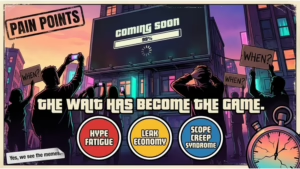
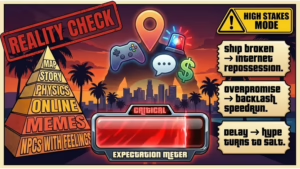
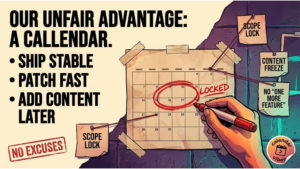
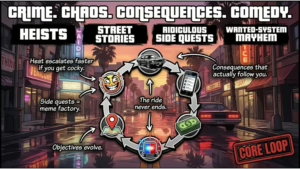
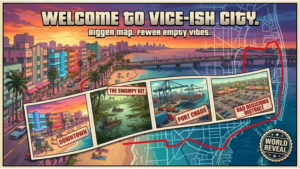
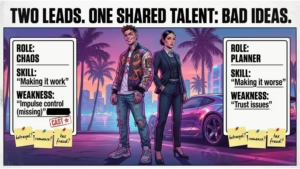
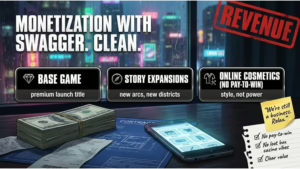
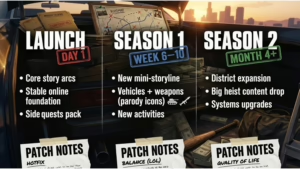
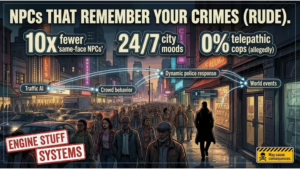
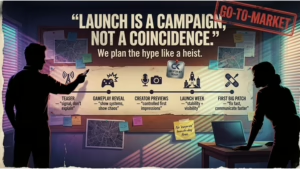
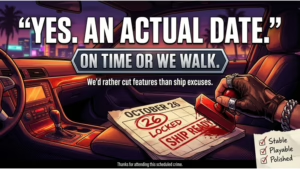
The following is a spoof deck we did for GTA 6 that actually comes on time.
What game publishers look for when reviewing your deck
Publishers don’t “fall in love” with your lore. They run a screening checklist to answer one question:
Will this game ship, sell, and not embarrass everyone involved?
1) A hook they can pitch internally in 10 seconds
Purpose: If they can’t repeat it, they can’t champion it.
What to show:
- 1-line “X meets Y” + your twist
- Genre + platform clarity
- The player fantasy (what the player becomes/does)
Common mistake: A poetic premise with no gameplay hook.
2) Clear market positioning (and comps that make sense)
Purpose: They need to know where it sits on Steam/console shelves.
What to show:
- 3–5 comparable titles (recent + relevant)
- Your differentiation in 1–2 bullets
- Expected price band (range is fine)
Common mistake: Only AAA comps or totally unrelated games.
3) Proof you can execute: prototype / vertical slice plan
Purpose: Publishers fund confidence, not imagination.
What to show:
- Current build status (prototype, demo, vertical slice)
- What the next build will prove (loop, feel, visuals, retention hook)
- Delivery date for the next milestone
Common mistake: “We’ll build it after funding” with nothing playable.
4) A production plan that doesn’t require divine intervention
Purpose: They need to see how you’ll ship.
What to show:
- Milestones: Prototype → VS → Alpha → Beta → Launch
- Team roles mapped to milestones
- Key risks + mitigations (top 3 is enough)
Common mistake: A timeline with dates but no deliverables.
5) Budget sanity (and a funding ask that matches scope)
Purpose: They’re allergic to fantasy math.
What to show:
- Budget buckets (dev, art, audio, QA, marketing, outsourcing)
- Burn/month + runway
- What publisher money unlocks (content, polish, ports, UA)
Common mistake: One big number, no breakdown, no logic.
6) Go-to-market that isn’t “we’ll tweet”
Purpose: They want demand creation, not hope.
What to show:
- Distribution plan (Steam/console/mobile)
- Beat calendar (demo, festivals, creators, launch beats)
- Community plan (where, how often, what content)
Common mistake: Treating marketing as something you do in the last month.
7) Team credibility (even if you’re small)
Purpose: They’re betting on execution capability.
What to show:
- Shipped work, mods, prototypes, jams, relevant experience
- Clear ownership of disciplines (who does what)
- Gaps + plan to fill them (outsourcing or hires)
Common mistake: Inflated titles and zero proof you’ve shipped anything.
8) Deal clarity: what partnership you actually want
Purpose: They need to know what they’re evaluating.
What to show:
- What you want: milestone funding / MG / marketing / ports / distribution
- What you’re offering: IP rights, rev share expectations (high level), deliverables
- Next step: build + deck + call
Common mistake: “We’re open to anything.” (Translation: you’re not ready.)
What investors look for in a game pitch
Investors aren’t buying your game. They’re buying the company’s ability to turn games into repeatable revenue. Different brain, different fears.
1) A business thesis, not just a cool project
Purpose: Explain why this becomes a venture (or at least investable), not a one-off art piece.
What to show:
- One-line company thesis (“We build X for Y, using Z distribution model”)
- Why now (market shift, platform trend, underserved niche)
- What makes this studio repeatable (pipeline, tools, IP strategy)
Common mistake: Pitching a single title like it’s a SaaS startup.
2) Market clarity + realistic positioning
Purpose: Prove there’s a reachable audience that pays.
What to show:
- Genre + audience size logic (keep it simple)
- 3–5 comps with pricing + why you belong in that set
- Your wedge (what gets you discovered)
Common mistake: “Gaming is a $200B market” with no specific segment.
3) Proof signals (traction) — even if you’re early
Purpose: Reduce risk with evidence of demand.
What to show:
- Steam wishlists, demo downloads, playtest retention, Discord growth
- Creator interest, press mentions, community engagement rate
- Qualitative proof: 3 strong playtester quotes (tight, real)
Common mistake: Calling “we launched socials” traction.
4) Monetization that matches the design
Purpose: Show the money plan isn’t fighting the game.
What to show:
- Premium vs F2P vs hybrid (pick one primary)
- Revenue drivers (base game, DLC cadence, cosmetics, season pass, etc.)
- Pricing assumptions and why they’re reasonable
Common mistake: Trying to stack every model at once (“premium + ads + tokens + NFTs + subscriptions”… relax).
5) Distribution plan (how you actually reach players)
Purpose: Investors want a go-to-market engine, not a prayer.
What to show:
- Steam/console/mobile route and why
- Your acquisition channels: festivals, creators, community loops, paid UA (if relevant)
- Launch beats: announce → demo → event → launch → post-launch cadence
Common mistake: “We’ll do marketing later” (that’s how games die quietly).
6) Unit economics logic (light, honest, not fake-precise)
Purpose: Show you understand what drives outcomes.
What to show:
- For premium: price × conversion × reach (simple funnel)
- For F2P: ARPDAU/ARPU assumptions + retention targets (ranges)
- What metrics you’ll track and improve
Common mistake: Spreadsheet fiction with 12 decimal places.
7) Execution plan tied to capital
Purpose: Explain exactly what the money buys and what milestone it unlocks.
What to show:
- Milestones + dates + deliverables
- Hiring plan (critical roles only)
- What “success” looks like after this round (demo, beta, launch readiness)
Common mistake: Raising money without defining the finish line.
8) Team ability + unfair advantages
Purpose: De-risk the bet: can this team ship and sell?
What to show:
- Shipped titles, relevant credits, proven disciplines
- Pipeline strength (outsourcing partners, tools, production process)
- Why you win in this genre (taste + execution + distribution)
Common mistake: Big titles and no demonstrated output.
9) Risk + mitigation (say it before they do)
Purpose: Investors respect founders who see the landmines.
What to show:
- Top 3 risks (production, market, technical)
- Mitigation plan for each
- What you’ll cut if scope slips (prioritization)
Common mistake: Pretending there are no risks (instant red flag).
10) The ask (clean and investable)
Purpose: Make the decision simple.
What to show:
- Raise amount + runway
- Use of funds by bucket
- Milestone targets by date
- Optional: expected round timing / next financing step
Common mistake: “We’re raising $X” with no clear plan for what changes after you get it.
Market & genre proof you can cite in your deck
Use these lightweight, credible anchors (1 slide max). Nobody wins funding by turning their deck into a census.
- Global market size (macro context): Newzoo estimates the global games market generated $187.7B in 2024 (+2.1% YoY) and notes PC + console together account for about 51% of global revenues. Newzoo
- 2025 outlook (optional “why now”): Newzoo’s free 2025 report projects $188.8B in 2025 (+3.4% YoY) and provides platform breakdown charts you can reference. nzgda.com
- US audience proof (if you need demographics): ESA’s Essential Facts 2024 reports 190.6M Americans play video games weekly. the ESA
- Steam wishlist “why it matters” (don’t overclaim): Steamworks documents that wishlists primarily drive customer notifications (launch / EA exit / discounts), and are mostly not a factor in algorithmic visibility (with some exceptions). Steamworks
- Steam Next Fest (why demos matter): Steamworks positions Next Fest as a demo-driven event to connect players with upcoming games and help devs get exposure + feedback. Steamworks
Where to pull stats (so you don’t invent numbers)
- Newzoo (global market size, platform splits, forecasts). Newzoo+1
- ESA Essential Facts (US player counts, demographics, behaviors). the ESA
- Steamworks (wishlists, festivals, best practices straight from Valve). Steamworks+1
One warning (seriously)
Don’t overload slides with stats. One chart is plenty. If they want the appendix, they’ll ask. If you spam numbers, you’ll look like you’re compensating for lack of proof.
Budget, milestones, and funding ask
This is the section people fake badly… and publishers smell it like yesterday’s rakija.
Milestone-based funding logic
Simple rule: funding should buy a deliverable that reduces risk.
- Prototype → proves the loop is fun
- Vertical Slice → proves quality bar + pipeline works
- Alpha → proves content scope + systems are in
- Beta → proves stability + full playthrough
- Launch → proves marketing + ops readiness
Your ask should map to the next 1–2 milestones (not “the whole dream”).
What a believable roadmap looks like
- Milestones tied to deliverables, not just dates (“Vertical slice: 30–45 min playable, 2 biomes, 1 boss, final-ish lighting pass”)
- Buffers exist (because reality exists)
- Critical path is clear (what must happen first)
- Scope cuts are defined (what gets trimmed if time slips)
Example budget buckets (clean and normal)
Use buckets that match how games actually get built:
- Core Dev (engineering, design, production)
- Art (2D/3D, animation, VFX, UI)
- Audio (music, SFX, VO if relevant)
- QA (internal + external test, compliance prep)
- Marketing (trailer, key art, creator kit, events, UA if mobile)
- Outsourcing (ports, cinematics, specialist art)
- Tools + licenses (engine plugins, middleware, seats)
- Contingency (10–20%—the adult supervision line item)
Go-to-market for games
Steam vs console vs mobile (what changes)
- Steam (PC): discovery loops, wishlists, demos, festivals, community; your store page is a product.
- Console: platform relationships, certification, premium positioning, launch windows, often publisher leverage matters more.
- Mobile: UA math, retention, LTV, live-ops cadence; the “marketing plan” is basically the business.
Wishlist/community loop (Steam-friendly)
- Announcement → Store page live → Content drip → Playtest → Demo → Festival → Launch → Post-launch updates
- Your deck should state:
- what the next conversion event is (demo, playtest, festival)
- what you’re optimizing (wishlists, demo completion, retention, community growth)
Influencer/creator strategy basics (not cringe)
- Build a creator list by genre, not by follower count.
- Give them a clean kit: trailer, key art, short pitch, talking points, build access.
- Optimize for watchability moments (spectacle, chaos, “clip moments”, decision tension).
Launch beats (a sane version)
- T-90 to T-60: announcement + Steam page + Discord
- T-60 to T-30: playtest or demo, start creator seeding
- T-30 to launch: festival/demo push, press outreach, daily short-form clips
- Launch week: creator spikes + updates + bug response cadence
- Post-launch: roadmap + community events + discount strategy timing
How to pitch publishers
Where to find publisher fits
- Look for publishers who already ship your genre + scope + platform (their portfolio is your filter).
- Use:
- Steam publisher pages (portfolio reality check)
- Event lineups (Next Fest, showcases)
- Dev/publisher directories and public “submission” pages
- If your game is cozy, don’t pitch the “hardcore survival masochism” publishers. Sounds obvious. People still do it.
What to send (the standard pitch pack)
Send a tight bundle:
- Deck (PDF) — 10–15 slides
- Build or demo (or clear vertical slice timeline)
- Short video (60–120s) gameplay + hook (unlisted link)
- Press kit folder (key art, screenshots, logo, 1-paragraph pitch)
- Optional: one-page milestones + budget (for serious conversations)
Video Game Pitch Deck Examples
Alright, if you’re stuck in a ruth, here are a few ideas to help you get unstuck and get that inner gamer spewing ideas:
“Galactic Conquest”: A Space-Themed Strategy Game
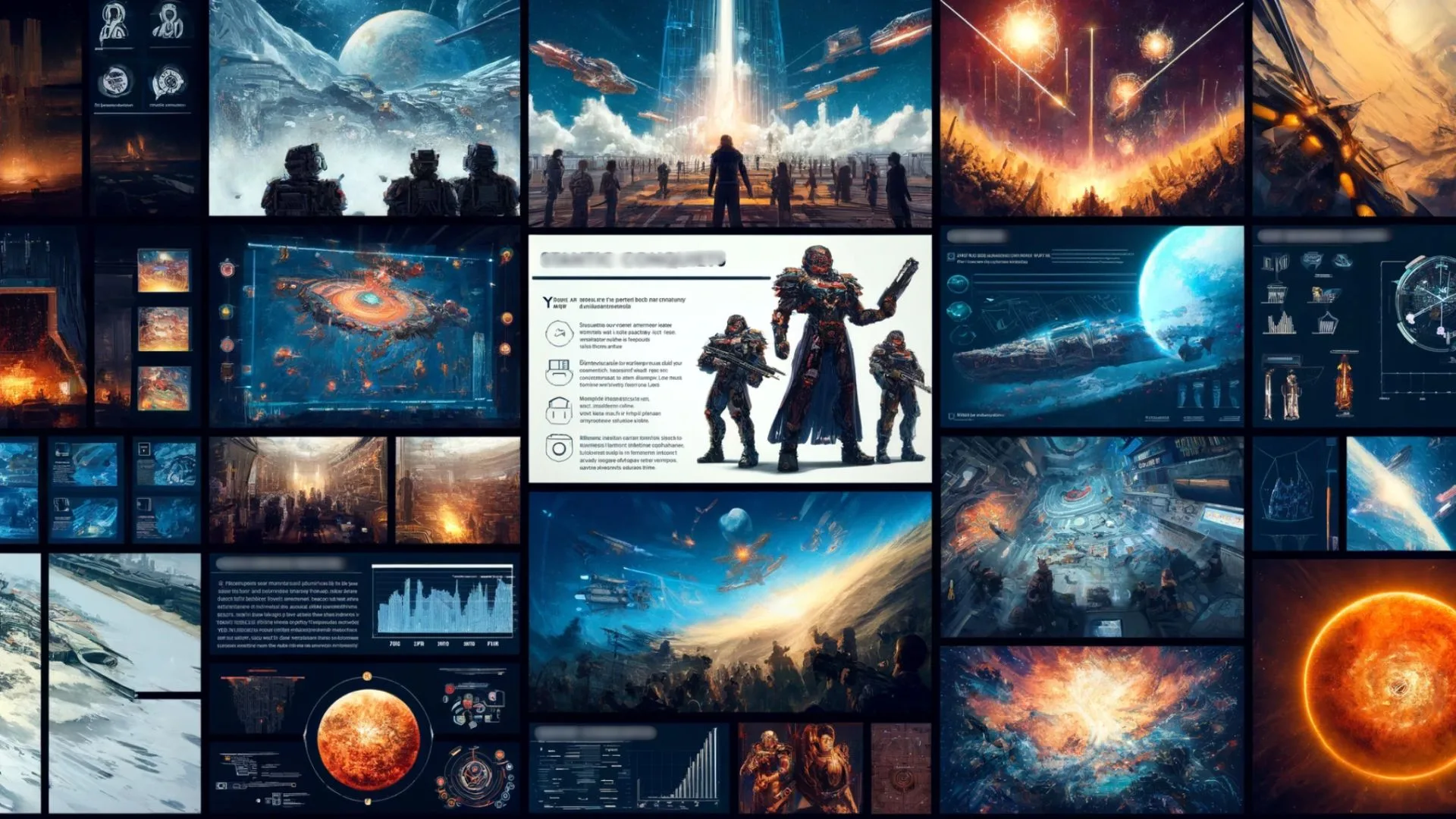
- Slide 1: Logo and tagline – “Galactic Conquest – Command. Strategize. Conquer.”
- Slide 2: Game introduction – A captivating overview of the game’s premise and unique features.
- Slide 3: Storyline – A brief introduction to the narrative that drives the game’s action.
- Slide 4: Characters and Factions – Description and visuals of the main characters and factions players can command.
- Slide 5: Gameplay Mechanics – Explanation of core gameplay elements, complemented by screenshots or short video clips.
- Slide 6: Art Style – Showcase of the game’s art style, displaying key scenes, characters, and spacecraft designs.
- Slide 7: Target Audience – Breakdown of the intended demographic, supported by market research.
- Slide 8: Monetization Strategy – Clear explanation of how the game will generate revenue.
- Slide 9: Development Timeline – Key milestones for the game’s development and projected launch date.
- Slide 10: Team – Introduction to the game development team, with emphasis on their skills and previous successful projects.
- Slide 11: Budget and Financial Projections – Detailed financial information, including development costs and expected revenue.
- Slide 12: Call to Action – Invitation to invest, with reasons why this game promises a good return on investment.
“Mystic Quest”: An Adventure Role-Playing Game (RPG)
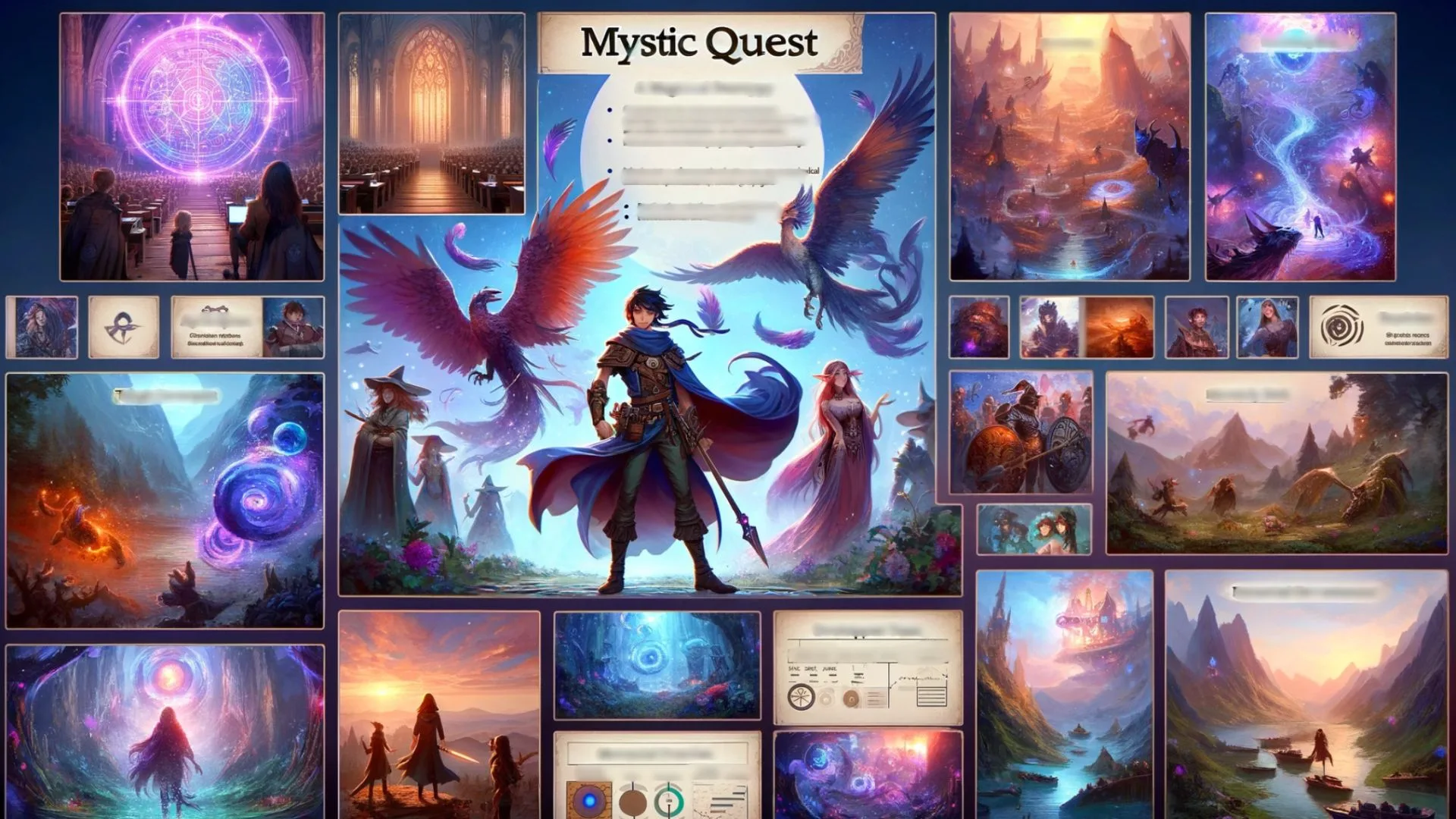
- Slide 1: Logo and tagline – “Mystic Quest – Embark on a Journey of Destiny and Magic.”
- Slide 2: Game Concept – Brief overview of the game idea, highlighting its unique aspects.
- Slide 3: Storyline – Summary of the game’s narrative, focusing on the epic journey of the protagonist.
- Slide 4: Characters – Introduction to the main characters, showcasing their design and detailing their roles.
- Slide 5: Gameplay Mechanics – Description of how the game is played, along with gameplay visuals.
- Slide 6: Game World – Presentation of the game’s immersive world and its variety of environments.
- Slide 7: Target Audience – Analysis of the game’s target demographic and reasons for its appeal.
- Slide 8: Monetization Strategy – Outline of how the game will generate income.
- Slide 9: Development Timeline – Roadmap of the game’s development process and anticipated launch date.
- Slide 10: Team – Profile of the development team, highlighting their expertise and experience.
- Slide 11: Financials – Overview of the project’s budget, expected costs, and projected earnings.
- Slide 12: Call to Action – Final slide encouraging investment, stressing the potential success of the game.
And, a few compressed ones:
“Adventure Valley”: A Farming Simulation Game
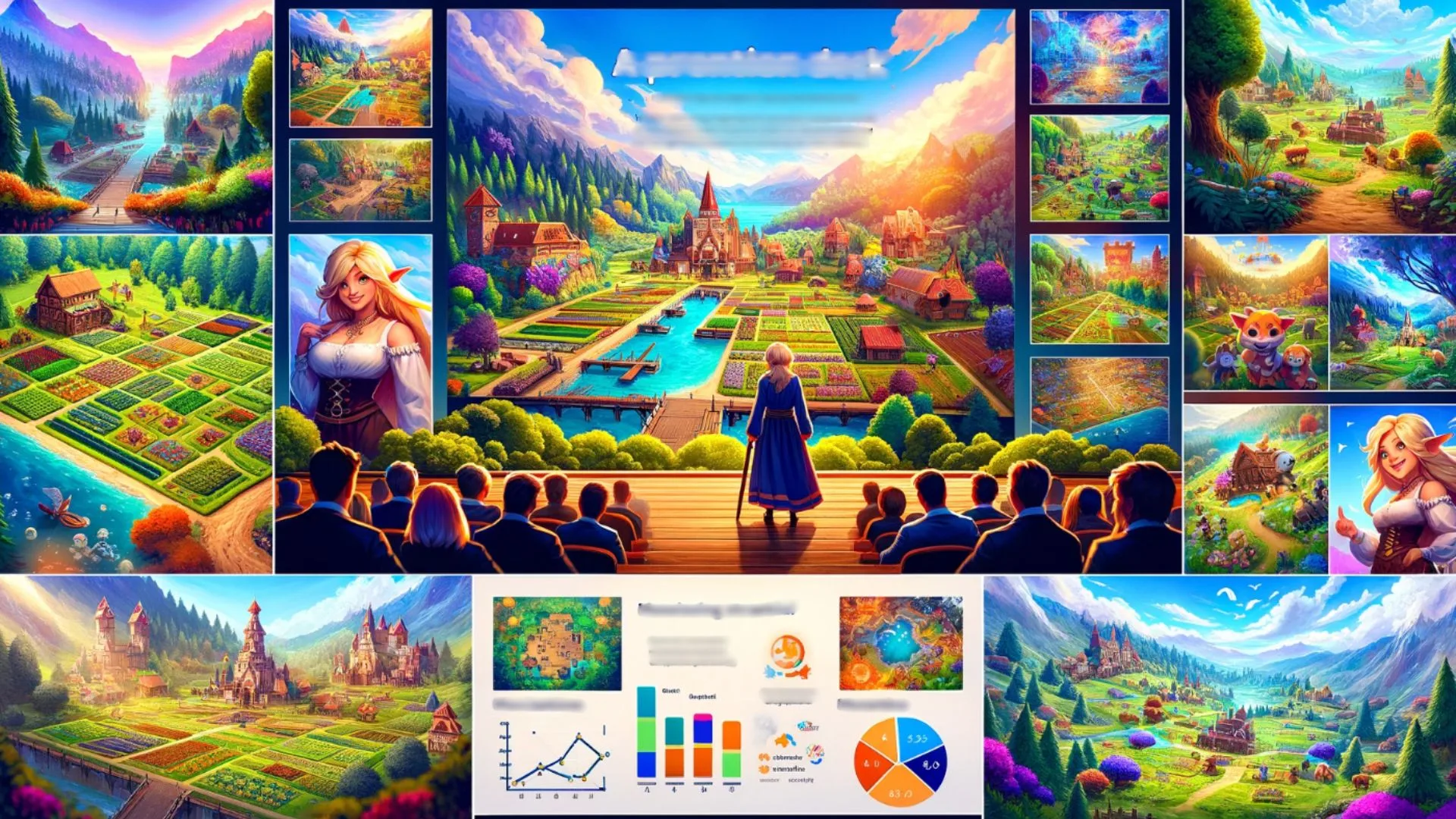
The pitch deck would start with an engaging introduction about the enchanting world of Adventure Valley. It would then move into the unique gameplay elements that combine traditional farming simulations with adventure and puzzle-solving.
Character designs and concept art would bring the game’s aesthetic to life. Key market demographics would be identified, emphasizing the wide appeal of simulation games. The deck would detail monetization through in-game purchases and partnerships. Finally, the potential growth and return on investment would be presented, making a compelling case for investment.
“Chronos Quest”: A Time-Travel RPG
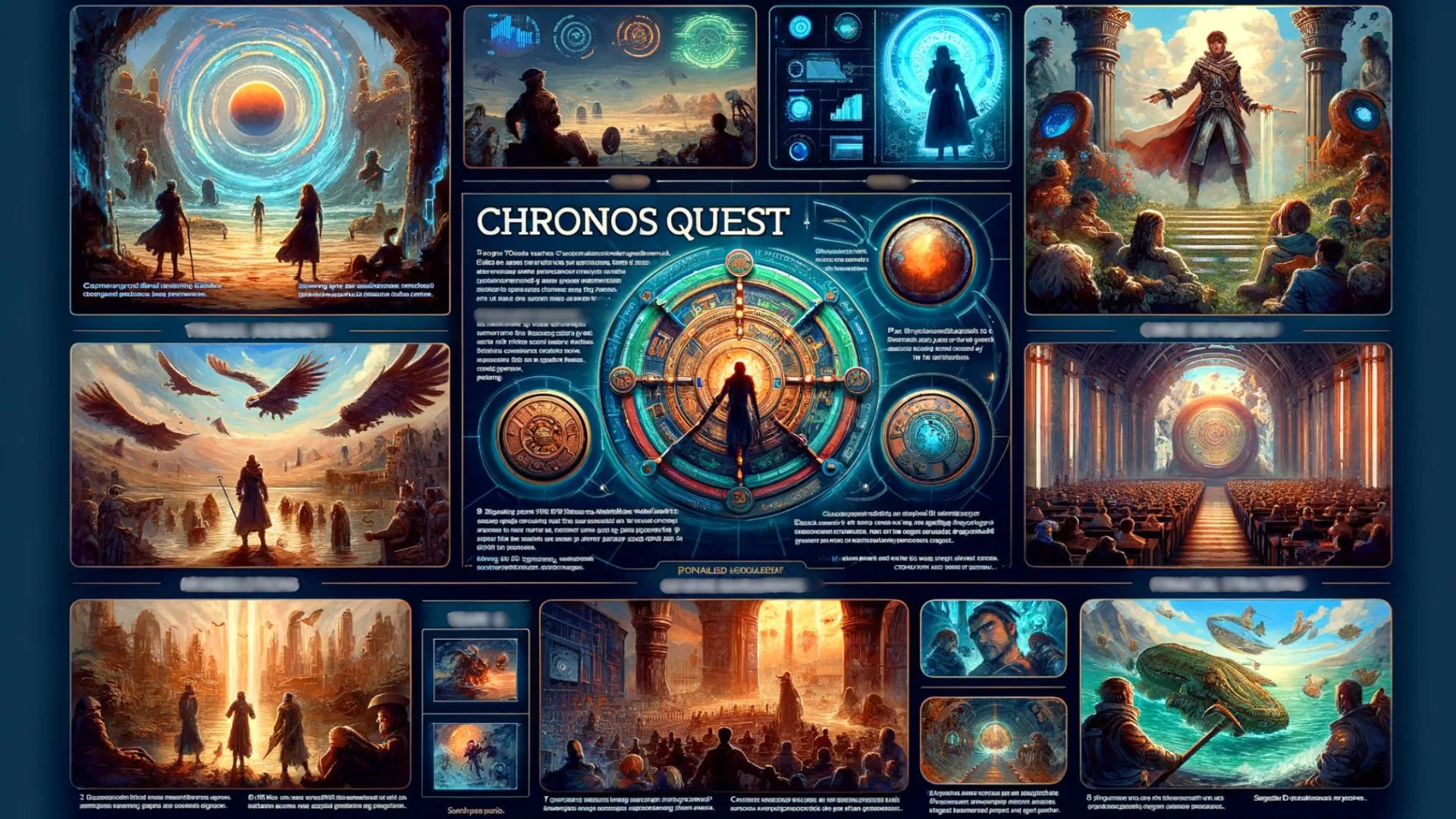
This pitch deck would open with a captivating summary of the game’s time-traveling mechanic, allowing players to experience different eras and civilizations. It would feature character designs and game art to illustrate the diverse settings. The game mechanics would be explained, focusing on the unique time-manipulation aspect.
The pitch would then address the target audience: core gamers who enjoy immersive narratives and intricate gameplay. The monetization strategy would involve premium game sales and potential DLC expansions. The deck would conclude with the development timeline, team overview, and financial projections.
“Battle Bots: Arena”: A Multiplayer Battle Royale Game
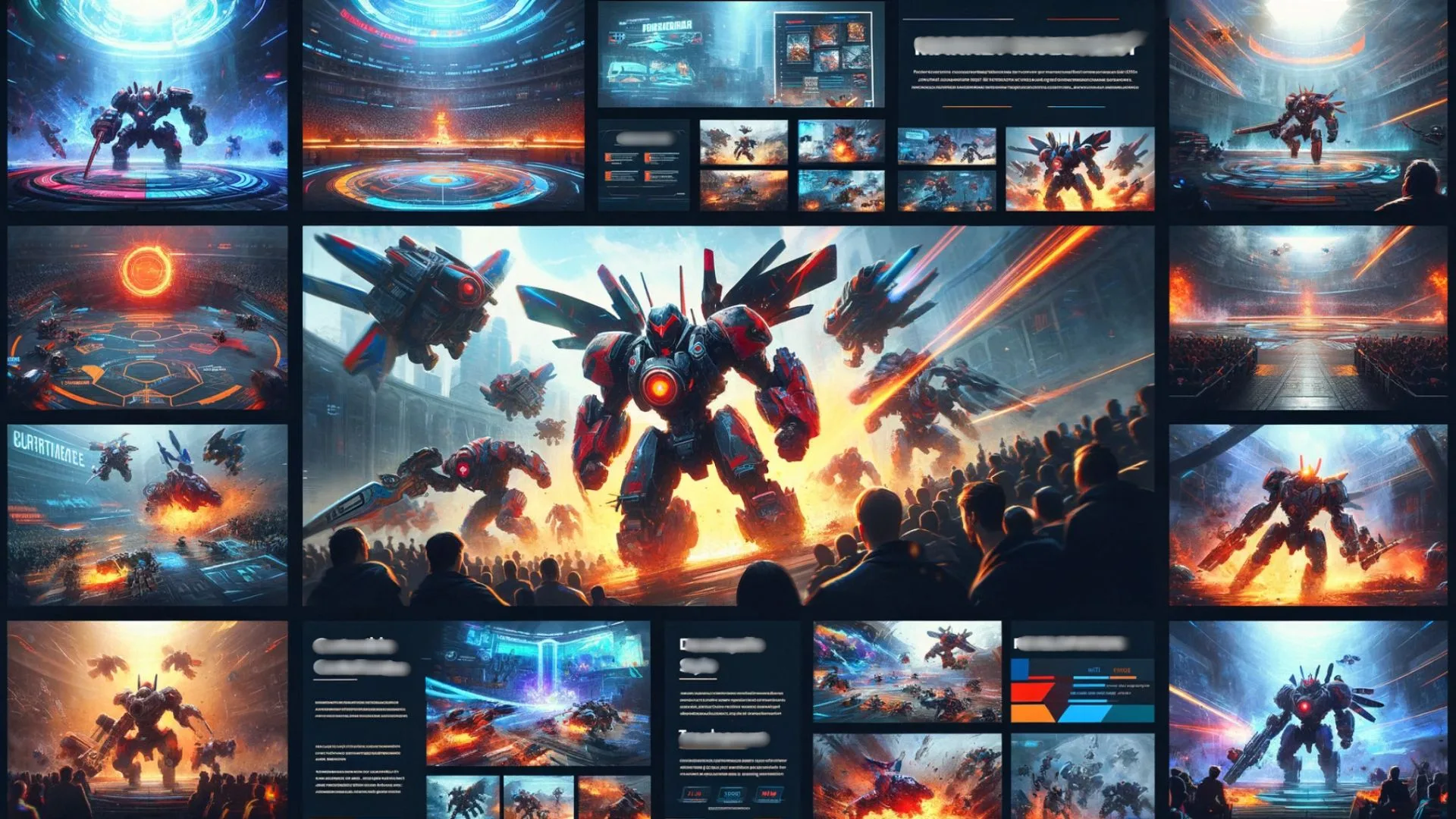
This pitch deck would start with a gripping introduction to the high-energy world of Battle Bots: Arena. It would present a detailed overview of the gameplay mechanics, highlighting the customizable bots and destructible arenas.
High-quality renders of bot designs and action-packed scenes would illustrate the game’s visual style. The pitch would then discuss the target audience: competitive gamers and esports enthusiasts. The primary revenue model would be a freemium model with in-game purchases for bot customization. The pitch would close with a discussion on market potential, development timeline, and a call for investment.
You’re welcome.
Successful Gaming Pitch Deck Examples
A successful game pitch deck is an essential tool for anyone seeking to secure funding or attract an audience for their game.
For the pitch deck to be successful, it should present the concept of the game in a concise and engaging manner that will capture the attention of potential users, partners, or investors.
Having in mind that there are a lot of shows for gaming and entertainment in the game industry nowadays, it’s no surprise that there are many gaming pitch deck examples, but only a few I know have gotten that elevator pitch AKA the perfect pitch moment.
Here are 5 really good pitch decks:
Related Gaming Pitch Deck Templates
How MythicOwl’s “Perfect Pitch” Landed a Publishing Deal in One Hour
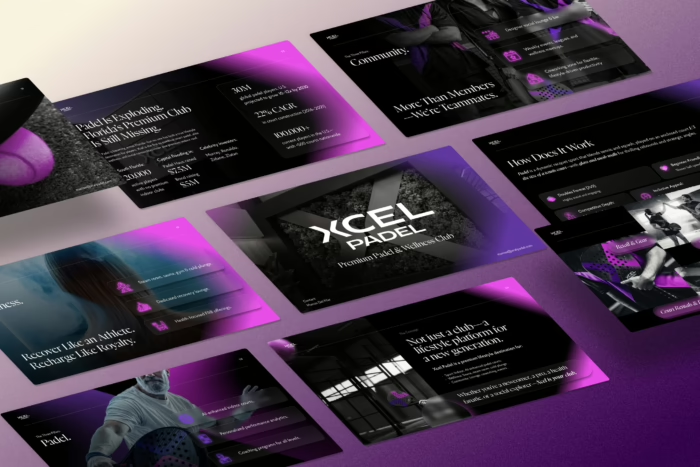
Xcel Padel Pitch Deck Case Study | Viktori.co
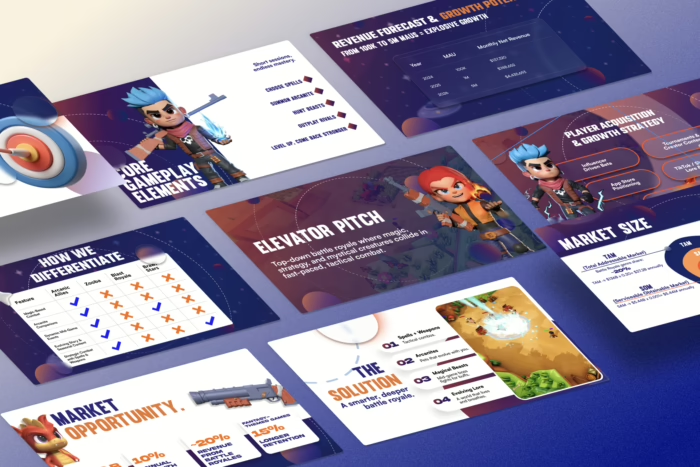
Gaming Pitch Deck Case Study – Arcanic Allies

12 Slide Decentralized Tech And Gaming VC Pitch Deck Template
Cloud Gaming for Mobile Devices Pitch Deck Template
You’ve got the next big idea in gaming—bringing high-quality, console-level experiences to anyone with a…
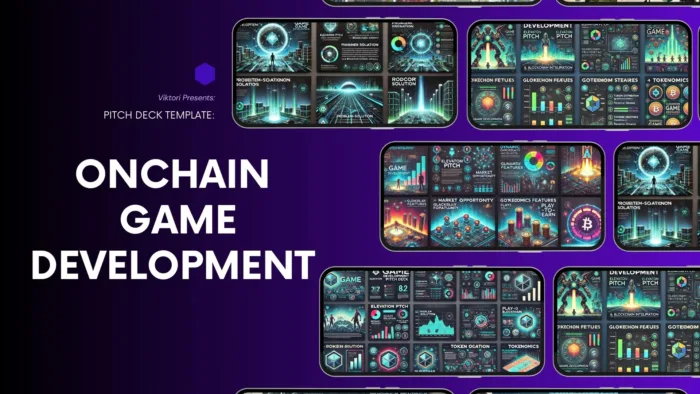
14 Slide On-Chain Game Development Pitch Deck Template
You’re probably sitting there, deep into yet another gaming session, thinking, “I could do better.”…
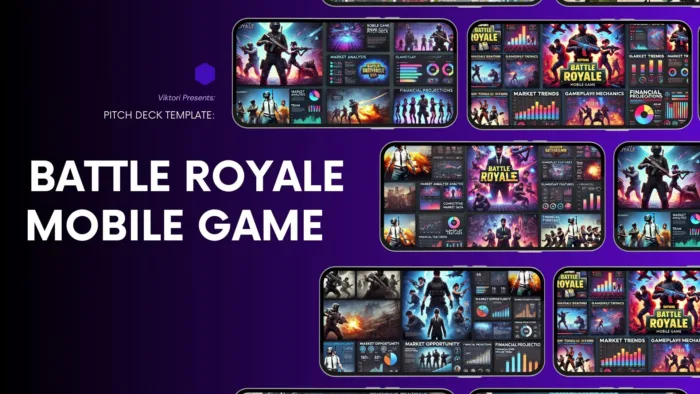
Winning Battle Royale Pitch Deck Template
Imagine this—you’ve built the next Fortnite, but no one is biting. Spoiler: it’s not the…
Also, you want to make sure that your presentation equipment is top notch. Check out my guide on selecting the best projectors for presentations and make your pitch shine.
By incorporating these innovative and interactive elements, you can create a pitch that not only conveys the potential of your game but also provides an entertaining and memorable experience for your audience.
FAQ
How long should it be?
10–15 slides. If it needs 30, the concept isn’t clear yet.
Publisher vs investor: what changes?
Publishers want a greenlight + production plan. Investors want a business + scalability story (studio repeatability, distribution, economics).
Do I need a demo?
You don’t always need it on day one, but you need a plan to a playable milestone (prototype/vertical slice) that doesn’t sound like fantasy.
What if my numbers are assumptions?
Totally fine—just label them and show your logic. “Assumption + why it’s reasonable” beats fake precision every time.
What does “vertical slice” mean?
A short, playable chunk that represents the final quality bar—art, UI, feel, pipeline—so partners can judge what “shipping this” really means.
Should I include lore?
Yes, but as pillars and beats, not a novel. Gameplay sells the meeting; lore supports it.
What should I NEVER say?
“We’re open to anything.” (means you’re not ready)
“It’s for everyone.” (means you don’t know your player)
“We’ll add multiplayer later.” (famous last words)
“Marketing will be easy because the game is good.” (nope)
