


Most books about pitching are written from the founder’s point of view: how to be persuasive, how to stand out, how to “win the room.”
That framing misses the real dynamic.
In capital evaluation environments, information is not received as a story — it is processed as risk, eligibility, credibility, and fit within an existing mandate. The response you get from investors is less about how compelling your narrative is and more about how your signals align with internal screening logic, decision hierarchies, and capital constraints.
The books listed here are not valuable because they teach persuasion techniques. They are valuable because they reveal how decision-makers interpret information under pressure, how authority is inferred, how credibility is constructed, and how risk is mentally categorized.
This page does not explain how to pitch.
It documents how pitching is interpreted.
That distinction matters, because the same psychological patterns described in these books are structurally expressed through specific formats — particularly in how information is arranged in an investor pitch deck.
Pitch Anything: An Innovative Method for Presenting, Persuading, and Winning the Deal by Oren Klaff
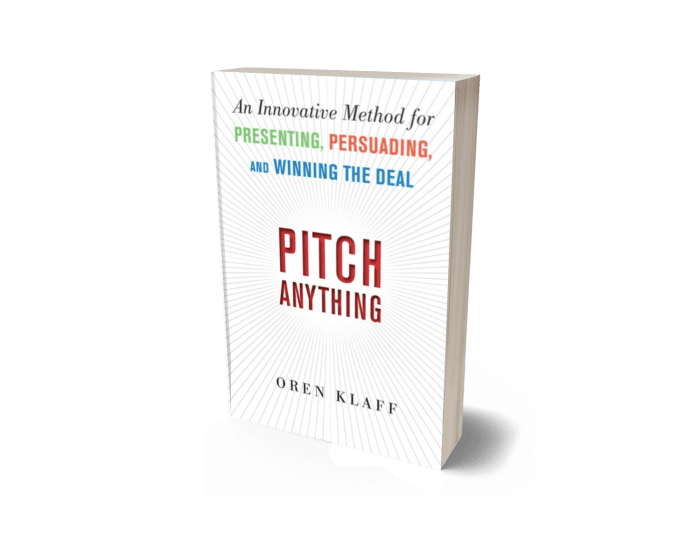
Oren Klaff’s work is often misread as a persuasion manual. In reality, its value lies in how clearly it exposes the status sensitivity and authority heuristics that operate inside high-stakes decision environments.
The book documents a consistent pattern: when information is presented from a position of perceived need, it is filtered as risk. When it is framed from a position of control, it is filtered as optionality. This dynamic reflects how investors subconsciously sort opportunities before any analytical work begins.
What Klaff describes as “frames” are not tricks — they are the mental containers decision-makers use to decide whether something deserves attention or dismissal. This pattern shows up as increased resistance when founders over-explain, over-justify, or pre-empt objections before authority has been established.
In capital contexts, this behavior is typically expressed through how early slides are structured and how quickly the narrative establishes control over scope, category, and positioning. This aligns with how authority is structurally expressed in a fintech pitch deck, where positioning precedes detail.
To Sell Is Human: The Surprising Truth About Moving Others by Daniel H. Pink

Pink’s core contribution is not about selling — it is about how people process influence when they are not expecting to be influenced. In capital contexts, this distinction is critical. Decision-makers resist overt persuasion, but remain highly responsive to cues that signal competence, momentum, and inevitability.
The book documents how alignment, clarity, and perceived direction shape receptivity. These are not emotional responses; they are cognitive shortcuts used to conserve attention in high-volume decision environments.
This pattern appears structurally in how early context is framed inside an investor pitch deck — whether the opportunity is positioned as exploratory or as already in motion. The difference materially affects how information is weighted downstream.
Hold on. You might want to check my list on the best presentation and communication books...
These are crucial books that will help you improve the design and structure of your decks and presentations, besides improving your delivery and skyrocketing your confidence when facing investors. Check them out below.

Or, lets just continue on with this list.
Communication Skills: A Practical Guide to Improving Your Social Intelligence, Presentation, Persuasion and Public Speaking by Ian Tuhovsky
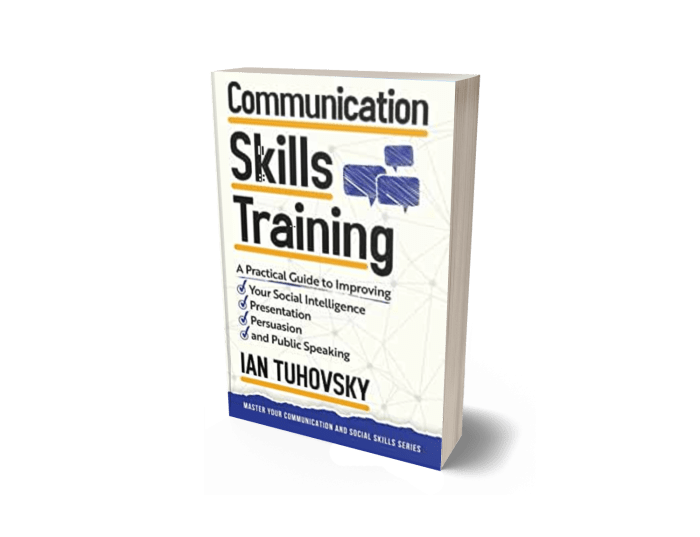
Tuhovsky’s work focuses on social intelligence and clarity, but its relevance here is diagnostic: ambiguity is processed as risk. In evaluation settings, unclear articulation is not treated as a style issue — it is treated as a competence signal.
The book outlines how structure, coherence, and verbal economy reduce cognitive load. This maps directly to how reviewers triage materials under time pressure. Information that requires interpretation is deprioritized. Information that resolves cleanly is retained.
This is why dense or disordered slides degrade trust, regardless of content quality. The same pattern is visible in how complexity is managed within a SaaS pitch deck, where signal clarity is expected even when the product is technical.
Flip the Script: Getting People to Think Your Idea Is Their Idea

This book is often framed as a persuasion technique. Its actual value lies in documenting ownership bias — the cognitive tendency to defend ideas we believe originated internally.
In capital environments, this bias explains why externally imposed narratives face resistance, while internally “discovered” conclusions are defended. Committees do not like being sold; they like recognizing.
This dynamic shows up in how evaluation questions are asked and how objections are framed. When the structure of information allows reviewers to reach conclusions themselves, resistance drops. When conclusions are pre-packaged, resistance rises.
This is structurally reflected in the pacing and disclosure order inside a banking pitch deck, where risk logic is allowed to emerge rather than be asserted.
The Art of the Pitch by Peter Coughter
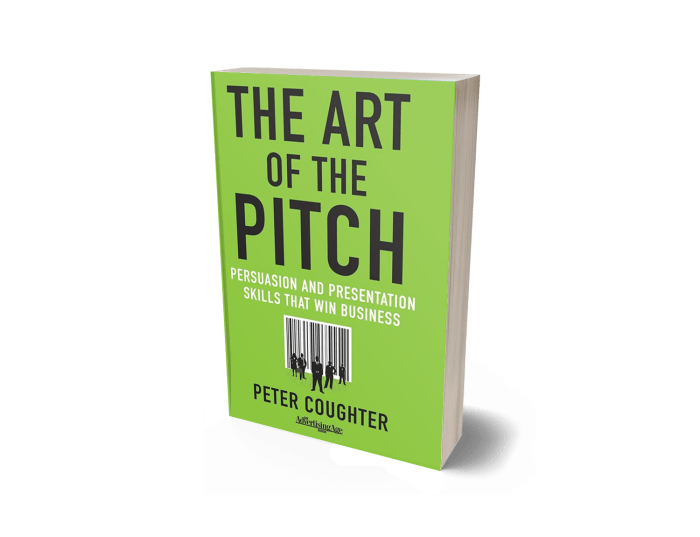
Coughter’s background in advertising makes this book useful not for creativity, but for its exposure of how authority is perceived in presentation settings. The book shows that confidence is not persuasive by itself — it is persuasive when it appears unforced and unneedy.
In institutional settings, this matters because over-explanation is interpreted as uncertainty, and enthusiasm is discounted if it is not anchored in structure. Reviewers are not evaluating passion; they are evaluating stability.
This pattern is visible in how tone and restraint are expressed in a real estate pitch deck, where measured confidence carries more weight than overt excitement.
Pitch Perfect: Say it Right the First Time, Every Time by Bill McGowan

McGowan’s work focuses on vocal precision and messaging discipline. The relevance here is not delivery — it is signal hygiene. In capital evaluation, small inconsistencies are not ignored. They are aggregated.
Misalignment between what is said, how it is said, and how it is structured creates noise. Noise is processed as uncertainty. Uncertainty is processed as risk.
This is why narrative consistency matters across slides, not because it is elegant, but because inconsistency degrades perceived control. The same principle governs how cohesion is expected in a fintech pitch deck, where technical complexity must still resolve cleanly.
Stop Talking, Start Communicating: Counterintuitive Secrets to Success in Business and Life, with a foreword by Martha Mendoza
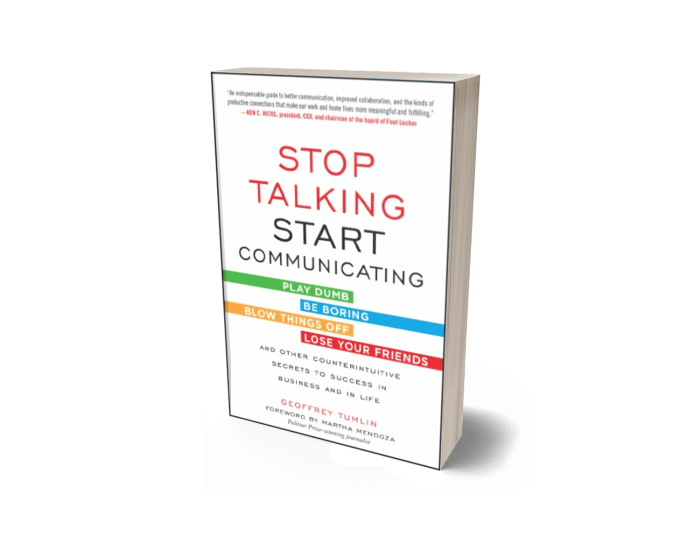
This book is often misread as a soft-skills guide. Its deeper value is in showing how brevity is interpreted as authority. In high-stakes environments, those who control length are assumed to control substance.
Long explanations signal uncertainty. Tight articulation signals mastery. This is not stylistic — it is hierarchical.
This dynamic explains why decks that “cover everything” underperform compared to those that resolve quickly. Decision-makers are not impressed by volume. They are reassured by control.
This pattern is structurally visible in how information density is managed in an energy pitch deck, where regulatory and technical weight still resolves into concise logic.
How to Win Friends and Influence People by Dale Carnegie

Carnegie’s work is often treated as a manual for charm. In institutional environments, its relevance is more structural: likability functions as friction reduction, not conversion.
Decision-makers do not allocate capital because they “like” founders. They allocate capital when interaction costs are low. Politeness, listening, and non-threatening communication reduce perceived social risk, which in turn lowers cognitive resistance.
This explains why abrasive brilliance underperforms compared to calm competence. Reviewers are not judging personality; they are judging operational ease.
You see this dynamic reflected in how founders are framed inside a startup pitch deck — whether the team appears navigable or volatile.
The Startup Game: Inside the Partnership between Venture Capitalists and Entrepreneurs Paperback

This book is valuable because it exposes the structural imbalance between founders and capital, without romanticizing it. Venture capital is not a partnership of equals; it is a system of delegated authority.
Founders bring optionality. Investors bring control mechanisms. This asymmetry is not ethical or unethical — it is functional.
Understanding this dynamic explains why certain narratives are tolerated and others are rejected. It is not about truth; it is about compatibility with mandate, timing, and portfolio structure.
This power logic is embedded implicitly in every venture capital fundraising process, whether founders recognize it or not.
Brilliant Pitch: What to Know, Do and Say to Make the Perfect Pitch (Brilliant Business)
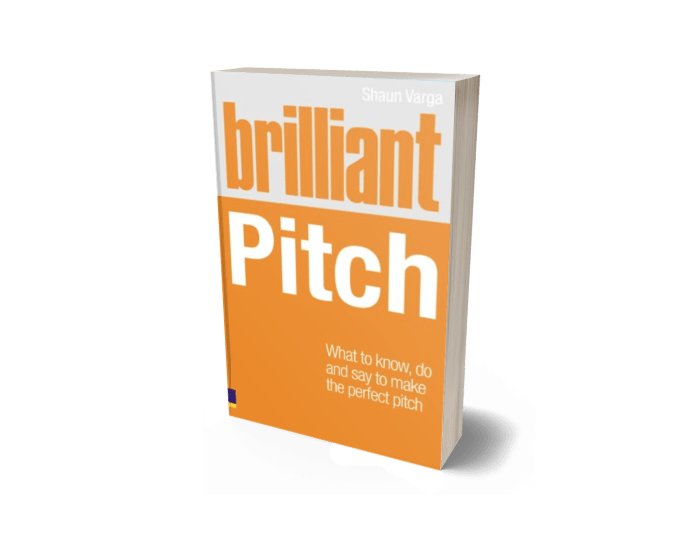
Hall’s book is framed as a pitching guide, but its real value is diagnostic: it shows how structure is used as a proxy for competence.
In evaluation environments, originality is discounted if it is not scaffolded. Reviewers assume that disordered thinking will produce disordered execution.
This is why novel ideas with weak framing underperform conventional ideas with clean structure. The market is not conservative — the market is risk-weighted.
You see this same pattern in how frameworks are expected to appear in a consulting pitch deck, where predictability is interpreted as reliability.
How Highly Effective People Speak: How High Performers Use Psychology to Influence With Ease (Speak for Success)

This book explores linguistic dominance patterns — how cadence, phrasing, and pacing affect perceived status. In capital settings, this matters because status is used as a shortcut for competence.
Committees do not have time to validate every claim. They infer. Language becomes a signal.
Hesitation, over-qualification, and verbal clutter are not neutral. They are read as uncertainty. Clean language is read as control.
This is why delivery quality affects how data is weighted inside a financial projections guide — not because tone changes numbers, but because tone changes trust.
How to Talk to Anyone About Anything: Improve Your Social Skills, Master Small Talk, Connect Effortlessly, and Make Real Friends (Communication Skills Training)

This book is often positioned as social advice. In capital environments, its relevance is operational: social fluency is interpreted as coordination capacity.
Founders who can navigate conversation easily are assumed to navigate stakeholders easily. Those who struggle socially are assumed to struggle organizationally.
This is not fair. It is real.
This is why first meetings disproportionately influence perception, and why early interaction style impacts how seriously a one-pager pitch deck is treated downstream.
The Art of Communicating
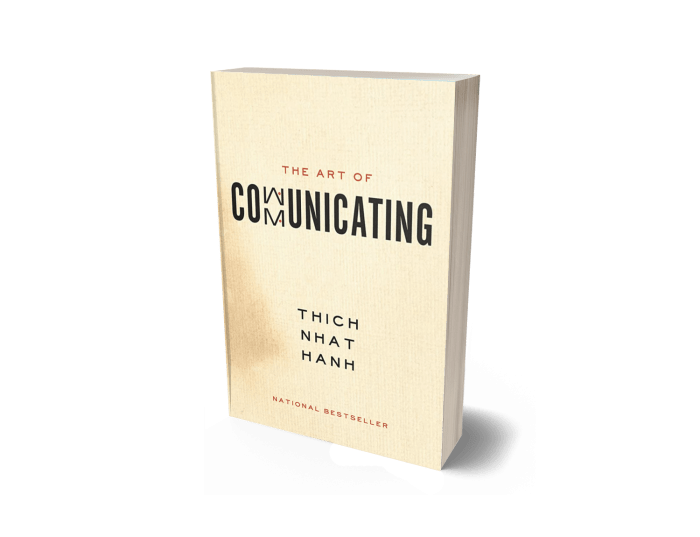
This book operates in an entirely different register — mindfulness, presence, restraint. Its relevance here is subtle but important: calm is interpreted as control.
In high-stakes environments, emotional volatility is read as operational volatility. Founders who appear internally settled are assumed to manage pressure better.
This does not mean spirituality persuades investors. It means emotional regulation affects risk perception.
Get to the Point!: Sharpen Your Message and Make Your Words Matter

LeFever’s core argument is about clarity and brevity, but in institutional environments the dynamic is more structural: compression is interpreted as understanding.
Reviewers assume that people who truly understand a system can explain it cleanly. Over-explaining is read as uncertainty, not thoroughness. Density without clarity is read as confusion, not depth.
This is why sprawling explanations underperform even when correct. Committees are not optimizing for education — they are optimizing for decision velocity.
You see this expectation clearly in how the elevator pitch slide is weighted. It is not about being catchy. It is about demonstrating cognitive control over complexity.
Start with No: The Negotiating Tools that the Pros Don’t Want You to Know

Camp’s framework is often misunderstood as aggressive negotiation. Its real relevance here is diagnostic: it reveals that “no” is the natural posture of institutional systems.
Committees are built to prevent mistakes, not to enable ambition. Their job is to block bad outcomes, not to discover good ones.
This means every proposal enters an environment optimized for refusal. Approval is the exception. Rejection is the baseline.
Understanding this reframes how silence, delays, and deferrals should be interpreted inside a fundraising process — not as personal failure, but as structural inertia.
Go for No!: Yes Is the Destination, No Is How You Get There

This book is often framed as resilience training. In capital contexts, its value is analytic: it exposes how rejection is part of filtration, not feedback.
Institutions reject far more than they evaluate. Most “no” responses are not judgments — they are resource management decisions.
This explains why founders rarely receive detailed feedback. It is not hostility. It is throughput.
This dynamic is especially visible in early outreach using a one-pager pitch deck, where rapid disqualification is the norm, not the exception.
Need Help Turning Pitch Deck Advice Into an Investor-Ready Deck?
Reading the right books can help you understand storytelling, persuasion, investor psychology, and presentation structure.
But turning that advice into a clear pitch deck is a different job.
Investors still need to understand your business, market, traction, financial logic, use of funds, competitive advantage, and why the opportunity deserves attention now.
If you are preparing to pitch investors and want help turning your notes, strategy, story, and business logic into a clearer deck, I can help you shape the structure, copy, and design.
Explore my pitch deck design services to see how I can help.
