
Ai Pitch Deck Resources



Author: Viktor
Pitch Deck & Fundraising Consultant. Ex Advertising. Founder of Viktori. $500mill In Funding. Bald Since 2010.
Headline:
“Personalized Commerce. Delivered Smarter.”
Subheadline:
“We help consumers overwhelmed by choice find exactly what they need—faster, better, and with confidence—through a next-gen e-commerce platform powered by AI and curation.”
Core Elements:
Target Audience: Digital-native shoppers who value quality and personalization.
Problem Solved: Overchoice, generic recommendations, and poor retention in traditional marketplaces.
Solution in One Line: AI meets human curation to deliver a tailored online shopping experience that feels like magic.
Optional Visual:
Side-by-side comparison of traditional e-commerce vs. your solution (clean UI, curated flow, smart results).
Headline:
“Momentum That Demands Attention”
Bullets with Stats:
$2.1M in ARR with 180% YoY growth and expanding into three new verticals
62% customer retention rate after three purchases
Customer LTV up 42% over the last two quarters
CAC down 35% due to intelligent remarketing and referral loops
Backed by early investors from Shopify, Stripe, and Revolut
Awarded Best UX Platform 2024 by RetailTech Awards
Design Tip:
Bold numbers paired with simple, elegant icons or infographics to visually communicate progress and credibility.
Headline:
“The Paradox of Choice is Killing Conversion”
Pain Points:
70% of carts are abandoned due to decision fatigue, lack of trust, or friction.
Over 60% of consumers say online shopping feels “uninspired” or “transactional.”
Most platforms optimize for product volume, not customer satisfaction or loyalty.
Consequences:
Billions in lost revenue across verticals.
Consumers bounce after browsing because they’re not understood, only targeted.
Quote or Stat:
“Shoppers don’t want more options—they want the right ones.” (McKinsey Digital, 2023)
Headline:
“An E-Commerce Engine Designed for the End User”
Product Solution:
AI-driven personalization that learns user preferences in real time
Human-vetted curation to maintain quality and brand trust
Frictionless checkout with universal cart and one-click payment integrations
What This Means for Users:
Faster product discovery
Higher satisfaction and repeat purchase
Emotional connection with your platform, not just the product
What This Means for Investors:
Higher retention
Better LTV:CAC ratios
Scalable infrastructure with low churn
Visual Option:
User journey timeline or UX screenshots showing personalized flow.
Headline:
“A Multi-Trillion Dollar Market with Room for Precision”
Market Analysis:
$6.3T global e-commerce market by 2025 (Statista)
Niche focus on underserved segments (e.g., eco-luxury, home wellness, digital collectibles) representing $850B+ TAM
Rise of Gen Z and Millennial spending: 60% of them expect personalized shopping experiences
Strategic Narrative:
“Legacy marketplaces won the infrastructure war. We’re winning the experience economy.”
Visual Option:
TAM/SAM/SOM breakdown or industry landscape map.
Headline:
“Multiple Revenue Streams. High Margin Potential.”
Primary Revenue Models:
Transaction Fees: 10–20% per completed sale depending on category
Subscription (B2B): Monthly SaaS fees for merchant dashboards, analytics, and promotion tools
Consumer Premium: Monthly membership for early access, exclusive products, and loyalty boosts
Brand Partnerships & Ads: Sponsored placements, influencer bundles, native ad integrations
Unit Economics Snapshot:
AOV: $85
Gross Margin: 68%
CAC: $21
LTV: $163
Visual Option:
Monetization flywheel or unit economics chart with margin levers.
Headline:
“A Seamless Shopping Experience Engineered for Simplicity”
Three-Step Overview:
Personalized Discovery
AI/ML algorithms instantly tailor the product feed based on browsing behavior, preferences, and historical data.
Smart Curation Engine
Editorial and algorithmic curation weed out low-performing or irrelevant products, enhancing product-to-consumer fit.
Effortless Checkout & Delivery
Universal checkout, saved preferences, and rapid fulfillment create a frictionless end-to-end experience.
Key Benefit:
From browsing to buying, the platform guides shoppers intuitively and efficiently—building trust and reducing friction.
Visual Suggestion:
Horizontal flow diagram or animated product interface walkthrough.
Headline:
“More Than a Marketplace—An Intelligent Shopping Companion”
Competitive Matrix:
Compare key competitors on features like:
Personalization depth
Curated experience
User engagement
Conversion rates
Brand loyalty features
Supply chain flexibility
Your Moat:
Proprietary behavioral data layer improving with scale
Brand positioning built around trust and taste
Integrations with DTC and indie brands not available on Amazon/Walmart
Narrative:
Competitors are drowning customers in options. We guide them to the right ones—with context, clarity, and confidence.
Headline:
“Turning Transactions into Relationships”
Customer Success Metrics:
40% of users return within 7 days of first purchase
30% of new customers join loyalty program within 30 days
82% satisfaction rate on post-purchase survey
Testimonials:
Use real or placeholder quotes that emphasize:
Ease of use
Joy in discovery
Feeling understood
Before vs. After Example:
Before: Endless scrolling, generic results, overwhelming checkout
After: Tailored picks, fewer clicks, delightful UX
Design Tip:
Visualize transformation through a side-by-side journey or timeline.
Headline:
“Proof of Performance and Product-Market Fit”
Key Metrics to Showcase:
Monthly Active Users (MAUs): 80K+, with 12% MoM growth
Daily sessions per user: 2.4
AOV increase YoY: +25%
Referral traffic: 18% of new signups
Churn rate: Under 3% monthly for repeat buyers
Growth Milestones:
3x increase in checkout conversion rate post-new UX rollout
First profitable month in Q2 of current year
Visual Option:
Line graphs or growth KPIs with key milestone flags.
Headline:
“Targeted, Data-Driven, and Built to Scale”
Channels & Approach:
Influencer & Affiliate Partnerships:
Tapping micro-communities and lifestyle creators aligned with brand verticals
Content-Driven SEO & Product Discovery:
Blog, buying guides, and interactive quizzes tailored to intent
Paid Social & Retargeting:
Highly segmented campaigns via Meta, TikTok, and YouTube
Referral Engine & Loyalty Loop:
Gamified rewards, early access incentives, and dynamic perks
Launch Priorities:
Dominate 2–3 verticals (e.g., home decor, wellness, fashion) before expanding.
Check out the go-to-market slide guide.
Headline:
“Investing in the Future of Frictionless Commerce”
Vision Statement:
To be the most trusted destination for curated, personalized shopping—transforming how people discover and connect with the products they love.
Funding Ask:
Seeking $2.5M to accelerate product development, expand marketing, and scale operations
18-month runway with clear KPIs: user growth, retention, and GMV
Use of Funds:
40% Marketing & Customer Acquisition
30% Product & Engineering
20% Hiring Key Roles
10% Ops & Infrastructure
Contact Info & CTA:
Clear contact details
Optional QR code to interactive demo or investor portal
Need a customized pitch deck template?
1000s of individuals like you asked for a tailored version of this template to help them craft a better pitch deck. Get yours for just $44. As soon as I get your request, I’ll follow up with one question to confirm what exactly is that are you pitching. This will help me nail the content for you.
What you’ll get is a 3+ page editable word document that contains a fully fleshed out slide by slide deck content for your pitch.
Alternatively, book a call and you’ll brief me on the specifics of your pitch.
Book The Free 30 Min Call
5/5 Upwork Rating | 100% TrustPilot

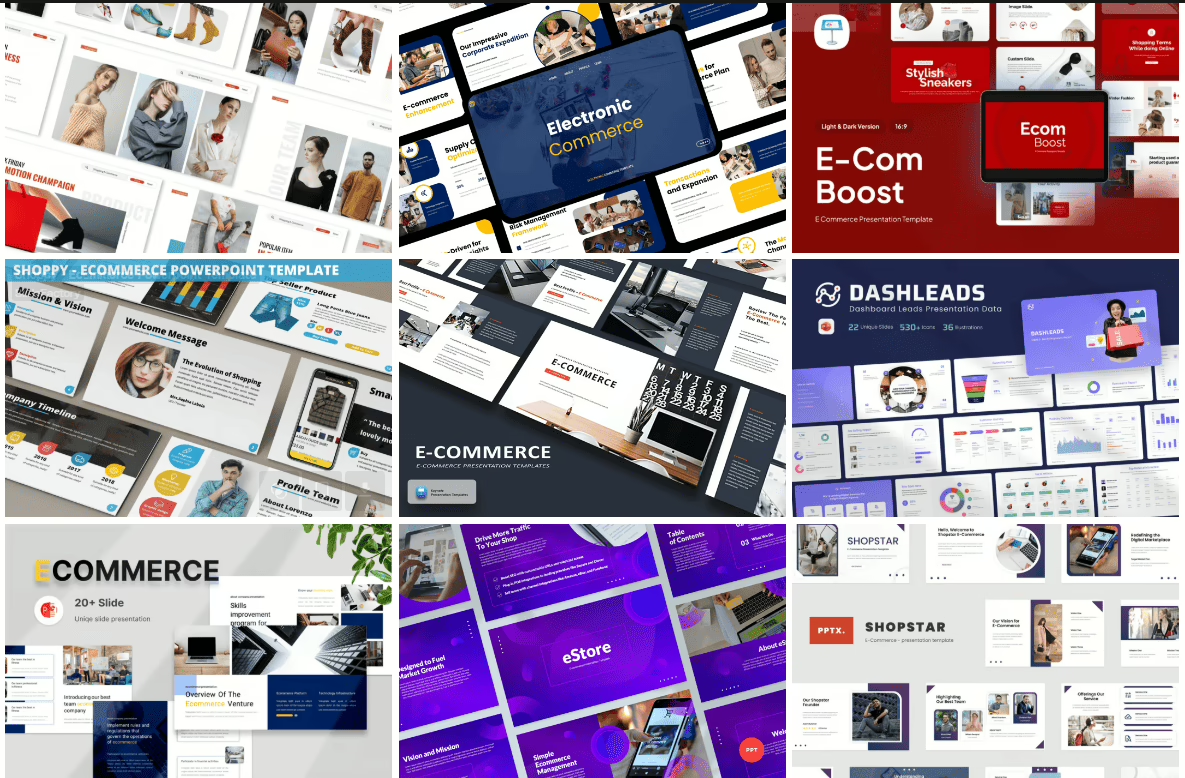
Gamma is the preferred Ai presentation maker and if you’re strapped for resources, this tool will help you flesh out an ok pitch deck presentation. Here’s how it looks:
If you’ve done a few presentation in the past, then this is the option you should take. Follow these simple steps:
And build your own deck. It’s as easy as that.
Questions:
What is the core problem your platform solves?
Who is your target audience?
What makes your solution unique?
What is the single biggest benefit to your customer?
How can you summarize your business in one sentence?
Questions:
What are your top 3–5 traction metrics (revenue, users, retention)?
Have you raised capital before? If yes, how much and from whom?
Are there any notable partnerships or clients?
Have you been featured in media or won awards?
What proof do you have that your business is working?
Questions:
What pain points do customers face in your market?
Why is this a significant problem today?
What are the emotional and financial costs of this problem?
Are there any industry stats or trends that support your claims?
What’s broken about the current solutions?
Questions:
How does your platform solve the core problem?
What are the main features or innovations?
What are the tangible benefits for the user?
How is your user experience different or better?
Do you have testimonials, product reviews, or success stories?
Questions:
What is the size of your Total Addressable Market (TAM)?
What niche or segment are you targeting first (SAM/SOM)?
What macro or consumer trends support your timing?
Who are your primary customers—demographics and behaviors?
Why is this market underserved or primed for disruption?
Questions:
How does your company make money (revenue streams)?
What are your pricing strategies (B2B/B2C)?
What are your unit economics (CAC, LTV, margins)?
How scalable is your model?
Are there recurring revenue opportunities?
Questions:
What is the customer journey, from discovery to purchase?
What technology or process powers your platform?
Can you break down the experience into 2–4 simple steps?
How does your system improve over time (e.g., AI, data)?
What makes this experience seamless or frictionless?
Questions:
Who are your main competitors?
How do you compare feature-by-feature or on brand value?
What is your moat (tech, brand, network, data)?
Why will you win and continue to win over time?
What prevents others from copying you?
Questions:
What do customers say they love about your product?
What is the transformation they experience (before/after)?
Do you have strong testimonials or case studies?
What’s your retention or satisfaction rate?
What benefits go beyond the functional (emotional, lifestyle)?
Questions:
What KPIs show your growth and health?
How fast is your user base or revenue growing?
What milestones have you hit recently?
What operational or product improvements drove results?
Are there any benchmarks where you outperform competitors?
Questions:
How are you currently acquiring users/customers?
What channels have proven effective?
What’s your CAC and conversion funnel like?
How will you scale this over time?
Are there any unique partnerships or strategies in play?
Questions:
What is your long-term vision for the company?
What kind of impact do you hope to have in the industry?
How much funding are you raising, and for what purpose?
How will the funds be allocated?
What are the key milestones you’ll hit with this raise?
Check out
A detailed guide with the steps outlined to get to a investor ready deck.





Viktori. Pitching your way to your next funding.
Locations
Office 1: 633 North Wells Street Chicago, IL, United States, 60654
HQ: Boulevard P.O. 10000 Skopje, North Macedonia
Pitch Deck Resources
Case Studies
Client Reviews
