


Are you working tirelessly to empower abused women and provide them with the support they need? If so, you understand the critical importance of delivering a compelling pitch to secure the resources and partnerships necessary for your cause.
In this article, we introduce you to an invaluable tool – the “Abused Women Pitch Deck Template” – designed to help organizations and programs effectively communicate their mission, impact, and needs.
Imagine the potential impact your program can achieve when presented effectively. Picture donors, investors, and collaborators deeply engaged with your cause, eager to join your mission to empower abused women. With the right pitch deck, you can turn this vision into a reality.
I’m Viktor, a pitch deck designer and a creative business strategist. Over the past 13 years, I’ve helped businesses secure millions of $ in funding thanks to my approach and I’m sharing it here in this pitch deck guide.
Join us as we explore the elements of an effective “Abused Women Pitch Deck template.”
Fresh case studies: Check out how we helped Charmaine build a pitch deck for her Praise House non profit project.
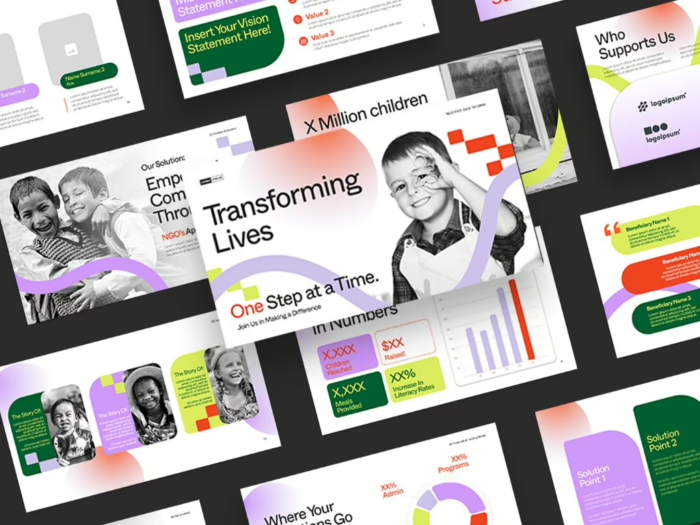
Here’s the 12-Slide NGO Pitch Deck Template That’s Helped Nonprofits Secure Millions:
- Built by a certified NGO pitch deck expert
- Donor-ready design, plug-and-play content.
- Fully editable PowerPoint and Google Slides files.
Get it now for a promo price of just $44 and start raising funds with confidence!
14 Slide Abused Women Pitch Deck Template | Google Slides
1. Title Slide:
- Name of the Program/Organization: “EmpowerHER: Rebuilding Lives After Abuse”
- Logo or Visual Identity: Display the organization’s logo.
- Contact Information: Include the program’s website (www.empowerher.org), email ([email protected]), and phone number (555-123-4567).
2. Introduction:
- Brief Introduction of the Speaker/Team: Start with a warm greeting and introduce yourself and any key team members who will be presenting.
- Overview of the Problem (Statistics and Impact of Domestic Abuse): Share a powerful statistic, e.g., “1 in 3 women worldwide has experienced physical or sexual abuse in their lifetime.” Explain the devastating impact this problem has on individuals, families, and communities.
- Mission and Vision Statement: Present your organization’s mission: “EmpowerHER is dedicated to providing abused women with the tools, support, and community they need to break free from domestic violence and thrive as survivors.” Share the vision: “A world where no woman lives in fear of abuse.”
3. Problem Statement:
- Highlight the Issue of Domestic Abuse: Expand on the problem by discussing its prevalence, including the different forms of abuse (physical, emotional, financial) that women endure.
- Present Statistics and Data: Show relevant statistics from trusted sources or studies to emphasize the severity of the issue.
- Share Personal Stories or Case Studies (anonymized): Share brief anonymized stories or experiences of women who have faced domestic abuse. Use these stories to humanize the issue and make it relatable.
4. Solution:
- Explain Your Program’s Core Offering: Provide an overview of what EmpowerHER does. “EmpowerHER offers a comprehensive program that combines education, counseling, and community support to help abused women regain control of their lives.”
- How Your Program Supports and Empowers Abused Women: Highlight key aspects of your program, such as providing safety planning, legal assistance, and access to mental health resources.
- Highlight Unique Features or Approaches: Mention any innovative or unique approaches that set EmpowerHER apart from other organizations. For instance, if you provide virtual support groups or have a specialized curriculum, mention it here.
5. Program Components:
- Training and Workshops: Describe the educational components of your program, including workshops on recognizing abuse, financial literacy, and personal development.
- Counseling and Emotional Support: Explain the availability of one-on-one counseling sessions and group therapy to address emotional healing.
- Safety Planning: Emphasize how you help women create personalized safety plans to protect themselves and their children.
- Legal and Financial Guidance: Mention the assistance provided for navigating legal issues and financial independence.
- Community Building and Peer Support: Highlight the importance of building a supportive community where survivors can connect and share experiences.
- Testimonials or Success Stories: Share a brief success story from one of your program participants to illustrate the positive impact of EmpowerHER’s services.
Hold on. You might want to check my list on the best presentation and communication books...
These are crucial books that will help you improve the design and structure of your decks and presentations, besides improving your delivery and skyrocketing your confidence when facing investors. Check them out below.
6. Impact:
- Show Measurable Outcomes: Share concrete data and statistics to demonstrate the positive impact of your program. For example, mention that “90% of our program participants reported improved emotional well-being, and 80% successfully transitioned to safe and independent living situations.”
- Share Success Stories and Testimonials: Showcase more success stories from program participants, ideally with before-and-after narratives. Include quotes or video testimonials if available.
- Quantify the Number of Women Benefiting: Highlight the number of women who have benefited from your program to date, providing credibility to your organization’s work.
7. Market Analysis:
- Market Size and Potential: Provide statistics on the prevalence of domestic abuse in your region or the target areas you serve. Include projections for future growth or demand for support services.
- Competitor Landscape (if applicable): Briefly mention other organizations or programs that address similar issues. Highlight what sets EmpowerHER apart and any gaps you fill in the market.
- Key Partnerships or Collaborations: If you have existing partnerships or collaborations with local organizations, law enforcement agencies, or healthcare providers, highlight them to demonstrate your program’s credibility and reach.
8. Revenue Model:
- Funding Sources (Donations, Grants, Partnerships): Explain your current sources of funding, such as individual donations, grants from foundations, and partnerships with corporate sponsors or government agencies.
- Cost Structure: Provide a breakdown of how you allocate funds, including expenses for staff salaries, program materials, administrative costs, and marketing.
- Sustainability Plan: Discuss your organization’s long-term financial sustainability plan, including strategies for diversifying funding sources and scaling your impact.
9. Marketing and Outreach:
- Outreach Strategies (Social Media, Partnerships, Community Engagement): Describe your outreach efforts, including your social media presence, partnerships with local organizations, and community engagement events. Highlight successful outreach campaigns.
- Plans for Awareness and Education Campaigns: Mention any upcoming or planned awareness campaigns to further your mission and reach more women in need.
10. Team:
- Introduce Key Team Members and Their Roles: Provide brief bios of your core team members, emphasizing their relevant expertise in fields like social work, counseling, legal advocacy, or program management.
- Highlight Relevant Expertise and Experience: Mention specific accomplishments or qualifications that make your team well-equipped to address the issue of domestic abuse and support survivors effectively.
11. Timeline:
- Present a Roadmap for the Program’s Development and Growth: Provide a visual timeline that outlines your program’s milestones, both past and future. This can include the launch date, key achievements, and future expansion plans.
- Milestones and Key Achievements: Highlight significant milestones your organization has achieved or plans to achieve in the near future, such as reaching a specific number of program participants or expanding to new locations.
12. Financial Projections:
- Budget Allocation: Share a breakdown of how you allocate funds within your organization, emphasizing the percentage allocated to program delivery, administrative costs, and fundraising.
- Revenue Projections: If applicable, present revenue projections for the next few years, including expected increases in funding from various sources.
- Expenses Breakdown: Provide details on major expenses, such as staff salaries, facility costs, and marketing expenses.
13. Ask:
- Specify Funding Needs (if seeking investment): Clearly articulate the amount of funding you are currently seeking and how it will be used to achieve specific program goals. For example, “We are seeking $500,000 to expand our program to three new communities and reach an additional 500 survivors.”
- Opportunities for Collaboration or Partnerships: If you are open to partnerships or collaborations, mention your interest and the benefits that potential partners could receive by supporting your organization.
- How the Audience Can Get Involved or Support the Program: Encourage your audience to take action. This could include making a donation, volunteering, sharing your mission with their networks, or offering their expertise.
14. Q&A:
- Open the Floor for Questions and Discussion: Invite questions from your audience and provide thoughtful, concise answers. Be prepared to address inquiries about your organization’s impact, financials, and future plans.
- Use this section to engage with potential supporters, partners, or investors and build rapport.
Pick a specific pitch deck design from the award winning Envato.
1000’s of ready made Powerpoint, Google Slides, and Keynote presentations that are easy to edit, format and tailor to your idea.
Last Words
Now that you’ve learned the essential elements of an effective deck and how it can empower your mission to support abused women, it’s time to take action.
Armed with this comprehensive guide, you have the tools to create a persuasive pitch deck that captures the attention of potential donors, partners, and supporters. You can clearly convey your organization’s mission, highlight your impact, and secure the resources needed to make a lasting difference.
You got this!
If you want to really dive into the world of pitch decks, check out our complete collection of pitch deck templates.
For more guidance, check out my non profit pitch deck guide or my other templates:
- Non profit airline pitch deck template
- Non profit donors pitch deck template
- Non profit pitch deck template for disadvantaged communities
- Women in workforce pitch deck template
- Athlete scholarship foundation pitch deck template
- Non profit cafe pitch deck template
- Youth mentoring program pitch deck template
- Veterans services pitch deck template
- Women abusal pitch deck template
- Mental health charity template
- Rural learning centers template
- Non profit gala template
- Music non profit template
- Teenage initiative empowerment template
- Pitch deck template for a youth incarceration program
- Pitch deck template for a Muslim non profit
- Template for a initiative about domestic violence
- Template for a non profit theather
- Homeless shelter pitch deck template
- Template for a venture philanthropy fund
- Template for a kids NGO
Check out some of the essential 101 guides:

Burn Rate and Runway in a Pitch Deck: How to Show Investors Survival Math
Burn rate is where a pitch deck stops being brave and starts being accountable. Up…

Financial Projection Slide: How to Show Investors the Numbers Behind the Story
A financial projection slide shows investors how your business could grow over time. It usually…

Revenue Model Slide: How to Show Investors How You Make Money
A revenue model slide explains how your business makes money. That sounds simple, but this…

Use of Funds Slide: How to Show Investors Where the Money Goes
Use Of Funds Slide Quick Summary A use of funds slide explains how the capital…

Top Pitch Deck Design Agencies for Investor-Ready Presentations
Quick Summary A pitch deck design agency helps startups turn complex business ideas into clear,…

How to Create a High-Impact Investment Highlights Slide For Your Pitch Deck
An investment highlights slide is often the moment in a pitch deck when investors decide…
