


Alright, let’s be real. You’ve got your eye on the world of investment properties, thinking, “I want in on that passive income game.” But let me guess—every other pitch deck out there is just charts, jargon, and that one dude in a suit who’s way too excited about “synergy.”
But here’s the kicker: It doesn’t have to be that way. You don’t need to be Warren Buffett or some financial wizard to make smart property investments. Nope, what you really need is a clear vision, a solid strategy, and maybe someone like me who’s been doing this for a minute.
I’m Viktor, a pitch deck designer and a creative business strategist. Over the past 13 years, I’ve helped businesses secure millions of $ in funding thanks to my approach and I’m sharing it here in this pitch deck guide.
I’m here to break down this investment property pitch deck in a way that’s simple, actionable, and, more importantly, human. So let’s ditch the fluff, get to the heart of it, and figure out if this deal is the one that finally has you saying, “Yeah, I’m in.”
Fresh Case Study: Check out how we helped Cranwood Enterprises build a pitch deck for their senior living luxury real estate venture.
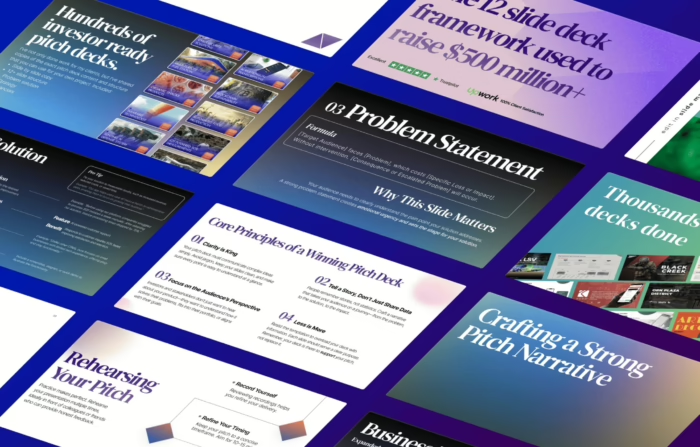
Get My 12 Slide Framework That Got $500mil in Funding For Clients.
What do you think of having 12 dead simple formulas, that will help you craft 12 slides, in about 1 hour? That’s what you’ll get, when you download my 12 slide framework. Save hours crafting your pitch deck copy with my tested approach that includes:
- Elevator pitch one sentence formula
- Problem/ solution slide one sentence formula
- Competitor slide one sentence formula
- 9 other formulas, tips, tricks and advice
The formulas worked for 40+ industries and 500+ companies. Including the one you’re looking at now.
Clicking the link won’t charge you anything.
15 Slide Investment Property Pitch Deck Template | Google Slides
The above is is just a simplified template.
Founders that are serious about getting the funding they need, opt in for a deck has industry specific content, superb narrative and award winning design like these ones below:


I can help you build that deck with my hands-off process in 7 days or less.
Book a free 30 minute call below if you’re serious about getting an investor ready deck, and we’ll discuss your needs in detail. I’ll help you design the deck, write the content, develop the narrative and flesh out the strategy with financials.


Follow us on social for the newest templates:
1. Cover Slide:
Property Image:
- Use a high-resolution, captivating image of the property. This is the first impression, so choose a photo that truly captures the essence and potential of the property.
Project Name:
- A memorable and fitting name for the property or project. This could be based on its location, unique features, or intended purpose (e.g., “Downtown Plaza” or “Seaside Commerce Center”).
Date:
- The current date or the date of the presentation. This helps in tracking iterations of the pitch deck or referencing back at a later time.
2. Introduction:
Brief Overview of the Opportunity:
- A 1-2 sentence teaser that sums up the essence of the opportunity. E.g., “A prime commercial space in the heart of downtown, offering unparalleled access to foot traffic and local businesses.”
Your Company’s Mission or Background (if relevant):
- Give a snapshot of your company’s credibility. E.g., “With over a decade in commercial real estate, our team specializes in curating premium properties that promise substantial returns.”
3. Location Overview:
Details about the Property’s Location:
- Descriptive highlights, such as proximity to main roads, popular landmarks, public transport hubs, etc.
Why this Location is Strategic:
- Emphasize factors like demographics, business ecosystem, or traffic patterns that make the location advantageous. E.g., “Located just a block from the main subway station, the property ensures consistent footfall throughout the day.”
Maps, Local Amenities, and Nearby Attractions:
- Visual aids like a map pinpointing the property and surrounding important sites. This can be paired with icons or markers for easy understanding.
- List of local amenities like banks, restaurants, parks, and more.
- Highlight nearby attractions that might boost the property’s appeal, such as museums, theaters, or shopping complexes.
4. Property Details:
Size, Type, and Specifications:
- Detailed breakdown of the property’s size, perhaps with a floor plan or layout. Specify the type (e.g., retail space, office building, mixed-use, etc.), and any unique specs like floor-to-ceiling windows, energy-efficient systems, etc.
Images or Renderings:
- A visual tour using high-quality photos from multiple angles and perspectives. If the property is still in development, architectural renderings can give potential investors a glimpse of the finished product.
Unique Features or Selling Points:
- Highlight aspects that set this property apart. E.g., “Rooftop terrace with a panoramic city view” or “State-of-the-art security systems in place.” Make sure these features align with the needs and desires of your target audience.
5. Market Analysis:
Current Market Trends:
- Highlight recent data on the commercial property market in the specific area or region. Discuss growth rates, shifts in demand, emerging sectors, and other relevant trends. E.g., “The downtown area has seen a 20% increase in commercial rentals over the past year.”
Comparative Property Values:
- Show a comparison of property values in the vicinity or similar locales. This can visually depict the competitive advantage or potential of your property.
Demographics and Target Audience:
- Present data on the population, age distribution, income brackets, business types, etc. in the area. E.g., “The district attracts a daily influx of over 10,000 professionals in the tech sector.”
Hold on. You might want to check my list on the best presentation and communication books...
These are crucial books that will help you improve the design and structure of your decks and presentations, besides improving your delivery and skyrocketing your confidence when facing investors. Check them out below.
6. Financials:
Purchase Price and Financing Structure:
- Detail the price of the property and any associated fees. Break down the financing options or structures available, such as down payments, mortgage terms, or potential partnerships.
Expected ROI:
- Offer projections on the expected return on investment over a specified period, considering rental income, property appreciation, tax benefits, etc.
Revenue Projections:
- Based on the rental strategy or business model, project potential earnings from the property over time.
Operational Costs:
- Outline recurring costs associated with the property, such as maintenance, utilities, insurance, property management fees, and any other relevant expenses.
7. Development Plan (if applicable):
Timeline for Construction or Renovations:
- Provide a phased timeline showing the start, milestones, and completion dates. This gives potential investors an idea of when the property will start generating revenue.
Phases of Development:
- Detail the different stages of development. For instance, initial groundwork, structural completion, interior finishing, and final touches.
Key Milestones:
- Highlight significant events in the project timeline, such as obtaining necessary permits, completion of major construction phases, or securing anchor tenants.
8. Rental Strategy (if it’s an investment property):
Expected Rental Income:
- Based on market rates and property features, provide an estimate of potential monthly and yearly rental income.
Occupancy Rates:
- Present historical occupancy rates if available, or provide estimates based on similar properties or market data. E.g., “Similar properties in the area have enjoyed a consistent 95% occupancy rate.”
Tenant Targeting Strategy:
- Describe the ideal tenants for the property, whether they’re retail businesses, professional firms, or other entities. Explain how you plan to attract and retain these tenants, considering factors like lease terms, promotional offers, or property features.
9. Sales and Exit Strategy (if you’re looking to flip or eventually sell):
Projected Resale Value:
- Use market forecasts, property appreciation rates, and any potential property improvements to project its resale value in the future.
Timeline for Exit:
- Offer an expected timeframe for when you aim to sell or exit from the property. This can be framed as a range (e.g., “5-7 years”) or tied to specific market conditions.
Potential Buyers or Market:
- Identify and describe likely buyer segments or industries interested in the property upon exit. E.g., “Given the rising trend of tech hubs in the area, tech companies are potential buyers.”
10. Risks and Mitigation:
Potential Challenges:
- Transparently lay out potential hurdles, such as changes in market conditions, unexpected renovation costs, or regulatory challenges.
Plans to Address These Challenges:
- For each identified risk, provide a strategy or contingency plan. This can demonstrate foresight and preparedness, which can build investor trust. E.g., “In case of a downturn in the commercial market, the property can be repurposed for mixed-use or residential leasing.”
11. Team:
Who’s Involved:
- List key team members, partners, or stakeholders.
Relevant Experience and Background:
- Briefly describe each individual’s or entity’s background, expertise, and role in the project. Use titles, years of experience, or past successes to highlight credibility.
Roles and Responsibilities:
- Outline what each member is tasked with or responsible for concerning the property or project. E.g., “John Doe: Project Management – Overseeing the renovation process and liaising with contractors.”
12. What You’re Asking For:
Investment Amount:
- Clearly state the amount of investment you’re seeking and what it will be used for. Break down costs if necessary.
Partnership Opportunities:
- Highlight potential collaboration or partnership avenues. This could include joint ventures, co-branding, or strategic alliances.
Other Resources or Support:
- Beyond financial investment, specify any other needs, such as introductions to potential tenants, regulatory guidance, or industry expertise.
13. Testimonials or Case Studies:
Previous Successes:
- Highlight past projects or properties that have been successful. Use metrics like ROI, increased property value, or tenant satisfaction rates to quantify success.
Client or Partner Testimonials:
- Feature quotes or endorsements from satisfied clients, tenants, or partners. Visuals like photos of the individual providing the testimonial can make this more authentic. E.g., “Working with [Your Company] was seamless. Their expertise in commercial property is unmatched!” – Jane Smith, CEO of XYZ Corp.
14. Next Steps:
Timeline for Decision-making:
- Set a clear expectation for when you hope to finalize decisions. This creates a sense of urgency and purpose.
How They Can Get Involved:
- Lay out the process for potential investors or partners to take the next step. Whether it’s setting up a follow-up meeting, visiting the property, or starting the investment process, be clear and actionable.
Contact Information:
- Provide all necessary contact details for stakeholders to reach out. This should include a primary contact person, phone number, email address, and potentially a business address or website.
15. Thank You/Questions Slide:
A Chance for Interaction and Clarification:
- Express gratitude for the attendees’ time and attention. Open the floor for questions. This interactive session can clarify doubts, build rapport, and identify areas of particular interest or concern for stakeholders.
Pick a specific pitch deck design from the award winning Envato.
1000’s of ready made Powerpoint, Google Slides, and Keynote presentations that are easy to edit, format and tailor to your idea.
Last Words
Alright, so here’s the bottom line. We’ve walked through the strategy, the numbers, the potential returns, and why this property is the smart play right now. But the truth is, investing isn’t just about dollars and percentages—it’s about vision, timing, and, yes, a little bit of gut instinct.
This isn’t just another pitch to add to your inbox clutter. It’s an opportunity—a damn good one, if I do say so myself. So if you’re ready to turn those idle dollars into something real, something that starts paying you back, now’s the time to take action.
I mean, worst-case scenario? We grab a coffee, talk it out, and if it’s not a fit, no harm, no foul. But if it clicks, well, we just might be looking at your next big win.
So, what do you say—ready to make a move?
You got this!
Related Real Estate Pitch Deck Templates
Check out our massive directory of real estate pitch deck templates. Some of them:
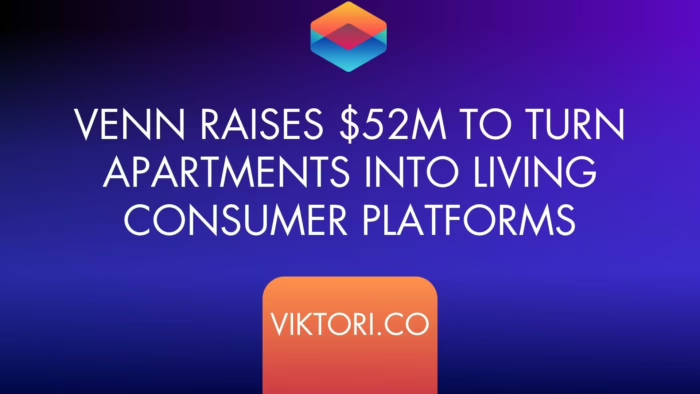
Venn Raises $52M to Turn Apartment Buildings Into Consumer Brands
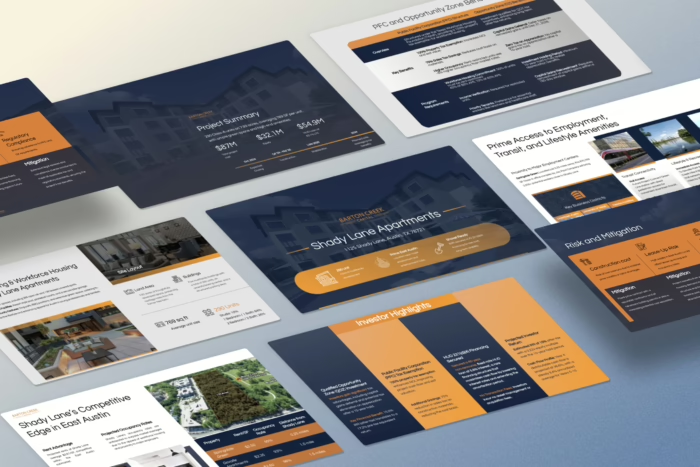
290 Unit Residential Real Estate Pitch Deck Case Study

The 12 Slide Community Living Pitch Deck Template

Raise $10mil With This Land Development Pitch Deck Template

Investment Fund Pitch Deck Guide (2026): How LPs Evaluate Capital Allocation
Inside the $5M Pitch Deck Fixing the Broken Home Services Model
Booking a plumber shouldn’t feel like a leap of faith—and yet, the home services industry…
This Deck Raised $10M for an Immersive Local Adventure — See the Template
You’ve got a creative idea for an immersive neighborhood adventure — maybe a live‑role mystery,…
£1.85M Equity Raise With This Rooming House Pitch Deck Template
Ever walked into a rooming house and thought, “I could make this place a goldmine”?…

The Pitch Deck Powering a $5M Raise in PropTech
Let’s face it—managing real estate today is like trying to run a marathon in flip-flops….

The Deck That Helped Platforms Like “Shopify for Real Estate” Raise Capital
You have the vision: a platform that lets real estate brokerages operate like an online…
Raising $10M With a Raw Land Development Pitch Deck
Raw land might look like empty dirt to some—but to smart investors, it’s pure potential….

Inside the $12M Pitch Deck Revitalizing Louisville’s Retail Core
Strip malls are dying—but neighborhood retail isn’t. The next wave of shopping centers blends convenience,…
The $25M Deck Behind a High-Yield Urban Mixed-Use Strategy
Mixed-use assets are back in favor—and smart capital knows it. As urban cores densify and…
Pitch Deck That Helps Raise $50M for a Multi‑Family Project
Multi-family real estate is one of the most resilient, scalable, and investor-loved asset classes—but raising…

Houston, Meet Your Next Austin Opportunity: Deck Built to Raise $20M
Let’s be real—Austin isn’t just booming; it’s reinventing itself as America’s fastest-growing real estate frontier….

Inside the $50M Hotel Pitch Deck That Blends Luxury & Sustainability
Hotels aren’t just buildings. They’re experiences waiting to be written in stone, steel, and service….
Real Estate Training Course Pitch Deck Template
Let’s get straight to the point: You’re ready to dive into the multifamily real estate…

How to Raise $20M for Nicosia Real Estate—Slide by Slide
So, you’re eyeing the Cyprus real estate market—Nicosia, villas, commercial, maybe industrial—and you know there’s…
The $15M Fix-and-Flip Fund Deck Investors Actually Paid Attention To
You love flipping houses. You see the opportunity in worn‑down walls, weathered facades, and properties…
This Real Estate Pitch Deck Template Helps Land $15M in Capital
Let’s be honest—most real estate firm pitch decks either drown investors in detail or leave…
Looking for a step by step guide to build a real estate pitch deck?
Check out our in-depth real estate pitch deck guide. I’m a real estate pitch deck expert that can help you develop a deck for your project. Handsoff.
Check out some of the essential 101 guides:

Burn Rate and Runway in a Pitch Deck: How to Show Investors Survival Math
Burn rate is where a pitch deck stops being brave and starts being accountable. Up…
Financial Projection Slide: How to Show Investors the Numbers Behind the Story
A financial projection slide shows investors how your business could grow over time. It usually…

Revenue Model Slide: How to Show Investors How You Make Money
A revenue model slide explains how your business makes money. That sounds simple, but this…

Use of Funds Slide: How to Show Investors Where the Money Goes
Use Of Funds Slide Quick Summary A use of funds slide explains how the capital…

Top Pitch Deck Design Agencies for Investor-Ready Presentations
Quick Summary A pitch deck design agency helps startups turn complex business ideas into clear,…

How to Create a High-Impact Investment Highlights Slide For Your Pitch Deck
An investment highlights slide is often the moment in a pitch deck when investors decide…
