

Author: Viktor
Pitch Deck & Fundraising Consultant. Ex Advertising. Founder of Viktori. $500mill In Funding. Bald Since 2010.
The 12 Slide AI Edtech Pitch Deck Template
Slide 1 – Elevator Pitch
Headline: “AI-Powered Personalized Learning for Every Student, Everywhere.”
Narrative:
Education is broken by one-size-fits-all teaching models.
Our AI tutor adapts to every learner’s pace, style, and needs.
Schools, parents, and companies use our platform to unlock potential at scale.
Visual: A split-screen: left side = overcrowded classroom, right side = learner with an AI dashboard showing personalized progress.
Slide 2 – Investor Highlights
Headline: “Momentum in the Fastest-Growing Segment of EdTech.”
Narrative:
Global EdTech market: $400B+ by 2030; AI-driven learning adoption accelerating.
Traction: [insert X schools / Y learners / Z% retention].
Proven ROI: students improve performance by [X%].
Founders: AI + Education domain expertise.
Visual: Four big data points/icons (e.g., Market Size, Current Users, Growth Rate, Team Credibility).
Slide 3 – The Problem
Headline: “The Education Gap is Widening.”
Narrative:
Teachers are overextended; students left behind.
1.6B learners worldwide lacked access to quality, personalized education (UNESCO).
Standardized methods fail to adapt to individual learning needs.
Without intervention, the skills gap will worsen, leaving millions unprepared for the future of work.
Visual: A downward graph of student engagement vs. rising demand for skills. Add stats like “40% of students disengaged in class.”
Slide 4 – The Solution
Headline: “An AI Tutor for Every Learner.”
Narrative:
Adaptive learning platform powered by proprietary AI.
Personalized curriculum, real-time assessment, and feedback.
Scales across K-12, higher ed, and workforce training.
Teachers save time, students gain mastery faster, institutions improve outcomes.
Visual: Before/after flow: “Generic Class → Learning Gaps” vs. “AI Adaptive Pathway → Personalized Success.”
Slide 5 – Market Opportunity
Headline: “A Massive, Fast-Growing Global Market.”
Narrative:
TAM (Total Addressable Market): $400B+ global EdTech by 2030.
SAM (Serviceable Market): $50B AI-enabled education sector.
SOM (Obtainable Market): $5B initial focus on English-speaking K-12 & corporate training.
Macro trends: AI adoption, digital-first classrooms, upskilling economy.
Visual: Market pyramid (TAM → SAM → SOM), with growth CAGR arrows.
Slide 6 – Product Demo (Show, Don’t Tell)
Headline: “Learning, Reinvented with AI.”
Narrative:
Step 1: Student logs in → AI baseline assessment.
Step 2: AI generates dynamic curriculum, adapting in real time.
Step 3: Teacher dashboard highlights insights, progress, and interventions.
Outcome: measurable student improvement, reduced teacher workload, higher engagement.
Visual: Screenshots/mockups:Student dashboard (progress bar, next lesson).
AI tutor chat window.
Teacher/admin panel with analytics.
Slide 7 – Business Model
Headline: “Scalable SaaS with Multiple Revenue Streams.”
Narrative:
Schools & Institutions (B2B): Subscription per student/seat, annual licenses for classrooms.
Enterprises (Corporate Training): Per-seat pricing with tiered packages.
Direct-to-Consumer (B2C): Freemium model with premium subscription upgrades.
Expansion potential: white-label solutions for publishers, international licensing.
Visual: Flow diagram with three pillars (B2B, B2C, B2E) leading to revenue streams.
Slide 8 – Traction & Validation
Headline: “Proven Results, Growing Adoption.”
Narrative:
Current traction: [X schools onboarded / Y learners / Z% retention].
Learning outcomes: students show [XX% improvement] in comprehension/grades.
Testimonials: Teachers report [XX% reduction] in workload.
Pilot case study: Partnered with [School/Org], results after 6 months.
Visual: Growth chart of active users, retention graph, plus 1–2 real testimonial quotes.
Slide 9 – Go-To-Market Strategy
Headline: “Targeted Growth with Strategic Partnerships.”
Narrative:
Phase 1: K-12 private schools and early adopters in North America/Europe.
Phase 2: Partnerships with education ministries, universities, and publishers.
Phase 3: Global expansion into corporate upskilling and lifelong learning markets.
Customer acquisition: digital marketing, education conferences, referral programs.
Visual: Roadmap or GTM funnel (Phase 1 → Phase 2 → Phase 3).
Slide 10 – Competitive Landscape & Moat
Headline: “Positioned to Lead in AI-Powered Education.”
Narrative:
Competitors: Duolingo, Coursera, Khan Academy, legacy LMS platforms.
Differentiation: Deep AI personalization, real-time feedback, cross-segment scalability (K-12 to corporate).
Defensibility: Proprietary AI algorithms, exclusive content partnerships, and data network effects.
Visual: 2×2 quadrant (Y-axis = personalization, X-axis = engagement). Position company in top-right quadrant as “High Personalization + High Engagement.”
Slide 11 – Financial Projections & Scaling
Headline: “High-Growth Model with Clear Path to Scale.”
Narrative:
Year 1–3 revenue forecast:
Year 1: $X million (pilot + early adopters).
Year 2: $X million (institutional expansion).
Year 3: $X million (global scaling, corporate adoption).
Gross margins ~70% (SaaS economics).
Break-even by Year [X].
Visual: 3-year revenue projection chart (bar or line), with key milestones annotated.
Slide 12 – Team & Vision
Headline: “The Team Building the Future of Education.”
Narrative:
Founders: AI researcher, ex-teacher/education leader, business strategist.
Advisors: industry veterans from EdTech, AI, and policy.
Shared mission: democratize access to personalized, high-quality education for all learners.
Vision: “An AI tutor for every student, everywhere.”
Visual: Headshots of founders, advisory board logos, plus a strong closing vision statement overlaying a global education image.
Need a customized pitch deck template?
1000s of individuals like you asked for a tailored version of this template to help them craft a better pitch deck. Get yours for just $44. As soon as I get your request, I’ll follow up with one question to confirm what exactly is that are you pitching. This will help me nail the content for you.
What you’ll get is a 3+ page editable word document that contains a fully fleshed out slide by slide deck content for your pitch.
Alternatively, book a call and you’ll brief me on the specifics of your pitch.
Book The Free 30 Min Call
5/5 Upwork Rating | 100% TrustPilot

Plan on building the pitch deck yourself?
Option 1: Do It Yourself
If you’ve done a few presentation in the past, then this is the option you should take. Follow these simple steps:
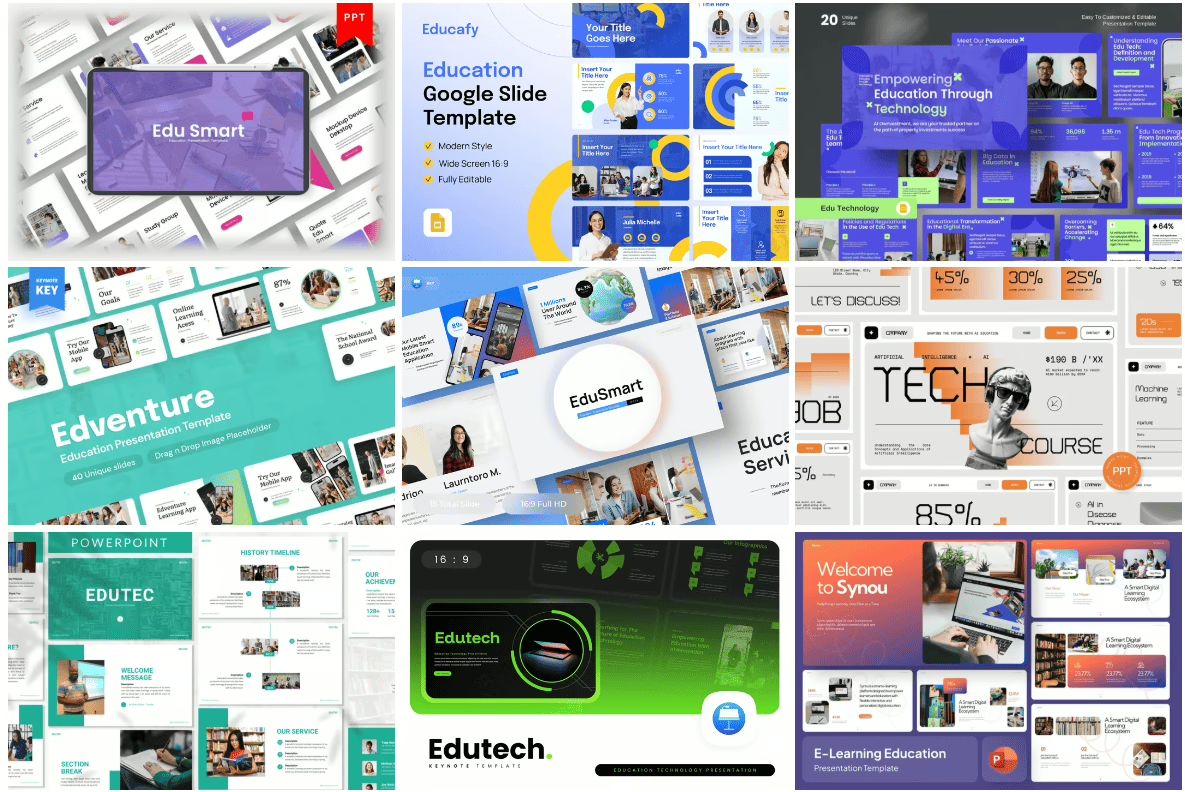
- Pick one of the premium Envato templates by clicking on the image below,
- Answer the slide by slide questions I listed in the section below the image
- Follow the pitch deck guide I linked out to, next to the questions,
And build your own deck. It’s as easy as that.
Key Questions to Ask Yourself And Write The AI Edtech Pitch Deck Slides
Slide 1 – Elevator Pitch
What is your one-sentence description of the company?
Who is your target audience (students, schools, enterprises, parents)?
What transformation or outcome do you deliver that no one else does?
What’s your bold, memorable tagline?
Slide 2 – Investor Highlights
What traction have you achieved (users, schools, pilots, revenue)?
What’s your growth rate (month-over-month or year-over-year)?
Any industry recognition, awards, or accelerator programs?
Why is this the right team at the right time?
Slide 3 – The Problem
What specific problems in education are you solving?
What’s the scale of the problem (market stats, % disengaged, skills gap data)?
Who feels the pain most (students, teachers, institutions, employers)?
What happens if this problem is not solved now?
Slide 4 – The Solution
What exactly does your product do in the simplest terms?
How does your AI differentiate itself from traditional EdTech tools?
What results can learners/teachers expect?
Can you illustrate a before/after scenario for users?
Slide 5 – Market Opportunity
What is your TAM (Total Addressable Market)?
What is your SAM (Serviceable Available Market)?
What is your SOM (Serviceable Obtainable Market) — where will you start?
What industry or macro trends make this market ripe now (AI adoption, online learning growth)?
Slide 6 – Product Demo (Show, Don’t Tell)
What are the top 2–3 product features that must be shown visually?
Can you provide screenshots or mockups (student dashboard, teacher panel)?
How does the user journey flow (onboarding → AI assessment → personalized path → results)?
What measurable outcomes can you demonstrate in the demo?
Slide 7 – Business Model
How do you make money (B2B, B2C, enterprise licensing)?
What is your pricing structure? (per-seat, per-institution, subscription, freemium?)
What’s your customer lifetime value (LTV) and acquisition cost (CAC)?
Do you have secondary revenue streams (white-label, partnerships, data insights)?
Slide 8 – Traction & Validation
What are your current usage metrics (active users, engagement, retention)?
What learning outcomes or improvements have you measured?
Do you have case studies or pilot results?
What do your customers (students, teachers, institutions) say about you?
Slide 9 – Go-To-Market Strategy
Who is your initial beachhead customer (K-12, higher ed, corporate training)?
What is your distribution strategy (direct sales, channel partners, online marketing)?
What is your sales cycle and who are the decision-makers?
What partnerships or alliances could accelerate adoption?
Slide 10 – Competitive Landscape & Moat
Who are your main competitors (traditional EdTech, AI-first platforms, LMS providers)?
How are you different (personalization, engagement, adaptability, pricing)?
What barriers to entry protect you (IP, data, partnerships, community effects)?
What unique advantage do you have that competitors cannot replicate easily?
Slide 11 – Financial Projections & Scaling
What are your 3–5 year revenue projections?
What assumptions are these projections based on (user growth, pricing, churn)?
What are your gross margins, CAC, and LTV?
When do you expect to reach profitability?
How much capital are you raising, and how will it be allocated?
Slide 12 – Team & Vision
Who are the key founders and what unique expertise do they bring (AI, education, business)?
Who are your advisors or early investors?
What is your long-term vision (10-year impact)?
What’s your “North Star” mission that inspires investors and partners?

Follow My Edtech Pitch Deck Guide
A detailed guide with the steps outlined to get to a investor ready deck.
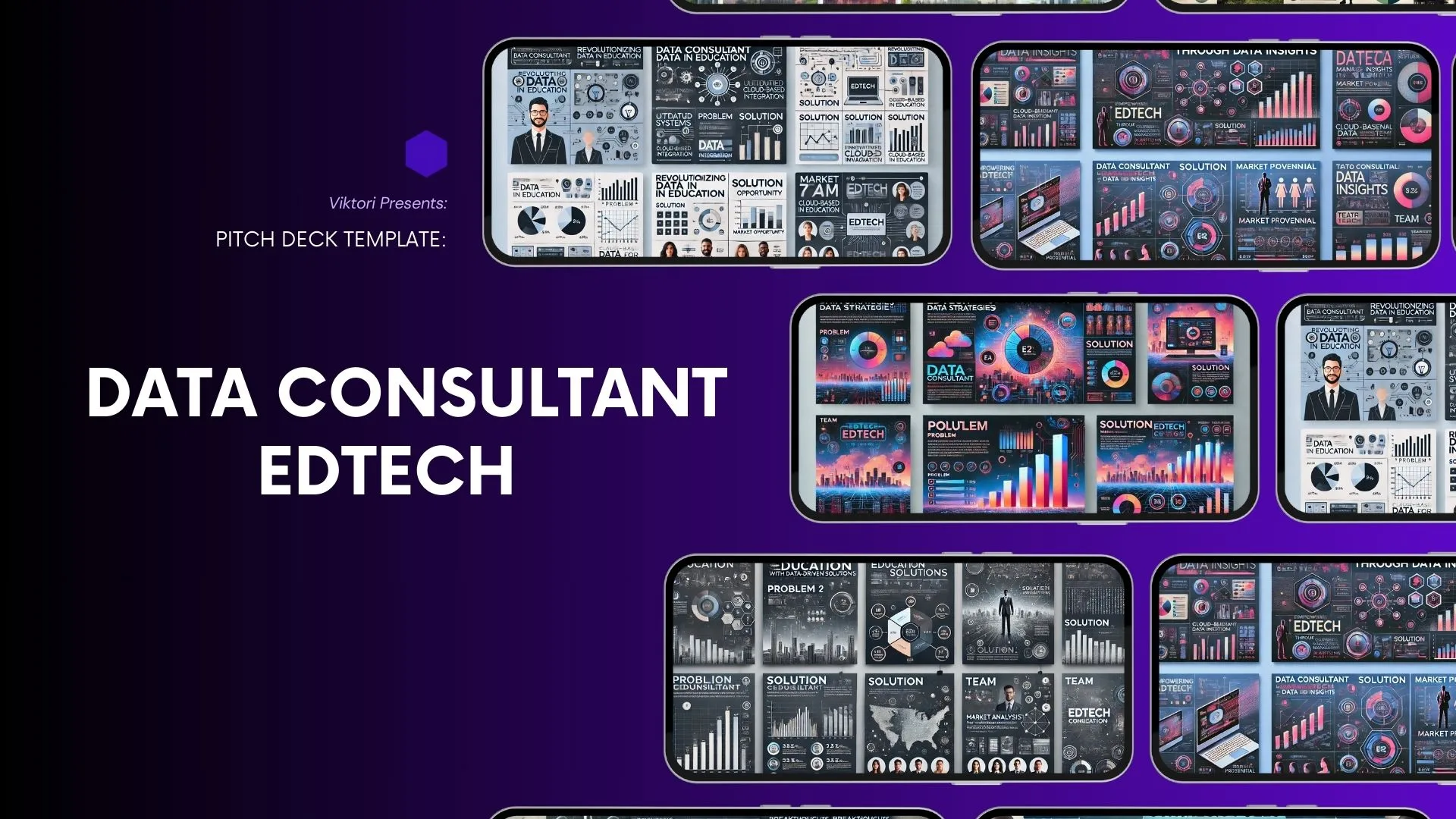
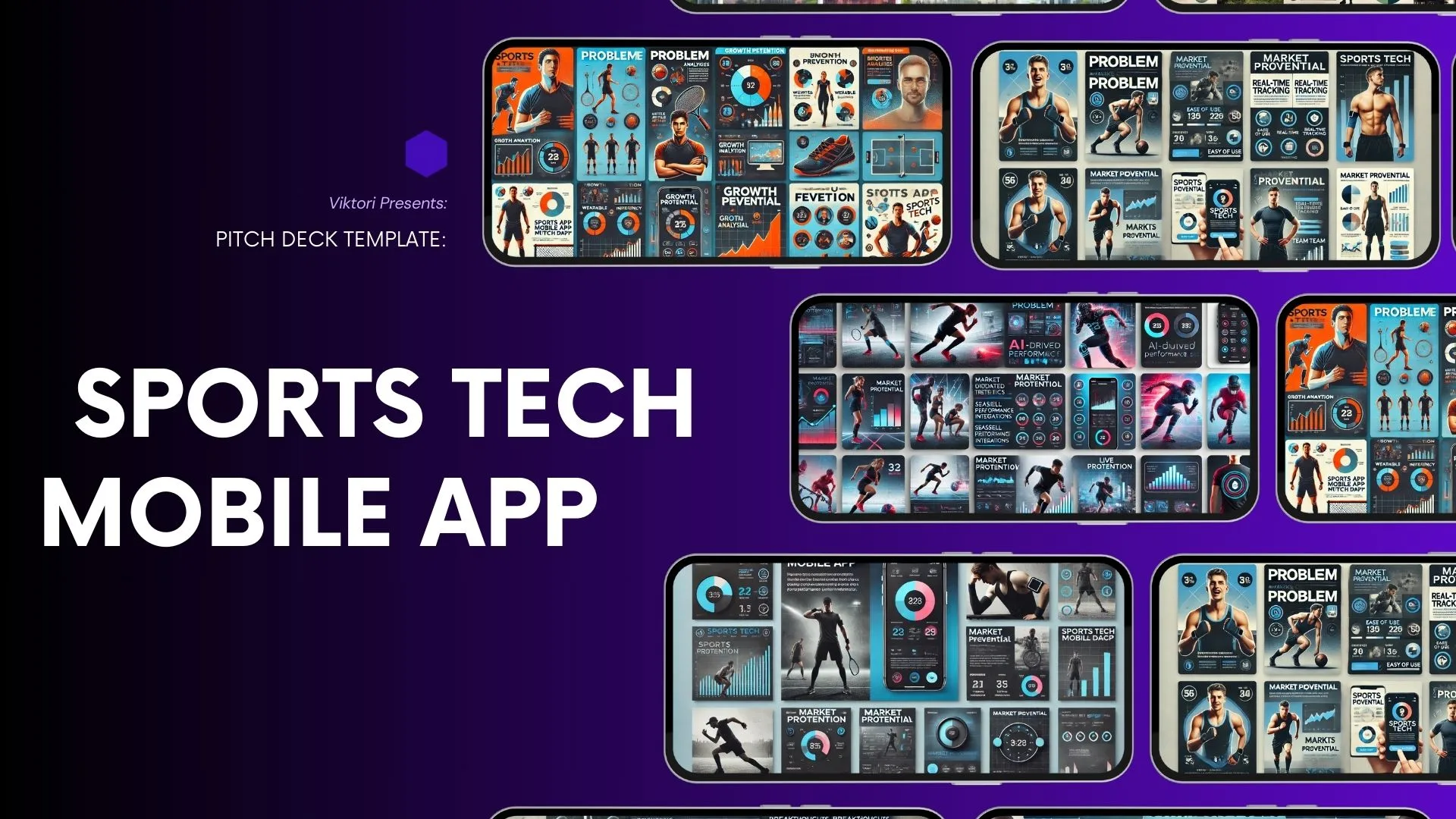
Related Edtech Pitch Deck Templates



Other Resources


Viktori. Pitching your way to your next funding.
Locations
Office 1: 633 North Wells Street Chicago, IL, United States, 60654
HQ: Boulevard P.O. 10000 Skopje, North Macedonia
Pitch Deck Resources
Case Studies
Client Reviews
Presentation Resources
Pitch Deck Services
Industry Specific Pitch Deck Services:
Additional Services
About Viktori