


Circular economy decks often start with the moral argument: waste is bad, recycling is good. That’s fine for awareness, but investors don’t allocate capital to guilt—they allocate to cash flows, constraints, and defensibility.
This project’s visuals show a clean blue system with strong institutional spacing: competitor limitations, why the solution is different, a phased go-to-market, a headline funding ask (“seeking equity to unlock annual revenue stream”), and a “waste crisis / supply shortage / dependency” slide with simple numeric anchors.
The actual problem wasn’t “storytelling.” It was category framing.
The deck needed to stop sounding like:
- an NGO initiative
- a policy memo
- a “green startup” pitch
…and start reading like industrial infrastructure with:
- capacity
- output quality and certifications
- buyer demand dynamics
- integration with supply chains
- staged deployment economics
Once you frame it as infrastructure, the investor’s questions change. They stop asking “why does this matter?” and start asking “how do you win and scale?”
Narrative structure: constraints → demand → capacity → economics
The rebuilt story followed a clear industrial flow:
- Waste crisis is the input constraint (volume exists; handling is broken).
- Supply shortage is the output constraint (quality recycled content is scarce).
- Regulation and brand mandates are the demand engine (content requirements become forced demand).
- Existing players have limitations (fragmentation, lack of integration, certification gaps).
- This solution is different (integration, certification readiness, consistent output).
- Go-to-market is phased (secure demand first, then scale distribution).
- Capital unlocks throughput (equity and structured finance tied to capacity growth).
This is why the deck leans on “securing demand first, then scaling distribution.” That’s infrastructure logic: reduce risk by locking demand before scaling capacity.
Competitive slides that don’t feel like marketing
The competitor limitations slide can easily become a list of insults. Here, it’s done in a mature way: show what competitors generally lack (integration, consistency, certifications, etc.) and then show the specific differentiator. It reads like an operator talking to another operator.
Those tables are not “pretty slides.” They are underwriting slides.
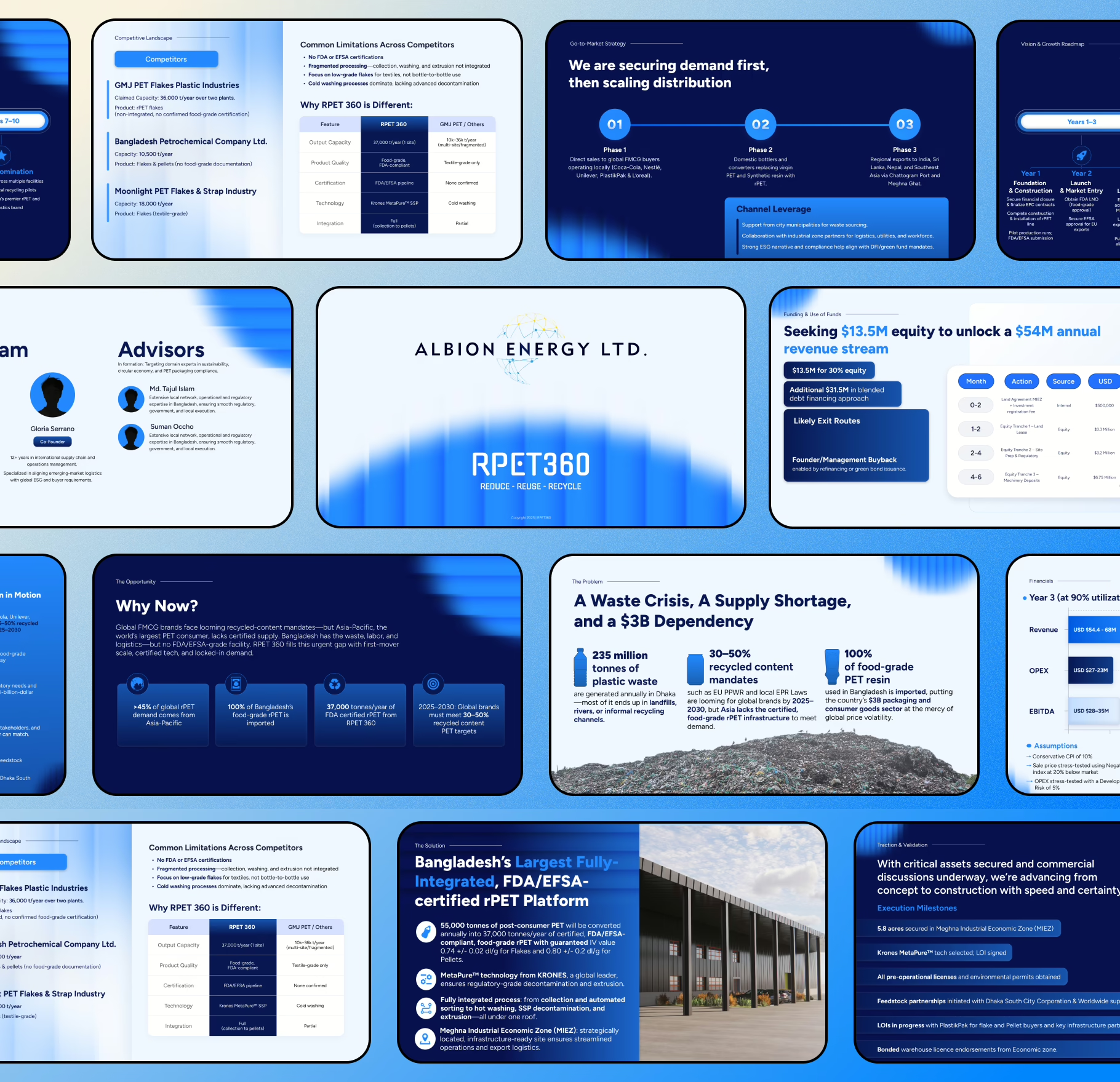
The design system choice (and why it matters)
The blue/white system with generous space is doing something subtle:
- It signals compliance and process (important in recycling where certification and standards matter).
- It avoids the “green gradient eco aesthetic” that screams retail sustainability marketing.
- It feels closer to an institutional or industrial board pack.
In short: it communicates “this can be audited.”
Funding ask framing: avoid the trap
Many recycling pitches present the ask as “we need money to build.” That invites the investor to focus on construction risk. The better approach is: the capital is the final piece in a chain of execution readiness—demand, site, process, partners—then capital unlocks production.
So the funding slide was treated as a mechanism, not a plea. The ask ties to a staged action plan and clear routes to scaling.
What the deck became
A deck like this becomes a multi-purpose asset:
- Investor deck for climate/infrastructure capital.
- Partner deck for buyers and supply chain collaborators.
- Stakeholder deck for regulators or economic zones.
When the story is infrastructure-first, the same narrative works across rooms. That’s the point.
