
Bluefish Raises $20M to Redefine AI Search Marketing: Why This Deck Worked

Author: Viktor
Pitch Deck & Fundraising Consultant. Ex Advertising. Founder of Viktori. $500mill In Funding. Bald Since 2010.
When Bluefish announced its $20M Series A, it wasn’t just another funding headline — it was a signal. AI search isn’t a side channel anymore; it’s becoming the new front door for consumer discovery. And brands are scrambling to figure out how to win visibility in this emerging landscape.


The Backstory
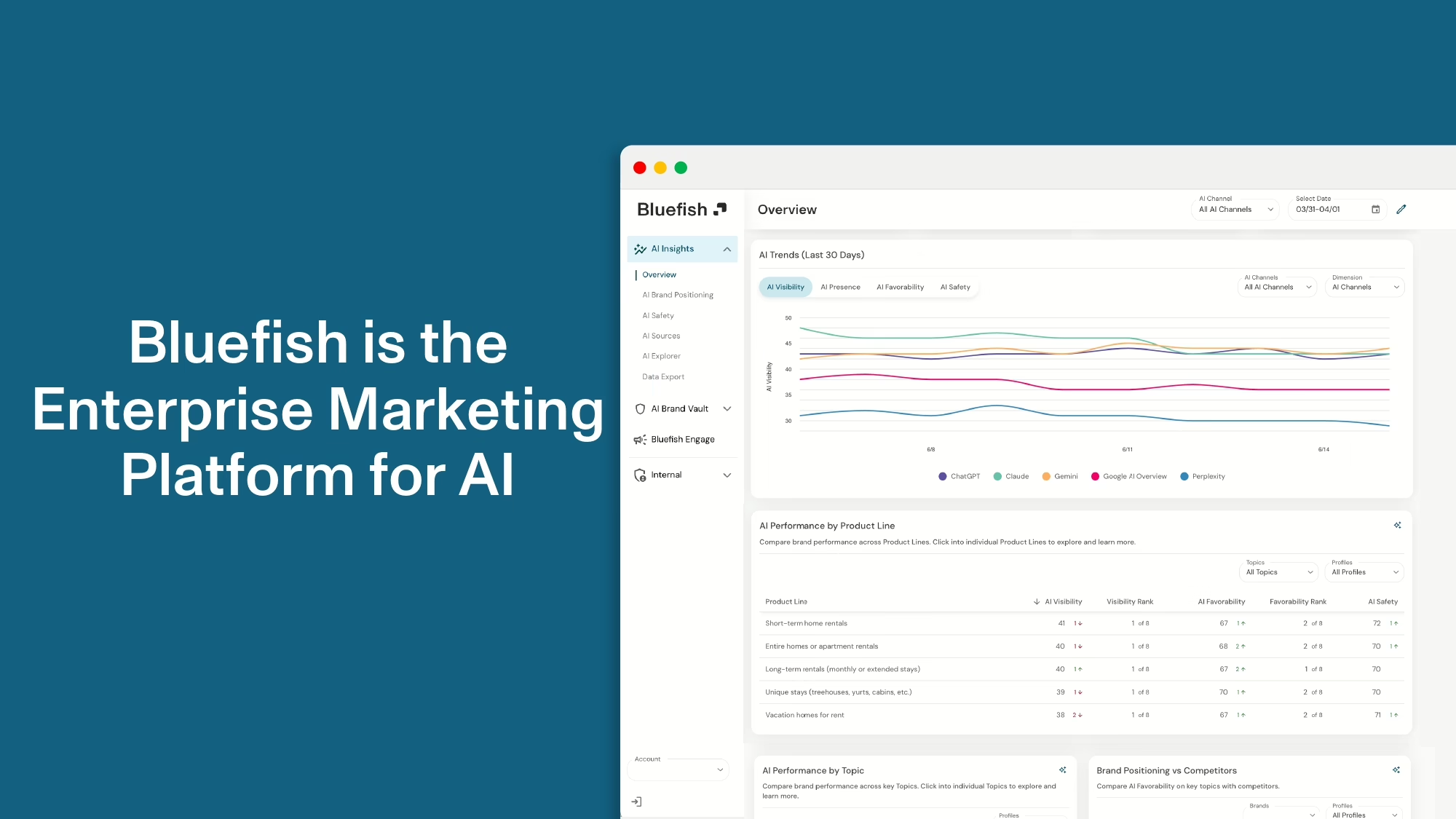
Bluefish positions itself as “the enterprise marketing platform for the generative internet.” In plain terms: as consumers shift from Google search and social media to AI-powered queries, Bluefish helps brands track, measure, and influence how they show up in AI responses.
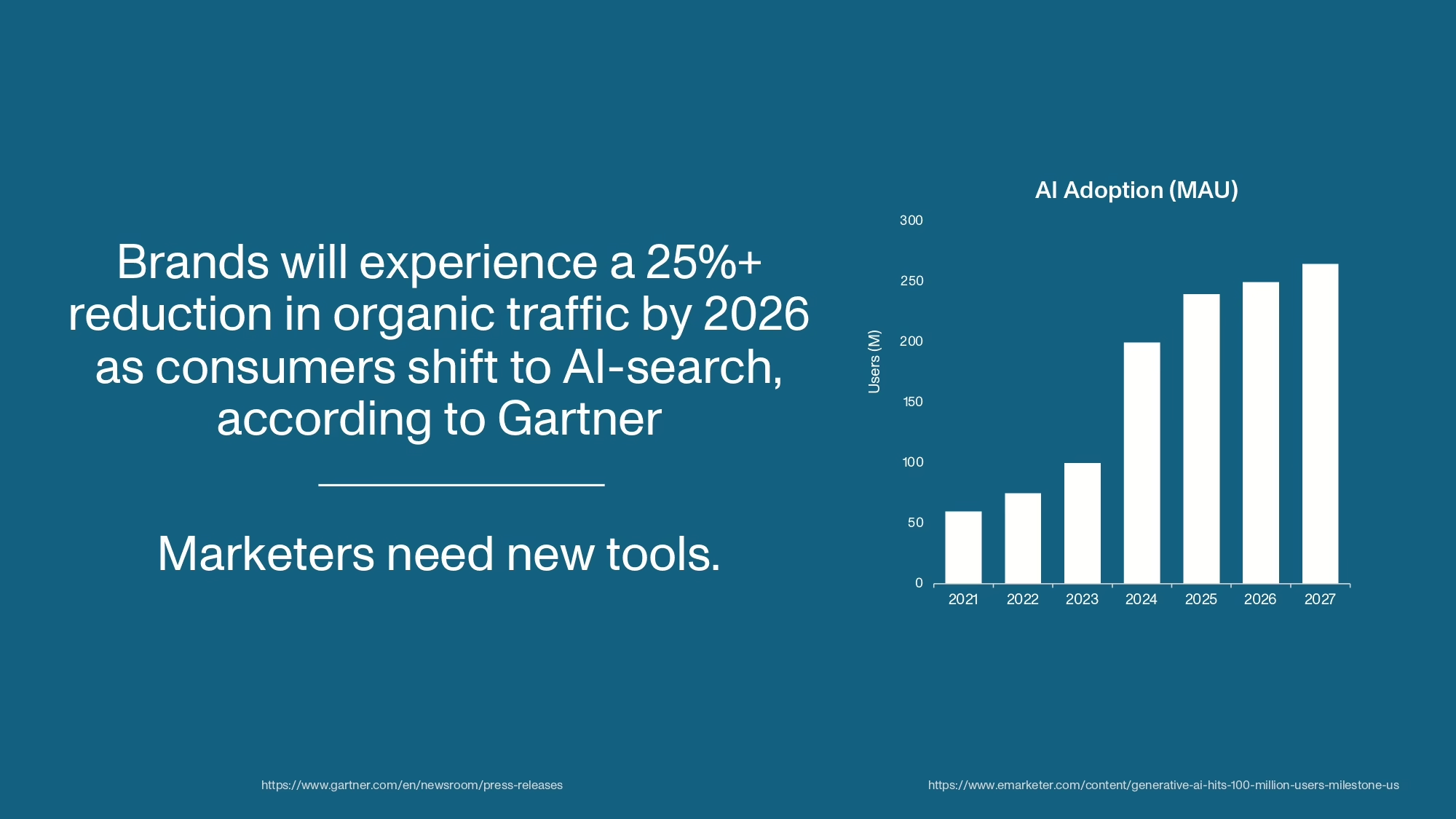
The urgency? Gartner predicts a 25%+ drop in organic traffic to brand sites by 2026 as AI assistants displace traditional search. If you’re a Fortune 500 CMO, that’s not a trend — that’s an existential threat.
Why This Pitch Worked
Most founders obsess over design-heavy decks or perfect storytelling arcs. But Bluefish’s raise proves a different truth:
It’s not always a visually stunning deck or a flawless narrative that wins investors. Sometimes it’s the team itself.
Bluefish’s leadership has category-defining martech pedigree:
CEO Alex Sherman, ex-founder of PromoteIQ (acquired by Microsoft).
CTO Andrei Dunca, ex-LiveRail (acquired for $500M).
COO Jing Feng, deep operational experience scaling platforms.
That track record alone tells investors: “We’ve built this playbook before, and we’ll do it again.”
The deck itself is functional, even a little dense — but it didn’t need to be flashy. The credibility of the team and the clarity of the market problem carried the story.
Here’s a breakdown of each slide.
Slide 1: Title Slide
Content: Series A — Summer 2025 (Confidential).
Investor Lens:
Standard opener, professional but not persuasive.
Establishes this is a serious enterprise round.
My 2 Cents:
Nothing wrong with keeping the opener simple. This isn’t where you win investors over, it’s just the handshake slide before the real story begins.
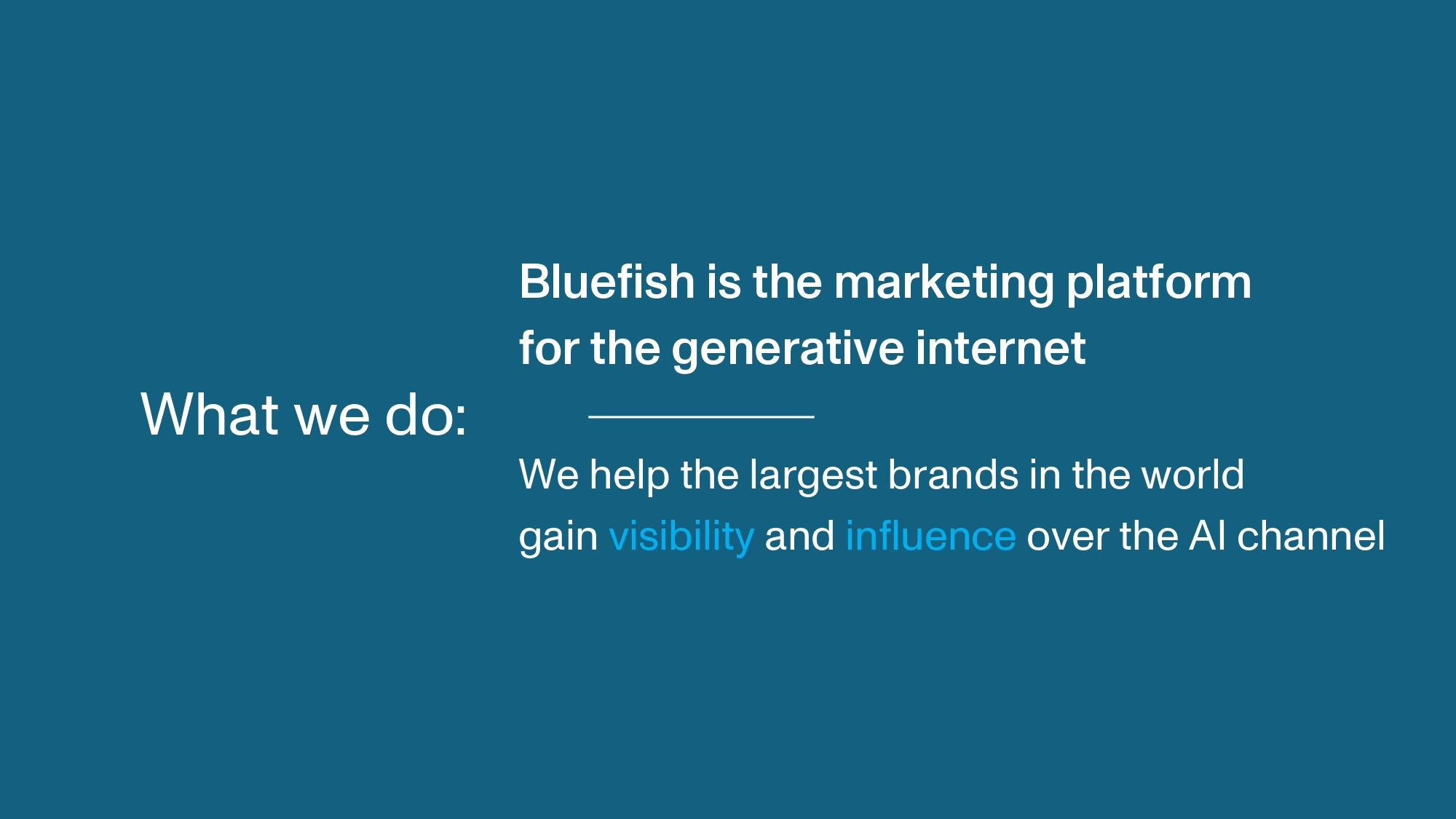
Slide 2: What We Do
Content:
“Bluefish is the marketing platform for the generative internet.”
Helps the largest brands gain visibility and influence over the AI channel.
Investor Lens:
Category-level positioning.
Broad but powerful: frames Bluefish as infrastructure, not a tool.
My 2 Cents:
I love this framing. They’re not saying “we’re an AI marketing app,” they’re saying “we’re the platform for the generative internet.” It’s bold, it’s big, and it immediately signals: we’re here to own the category, not play in it.
Slide 3: AI as a Consumer Channel
Content:
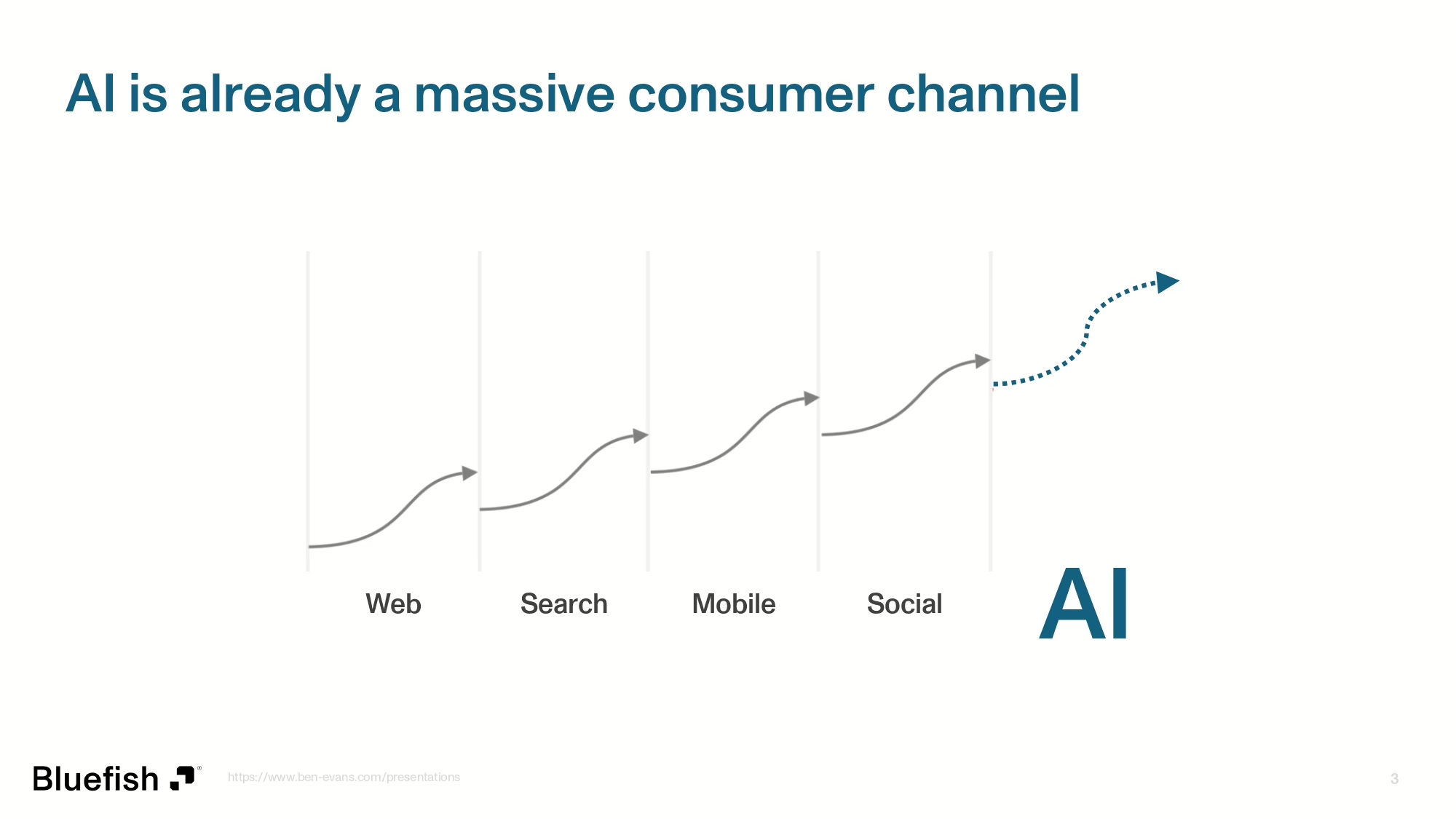
Compares AI to Web, Search, Mobile, Social.
Message: AI is already a major consumer channel.
Investor Lens:
Aligns AI with previous seismic shifts in discovery.
Implies investors who missed Google/Facebook don’t want to miss this one.
My 2 Cents:
This is brilliant category framing. The smartest way to explain AI search isn’t by showing off tech — it’s by putting it in a historical lineup. Web, Search, Mobile, Social… and now AI. Simple, inevitable, and hard to argue with.
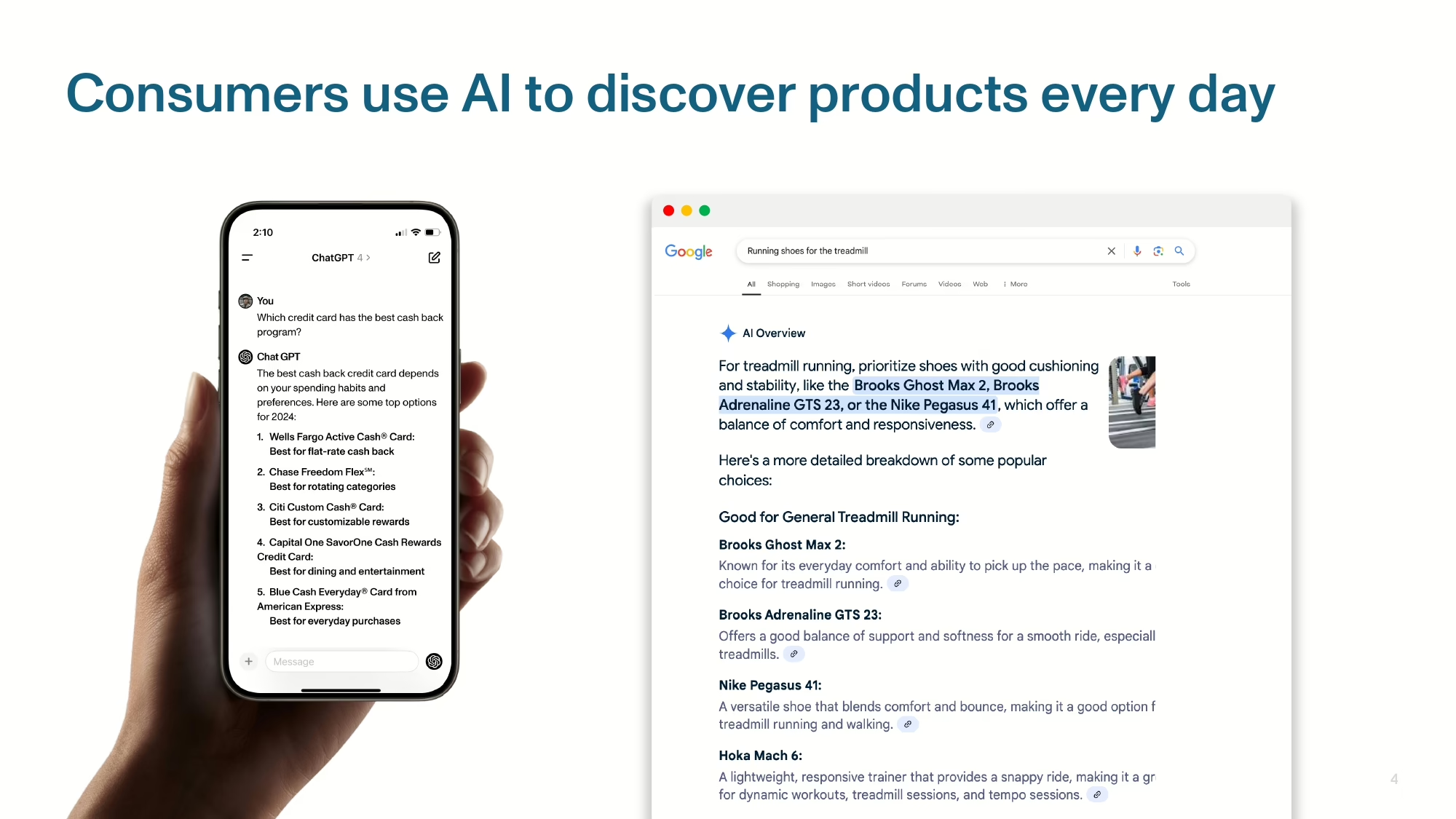
Slide 4: Consumers Already Use AI to Discover Products
Content:
Gartner: brands will lose 25%+ organic traffic by 2026.
AI adoption chart → rapid exponential growth.
Investor Lens:
Creates urgency.
External authority (Gartner) validates the pain point.
My 2 Cents:
This is the fear slide — and it’s a good one. The phrase “25% traffic loss by 2026” is sticky. If you’re a CMO, that keeps you up at night. If you’re an investor, you immediately see budgets shifting into solutions like Bluefish.
Slide 5: The New AI Funnel vs. Legacy Funnel
Content:
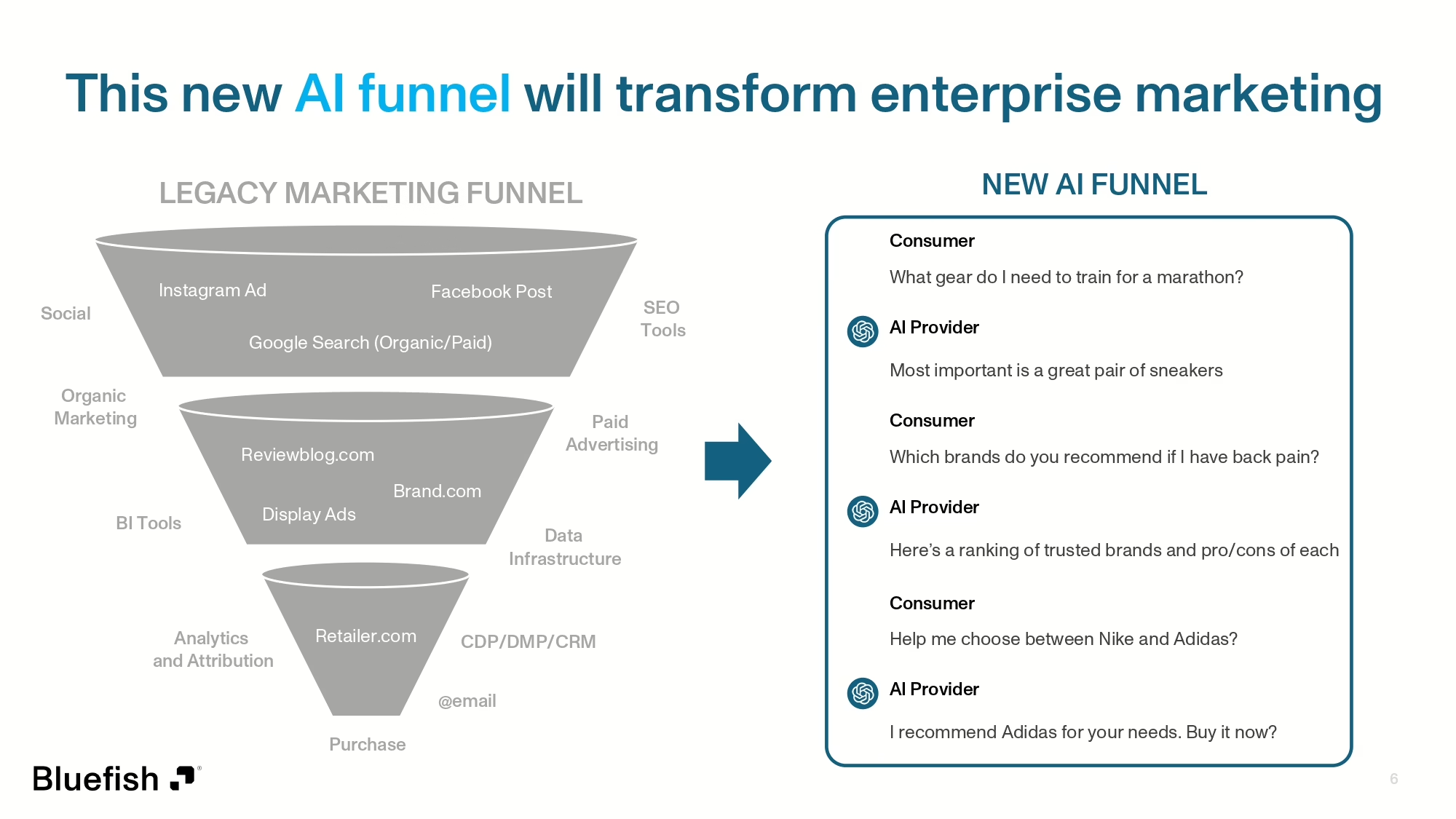
Old funnel: Brand.com → Ads → SEO → Social → Purchase.
New funnel: Consumer asks AI → AI recommends brand → Purchase.
Investor Lens:
Category design moment: redraws the map.
Forces investors to accept that old martech is misaligned.
My 2 Cents:
This is one of my favorite slides in the whole deck. Simple before/after storytelling at its best. You instantly see why SEO tools won’t cut it in an AI-first world. The funnel changed — and when the funnel changes, everything changes.
Slide 6: Bluefish as the Enterprise Marketing Platform for AI
Content:
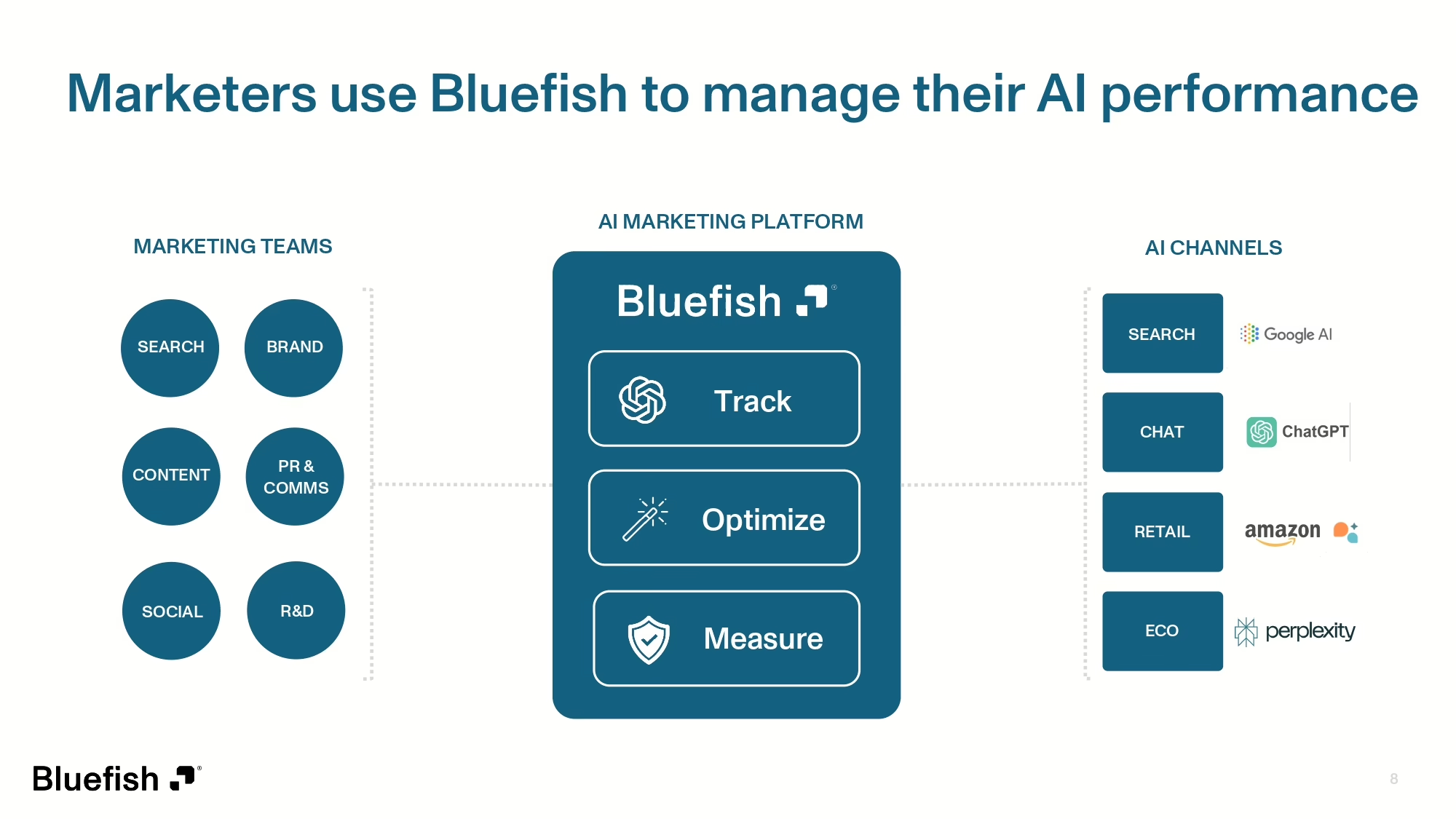
Bluefish sits across marketing departments: Search, Brand, PR, Comms, Content, Social, R&D.
Platform helps them track, optimize, and measure performance in AI channels.
Investor Lens:
Expands scope to the full marketing org.
Signals massive TAM and land-and-expand potential.
My 2 Cents:
This is where they flip from problem to solution. And they do it big. They’re not showing off features — they’re saying “every department in your enterprise can use Bluefish.” It’s a power move that makes them look like the Salesforce of AI marketing.
Slide 7: Platform Capabilities
Content:
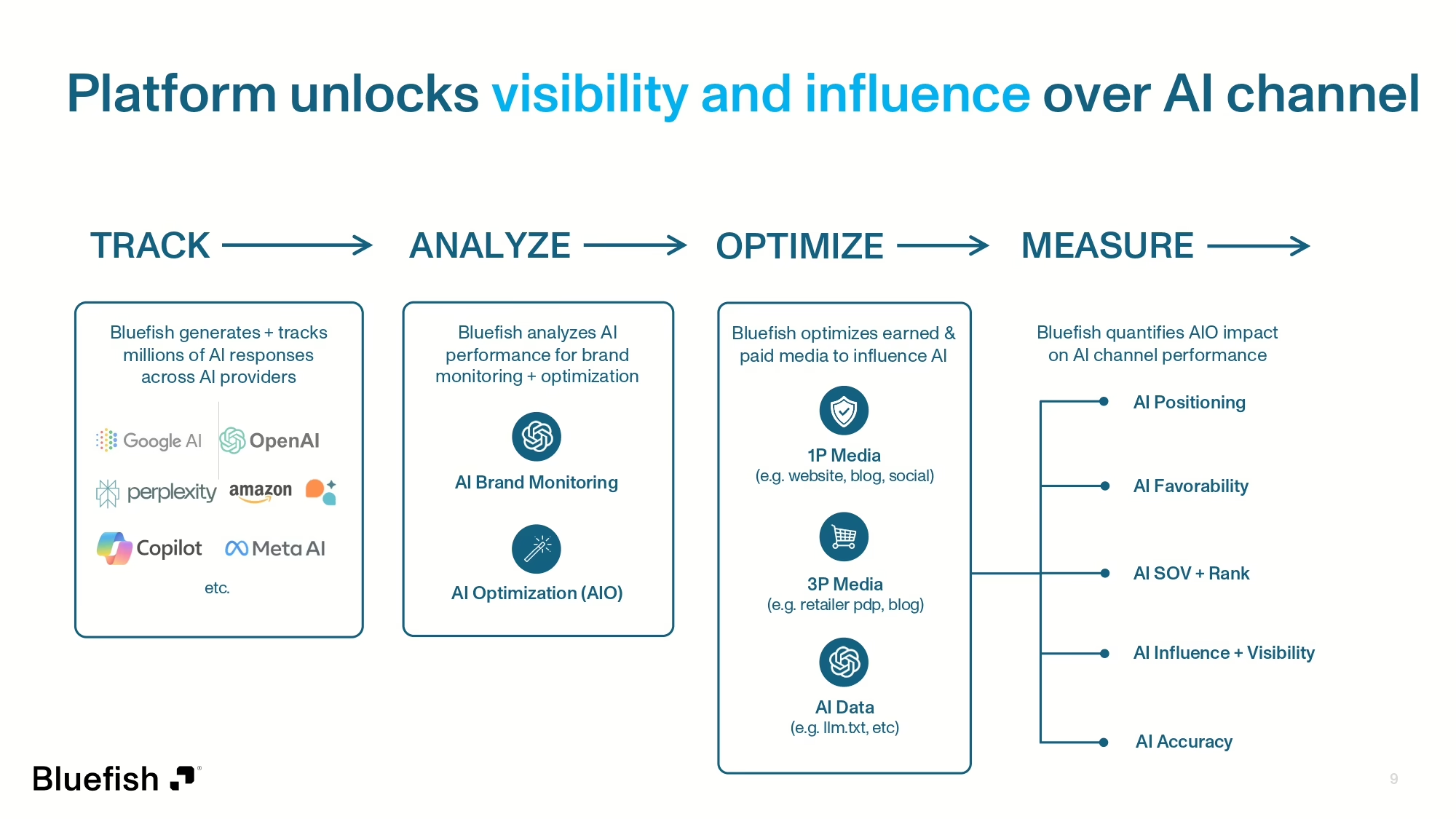
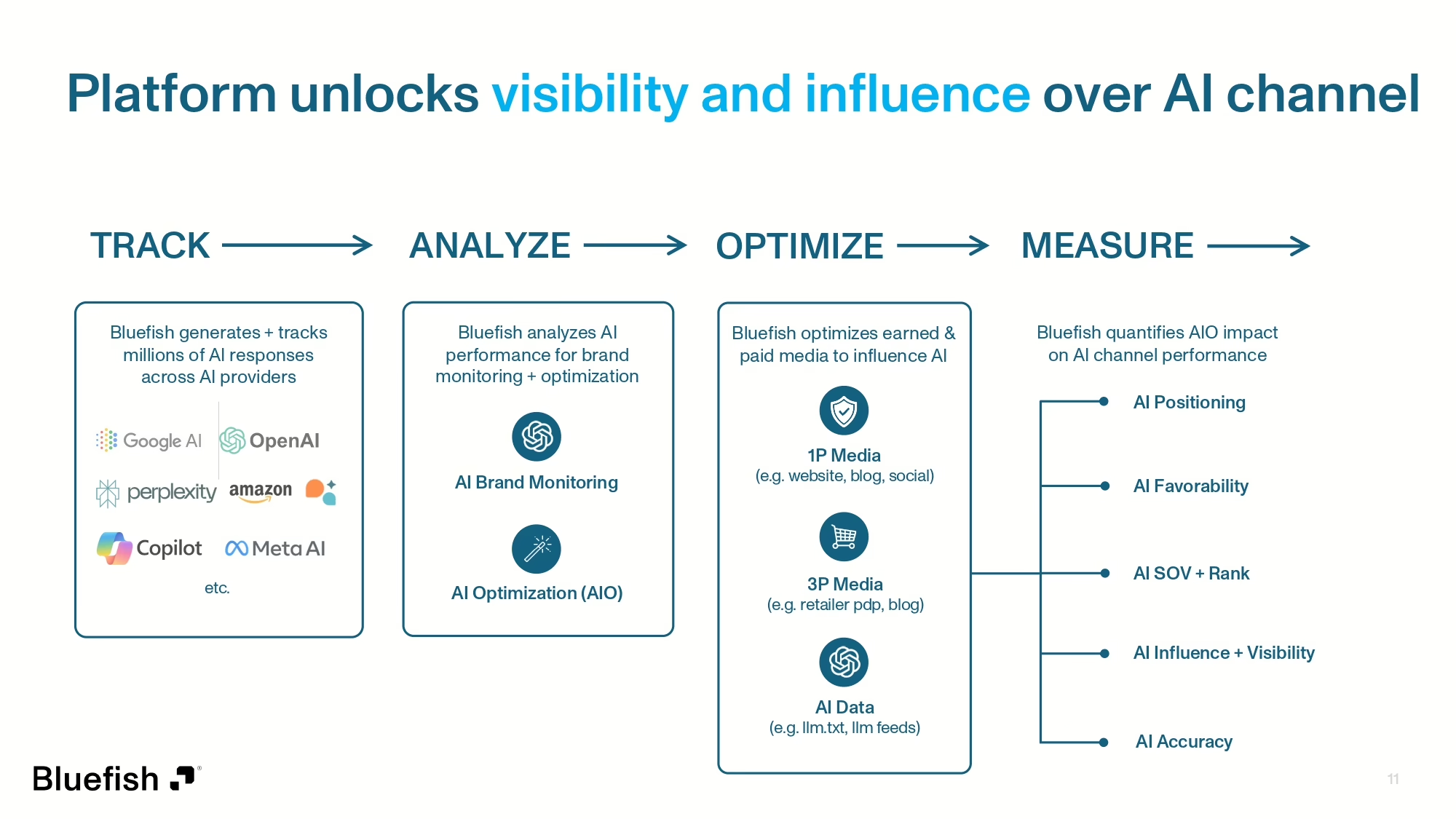
Framework: Track → Analyze → Optimize → Measure.
Functions: AI brand monitoring, AI optimization, AI visibility, AI accuracy.
Investor Lens:
Simplifies a fuzzy space with a clear 4-step model.
Feels like SEO/CRM language, easy for investors to digest.
My 2 Cents:
This is where they give structure to the chaos. “TAOM” might not sound sexy, but it works because it’s familiar. It feels like the next-gen version of SEO or CRM. That’s how you plant the seed of a new category in investors’ minds.
Slide 8: Control, Transparency, Enterprise Tech
Content:
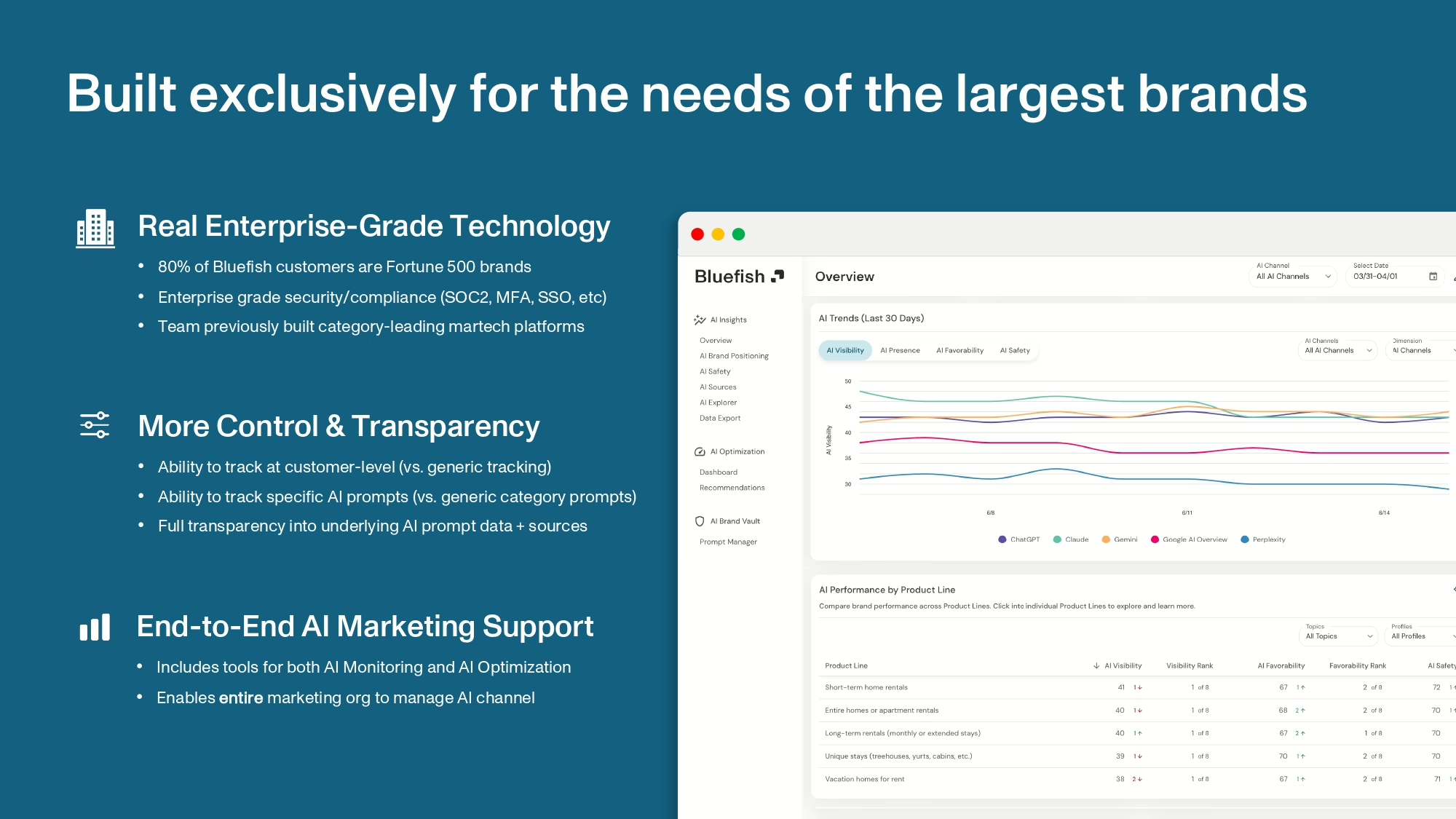
Customer-level and prompt-level tracking.
Transparency into AI data.
Enterprise compliance (SOC2, MFA, SSO).
Investor Lens:
Directly addresses skepticism: “What stops others from doing this?”
Enterprise-grade trust is the moat.
My 2 Cents:
Smart move. They know the pushback is coming: “Isn’t this just another AI tool?” And they knock it down early. By leaning on compliance and enterprise security, they position themselves as the safe bet for Fortune 500 CMOs.
Slide 9: More Platform Detail
Content:
Expanded detail: 1P vs. 3P media, AI positioning, AI influence, AI favorability.
Repeats Track, Analyze, Optimize, Measure with more technical depth.
Investor Lens:
Dense, but adds substance for technical investors.
Proves this isn’t vaporware; there’s real software underneath.
My 2 Cents:
I’ll be honest — it’s a heavy slide. But in enterprise sales, sometimes heavy is good. If you’re an investor or CMO, you want proof this isn’t just a PowerPoint startup. This slide screams: “we’ve built real tech.”
Slide 10: Quantifying AIO Impact
Content:
Introduces “AIO” (AI Optimization).
Shows how AIO improves brand visibility in AI search.
Investor Lens:
Creates a new metric category, like SEO once did.
Gives investors a term to latch onto: “owning AIO.”
My 2 Cents:
This is a killer branding play. By coining “AIO,” they’re doing exactly what Salesforce did with “CRM.” Investors love acronyms because they feel like categories. And categories are where billion-dollar companies live.
Slide 11: Traction
Content:
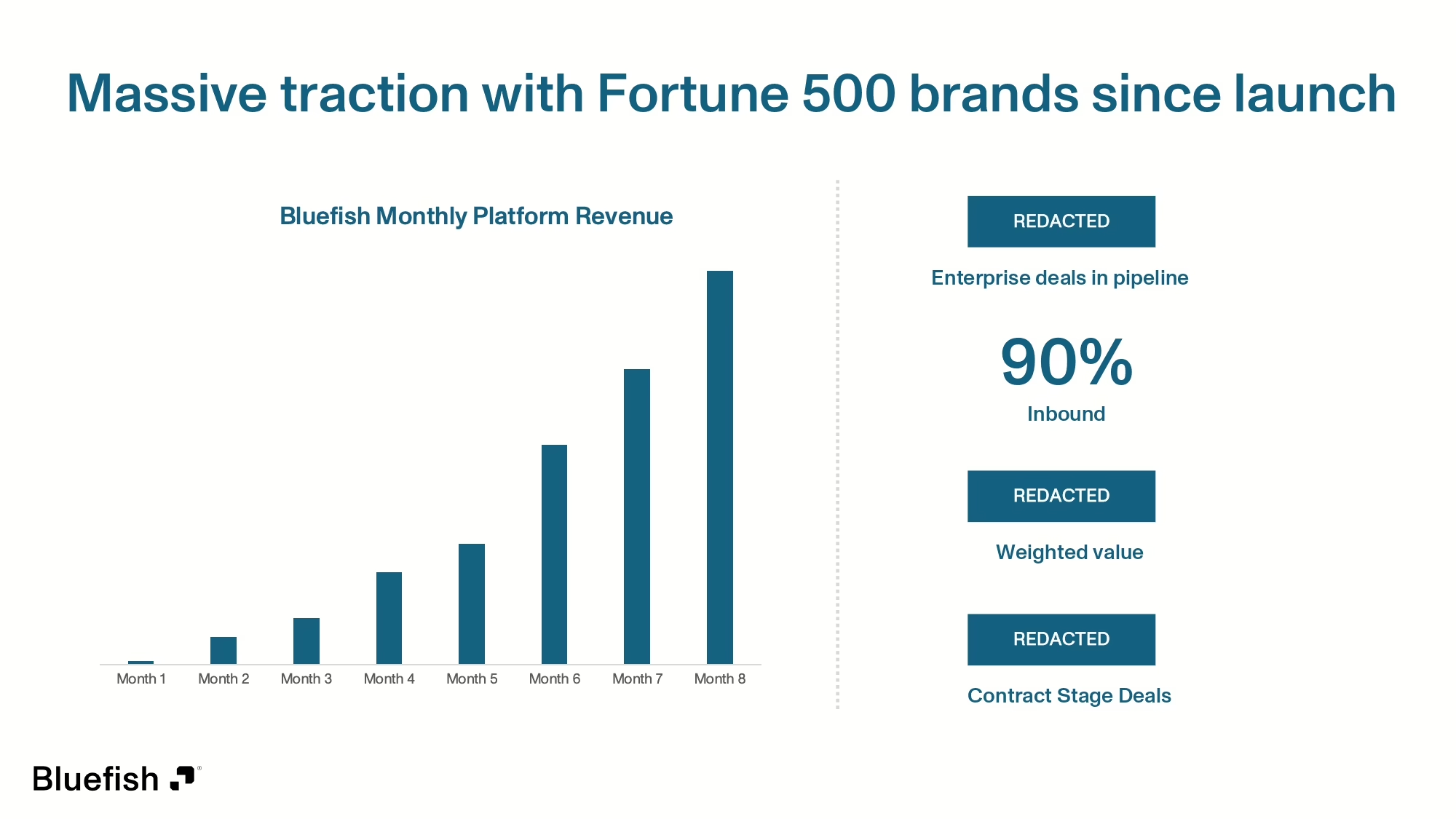
80% of customers are Fortune 500.
90% of pipeline is inbound.
Enterprise deals in play (redacted for public version).
Investor Lens:
Fortune 500 traction = validation.
Inbound demand = low CAC, strong pull.
My 2 Cents:
This is the money slide. The logos are the proof. When Fortune 500s are already knocking on your door, investors stop worrying about “if” and start asking “how big.” It’s proof that timing + team = traction.
Slide 12: The Team
Content:
Alex Sherman (CEO): PromoteIQ → acquired by Microsoft.
Andrei Dunca (CTO): LiveRail → $500M exit to Facebook.
Jing Feng (COO): scaled PromoteIQ ops.
Investor Lens:
Track record of exits in martech.
De-risks execution. Investors love “playbook repeat” teams.
My 2 Cents:
This is the closer. Honestly, the deck could be average and they’d still raise — because this team has already built and sold category leaders before. Investors aren’t just betting on AI, they’re betting on these people. And that’s the strongest pitch of all.
Slide 13: Fundraising History
Content:
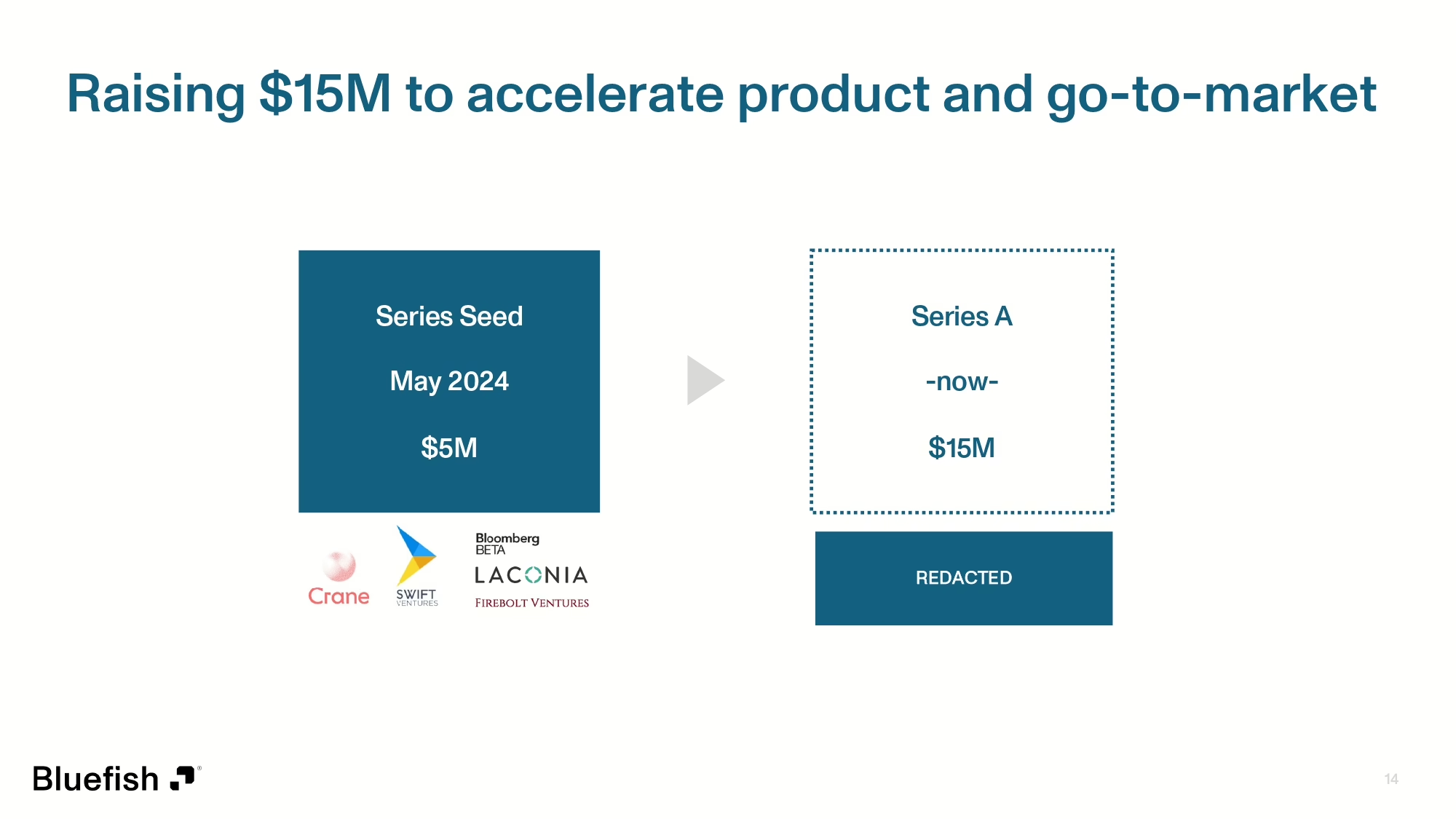
May 2024: $5M Seed.
Now: Raising $15M Series A (to scale product + GTM).
Investor Lens:
Shows capital efficiency: small seed → Fortune 500 traction within a year.
Positions them as disciplined operators, not reckless spenders.
Smooth progression: Seed ($5M) → Series A ($15M) is a classic, credible step-up.
My 2 Cents:
I like this slide because it tells investors: “We’ve done a lot with a little.” That’s powerful in today’s funding climate, where efficiency matters as much as growth. It also shows they’re not overreaching — just raising what they need to own the category.
Slide 14: Closing / The Ask
Content:
Raising $15M Series A.
Funds allocated to:
Product acceleration.
Go-to-market expansion.
Compliance & infrastructure scaling.
Investor Lens:
Clean, direct ask. No fluff.
Ties money to growth levers and milestones.
Investors like clarity: “$15M → category dominance within 24 months.”
My 2 Cents:
This is understated, but effective. No drama, no over-design. Just a confident close: “Here’s what we need, here’s where it’s going, and here’s how we’ll win.” Sometimes, that’s the best way to finish a pitch — especially when the team’s credibility does the heavy lifting.
My Take
Bluefish’s story is a powerful reminder:
Decks matter, but people close rounds. Investors back teams with proven execution, not just beautiful slides.
Category timing is everything. The AI funnel is new, urgent, and inevitable. Positioning Bluefish as the “enterprise AI marketing OS” made it a must-bet.
Clarity > polish. Their deck wasn’t designed to win awards — it was designed to communicate inevitability.
For founders, the lesson is clear: you don’t need to out-design everyone. But you do need to build credibility, own the urgency, and show that you’re the team that must lead the category.
Closing Thought
Bluefish didn’t just raise $20M because of AI hype. They raised because they showed investors they had the right team, timing, and traction to define the future of enterprise marketing.
Pitching Guides and Resources






Viktori. Pitching your way to your next funding.
Locations
Office 1: 633 North Wells Street Chicago, IL, United States, 60654
HQ: Boulevard P.O. 10000 Skopje, North Macedonia
Pitch Deck Resources
Case Studies
Client Reviews
Presentation Resources
Pitch Deck Services
Industry Specific Pitch Deck Services:
Additional Services
About Viktori