



Aerospace and Defence Pitch Deck Template

Picture of Viktor

Viktor

Pitch Deck & Fundraising Consultant. Ex Advertising. Founder of Viktori. $500mill In Funding. Bald Since 2010.

Featured in:

The logo of sole proprietor website, where viktor.co was featured
The logo of hubspot, where viktori.co was featured
The logo of marketer magazine, where viktori.co was featured
The logo of VC realm, where viktori.co was featured

Aerospace & Defence Pitch Deck Template Outline

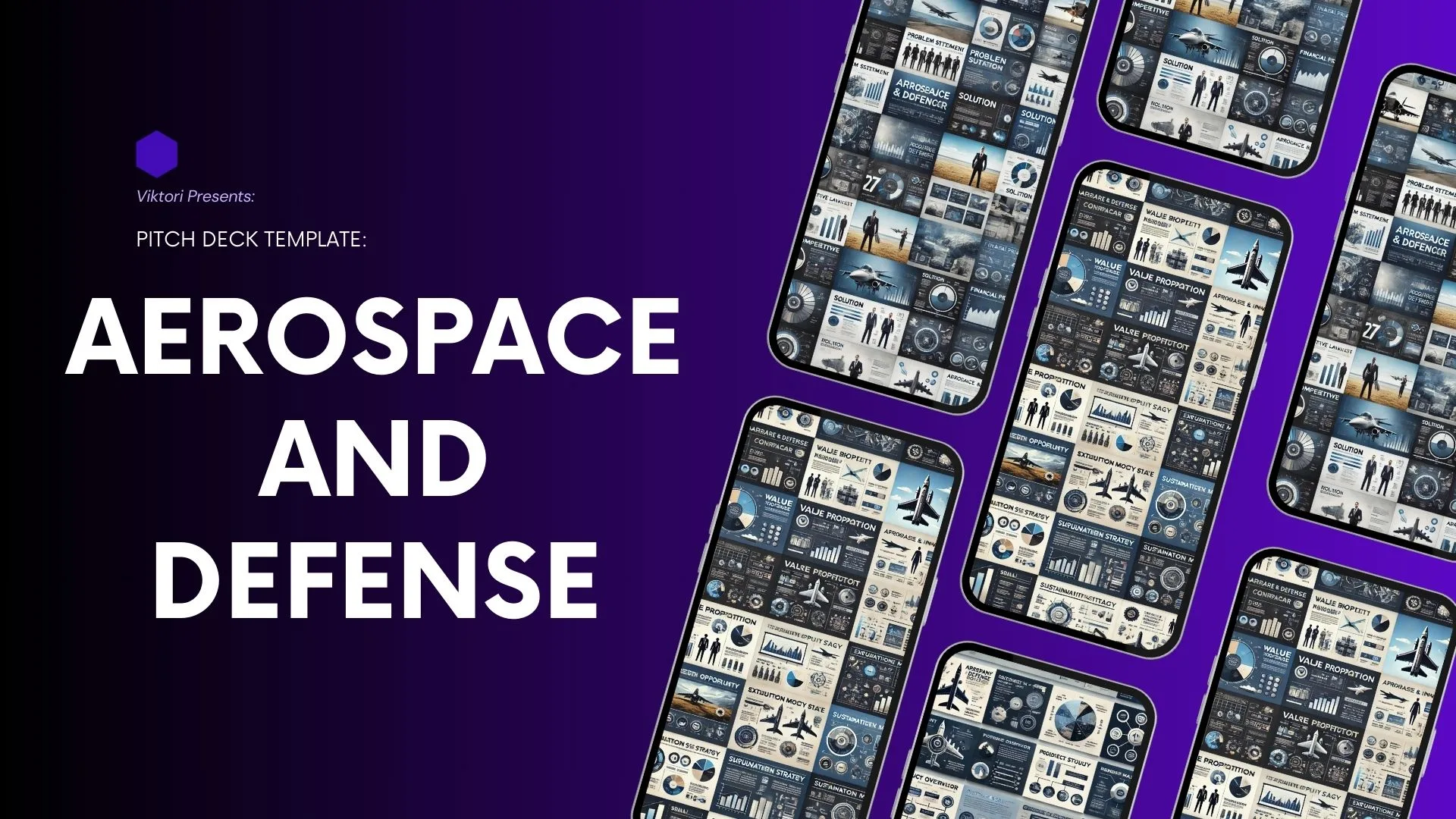
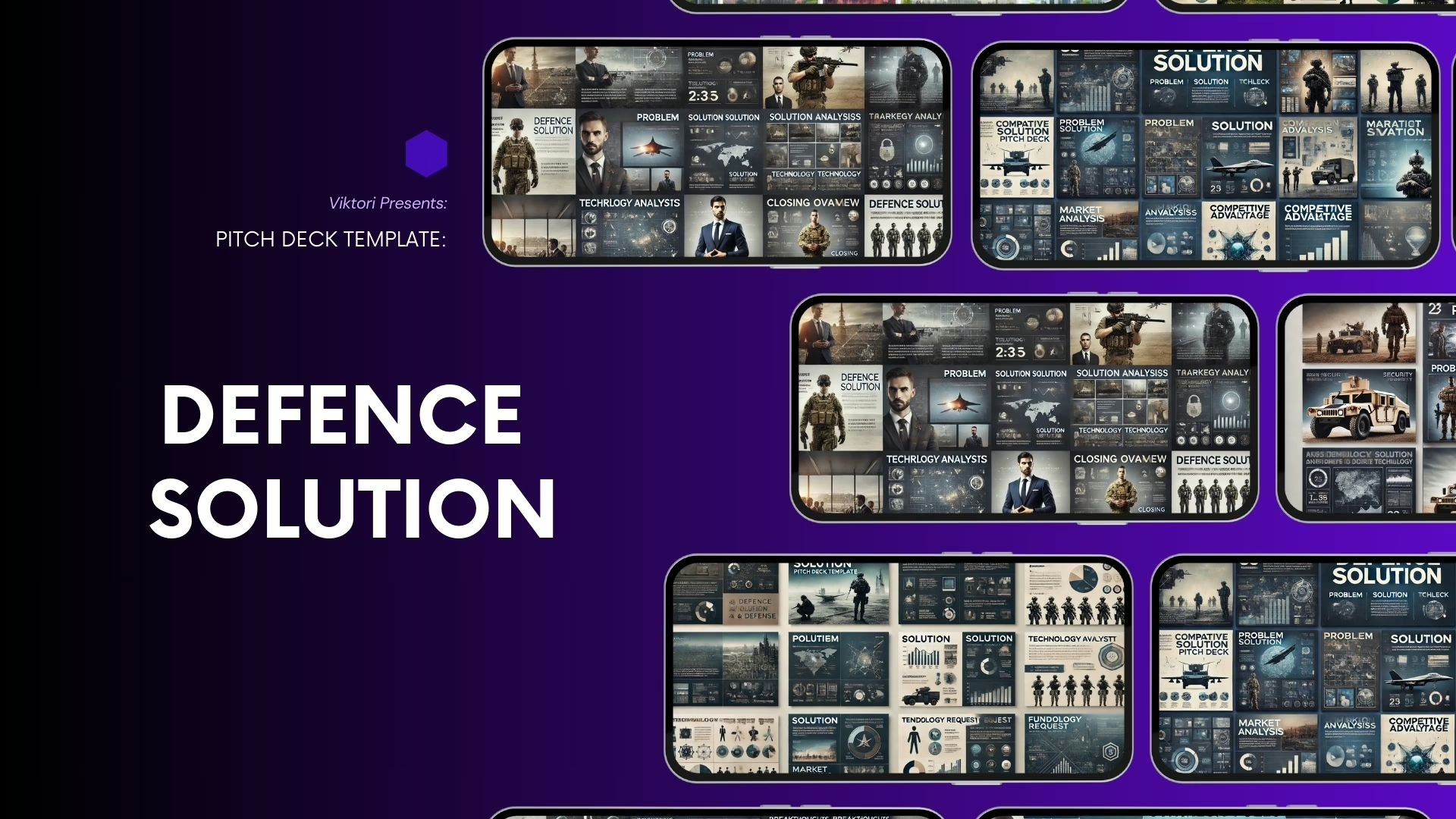
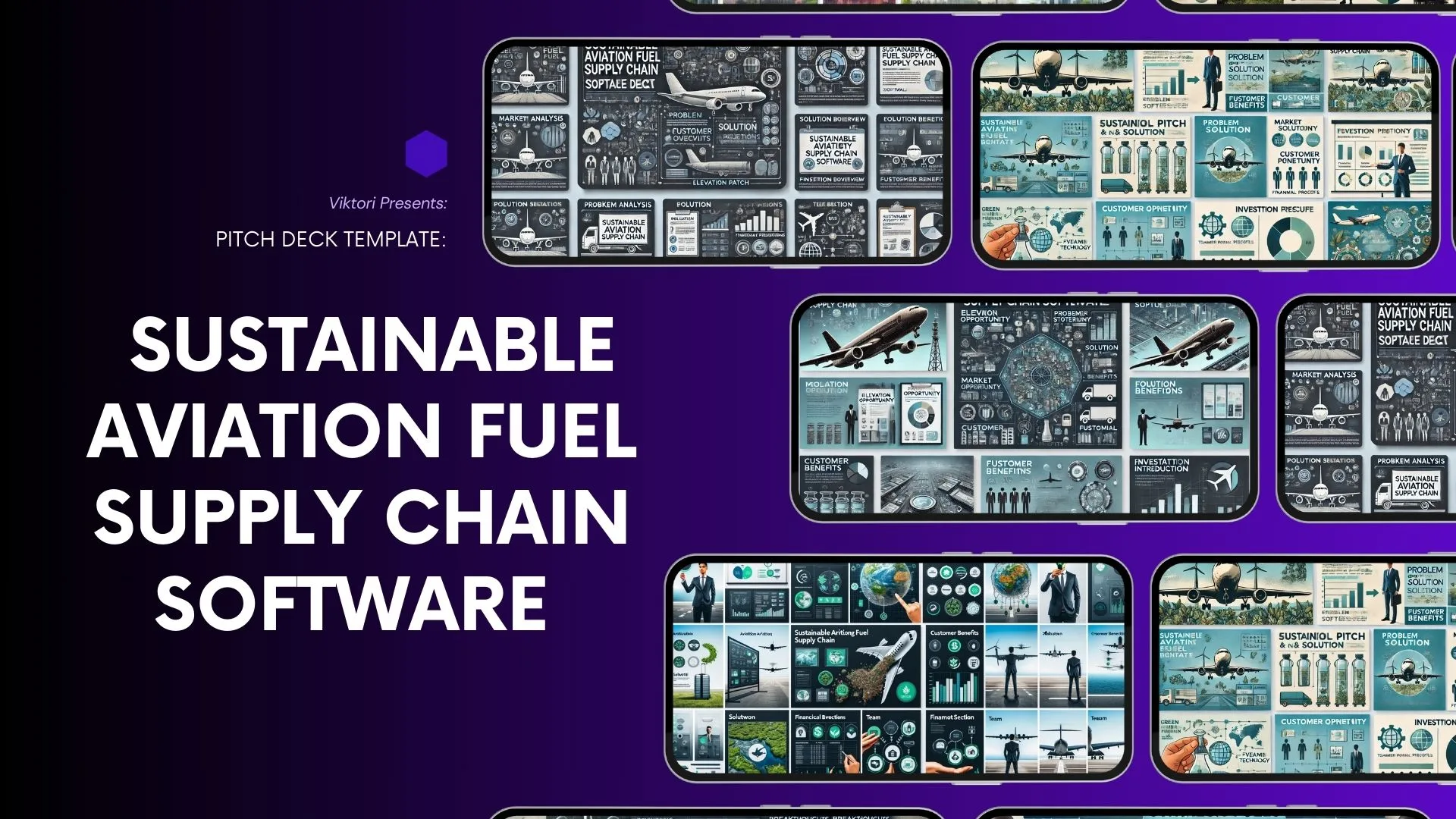
You’ve just seen a designed preview of the template in action—now, here’s the full structure behind it.

This 12-slide pitch deck template has been meticulously crafted after building 134 custom decks for aerospace and defense startups over the past year.

It captures the essential flow of a high-stakes pitch—starting from mission framing and strategic urgency, through to technical differentiation, GTM plans, and a compelling ask.

Below, you’ll find the complete slide-by-slide outline in text format.

Use this to plug in your own content, tailor messaging for your audience, and accelerate the creation of powerful, investor- and government-ready decks.

1. Elevator Pitch (Hook + Vision)

Purpose: Deliver your company’s essence in one breath.

Content:

  • One bold sentence capturing your mission: “We make [outcome] inevitable by solving [critical pain] for [target buyer] using [core innovation].”

  • Follow with a short paragraph: who you are, what you’ve built, who it’s for, and why now.

  • End with a powerful truth or stat (e.g., “Every 10 minutes of satellite delay costs $800K in compromised response time.”)

2. The Threat Landscape (Name the Enemy)

Purpose: Make the current situation look unsustainable.

Content:

  • Define the “enemy”: outdated systems, slow procurement cycles, interoperability failures, adversary advancements, etc.

  • Use threat assessments, conflict data, or budget inefficiencies to show that failure to act has escalating consequences.

  • Introduce the cost of inaction (lives, assets, sovereignty, budgets).

3. Strategic Opportunity (Create Urgency)

Purpose: Position your innovation as urgent and timely.

Content:

  • Explain why this is the moment—not just a good idea, but the right time.

  • Highlight defense priorities (e.g., JADC2, hypersonics, AI-enabled ISR, autonomy).

  • Use budget allocations, regulatory shifts, or geopolitical dynamics to underline urgency.

4. The Solution (Offer the Missing Piece)

Purpose: Reveal your tech as the breakthrough enabler.

Content:

  • Describe your product/service plainly—what it does, how it works, and why it matters.

  • Show how it completes a missing part of a current workflow, doctrine, or platform.

  • Use a visual or analogy to help non-technical audiences see the impact (e.g., “We’re the control tower for distributed drone fleets.”)

5. Strategic Differentiation (Frame Control)

Purpose: Own the category.

Content:

  • Highlight your moat: technical IP, unique integrations, deployment model, or UX advantages.

  • Compare briefly with how others fail (too slow, too siloed, too fragile).

  • Use narrative: “What if battlefield intelligence didn’t lag by 3 hours?”

6. Benefits by Stakeholder (Sell Benefits, Not Features)

Purpose: Map emotional and operational wins.

Content:

  • Frame benefits for four key personas: Defense Command, Program Manager, Operator, and Budget Holder.

  • Example: “For the operator, this means 6X faster threat detection. For the commander, it means fewer mission failures.”

  • Think outcomes: survivability, speed, reliability, scale.


7. Go-To-Market Strategy

Purpose: Show your path to adoption is real.

Content:

  • Which acquisition routes you’re targeting: SBIR, OTA, DIU, IDIQs, DSCA, allied exports?

  • Partners: primes, integrators, defense attachés, innovation hubs.

  • Timeline to procurement-readiness or field trials.


8. Traction (Build Trust)

Purpose: Show you’re already winning.

Content:

  • Contracts awarded, letters of interest, field trials, R&D validations, primes engaged.

  • Testimonials or endorsements from users or evaluators.

  • If early stage, show simulations, lab tests, or funded partnerships.


9. Market Size & Strategic Fit

Purpose: Demonstrate this is a valuable hill to take.

Content:

  • Total Addressable Market for your niche (e.g., uncrewed logistics, satellite comms, or drone countermeasures).

  • Dual-use pathways (civil, aerospace, homeland, allied military).

  • Expansion into other verticals or command theaters.


10. Business & Financial Model

Purpose: Show how money flows in and scales up.

Content:

  • How you charge: SaaS + hardware? Licensing? Data-as-a-service? Integration fees?

  • Cost structure and unit economics (if relevant).

  • Customer lifetime value, gross margin potential, and pricing advantage.


11. Team (Establish Authority & Credibility)

Purpose: Make them trust you with national security.

Content:

  • Show defense-industry fluency: veterans, ex-DARPA, Lockheed/Raytheon alumni, NASA scientists, mission operators.

  • Emphasize “built for defense by those who’ve lived it.”

  • Add advisors, allies, or strategic board members.


12. Call to Action (Make the Ask Clear & Memorable)

Purpose: Move them to action.

Content:

  • Be direct: “We’re raising $5M to scale our ISR deployment for 3 allied missions in 2025.”

  • Include options: “Join our advisory board,” “Introduce us to procurement,” “Let’s run a field demo.”

  • Close with vision: “We’re not just building tech—we’re rewriting the rules of defense agility.”

Who is this template for?

This template is designed for startups, founders, and business development leads working in aerospace, defense, dual-use technology, or adjacent GovTech sectors.

Can I use this for government grant or SBIR proposals?

Yes. While it’s optimized for verbal and visual pitching, many teams adapt the structure for Phase I/II SBIR, DIU, AFWERX, and OT solicitations. The narrative logic aligns well with tech transition and capability positioning.

Is this template suitable for commercial (non-defense) audiences?

Absolutely. While tailored for defense, you can easily adapt it for commercial aerospace, homeland security, or industrial applications. Just reframe the “threat landscape” and “procurement” slides for market context.

Do you offer custom pitch deck help?

I do. If you’d like a tailored deck or storytelling strategy session, book a call bellow—I work with selected startups and scale-ups across aerospace and defense.

Your Investor Deck, Done.
Book a free 30-minute audit; we’ll apply our award winning Pitcherman Blueprint™ to diagnose, score, and decide go/no-go—then build the deck for you. Expect an investor-tight narrative, sharp design, realistic financials, and usable GTM ideas the next day, without pulling you off ops. Trusted by 15,000+ founders/month. Top Rated on Upwork & Trustpilot. $500M+ raised.

Pitching Guides and Resources

Looking for something else?

Aerospace and Defence Pitch Deck Templates, Guides and Examples

Your Investor Deck, Done.
Book a free 30-minute audit; we’ll apply our award winning Pitcherman Blueprint™ to diagnose, score, and decide go/no-go—then build the deck for you. Expect an investor-tight narrative, sharp design, realistic financials, and usable GTM ideas the next day, without pulling you off ops. Trusted by 15,000+ founders/month. Top Rated on Upwork & Trustpilot. $500M+ raised.