


If you’re building an IT startup pitch deck in 2026, congratulations — you’ve chosen the most competitive playground in the funding world. Investors have seen thousands of SaaS tools, AI copilots, “enterprise-ready” platforms, and blockchain experiments. Their eyes glaze over faster than a CTO reading a non-technical CEO’s product roadmap.
But here’s the good news: the bar is high, but the formula still works.
A tight story.
Clear technical credibility.
A believable GTM plan.
And slides that make even the grumpiest VC nod with restrained approval.
I’m Viktor — pitch deck expert, consultant, and a man who has reviewed more “revolutionary IT platforms” than I’ve eaten breakfasts. After 13 years and $500M+ raised across industries, here’s what actually moves the needle for IT founders today.
This guide gives you realistic IT startup pitch deck examples, actual slide structures, and 2026 investor expectations you won’t find in the usual startup blogs.
Let’s build you a deck that doesn’t just “look nice” — but gets funded.
What Is an IT Startup Pitch Deck?
An IT startup pitch deck is a short, investor-ready presentation that explains what your technology does, why it matters, and how it becomes a scalable business. It’s used by founders raising pre-seed to Series A rounds across SaaS, AI, cloud infrastructure, cybersecurity, dev tools, and enterprise software.
Investors expect IT decks to be:
- More technical than a normal startup pitch
- More defensible, with clear IP or architectural advantage
- More GTM-focused, because tech without distribution is just a hobby
- More credible, because enterprise buyers do not play
IT pitch decks differ from standard SaaS decks because they must show architecture, reliability, compliance, scalability, and security — the things enterprise buyers care about before anything else.
2026 IT Startup Pitch Deck Update: What Investors Now Expect in IT Decks
Investors have become stricter across the board due to:
- Market saturation in SaaS
- AI tools blending together
- Higher expectations around security and compliance
- Demand for faster revenue traction
- Enterprise buyers asking “Where’s the ROI?” much earlier
So in 2026, your IT deck should show:
1. Defensible Technology
Not “AI-powered.”
Not “blockchain-enabled.”
But: Why YOUR approach is technically superior and hard to replicate.
2. Demo-First Storytelling
Investors want to “see it” within the first five slides.
3. Security & Compliance Early
SOC2, ISO, HIPAA, GDPR readiness — even at seed stage.
4. Realistic GTM Strategy
Not “viral,” not “product-led magic.”
Actual ICP + pricing + sales model.
5. Shorter Roadmaps
Nobody wants a 5-year tech vision. Show 12 months.
IT Startup Pitch Deck vs Standard Startup Pitch Deck (Quick Comparison)
| Element | Regular Startup Deck | IT Startup Deck |
|---|---|---|
| Core Narrative | Market + problem | Technical differentiation + reliability |
| Key Slide | Traction | Architecture / Product demo |
| Investor Focus | Growth potential | Security, scalability, uptime |
| “Red Flags” | No revenue | No GTM clarity, vague tech |
| Metrics | Users, ARR | ARR + churn + uptime + deployment data |
| Proof | Testimonials | Integrations, pilots, SOC2, compliance |
Top IT Startup Pitch Deck Examples (2026 Edition)
Here’s the honest, no-BS answer: there are real IT (and deeply tech-centric) early-stage startups whose actual pitch decks have been shared publicly and are widely regarded as excellent examples — and you can use these decks as real inspiration for your own IT pitch deck.
Below are three real IT-related startups with highly referenced pitch deck examples that raised actual funding — and where you can study the structure, slides, and investor narrative.
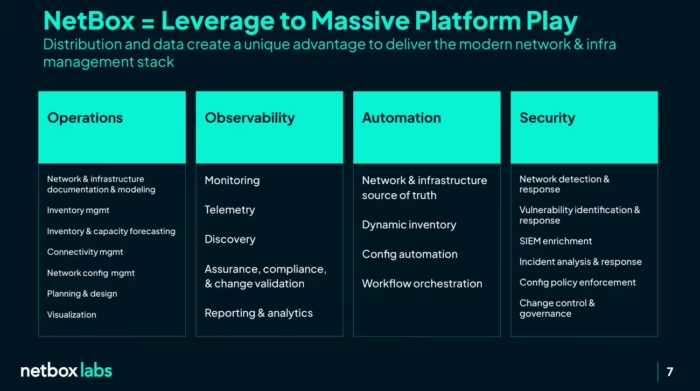
1. NetBox Labs (AI-Driven Infrastructure Management)
Industry: IT Infrastructure / DevOps
Stage: Series B
Amount Raised: $35M
1-Sentence Elevator Pitch
NetBox Labs transforms complex enterprise infrastructure into a unified, intelligent system with automated configuration, observability, and real-time insights.
Why the Deck Works
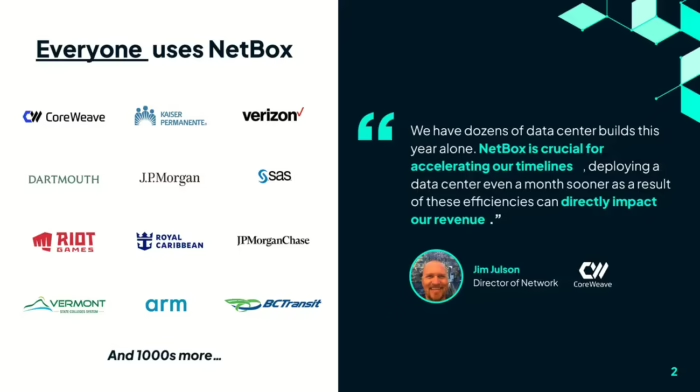
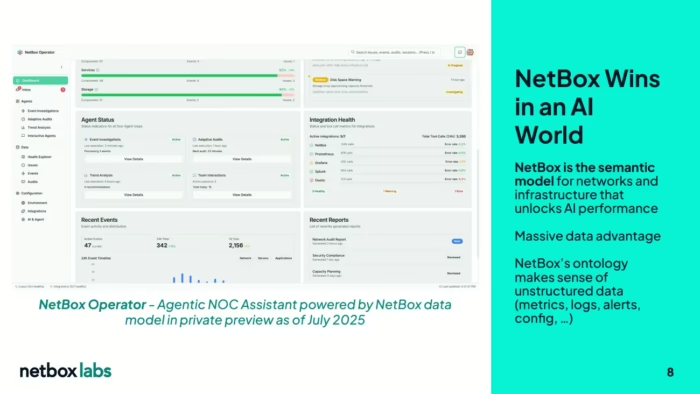
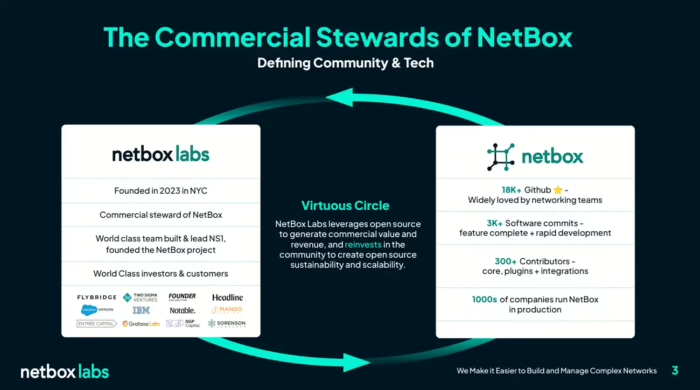
NetBox Labs didn’t try to dazzle investors — they proved that mission-critical IT automation is the next frontier. Their deck blends enterprise credibility, open-source adoption, and a clear commercialization path.
Key Slides Investors Loved
- Problem: Fragmented infrastructure and operational overhead
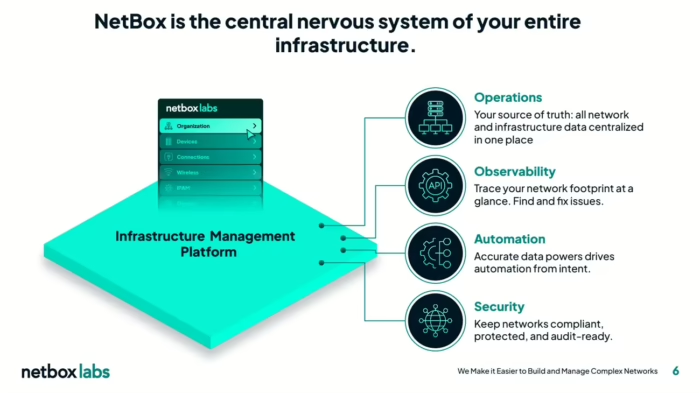
- Solution: A centralized, AI-enhanced source of truth for networks and systems
- Traction: Massive open-source adoption → enterprise pipeline
- Business Model: Hybrid OSS + enterprise SaaS
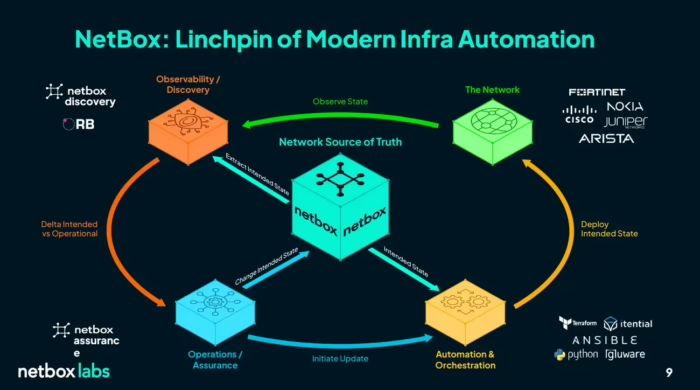
- Architecture: Clean explanation of a complex system
- Market Size: Explosive demand for automation in AI-era IT
- Competitive Edge: Strong community, fast deployment, extensibility
- Financials: Predictable ARR, multi-year enterprise contracts
Why It Converts
NetBox Labs shows what investors want most in IT:
credibility + adoption + enterprise need + market tailwinds.
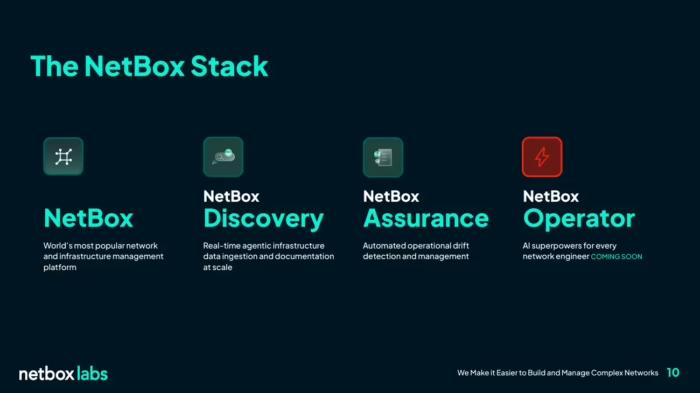
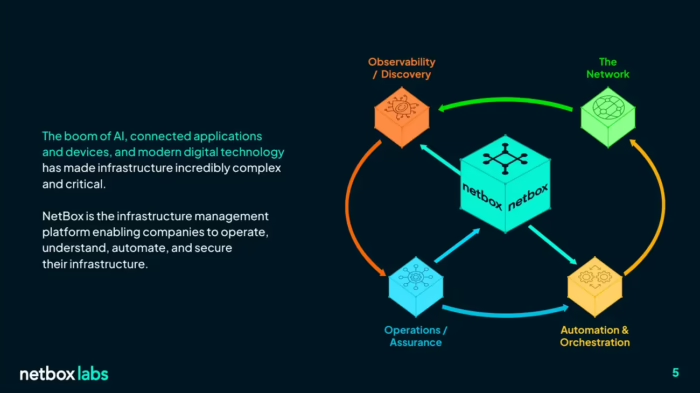
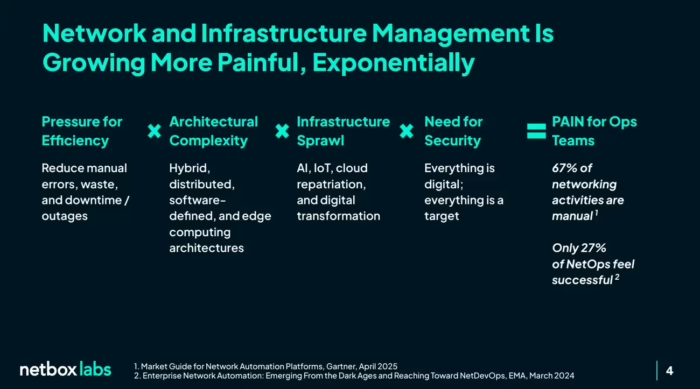
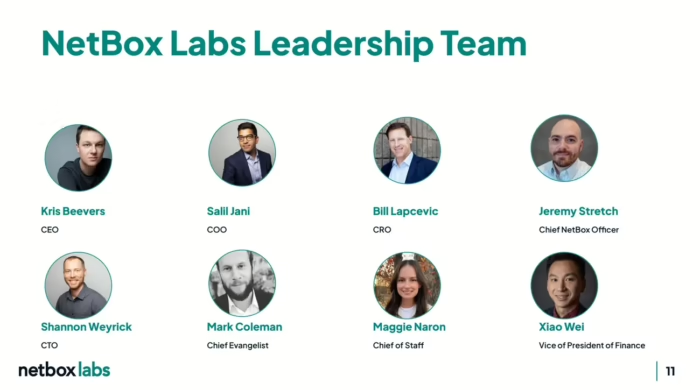
Here’s a look at the pitch deck the startup used to raise its $35M Series B. Some slides were edited or removed so the deck could be shared publicly.
2. Onyx (Enterprise AI Knowledge Assistant)
Industry: AI / Knowledge Management / Productivity SaaS
Stage: Seed
Amount Raised: Oversubscribed seed round (grew from ~$3M to ~$10M interest)
1-Sentence Elevator Pitch
Onyx is an AI agent that retrieves, summarizes, and contextualizes a company’s internal knowledge — turning scattered documents into instant answers.
Why the Deck Works
This is a masterclass in brevity: just nine slides, each laser-focused. Onyx proved you don’t need a 20-slide epic to raise money — you need clarity, story, and a killer product demo.
Key Slides Investors Loved
- Problem: Knowledge trapped in siloed internal systems
- Solution: AI that searches, summarizes, and learns context
- Demo Slide: Simple, powerful, “I get it” moment
- Market: Huge whitespace in enterprise knowledge automation
- Business Model: SaaS, usage-based enterprise pricing
- Competitive Landscape: Clear differentiation from generic LLM chatbots
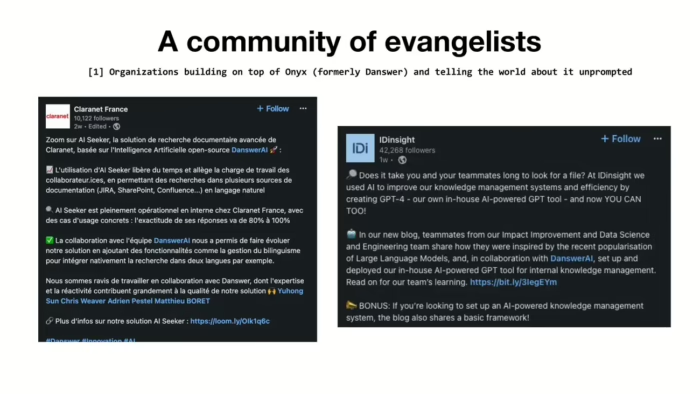
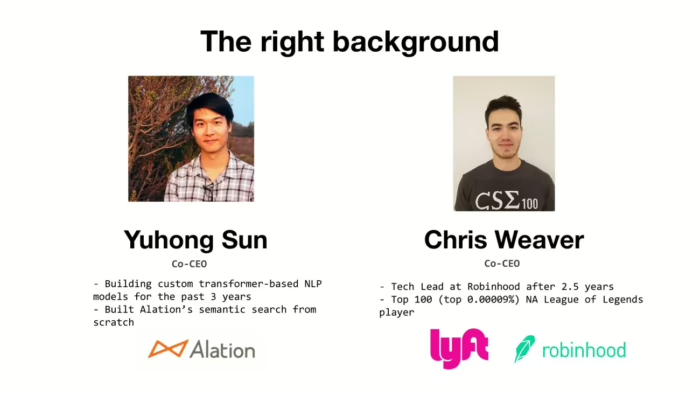
- Team: Strong operator background + technical execution
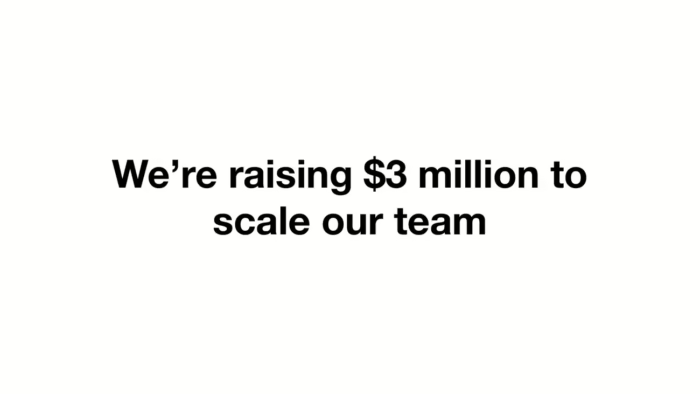
- The Ask: Clean, specific, tied to product milestones
Why It Converts
It’s short. It’s clear. It’s memorable.
Investors walked away repeating the pitch in one sentence, which is exactly the goal.
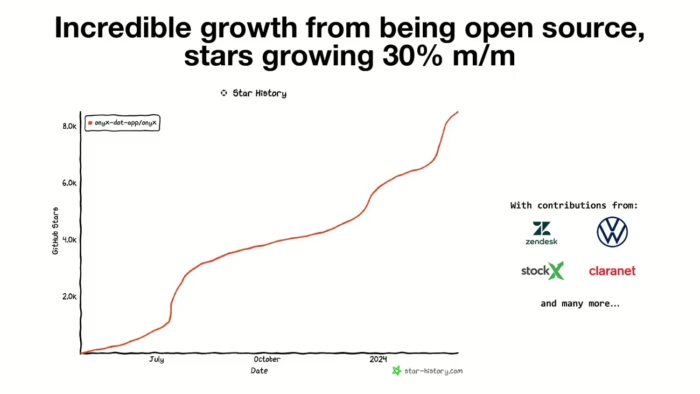
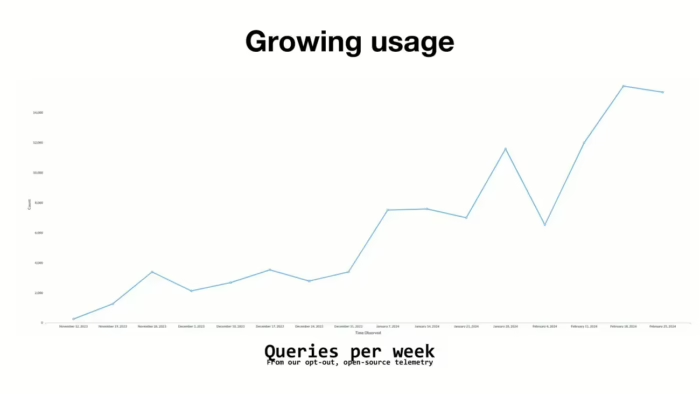
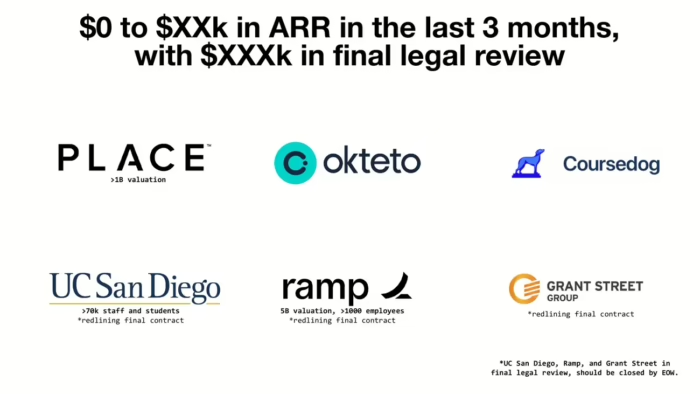
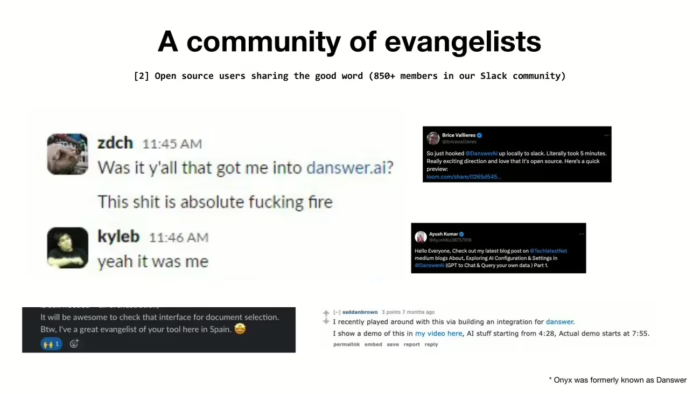
Here’s an exclusive preview of the nine-slide pitch deck Onyx used to raise a $10M seed round.
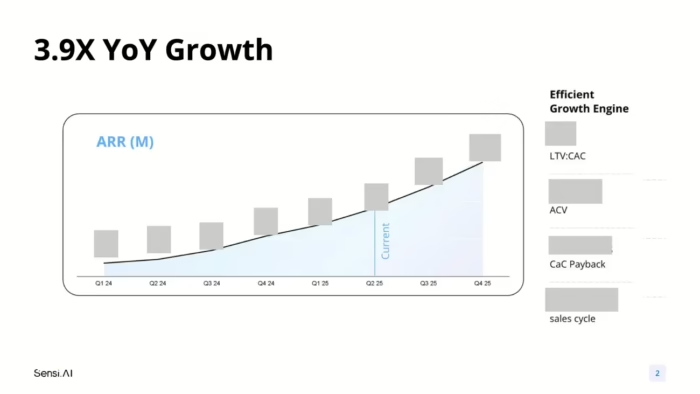
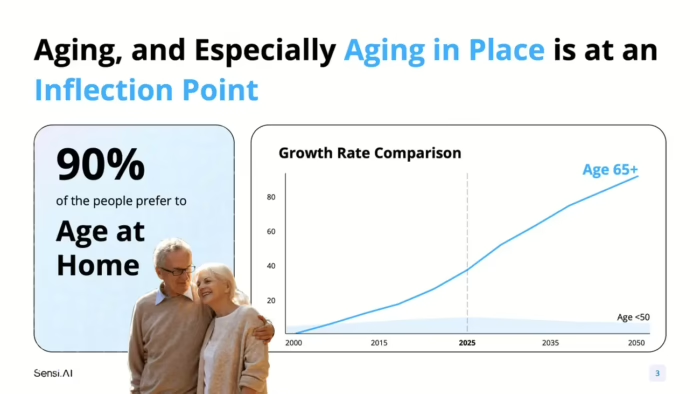
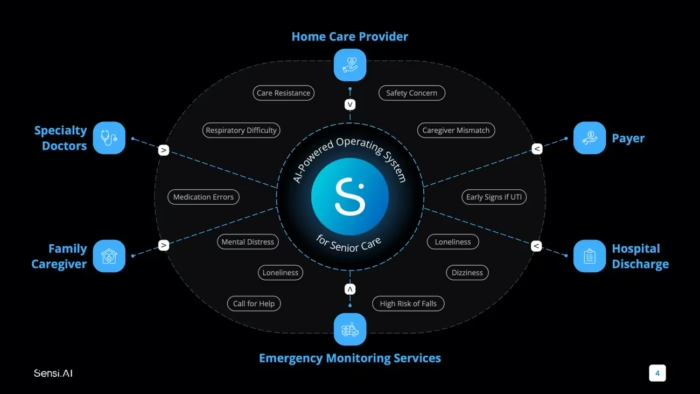
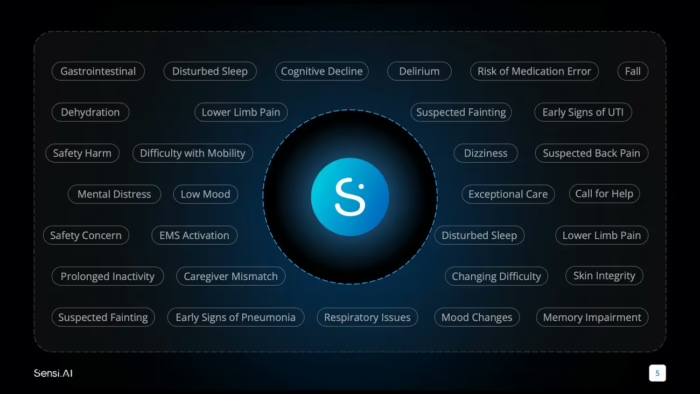
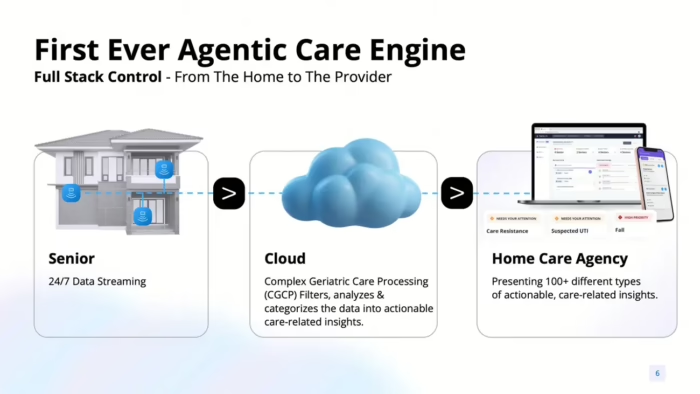
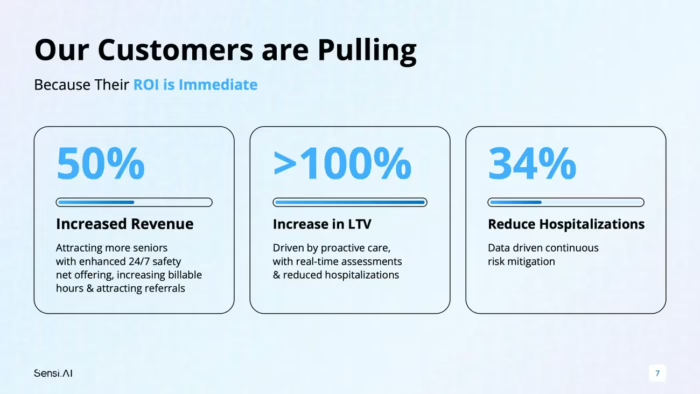
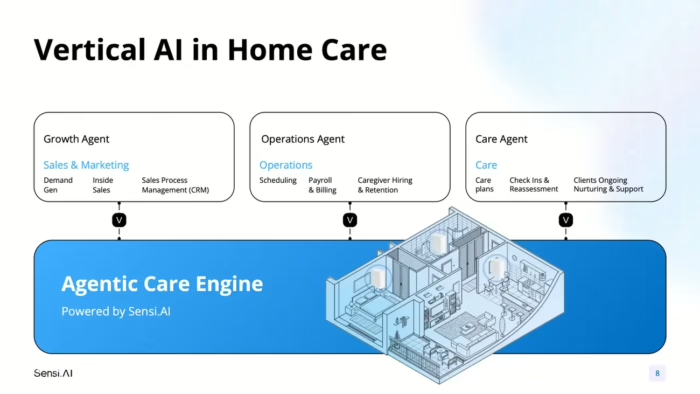
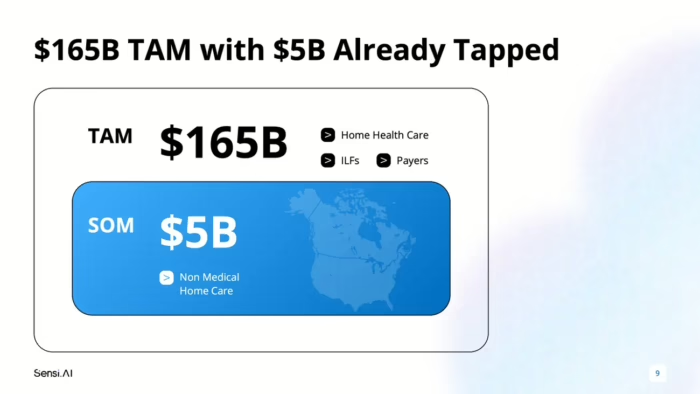
3. Sensi.AI (AI for Remote Healthcare Monitoring)
Industry: AI / Digital Health / Monitoring Tech
Stage: Series C
Amount Raised: $45M
1-Sentence Elevator Pitch
Sensi.AI provides real-time, AI-powered audio monitoring that helps caregivers detect issues early, prevent crises, and improve care quality.
Why the Deck Works
Sensi.AI’s pitch deck is packed with quantifiable need, strong regulatory awareness, and a believable path to scale. It’s a perfect example of how IT + AI startups can pitch successfully in regulated sectors.
Key Slides Investors Loved
- Problem: Caregiver shortages, rising eldercare demand, safety issues
- Solution: Always-on AI monitoring with event detection
- Market: Enormous and growing — validated by demographic trends
- Traction: Real deployments + measurable outcome improvements
- Technology: Clear explanation of audio AI + privacy safeguards
- Business Model: Enterprise SaaS + partnerships with care networks
- Regulatory Readiness: HIPAA, data protections, compliance-first
- Roadmap: Expansion into home health, telecare, and predictive analytics
Why It Converts
The deck combines human impact + scalable IT infrastructure + defensible AI, all underpinned by real-world traction.
Here’s an inside look at the 10-slide deck Sensi.AI used to secure $45M in funding.


How to Build an IT Pitch Deck (Mini Template)
Here’s the distilled version — the structure that wins meetings:
- Title Slide (brand, value prop)
- The Problem
- Solution & Demo
- Architecture / How It Works
- Market & ICP
- Business Model
- GTM Strategy
- Competitive Landscape
- Traction or Validation
- Financial Projections
- Roadmap (12 months)
- Team
- The Ask
Short. Sharp. No unnecessary fluff.
Final words
Technology changes every month, but the fundamentals of persuasion don’t. Investors want clarity, not buzzwords. A real plan, not a fantasy. A product that actually solves a problem, not “AI for the sake of AI.”
Whether you’re building VR tools, healthcare AI, or blockchain platforms, your deck must show:
- A painful problem
- A clean, defensible solution
- A believable path to revenue
- And a team who can actually deliver
Get these right, and your deck becomes more than a slide show — it becomes a funding magnet.
You got this.
FAQ (2026 Update)
1. What makes an IT pitch deck different from a regular startup deck?
IT decks require more technical clarity — things like architecture, security, scalability, and integrations. Investors want to know how the system works, not just why the idea is exciting.
2. How long should an IT startup pitch deck be?
Aim for 12–16 slides.
Long enough to explain your tech, short enough to keep investors awake.
3. Do I need a product demo for an IT pitch?
Yes. In IT, a demo isn’t optional — it’s expected.
Show the interface, user flow, or prototype within the first 5 slide.
4. Should early IT startups include security and compliance?
Absolutely.
If you skip it, investors assume you haven’t thought about it.
A single slide covering SOC2 readiness, encryption, and data practices goes a long way.
5. What metrics matter most for IT startups?
Depending on your model:
– ARR / MRR
– Churn
– Active deployments
– Uptime %
– Onboarding time
– Pilot traction
No revenue yet? Show usage, engagement, or technical validation.
6. What’s the most common mistake founders make with IT pitch decks?
Too much jargon, not enough clarity.
Investors aren’t looking for a 40-page whitepaper — they want a story they can repeat to their partners.
7. When should I show my technical architecture?
Right after your solution slide or demo.
It shouldn’t overwhelm the deck — but investors need proof that the product isn’t held together with hope and duct tape.
If you want to really dive into the world of pitch decks, check out our complete collection of pitch deck guides, pitch deck outlines, and pitch deck examples.
Want more guidance? Go back to my IT pitch deck guide or check out my in-depth IT pitch deck template.
