


Ever pitched a building and felt like you were explaining a dream to someone who’s never been outside? Welcome to architecture fundraising — where visuals sell the story, budgets keep the dream alive, and investors want “innovation… but also none of the risk, please.”
In architecture and real estate, the pitch deck is where ambition gets forced into a format that can survive a room full of objections. The deck carries the visual promise, the development constraints, and the framing that makes the project legible to an investor—whether it’s a traditional real estate vehicle or a startup pitch deck built for venture and early-stage fundraising.
I’m Viktor — pitch deck consultant, ex-advertising guy and someone who has absolutely spent more time walking around unfinished buildings than is legally necessary.
This page presents architecture and real estate pitch deck examples drawn from public releases and circulated materials—alongside deck examples from successful startups that reached later-stage conversations. Each pitch is treated as evidence: the sequencing of slides, the project logic implied by the narrative, the visual language, and the recurring emphasis on business model, traction, market size, partnerships, and key metrics when those components appear in the deck.
The goal here is pattern visibility. Not theory—just what’s on the page. Real pitch deck examples from successful teams, documented so the differences between a pretty presentation and a review-ready deck become obvious through the examples.
What Is an Architecture Pitch Deck?
An architecture pitch deck is a visual deck used in real estate and development contexts to present a project for funding, RFP consideration, or partner review—whether it’s a skyscraper, a residential development, or an urban regeneration concept. In practice, these decks tend to frame the same core question: how the structure is presented as feasible, financially viable, and aligned with the project’s development pathway for an investor, developer, or partner.
These pitch decks appear across architecture firms, real estate developers, sustainability-focused studios, proptech startups, and teams translating land, air, and ambitious 3D renders into a development proposal. Across many pitch deck examples and startup pitch deck materials, recurring content includes project economics, feasibility signals, design intent, environmental impact, and timelines—alongside visuals that aim to make the physical reality legible: materials, compliance constraints, permitting posture, construction costs, and risk framing. Compared to a typical startup pitch or SaaS deck, the architecture pitch often carries more “physical-world” documentation inside the slides—where the visual story sits next to the spreadsheet reality.
Architecture Pitch Deck vs Standard Startup Pitch Deck
Across reviewed pitch deck examples, architecture-focused decks and standard startup pitch decks tend to diverge in predictable ways. The comparison below reflects recurring patterns observed in circulated decks, rather than a set of rules or requirements.
| Element | Architecture Pitch Deck | Standard Startup Pitch Deck |
|---|---|---|
| Buyer Type | Often framed for developers, city councils, real estate funds, and corporate partners | Commonly framed for VCs, angels, and accelerators |
| Decision Process | Typically presented within slower, multi-layered, compliance-heavy review environments | Often positioned for faster, risk-tolerant review cycles |
| Traction Expectations | Frequently references past builds, awards, feasibility studies, and development partners | Commonly highlights users, revenue signals, and growth charts |
| Monetization | Project fees, construction profit, licensing, or development participation | Subscriptions, transactions, advertising, or platform-based models |
| Required Slides | Site analysis, zoning context, cost breakdowns, renders, and development timelines | Problem, solution, traction, and market framing |
| Compliance Notes | Building codes, environmental requirements, and permitting context appear regularly | Typically optional unless the startup operates in a regulated space |
| Narrative Style | Visual-first, technically grounded, often balancing inspiration with constraints | Story-first, growth-oriented, and momentum-driven |
| Investor Proof Needed | Emphasis on team execution ability and financial viability of the project | Emphasis on market demand, scalability, and defensibility |
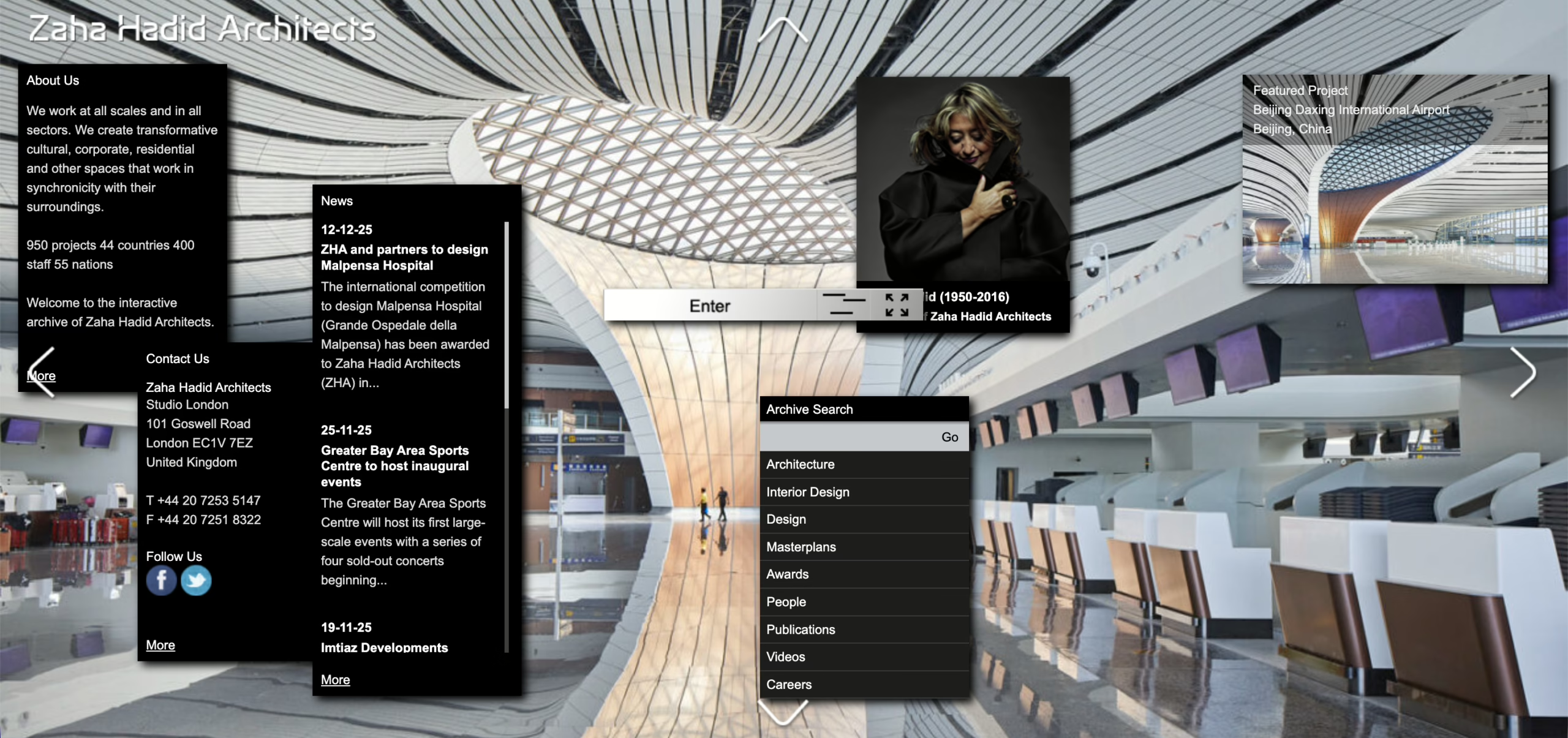
Architecture Pitch Deck Example 1: Zaha Hadid Architects (ZHA)
Overview
Zaha Hadid Architects’ public-facing pitch deck and project presentation materials consistently position the studio as a global practice known for fluid, high-performance buildings and large-scale urban statements. The deck language leans into architectural identity, engineering ambition, and a strong visual system across projects that operate at city and infrastructure scale.
How the Pitch Is Framed
Across these pitch deck examples, the narrative centers on architecture that is iconic and visually distinctive while still grounded in structural feasibility, environmental performance, and real-world constraints. The emphasis is less on marketing claims and more on demonstrating a repeatable design language applied across multiple project types.
What the Deck Shows
The pitch materials frequently surface parametric workflows, engineering collaboration, and visually magnetic form development. These are presented alongside technical documentation, allowing form, structure, and sustainability requirements to coexist within the same story—closer to a physical-world startup pitch deck than a traditional portfolio.
Market Context Referenced
The market framing remains global and project-led, covering cultural centers, airports, mixed-use developments, innovation hubs, and future-forward urban regeneration initiatives. Rather than narrowing to a single niche, the pitch deck positions the studio for high-visibility, high-complexity commissions.
Business Model Signals
The slides commonly reference architectural design fees, long-running project participation, and strategic collaboration with engineers, developers, and public institutions. Monetization appears relationship- and scope-driven, rather than based on a conventional startup subscription or transaction model.
Key Slides They Used
- Signature parametric design diagrams
- Digital massing evolution (concept → form → function)
- Environmental performance simulations
- Structural feasibility diagrams with engineering partners
- Portfolio of completed global projects (execution history)
- Cultural and economic impact projections
Pattern Across This Deck
The deck frames the work as more than individual buildings, presenting a recognizable architectural vision supported by engineering credibility. The tone remains highly visual, ambitious, and technically dense beneath the surface—traits that appear repeatedly across pitch deck examples from successful architecture practices.
Screenshot note: The screenshot is taken from the firm’s public website and is included solely to reflect the visual
Architecture Pitch Deck Example 2: MVRDV
Overview
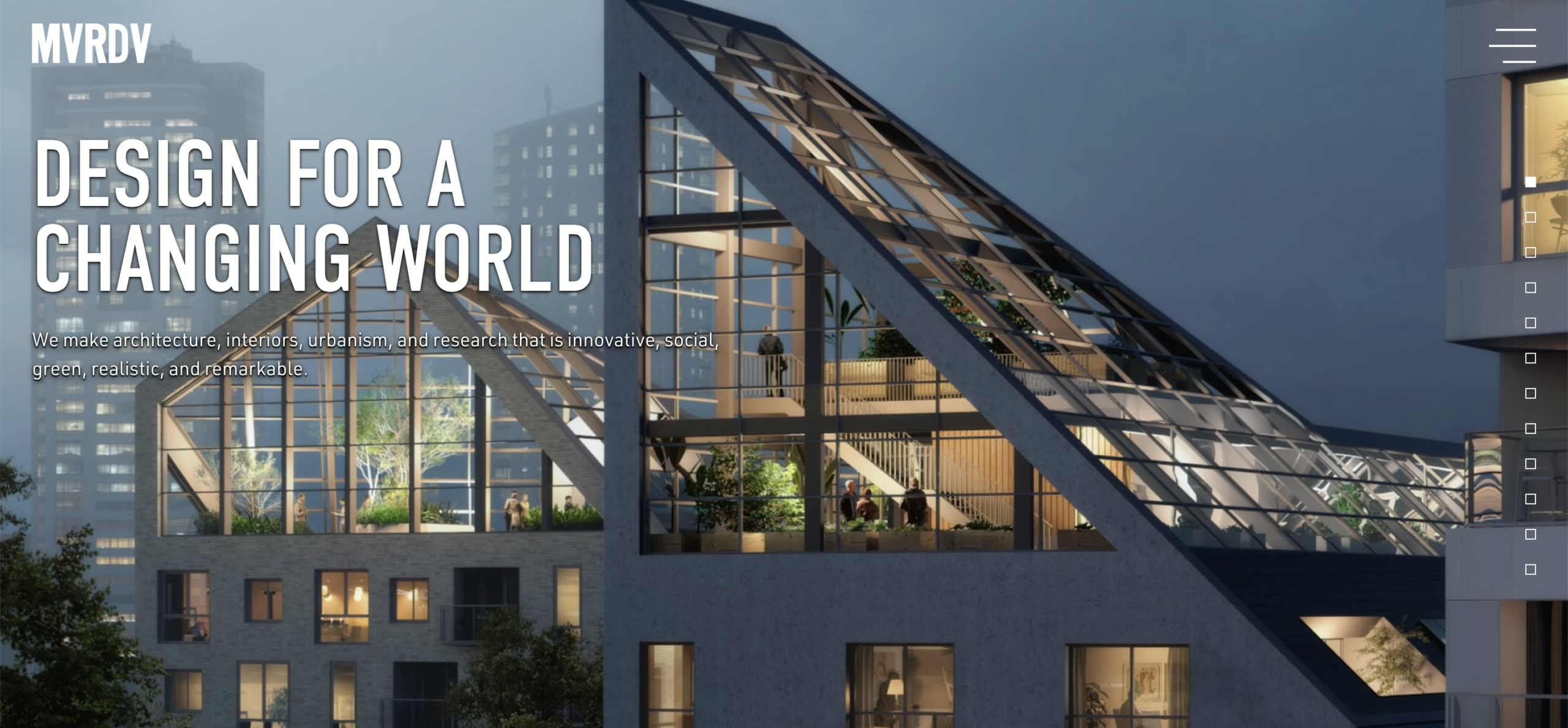
MVRDV’s publicly shared pitch deck and project presentation materials position the studio as a Dutch architecture practice known for bold, experimental, and community-driven design. The deck language consistently blends sustainability, technology, and urban problem-solving, often framed through playful yet structured visual storytelling.
How the Pitch Is Framed
Across these pitch deck examples, the narrative focuses on growing cities facing housing shortages, density pressure, and sustainability mandates. Rather than presenting architecture as object-making, the pitch frames buildings as systems designed to enhance public life, urban efficiency, and long-term livability.
What the Deck Shows
The slides surface data-driven design, adaptive reuse logic, and mixed-use concepts that balance form with function. Urban analysis, human-centered experience, and environmental strategy appear alongside diagrams that make complexity legible—closer to a civic-oriented startup pitch deck than a speculative concept showcase.
Market Context Referenced
Market framing centers on urban regeneration, affordable housing, mixed-use development, and sustainable densification across Europe, Asia, and North America. The deck positions these projects within long-cycle public and private development environments rather than fast-moving venture capital timelines.
Business Model Signals
The pitch deck references architectural design services, urban planning, research-led development strategies, and ongoing public-sector collaboration. Revenue appears tied to project scope, partnerships, and long-term involvement rather than a conventional startup product or service model.
Key Slides They Used
- Urban analysis & site context diagrams
- Community impact frameworks
- Environmental strategy slides (energy, light, biodiversity)
- Flexible program diagrams
- Economic + social value projections
- Playful but structured visual storytelling (a recognizable studio signature)
Pattern Across This Deck
The deck consistently translates complex urban challenges into accessible, optimistic narratives. Across multiple pitch deck examples from successful architecture teams, MVRDV’s approach stands out for pairing clarity with creativity—making civic-scale ideas readable for investors, city councils, and development partners alike.
Screenshot note: Image sourced from the firm’s public website to reflect visual language and brand positioning.
Architecture Pitch Deck Example 3: BIG (Bjarke Ingels Group) – Project Proposal Decks
Overview
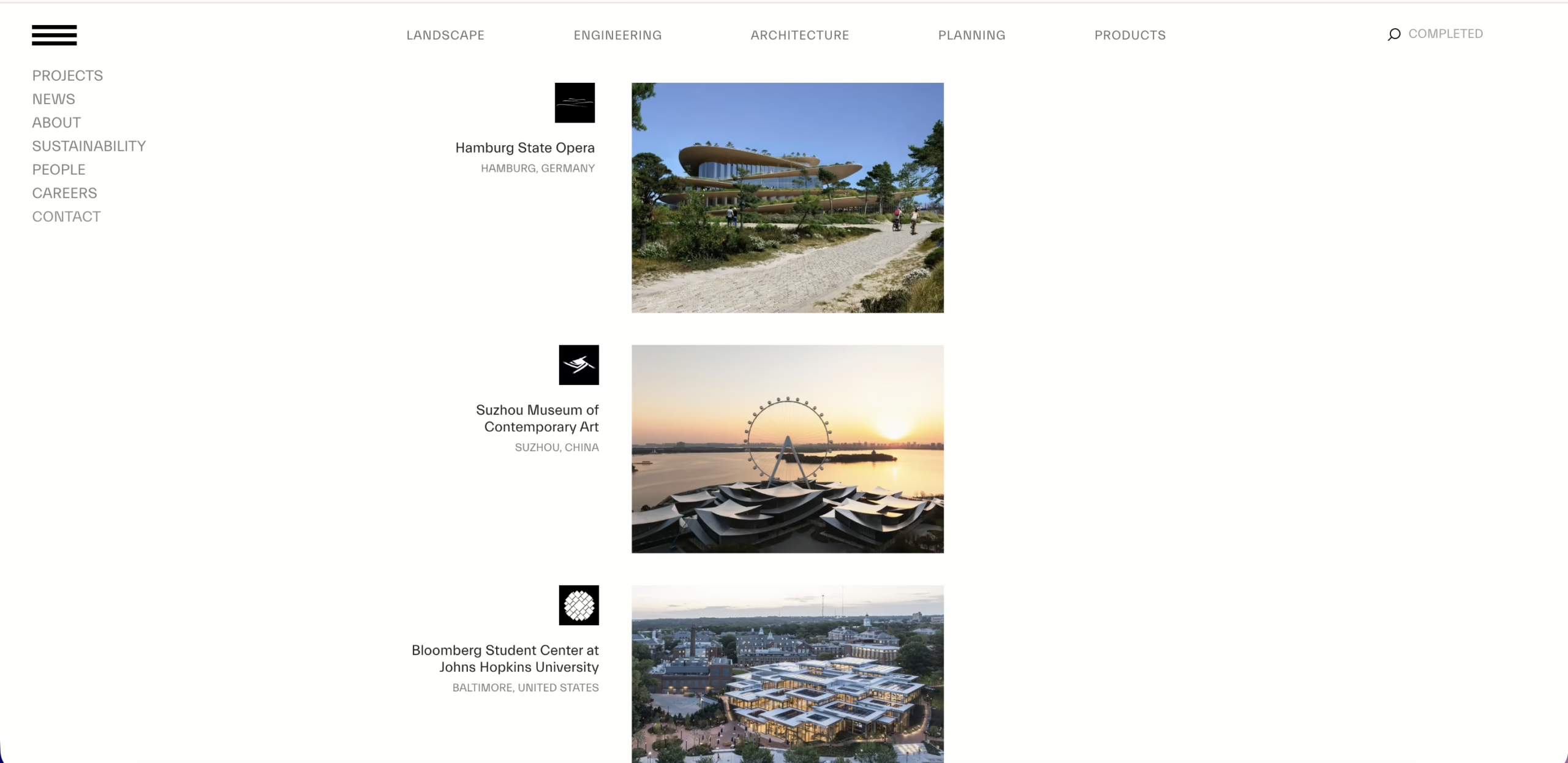
BIG’s pitch deck and project proposal materials position the studio as a globally recognized architecture practice focused on iconic, innovative, and culturally resonant structures. The deck language emphasizes ambition while maintaining a strong connection to buildability and environmental performance.
How the Pitch Is Framed
Across these pitch deck examples, the narrative contrasts conventional urban development with architecture that integrates sustainability, culture, and public engagement. The pitch avoids abstract theory, instead grounding visionary concepts in practical execution logic.
What the Deck Shows
The slides highlight massing studies, sustainability performance metrics, and urban integration visuals. Project narratives are sequenced clearly, allowing design intent, engineering feasibility, and development rationale to coexist within a single startup-style pitch deck format.
Market Context Referenced
The market framing reflects urban revitalization and global demand for landmark architecture, often tied to cities seeking long-term cultural and economic impact rather than short-term returns.
Business Model Signals
Revenue signals within the deck include design fees, strategic partnerships, and project involvement from concept through completion. The positioning aligns more closely with large-scale development participation than early seed round or Series B startup models.
Key Slides They Used
- Massing diagrams
- Sustainability performance visuals
- Urban integration studies
- Project narrative storytelling slides
Pattern Across This Deck
The pitch deck balances design excellence, feasibility, and narrative clarity. Across deck examples from successful startups and mature studios alike, BIG’s materials show how ambition and structure can coexist without overwhelming the viewer.
Screenshot note: Image sourced from publicly available materials.
Architecture Pitch Deck Example 4: GreenScape Modular Homes
Overview
GreenScape’s startup pitch deck positions the company as a sustainability-driven housing venture focused on modular, eco-friendly homes built faster and with lower energy consumption. The deck reads closer to a platform for startups than a traditional architecture portfolio.
How the Pitch Is Framed
The pitch centers on inefficiencies in urban housing—cost, construction time, and environmental waste—framed as systemic problems rather than isolated market gaps. The narrative aligns well with early-stage entrepreneur storytelling common in pre-seed and seed round contexts.
What the Deck Shows
The slides emphasize prefabrication workflows, customization logic, and sustainable material choices. Technical features are presented clearly, supporting a successful pitch narrative without excessive architectural abstraction.
Market Context Referenced
The deck references urban housing demand, ESG-driven development, and scalability across cities where speed and efficiency directly impact valuation and deployment timelines.
Business Model Signals
Revenue appears through direct-to-consumer sales, developer licensing, and city partnerships—signaling a hybrid startup and real estate business development model.
Key Features Highlighted
- Solar-ready roofs
- Energy-efficient insulation systems
- Fast-install foundation solutions
Pattern Across This Deck
The startup pitch deck prioritizes clarity and speed. Compared with more conceptual pitch deck examples, this one reads as execution-focused, aligning well with how investors actually evaluate modular housing ventures.
Architecture Pitch Deck Example 5: SkyBuild Vertical Urban Farms
Overview
SkyBuild’s pitch deck presents a hybrid startup pitch combining real estate development with sustainable food production. The deck frames vertical farming as both infrastructure and product or service, designed for dense urban environments.
How the Pitch Is Framed
The narrative positions urban agriculture as a response to supply-chain inefficiency and sustainability pressure. Rather than pure real estate, the pitch blends architecture with operational systems and community integration.
What the Deck Shows
The slides highlight mixed-use building layouts, automated farming systems, and shared community spaces. The presentation reflects a convergence of architecture, AI-driven automation, and operational design.
Market Context Referenced
The deck references demand for sustainable food systems, ESG-aligned development, and real estate hybridization—often associated with venture capital, accelerator, or combinator-adjacent conversations.
Business Model Signals
Revenue signals include partnerships with developers, food distributors, and ESG-focused funds. The positioning supports scalability from pre-seed to series expansion rather than one-off development projects.
Key Features Highlighted
- Hydroponic farming floors
- Automated nutrient and irrigation systems
- Integrated community spaces
Pattern Across This Deck
This pitch deck example demonstrates how architecture can function as a delivery mechanism for broader systems—food, technology, and community—reflecting how newer business ideas are packaged in modern startup pitch decks from successful teams.
Recurring Structures and Signals Across Architecture Pitch Deck Examples
Across reviewed pitch deck examples from successful architecture studios and startup pitch decks, certain structural patterns and informational signals appear repeatedly. These are not presented here as a pitch deck template, but as a descriptive summary of what tends to be visible across circulated decks used in real estate and development contexts.
Common Slide Groupings That Appear
Across multiple pitch decks, slides are typically grouped around:
- Project identity and high-level framing
- Visual presentation of the concept through renders or walkthroughs
- Site context, massing, and workflow documentation
- Market positioning and comparable developments
- Business model signals such as fees, leasing, or licensing
- Evidence of execution, including past builds or partner involvement
- Financial framing tied to construction cost, timelines, and returns
The sequencing varies by startup, studio, and project type, but these groupings recur across many pitch deck examples.
Metrics Frequently Referenced in These Decks
Within the financial and feasibility sections of these startup pitch decks, the following metrics commonly appear:
- CapEx requirements and cost per square meter
- Construction timeline assumptions and variance
- Project-level IRR and ROI framing
- Sustainability metrics tied to energy use or carbon impact
- Pre-leasing or pre-sales commitments
- Developer or municipal partnerships
- Permitting and zoning status
- Pipeline value across active projects
These metrics appear as context-setting signals rather than standardized benchmarks.
This page is an evidence shelf, not a sermon. The pitch deck examples collected here show how architecture and real estate projects are packaged at the pitch deck level once they enter real development and capital conversations. The value is in what’s visible: how the deck organizes attention, how the slides translate spatial ambition into reviewable information, and which signals show up repeatedly when the pitch moves beyond pure aesthetics—especially in startup pitch deck formats that borrow structure from tech but carry physical-world constraints.
Read these decks the way they were built to be read: as presentation artifacts. Not as universal rules, not as a pitch deck template, and not as presentation templates meant to be copied. For the sector-specific evaluation context these examples sit inside, see Real Estate Capital Evaluation . The patterns are useful precisely because they’re inconsistent—different teams, different projects, different constraints—yet recurring structures and key metrics still appear often enough to document.
Need Help Building an Architecture Pitch Deck?
Architecture pitch decks need to balance vision and business logic.
The presentation has to communicate design quality, project value, client understanding, process, credibility, and the reason someone should trust you with the work.
If you are pitching an architecture studio, design practice, real estate concept, development project, or built environment proposal, I can help you turn the idea into a clearer, more persuasive presentation.
Explore my pitch deck design services to see how I can help.
FAQ: Architecture Pitch Deck Examples
1. How Long Are These Pitch Deck Examples, Actually?
Across these pitch deck examples and architecture-adjacent startup pitch decks, length splits into two categories: a tight core deck meant for review, and a separate layer of technical material (appendices, exhibits, planning detail) that doesn’t live inside the main slide flow. The examples here lean toward “reviewable,” not “encyclopedia.”
2. What Counts as “Traction” in an Architecture Startup Pitch Deck?
In many real estate and architecture startup pitch deck examples, traction doesn’t look like SaaS charts. It shows up as execution signals: completed work, feasibility documentation, partners, awards, early commitments, and proof that the founder team can move from concept to build. This pattern appears across pitch deck examples from successful teams working in physical development cycles.
3. Are Renders Just Aesthetics, or Are They Doing Work?
In these pitch deck examples, renders and diagrams aren’t decoration. They’re the fastest way to communicate scope, massing, and intent at the slide level. The aesthetics matter, but mostly because they make complex information legible—especially when the deck has to survive non-architect reviewers.
4. What Key Metrics Show Up in These Decks When Numbers Appear?
Where financial framing is visible, the same key metrics show up across many decks: CapEx ranges, timeline assumptions, ROI/IRR language, scenario bands, and feasibility ranges. Not every pitch includes the same depth, but the signal is consistent: the pitch deck often treats numbers as credibility scaffolding for an investor or partner review.
5. How Do Deck Examples From Successful Startups Handle “Competition”?
Competition is rarely “other architects.” In many deck examples from successful startups, the comparison is positioned around delivery model, development pathway, partnerships, and execution credibility—how the project gets built, approved, and operated—more than pure design differentiation.
6. What Counts as a “Demo” in Architecture Pitch Decks?
In a physical-world startup pitch, “demo” usually means walkthroughs, phased sequences, system diagrams, operational logic, or animation—visual proof that the proposed product or service behaves like a real project, not a concept sketch.
7. Do These Pitch Deck Examples Show Multiple Design Options?
Sometimes. Proposal-style decks and RFP contexts often include variants and phased options. Other decks present a single resolved direction. Across the examples, this tends to reflect the review setting and the narrative posture the team chose—less “style choice,” more “context choice.”
8. Is This a Pitch Deck Template or Presentation Templates Library?
No. These are pitch deck examples, documented as evidence—what circulated, what was presented, and how it was framed. They are not a pitch deck template, not presentation templates, and not a formula meant to “unlock” outcomes. If anything, the examples show how variable the structure becomes once real constraints enter the room.
