


A revenue model slide explains how your business makes money.
That sounds simple, but this is one of the slides where many pitch decks become vague.
Founders often explain the product, the market, the problem, and the vision, but when investors reach the revenue model, they need something more concrete. They want to understand how money enters the business, who pays, why they pay, how often they pay, and what makes the revenue scalable.
A strong revenue model slide does not just say:
“We charge customers.”
It explains the commercial logic of the business.
A weak revenue model slide lists pricing ideas, vague revenue streams, or future monetization plans without showing which model actually drives the company.
The goal of the revenue model slide is simple:
Make the way your business earns money easy to understand, easy to test, and easy to believe.
What Is a Revenue Model Slide?
A revenue model slide is the part of a pitch deck that explains how the company generates revenue.
It usually answers questions like:
- Who pays?
- What do they pay for?
- How much do they pay?
- How often do they pay?
- What drives revenue growth?
- Can the model scale over time?
The revenue model slide is not the same as the full financial projections slide. It does not need to show every future number or every line in the financial model.
Instead, it explains the mechanism behind revenue.
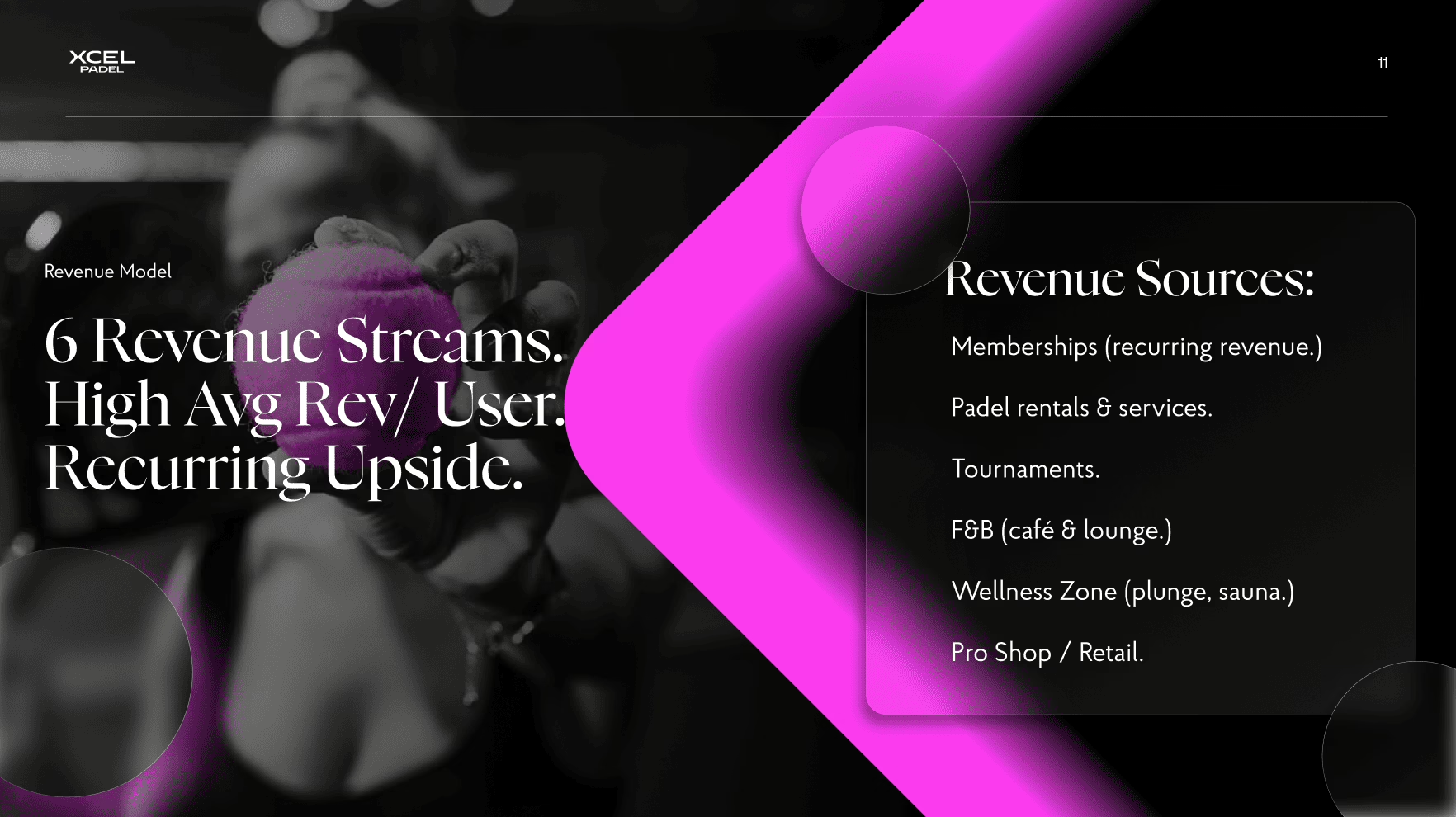
For example, a SaaS company might show subscription pricing, customer segments, average contract value, and expansion potential.
A marketplace might show transaction volume, take rate, average order value, and supply-demand growth.
A consumer brand might show product pricing, margin, distribution channels, repeat purchase behavior, and retail expansion.
A real estate or infrastructure project might show lease revenue, occupancy, service income, operating income, or project-level cash flow.
The revenue model slide should help investors understand how the business turns value into money.
Why Investors Care About the Revenue Model Slide
Investors care about the revenue model slide because it shows whether the business has a clear path to monetization.
A company can have an exciting product and still have a weak revenue model.
Investors want to know whether the business can generate revenue in a way that is:
- understandable
- repeatable
- scalable
- defensible
- connected to customer behavior
- supported by pricing logic
- realistic for the market
This slide also helps investors understand risk.
If the revenue model is unclear, investors may wonder whether the company actually knows how it will make money.
If the pricing is unrealistic, they may doubt the financial projections.
If the model depends on too many future assumptions, they may see the company as too early or too speculative.
If the business has five potential revenue streams but no clear primary model, investors may worry that the company has not made strategic choices.
A strong revenue model slide says:
“We understand who pays, what they pay for, why they pay, and how this can grow.”
Revenue Model vs Business Model vs Pricing Model
These terms often get mixed together, but they are not exactly the same.
Business Model
The business model explains how the company creates, delivers, and captures value.
It includes the customer, product, channel, operations, pricing, revenue, costs, and growth logic.
Revenue Model
The revenue model focuses specifically on how money enters the business.
It answers:
What are the revenue streams?
Who pays?
How does revenue scale?
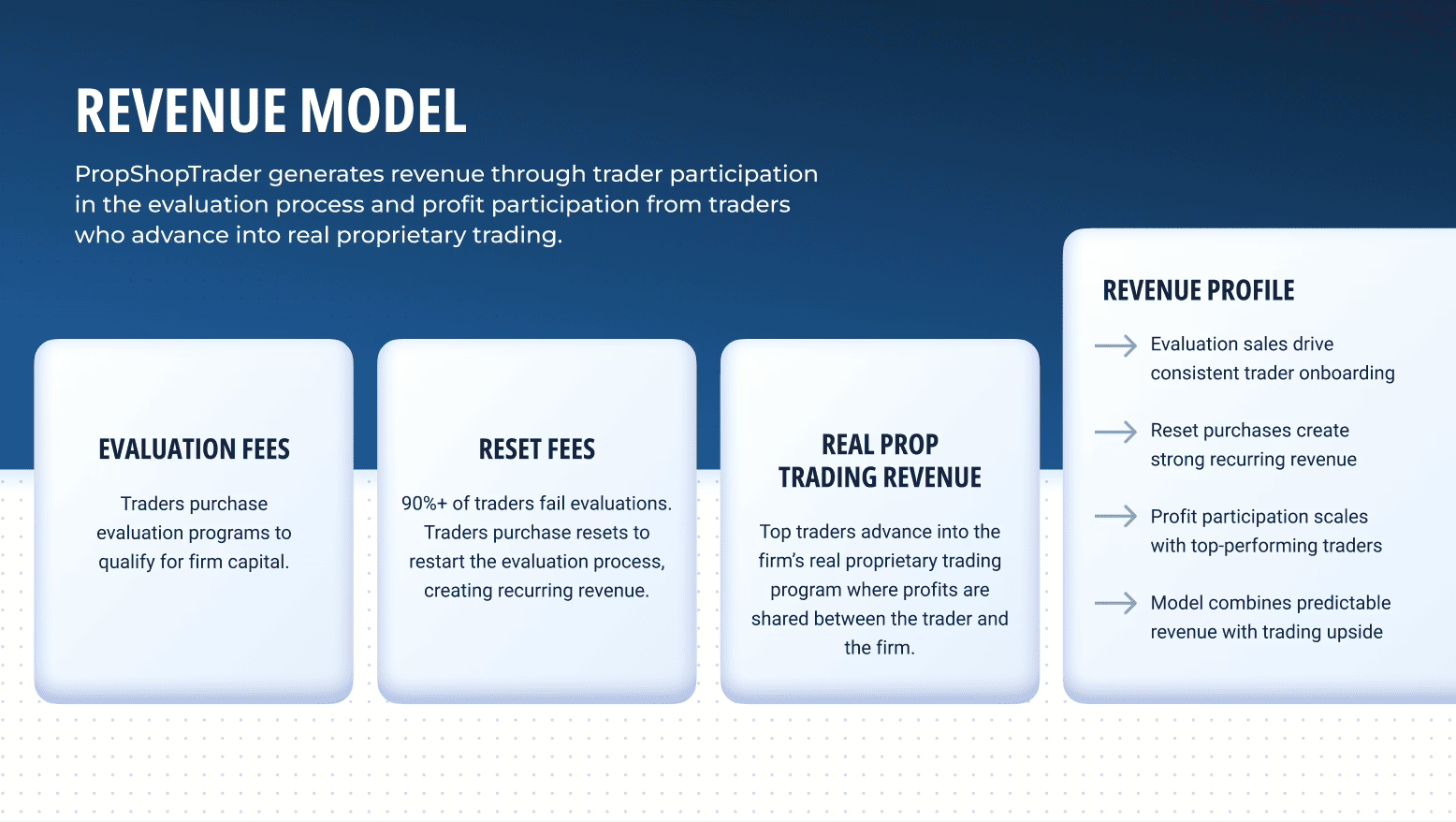
Pricing Model
The pricing model explains how the product or service is priced.
It answers:
Is it subscription-based?
Usage-based?
Transaction-based?
Project-based?
License-based?
Commission-based?
A pitch deck does not always need separate slides for all three.
But the revenue model slide should make the money logic clear enough that investors understand how the business works commercially.
What to Include in a Revenue Model Slide
A strong revenue model slide usually includes a few core elements.
You do not need to include all of these every time, but the slide should cover the most important parts of how the business earns money.
Customer or Buyer
Start by making clear who pays.
This might be:
- consumers
- small businesses
- enterprise customers
- hospitals
- insurers
- real estate developers
- government agencies
- sponsors
- advertisers
- marketplaces users
- brands
- distributors
- tenants
Do not assume investors already understand the buyer.
If the user and buyer are different, make that clear.
For example, in healthcare, the patient may use the product, but the clinic, insurer, employer, or provider network may pay.
In marketplaces, both sides may create value, but only one side may pay directly.
In B2B SaaS, the user may be one team, while the buyer is a department head, CFO, or procurement lead.
Revenue Streams
Show the main ways the company makes money.
Common revenue streams include:
- subscriptions
- one-time purchases
- transaction fees
- commissions
- licensing
- usage-based fees
- service fees
- implementation fees
- maintenance fees
- advertising
- sponsorship
- data or analytics revenue
- marketplace take rate
- product sales
- leasing income
- management fees
The important thing is to distinguish between primary revenue and secondary revenue.
If the main model is subscription, do not distract investors with five speculative future revenue streams.
Pricing Logic
Explain how pricing works.
Examples:
- $99 per month per team
- $500 per user per year
- 5% transaction fee
- $2,000 implementation fee
- $12 per unit wholesale
- $49 consumer subscription
- $150 per managed asset per month
- 10% commission on completed bookings
Pricing should feel connected to the buyer, value, and market.
If the pricing is still being tested, say that clearly, but show the current assumption.
Investors prefer an honest pricing hypothesis over a vague statement like:
“We will monetize through multiple channels.”
Revenue Drivers
This is one of the most important parts.
Revenue is usually driven by a few variables.
For SaaS, drivers might include:
- number of customers
- average contract value
- seats per account
- expansion revenue
- churn
- conversion rate
For marketplaces:
- number of transactions
- average order value
- take rate
- buyer frequency
- supply growth
- liquidity
For consumer products:
- units sold
- average selling price
- gross margin
- repeat purchase rate
- retail locations
- distributor relationships
For service businesses:
- number of clients
- project size
- retainer value
- utilization
- renewal rate
Your revenue model slide should show what actually moves the business.
Gross Margin or Unit Economics
If relevant, include a simple margin or unit economics signal.
This might be:
- gross margin
- contribution margin
- CAC
- LTV
- payback period
- average order value
- take rate
- retention
- churn
- repeat purchase behavior
You do not need to overload the slide with metrics.
But if your business depends on strong margins or repeat usage, the slide should show that.
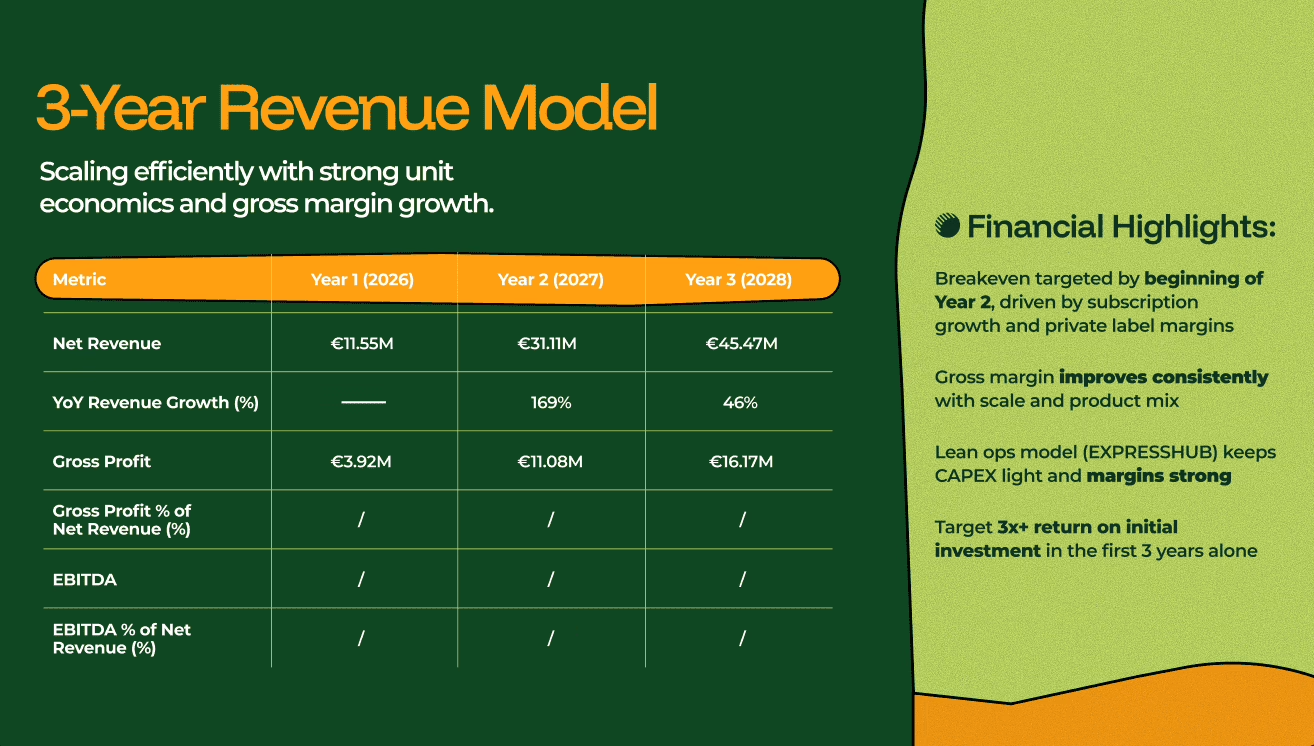
Current and Future Revenue Model
Some companies have one model today and another model later.
That can be fine, but it needs to be explained carefully.
For example:
Today: paid pilots and implementation fees
Next: annual SaaS contracts
Later: usage-based expansion
Or:
Today: direct-to-consumer sales
Next: wholesale and retail distribution
Later: subscription bundles and new product lines
The mistake is making future revenue streams sound guaranteed.
A better approach is to show the current model, then explain the expansion path.
How the Revenue Model Slide Connects to Pitch Deck Financials
The revenue model slide should connect directly to the financial projections, burn rate, runway, and use of funds.
If the revenue model slide says the company earns money from subscriptions, the financial projections should reflect subscription growth, churn, expansion, and recurring revenue.
If the revenue model slide says the company earns money through transactions, the financials should reflect transaction volume, average order value, take rate, and marketplace growth.
If the revenue model slide says revenue comes from product sales, the financials should reflect units sold, pricing, gross margin, inventory, and distribution costs.
A revenue model also has a timing problem hiding inside it. If the business needs six months to close enterprise contracts, or several production cycles before repeat purchases show up, the deck has to explain whether the company has enough cash to survive that gap. I cover that cash-timing logic in my guide on burn rate and runway in a pitch deck.
For a broader breakdown of financial slides, read my guide on how to present financials in a pitch deck.
The revenue model explains how the business makes money, while the financial projection slide shows how that model could perform over time.
How the Revenue Model Slide Connects to the Use of Funds Slide
The revenue model slide explains how the business makes money.
The use of funds slide explains how the capital raise helps grow or prove that revenue model.
These two slides should support each other.
For example, if your revenue model depends on enterprise sales, the use of funds should probably support sales hires, customer success, implementation, or product capabilities needed for enterprise customers.
If your revenue model depends on retail distribution, the use of funds should support inventory, packaging, sales support, distributor relationships, or retail expansion.
If your revenue model depends on usage growth, the use of funds should support acquisition, onboarding, retention, and infrastructure.
If these slides are disconnected, investors will notice.
For a deeper breakdown of that specific slide, read my guide on the use of funds slide.
Good vs Bad Revenue Model Slides
A bad revenue model slide usually tries to look impressive without making the model clear.
A good revenue model slide makes the commercial logic easy to understand.
Bad Revenue Model Slide
A weak revenue model slide might say:
Revenue streams:
- subscriptions
- ads
- partnerships
- marketplace
- data
- enterprise
- licensing
- premium features
This looks broad, but it is not clear.
The problem is that investors do not know what actually matters.
- Is subscription the main model?
- Is advertising realistic?
- Who pays for the data?
- What is the pricing?
- Which stream exists today?
- Which stream is speculative?
- What drives revenue growth?
A slide like this can make the company look unfocused.
Better Revenue Model Slide
A stronger version might say:
Primary revenue model:
Annual SaaS subscriptions for mid-market logistics companies.
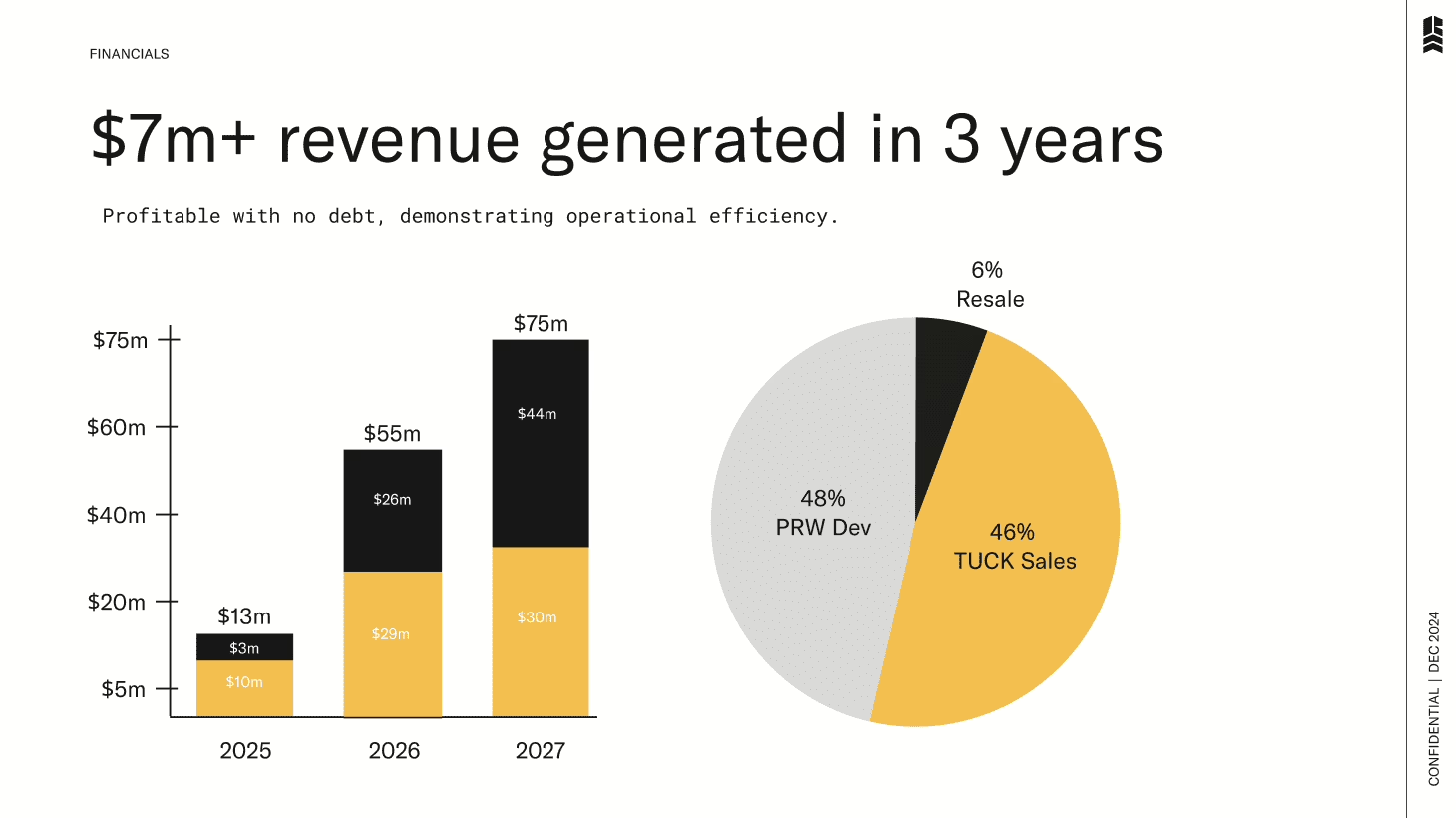
Pricing:
$18,000 average annual contract value.
Revenue drivers:
- number of customers
- seats per account
- annual renewal rate
- expansion into additional locations
- implementation fee for onboarding
Current traction:
12 paid customers
$216K ARR
94% gross retention
2.5 month CAC payback
Expansion path:
Land with operations team, expand to regional managers, then enterprise-wide deployment.
This is stronger because investors can understand the model quickly.
It explains who pays, what they pay for, how much they pay, what drives growth, and how the model can expand.
Revenue Model Slide Examples by Business Type
Different businesses need different revenue model slides.
Do not copy a SaaS revenue slide if you are building a marketplace, consumer brand, fund, real estate project, healthcare company, or infrastructure business.
The right slide depends on how money actually moves through the business.
SaaS Revenue Model Slide
For SaaS, the revenue model slide should usually explain subscription pricing, customer type, contract value, retention, and expansion logic.
Common elements:
- pricing tiers
- annual or monthly subscription
- average contract value
- customer segment
- seats or usage
- expansion revenue
- churn or retention
- implementation fees if relevant
Example framing:
We sell annual SaaS subscriptions to mid-market finance teams. The average contract value is $24K per year, with expansion potential through additional seats, modules, and departments.
Possible slide structure:
- Revenue Model
- Annual SaaS subscription
- $24K ACV
- Land with one department
- Expand through additional seats and modules
- Implementation fee for onboarding
Marketplace Revenue Model Slide
For a marketplace, the revenue model slide should show transaction volume, take rate, average order value, and buyer or seller activity.
Common elements:
- transaction fee
- take rate
- average order value
- number of transactions
- buyer frequency
- seller supply
- liquidity
- payment flow
Example framing:
We take a 12% commission on completed bookings. Revenue grows as supply increases, buyer frequency improves, and average booking value rises.
Possible slide structure:
Revenue = transaction volume × average order value × take rate
This makes the model simple and testable.
Consumer Product Revenue Model Slide
For consumer products, the revenue model slide should show pricing, gross margin, distribution channels, and repeat purchase behavior.
Common elements:
- retail price
- wholesale price
- gross margin
- direct-to-consumer sales
- retail distribution
- repeat purchase rate
- subscriptions or bundles
- product line expansion
Example framing:
We generate revenue through direct-to-consumer sales and wholesale distribution, with a $39 average order value and 62% gross margin.
Possible slide structure:
Primary revenue: DTC product sales
Expansion: wholesale and retail distribution
Growth drivers: repeat purchase, SKU expansion, and retail placement
Healthcare Revenue Model Slide
Healthcare revenue models often need extra clarity because the user, buyer, and payer may be different.
Common elements:
- who pays
- reimbursement logic
- provider contracts
- subscription model
- per-patient pricing
- enterprise licensing
- clinical or operational value
- regulatory or compliance constraints
Example framing:
We sell annual platform licenses to clinics, with pricing based on provider count and patient volume. Expansion occurs through additional sites and care teams.
The main risk in healthcare slides is assuming investors understand the payment flow.
Spell it out.
Fintech Revenue Model Slide
For fintech, the revenue model needs to make monetization and regulatory logic clear.
Common elements:
- transaction fees
- interchange
- subscription fees
- lending spread
- origination fees
- assets under management
- processing volume
- compliance or licensing context
Example framing:
Revenue comes from a 0.8% platform fee on processed payments, plus subscription fees for advanced analytics and compliance reporting.
The slide should avoid sounding like the company earns money from everything. Choose the model that actually drives the business.
Real Estate or Infrastructure Revenue Model Slide
For real estate or infrastructure projects, the revenue model slide should show how the asset generates cash flow.
Common elements:
- rental income
- occupancy
- lease structure
- service revenue
- operating income
- project yield
- power purchase agreements
- offtake agreements
- management fees
- exit or refinancing assumptions
Example framing:
Revenue is generated through long-term lease income, with upside from occupancy growth, premium units, and service revenue.
For infrastructure, the slide might focus on contracted revenue, project capacity, utilization, and long-term agreements.
How to Design a Revenue Model Slide
The revenue model slide should be visually simple.
This is not the place for a complicated diagram unless the business model truly requires it.
A strong layout usually has three parts:
- How money enters the business
- What drives revenue growth
- Why the model can scale
Use a Simple Formula
If possible, reduce the model to a simple formula.
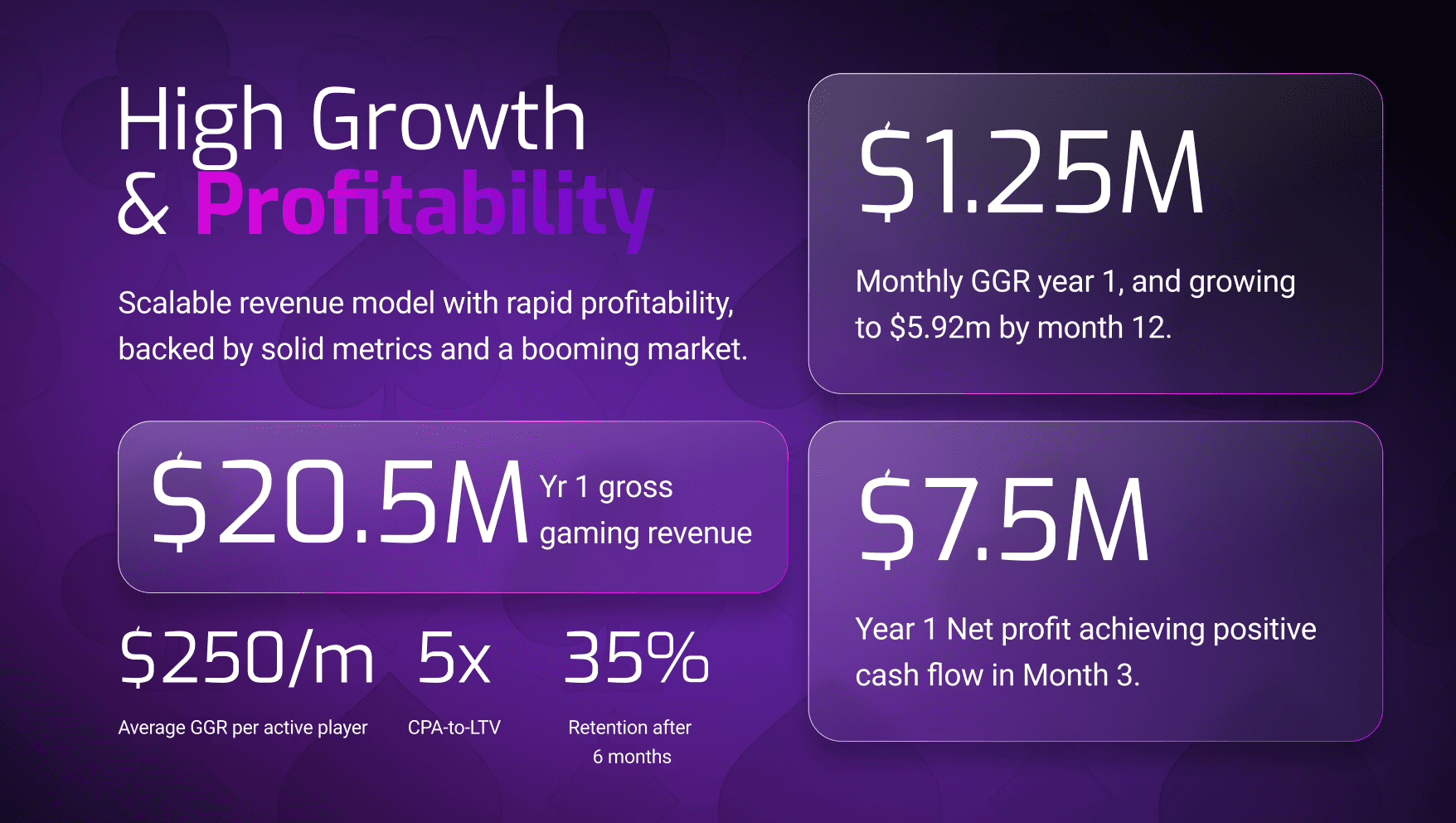
Examples:
SaaS revenue = customers × average contract value × retention
Marketplace revenue = transaction volume × average order value × take rate
Consumer revenue = units sold × average selling price × gross margin
Service revenue = clients × average project value × repeat rate
A simple formula helps investors understand the moving parts.
Show the Primary Model First
Do not lead with every possible future revenue stream.
Start with the main model.
Then show expansion paths only if they are credible.
For example:
Primary model: subscription revenue
Expansion: usage-based add-ons and enterprise modules
This is clearer than saying:
“We will monetize through subscriptions, ads, data, enterprise, marketplace, and partnerships.”
Separate Today From Later
If some revenue streams exist today and others are future opportunities, separate them visually.
Example:
Today:
- paid pilots
- implementation fees
- early subscriptions
Next:
- annual contracts
- expansion revenue
- enterprise licenses
This helps prevent the slide from sounding inflated.
Make Pricing Easy to Scan
Do not hide pricing in a paragraph.
Use a simple card, table, or row.
Example:
Starter: $99/month
Growth: $499/month
Enterprise: custom annual contract
Or:
Average contract value: $24K/year
Implementation fee: $5K
Expansion revenue: additional modules and seats
The point is not to show every detail. The point is to make the monetization logic easy to read.
Common Revenue Model Slide Mistakes
Most revenue model slide mistakes happen because founders either oversimplify or overcomplicate the business.
Mistake 1: Listing Too Many Revenue Streams
Too many revenue streams can make the business look unfocused.
Investors want to know the primary model.
If you show eight revenue streams, they may assume none of them are proven.
Focus on what matters now.
Mistake 2: No Pricing
A revenue model slide without pricing feels incomplete.
Even if pricing is still being tested, show the current assumption.
You can say:
Current pricing hypothesis: $499/month per team
or:
Pilot pricing: $15K annual contract
That is better than saying nothing.
Mistake 3: No Buyer Clarity
If the slide does not show who pays, investors may not understand the business.
This is especially common in healthcare, fintech, marketplaces, and B2B tools.
Make the buyer explicit.
Mistake 4: Confusing Revenue With Market Size
A large market does not explain how your company makes money.
Do not use the revenue model slide to repeat the TAM.
The revenue model should explain the path from customer behavior to revenue.
If you need a separate market sizing explanation, use a market slide.
Mistake 5: Overclaiming Future Revenue
Future monetization paths can be useful, but they should not sound guaranteed.
Avoid phrases like:
“We will later monetize through data, ads, partnerships, and enterprise licensing.”
Instead, say:
“Future expansion may include enterprise analytics once customer volume supports it.”
That sounds more credible.
Mistake 6: No Link to Financial Projections
The revenue model slide should support the projections.
If your revenue model is based on subscriptions, the financials should show subscription growth.
If your model is transaction-based, the financials should show transaction assumptions.
If the revenue model and financials do not match, the pitch becomes harder to trust.
How to Connect the Revenue Model to the Fundraising Narrative
The revenue model is part of the fundraising story.
It tells investors how the company captures value.
If the revenue model is unclear, the whole deck can feel weaker, even if the product is interesting.
For example:
A SaaS startup needs to show that the product can become recurring revenue.
A marketplace needs to show that activity can become transaction volume.
A consumer brand needs to show that demand can become repeat purchasing and margin.
A real estate project needs to show that the asset can produce reliable cash flow.
A healthcare company needs to show that value can become reimbursable, contractable, or operationally justified revenue.
If your revenue model, capital story, or investor logic still feels unclear, you may need fundraising narrative strategy before turning the model into slides.
Revenue Model Slide Template
Here is a simple structure you can use.
Headline
Explain the model in one sentence.
Example:
We generate recurring SaaS revenue through annual subscriptions sold to mid-market finance teams.
Buyer
Who pays?
Example:
Primary buyer: CFOs and finance operations teams
Pricing
How much do they pay?
Example:
Average contract value: $24K/year
Implementation fee: $5K
Expansion: additional seats and modules
Revenue Drivers
What makes revenue grow?
Example:
- number of customers
- seats per account
- annual renewal
- expansion into additional departments
Expansion Path
How can the model grow over time?
Example:
Land with one team, expand across departments, then move into enterprise-wide contracts.
This simple structure is enough for many pitch decks.
Revenue Model Slide Copy Examples
Here are a few examples you can adapt.
SaaS Example
We sell annual SaaS subscriptions to mid-market logistics companies. Revenue grows through new customers, additional seats, and expansion into more operational workflows.
Marketplace Example
We earn a 12% transaction fee on completed bookings. Revenue grows as supply increases, buyer frequency improves, and average booking value rises.
Consumer Product Example
We generate revenue through direct-to-consumer product sales and wholesale distribution, with growth driven by repeat purchase, SKU expansion, and retail placement.
Healthcare Example
We sell annual platform licenses to clinics based on provider count and patient volume. Expansion occurs through additional sites, care teams, and workflow modules.
Fintech Example
We generate revenue through a platform fee on transaction volume, supported by subscription fees for advanced reporting and compliance tools.
Real Estate Example
Revenue comes from long-term lease income, with upside from occupancy growth, premium units, and additional service revenue.
Where the Revenue Model Slide Goes in a Pitch Deck
The revenue model slide usually appears after the product or solution section and before the financial projections.
A typical sequence might look like this:
- Problem
- Solution
- Product
- Market
- Business model
- Revenue model
- Go-to-market
- Traction
- Financials
- Use of funds
- Team
- Ask
The order can change depending on the business.
For some companies, the revenue model belongs before go-to-market. For others, it makes more sense after traction.
The key is that the revenue model should appear before investors are asked to believe the financial projections.
Need Help Building an Investor-Ready Revenue Model Slide?
A revenue model slide needs to do more than list pricing or possible revenue streams.
It has to explain who pays, what they pay for, how revenue grows, what drives scale, and how the model connects to the rest of the investor story.
If you need help turning your revenue model, financial projections, use of funds, and fundraising narrative into a clearer investor-ready presentation, explore my pitch deck design services.
Revenue Model Slide FAQ
What is a revenue model slide?
A revenue model slide is a pitch deck slide that explains how the company makes money. It usually shows who pays, what they pay for, pricing, revenue streams, and the main drivers of revenue growth.
What should be included in a revenue model slide?
A revenue model slide should usually include the customer or buyer, primary revenue stream, pricing logic, revenue drivers, and any important unit economics. It should make the commercial model easy to understand.
Is the revenue model slide the same as the business model slide?
Not exactly. The business model explains how the company creates, delivers, and captures value. The revenue model focuses specifically on how money enters the business.
Where does the revenue model slide go in a pitch deck?
The revenue model slide usually appears after the product or solution section and before the financial projections. It should come before investors are asked to believe the numbers.
Should the revenue model slide include pricing?
Yes, in most cases. Investors need to understand how much customers pay and how pricing connects to the value being delivered. If pricing is still being tested, show the current assumption.
How detailed should a revenue model slide be?
It should be specific enough to explain the model, but not so detailed that it becomes a spreadsheet. The main slide should show the core logic. Detailed assumptions can go in the financial model or appendix.
What is the biggest mistake founders make on the revenue model slide?
The biggest mistake is listing too many possible revenue streams without showing the primary model. Investors want to know what actually drives the business, not every theoretical way the company might make money later.
Can a startup have multiple revenue models?
Yes, but the slide should separate the primary model from future expansion paths. If every revenue stream is presented as equally important, the business can look unfocused.
How does the revenue model slide connect to financial projections?
The revenue model slide explains the logic behind the projections. If the model is subscription-based, transaction-based, product-based, or service-based, the financial projections should reflect that same logic.
Do all pitch decks need a revenue model slide?
Most investor pitch decks should include one. If the company is raising capital, investors need to understand how the business will generate revenue and how that revenue can grow.
