You’ve got a groundbreaking startup idea—maybe it’s a climate-resilient agri-tech solution, a next-gen AI tool, or a defense innovation that could shift national security paradigms. But here’s the harsh truth: nobody’s biting. And it’s not because your concept lacks brilliance. It’s because your pitch deck doesn’t punch above its weight.
You might be building the next unicorn or solving a problem that could save lives, but if your deck is a slide-by-slide snoozefest, even the sharpest innovations won’t make it past the first coffee-stained gatekeeper. In today’s cutthroat capital climate, *ideas don’t get funded—*clarity, traction, and storytelling do.
The solution? A razor-sharp pitch deck that doesn’t just check boxes—it connects, compels, and converts.
I’m Viktor Ilijev. I’ve spent 13+ years helping startups and industry giants raise over $500 million by turning raw ideas into boardroom-winning narratives. I blend advanced NLP, topical authority SEO, and emotional storytelling to build presentations that don’t just speak—they persuade.
In this guide, I’ll walk you through the investor mindset, break down exactly what to include in each slide, and show you how to design a deck that doesn’t just get read—it gets funded.
Ready to stop guessing and start getting yeses?
Let’s get to work.
Why Your Pitch Deck Is a Deal Maker (or Breaker)
Let’s get one thing straight: your pitch deck isn’t just a sleek slideshow—it’s a strategic weapon designed to unlock funding. The core purpose? To spark enough interest and belief that an investor can’t afford to miss your opportunity. In essence, your goal isn’t just to inform. It’s to trigger FOMO—Fear of Missing Out—that primal investor instinct that makes a VC cancel lunch because your startup pitch just hit like a thunderclap.
A great pitch deck doesn’t throw spaghetti at the wall; it guides attention, frames the opportunity, and controls the narrative. As Oren Klaff explains in Pitch Anything, successful fundraising hinges on frame control—the art of steering perception. When you create a pitch deck that frames your startup as inevitable, scalable, and time-sensitive, you’ve already won half the battle.
Remember, investors aren’t reading your slides—they’re judging the opportunity behind them. That’s why every slide in your deck should do one of two things: build excitement or reduce perceived risk.
A winning pitch deck is not about features, it’s about urgency, clarity, and belief.
Use your first slide to create intrigue. Your target market slide to define scale. And your problem/solution sequence to evoke pain and resolution. This is not about dumping data. It’s about telling a strategic story with high stakes and a clear path to payoff.
Investor Expectations in 2025
If you’re building a startup pitch deck today, understand this: the bar for investor expectations has never been higher. Especially in a post-ZIRP world, where capital is tighter and due diligence is sharper, VCs want validation, not just vision.
Here’s what venture capitalists and angel investors expect from your deck in 2025:
Clarity: Can they understand your value proposition in 10 seconds or less? Your pitch should be concise, jargon-free, and strategically structured. Every slide in your deck template must have a clear purpose.
Scalability: Investors are looking for startups with exponential growth potential. Show how your product or service can go from niche to mainstream—supported by your go-to-market strategy, user acquisition model, and market size breakdown (TAM/SAM/SOM).
Traction: Whether you’re in a seed round or Series A, show progress. Metrics matter. Highlight real-world signals like revenue growth, pilot results, early adopters, or strategic partnerships. Slide decks that demonstrate momentum instantly stand out.
Financial Intelligence: Include clear financial projections, your burn rate, and runway. Demonstrate command over your LTV:CAC ratio, churn, and margins. This isn’t just about impressing investors—it’s about giving them confidence in your numbers.
Visual Polish: A compelling pitch deck is also a designed pitch deck. Fonts, spacing, and flow all communicate your brand’s attention to detail. A poorly formatted slide is a red flag—even if the idea behind it is gold.
Investors don’t invest in “ideas.” They invest in companies with clarity, conviction, and command over execution.
Understanding How Investors Think
Pattern Recognition & Mental Models Investors Use
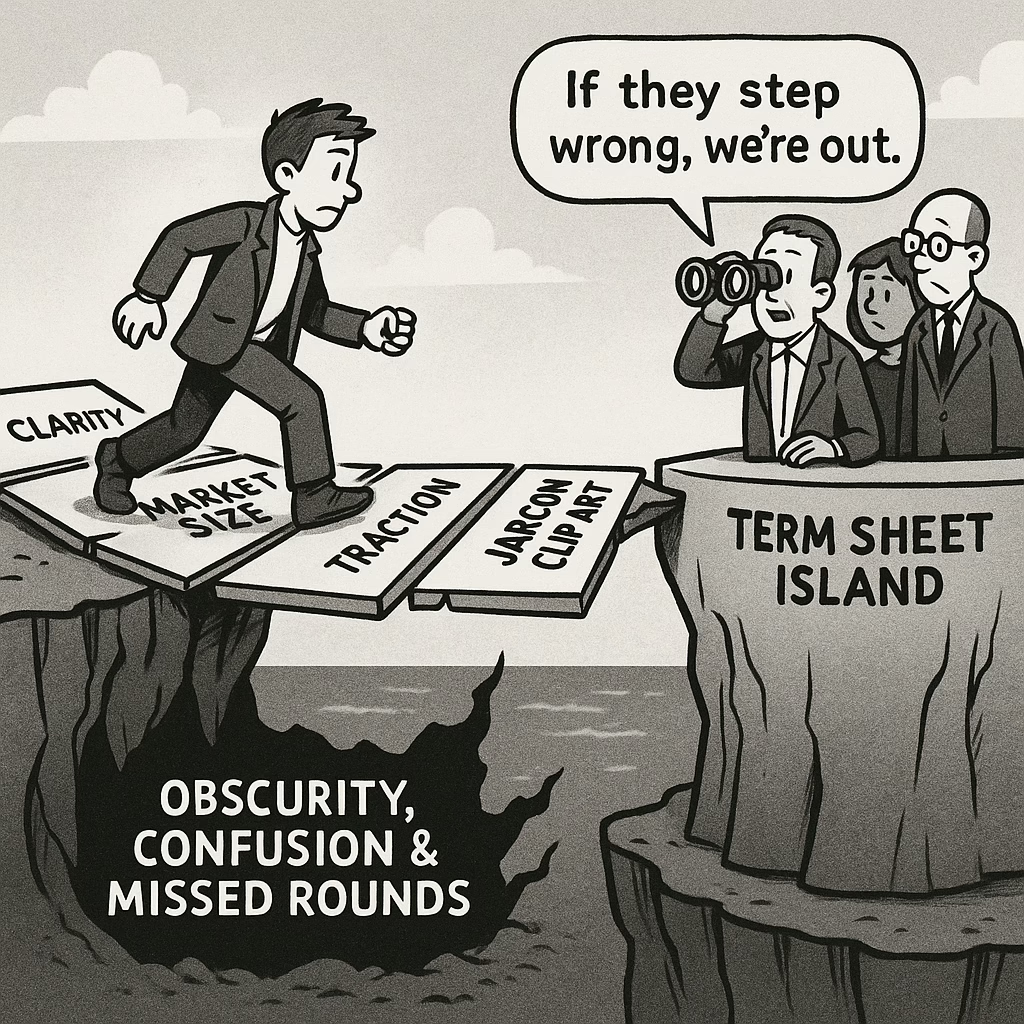
To create an effective pitch deck that resonates with investors, you need to understand how they think, not just what they want to hear. Most venture capitalists, angel investors, and early-stage funders rely on pattern recognition and mental models to quickly filter which startups are worth a second look—and which go straight to the “pass” pile.
In reality, investors are not combing through every pitch deck template for minute details. Instead, they use intuitive shortcuts and mental frameworks to rapidly evaluate the potential behind your business idea.
Let’s break down a few of their cognitive go-to’s:
First Principles Thinking: Made famous by Elon Musk, this model breaks complex problems into basic truths. Investors love founders who can strip away assumptions and show how their product or service logically solves a deep-rooted problem from the ground up.
Circle of Competence: Smart investors stay in their lane. If your startup operates outside their domain expertise, they’re looking for signals that you have clear mastery over your niche. Show deep insight, not surface-level buzzwords.
Second-Order Thinking: VCs think beyond the initial pitch—how will your solution ripple through the market? Can it evolve? Will it create or kill future dependencies? Smart pitch decks answer not just “What?” but “Then what?”
Because of this, your presentation deck should be more than a pretty slideshow. Every slide in your deck should address a critical mental checkpoint:
Is this a scalable startup?
Does the business model hold up to scrutiny?
Is the market opportunity big enough?
Is there clear product-market fit?
When you design a pitch deck, think like the investor. Use compelling visuals to frame your idea logically. A slide isn’t just space—it’s real estate for precision storytelling that passes the investor’s mental filters.
A winning pitch isn’t one that explains everything—it’s one that lights up the investor’s internal radar.
The Role of Emotion in Decision Making
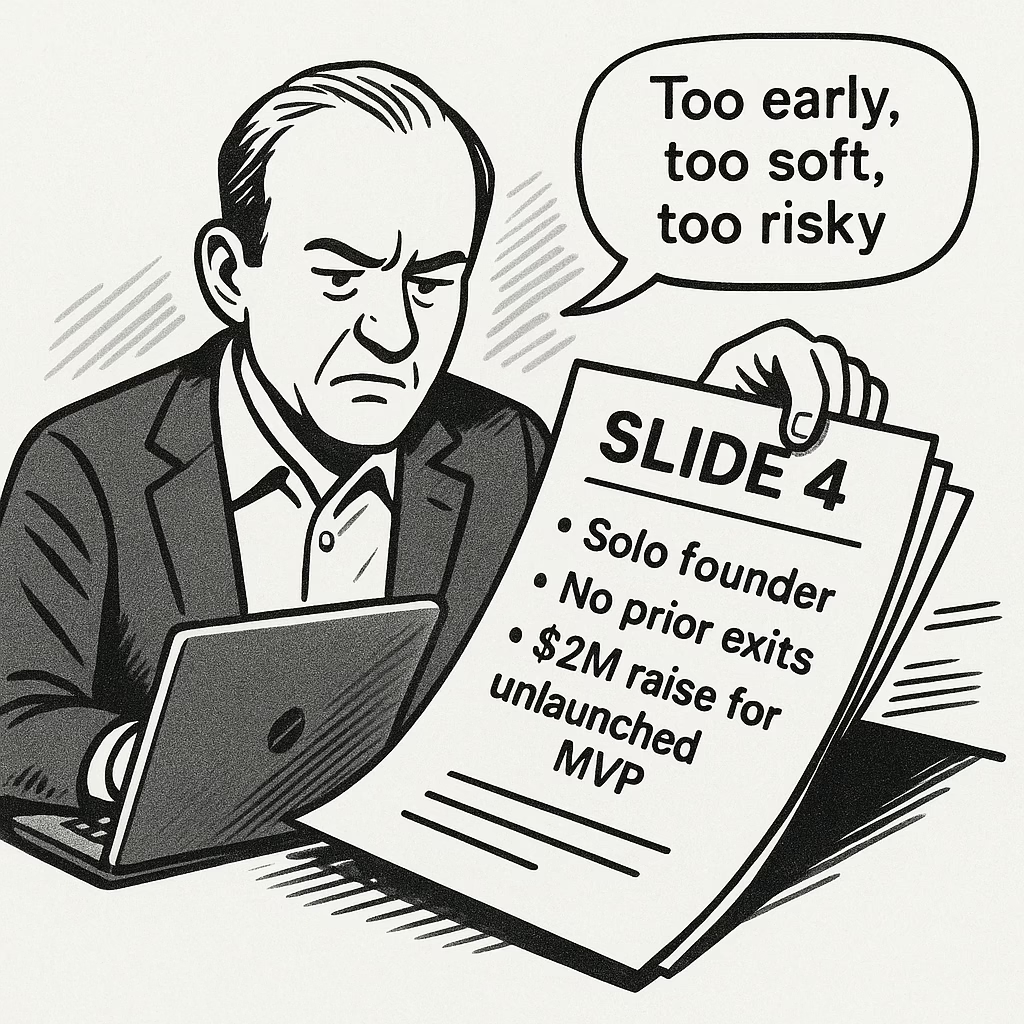
Despite the analytical front, investors buy into people, not spreadsheets. The team slide is often more scrutinized than your financial projections. Why? Because at the seed stage, execution risk is high—and VCs are betting on the who, not just the what.
Trust is the invisible axis around which your entire pitch spins.
From your opening line to your final deck slide, your pitch deck presentation must convey confidence, cohesion, and character. This is where emotional resonance becomes a weapon. Founders who narrate their journey—the why behind the what—create emotional alignment. And in competitive fundraising environments, that often tips the scale.
Key emotional triggers to embed into your pitch deck strategy:
Narrative Cohesion: Your slides must tell a unified story. Disconnected ideas lose attention fast. A cohesive arc, from problem to solution to vision, keeps investors locked in.
Vision and Vulnerability: Let your passion leak through the pitch. Show the audience not just your logic, but your fire. Vulnerability—like admitting early mistakes or pivots—can enhance credibility when framed correctly.
Urgency and Momentum: Investors want to see not only that your startup matters, but that it matters now. Use momentum metrics to convey this—user growth, pilot results, letters of intent.
In a room full of pitch decks, emotion is what makes yours memorable.
A great pitch deck doesn’t just show investors that your company is a good bet—it makes them feel like it’s a bet they can’t afford to miss.
You might like: The Role of Emotional Storytelling in Pitch Decks
Slide-by-Slide Breakdown of a Winning Pitch Deck
Creating a winning pitch deck isn’t about cramming all your insights onto slides—it’s about sequencing the right messages to guide investors from “interesting” to “I’m in.” Here’s how to design a pitch deck that moves the needle, slide by slide.
Slide 1 – Elevator Pitch Slide
This is the first impression—and it better land.
Name the enemy, introduce the startup’s core value, and spark immediate intrigue. Use a bold statement, relatable stat, or industry tension point to hook your audience.
Example: “95% of small medical practices lose revenue due to inefficient billing. Our AI platform automates this—reducing claim rejections by 70%.”
Keep it concise, and ensure this slide serves as a microcosm of your entire pitch deck presentation.
You might like: How to Write a Compelling One-Sentence Elevator Pitch
Slide 2 – Market Opportunity
Investors don’t invest in products—they invest in markets. Use this slide to map your Total Addressable Market (TAM), Serviceable Available Market (SAM), and Serviceable Obtainable Market (SOM).
Make the market size feel not just large, but inevitable. Use clean graphs, sourcing from credible databases (Statista, Gartner, McKinsey). This is where your deck template starts to communicate ambition.
Slide 3 – The Problem
This slide should agitate pain—not just identify it. Show the financial, operational, or emotional cost of inaction.
Use storytelling: highlight a user scenario, case study, or real-life stat that stings. The goal? Make investors nod with urgency. A good pitching your startup moment happens here—when the problem feels personal.
Slide 4 – The Solution
Now offer the antidote.
Your startup pitch deck should present a solution slide that is clear, compelling, and benefit-focused—not bogged down in features.
Visualize transformation with a simple “before and after” narrative. This helps potential investors grasp the value instantly and see the product’s scalability.
Slide 5 – Business Model
How do you make money? And can you repeat and scale it?
This is one of the most scrutinized slides in any investor pitch deck.
Break down your revenue streams, customer LTV, pricing strategy, and customer acquisition costs (CAC). Use flow diagrams or unit economics tables. Simplicity and logic are key.
Slide 6 – Traction & Validation
If you’ve launched or have proof of concept, show it here. Nothing builds investor confidence like traction, even if early.
Include:
Revenue or growth metrics
Pilot partnerships or LOIs
Customer testimonials
Product usage stats
Make this a brag slide—but stay concise. Visual graphs work better than walls of text.
Slide 7 – Go-To-Market Strategy
How will you reach your customers and scale efficiently?
Lay out the channels, growth loops, and marketing tactics you’ll use to capture your target market. Show how your startup can acquire users cost-effectively.
Investors want to see more than theory—they want unit-tested strategy.
You might like: Mastering Your Pitch Deck Go-to-Market Slide
Slide 8 – Competitive Landscape
Time to impress investors with your strategic edge.
Use a clean 2×2 matrix, feature comparison, or Blue Ocean Strategy visual to show how you differentiate. Avoid trashing competitors; instead, explain the white space you occupy.
A good pitch deck strategy acknowledges the field, but proves you’ve redefined the game.
Slide 9 – Financials
Investors will want to see 3–5 year projections that are grounded, not hyped.
Include revenue, gross margin, EBITDA, and burn rate. Clearly state your assumptions and tie them to traction.
A pitch deck template that’s investor-ready includes this slide in a way that complements—not overwhelms—the narrative.
You might like: The Financials Slide
Slide 10 – Team
People fund people.
Your team slide should highlight founder-market fit, domain expertise, and relevant wins (previous exits, high-growth experience, etc.). Include strategic advisors if they carry name recognition or key industry trust.
This is not a résumé dump—it’s proof you’ve assembled a team that can execute.
Slide 11 – Vision & Impact
Paint the future.
What world are you building? This is the slide where you elevate the pitch into something bigger. Align with trends, societal shifts, or generational changes.
“In five years, this won’t just be a product—it’ll be an industry standard.”
Vision is what makes a capital pitch deck feel transformational, not transactional.
Slide 12 – The Ask
Be specific.
Clearly state how much you’re raising, your valuation cap or terms, the use of funds, and your runway.
Example: “We’re raising $1.5M to scale our engineering team, launch GTM campaigns, and extend runway to 18 months.”
Add urgency by showing investor interest or committed capital if applicable. The final slide should convert interest into conversation.
The 12 slide pitch deck framework that got my clients $500m in funding.
I’ve developed 12 simple formulas that will save 40 hours of your time and show you how to craft content that makes investors invest.
Start using these formulas by downloading my detailed framework through the link below. Promo price available for the first 40 buyers. Few downloads remaining.
Design Principles That Build Investor Trust
The best pitch decks do more than communicate ideas—they project competence, clarity, and confidence. Investors often decide within minutes whether a startup pitch deck feels professional and trustworthy. And make no mistake: design plays a silent but powerful role in that decision.
Keep It Zen (Presentation Zen Principles)
Inspired by Garr Reynolds’ Presentation Zen, the most effective decks embrace simplicity, whitespace, and powerful visuals. These design choices help your ideas breathe—and make it easier for potential investors to absorb key insights quickly.
Here’s how to apply Zen design to your pitch deck presentation:
One idea per slide: Avoid clutter. Each slide in your deck template should serve a single purpose. Think of your deck as a visual storyboard, not a text-dump report.
Whitespace is your friend: White space isn’t “wasted” space—it’s strategic. It helps direct focus and reduces cognitive fatigue, especially in high-stakes VC pitch meetings.
Use visuals with intent: Charts, images, and diagrams should clarify—not decorate. A well-designed “before/after” visual on your solution slide can often say more than three paragraphs of text.
Avoid tired templates: Generic deck templates signal laziness. A great pitch deck feels tailored, unique, and in alignment with your brand identity. Tools like Canva, Pitch, and Figma allow even early-stage founders to create a pitch deck that looks sharp and professional without hiring a designer.
A text-heavy slide is the fastest way to lose investor attention. Keep your pitch deck tight, focused, and visually guided.
Fonts, Color, and Flow
Design isn’t just aesthetics—it’s psychology. When you design a pitch deck, small details like typography and color carry big implications about your startup’s professionalism.
Here are a few essentials:
Choose clean, legible fonts: Use no more than two font families—one for headings, one for body text. Think Inter, Helvetica, or Roboto. Investors won’t trust a startup pitch deck they have to squint to read.
Use color with strategy, not flair: Your color palette should reflect your brand but also aid comprehension. Use contrast (e.g., dark text on light backgrounds) to improve readability. Apply highlight colors sparingly to emphasize key points.
Design for visual flow: Each slide should lead naturally into the next. Group related information and use visual anchors (like icons or subtle dividers) to guide the eye. Your pitch presentation should feel like a cohesive journey, not a scattered slide dump.
Emphasize contrasts: When presenting your problem vs. solution, before vs. after, or product vs. competitors, use contrasting layouts or color tones. This not only makes your deck more engaging—it makes your message unforgettable.
In design, consistency equals credibility. A clean, coherent presentation deck signals to investors that you know what you’re doing—before they even read the content.
In a funding environment saturated with pitch deck examples, clean design is a subtle yet powerful differentiator. It shows attention to detail, respect for the investor’s time, and clarity in your thinking—all crucial when you’re pitching your startup to high-caliber investors and partners.
Investor Personas and Tailored Messaging
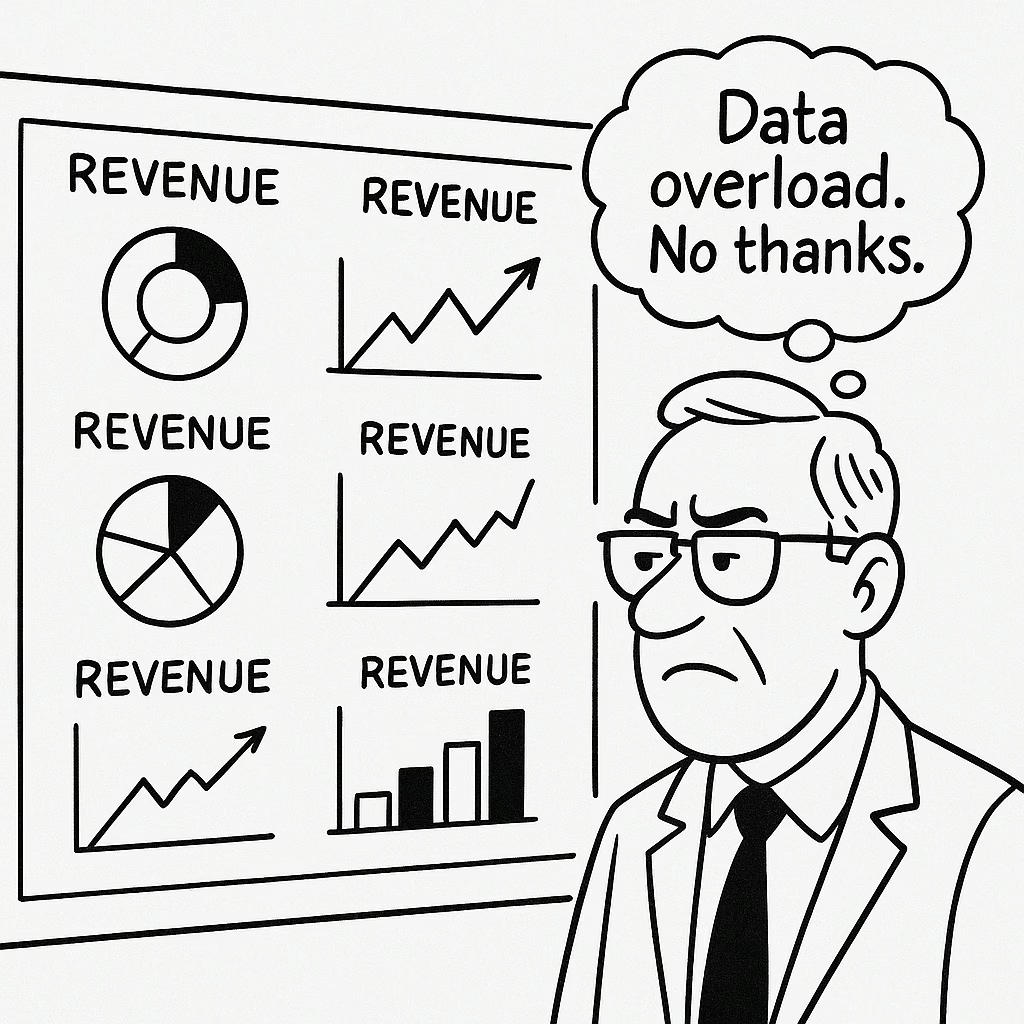
Understanding your audience is half the battle in pitching your startup. A pitch deck that dazzles one investor can fall flat with another if it’s not aligned with their specific focus, expectations, and decision-making frameworks. To create a successful investor pitch, you must tailor your messaging and pitch deck presentation to the right investor persona—because what works for a seasoned venture capital partner won’t necessarily resonate with an early-stage angel investor.
Seed vs. Series A vs. VC vs. Angel
Your fundraising strategy must match the stage of your startup—and so must your deck template. Each round comes with distinct investor expectations and risk appetites. Here’s what to emphasize in your pitch deck at each stage:
Seed Round (Angel Investors + Early Seed VCs)
Focus: Problem clarity, founding team strength, early signs of product-market fit.
Key Slides: The Problem, The Solution, Team, Vision.
What They Want: They’re investing in the people, not just the idea. Your startup pitch deck should radiate founder-market fit and passion.
Deck Strategy: Keep your pitch deck lean and story-driven. Angels don’t need ten financial spreadsheets—they want to feel the future you’re building.
Series A (Institutional VCs + Larger Seed Funds)
Focus: Traction, scalability, early monetization.
Key Slides: Traction, Business Model, Market Opportunity, Go-to-Market Strategy.
What They Want: Proof you can scale. They expect KPIs like CAC, LTV, churn, retention, and burn rate. A vague business plan won’t fly—show real metrics.
Deck Tip: Create a pitch deck that not only looks good but anchors every claim in early traction and operational logic.
Series B and Beyond (Growth-Stage VCs, Institutional Partners)
Focus: Defensibility, market dominance, team maturity.
Key Slides: Financials, Team, Competitive Advantage, Vision & Impact.
What They Want: A winning pitch deck here is about scale, speed, and staying power.
Deck Tip: Highlight barriers to entry, IP, proprietary tech, and anything that signals longevity and venture capital-grade returns.
Tailoring each slide in your investor pitch deck to these expectations is what separates a good pitch deck from a great pitch deck.
Framing for Investor Types
Beyond structure, it’s how you say it that determines who gets bought in. This is where Oren Klaff’s legendary frame control theory comes into play. A pitch isn’t just a presentation—it’s a narrative battlefield, and Klaff teaches us that whoever owns the frame, owns the room.
How to Apply Frame Control in Your Pitch Deck:
Power Frame: Investors walk in thinking they hold all the cards. Flip the script by anchoring your startup as the opportunity. Start strong on slide one. Establish the market need and urgency fast.
Intrigue Frame: Don’t reveal everything at once. Tease outcomes. Leave space for curiosity. An interesting pitch deck leads investors to ask questions—not just nod silently.
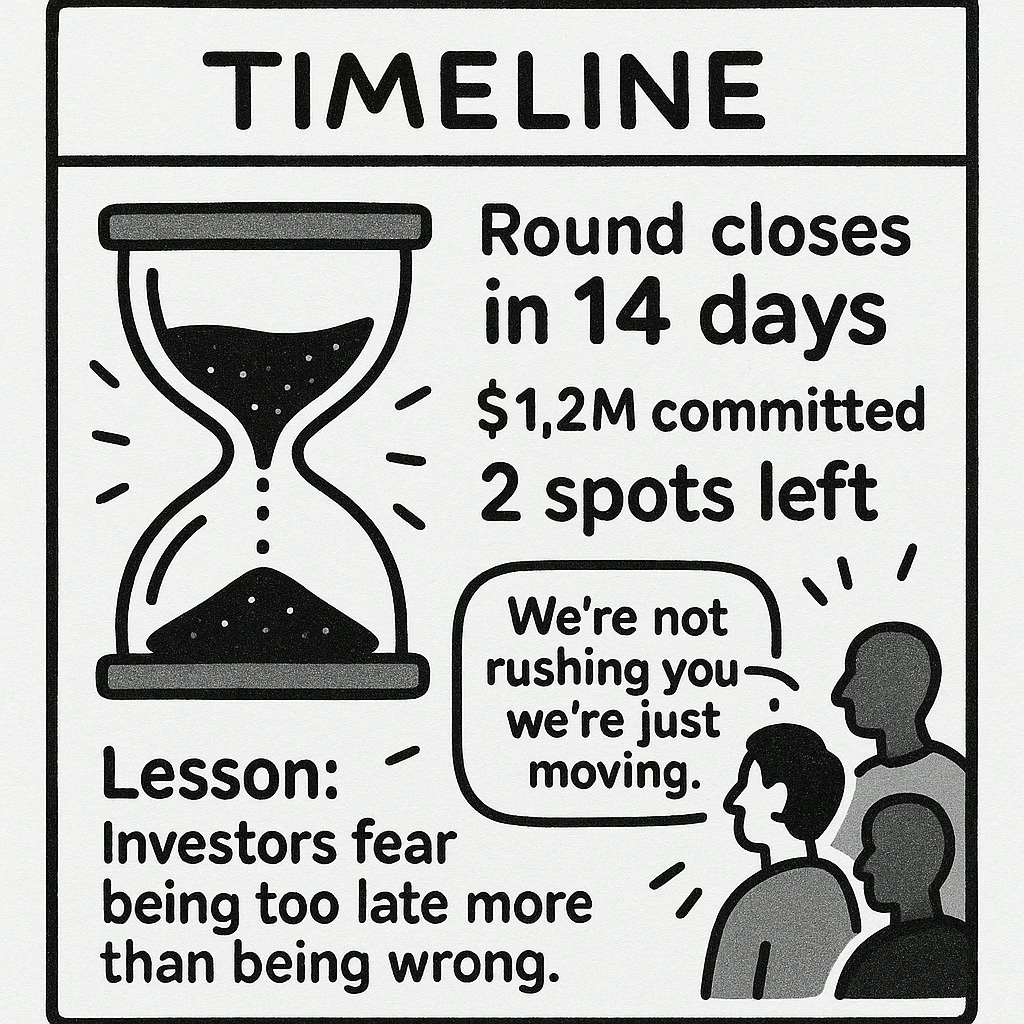
Time Frame: Urgency drives action. Mention limited availability in your funding round or highlight traction velocity to convey momentum. Show that this isn’t an open-ended window.
Prize Frame: You’re not begging for capital—you’re inviting them to join something extraordinary. Use confident language, strong branding, and a clean, assertive deck template to position your startup as the prize, not the seeker.
Your pitch deck is a presentation, but your delivery is positioning. Frame the conversation so you lead, not follow.
Understanding investor psychology is as important as understanding your own product. When you design a pitch deck, always consider who’s on the other side of the table—and make sure your entire deck speaks their language, fuels their interests, and meets their expectations without overwhelming.
Case Studies: What a Great Pitch Deck Looks Like
A truly winning pitch deck is one that not only tells a compelling story, but also aligns perfectly with what investors want to see—clarity, traction, market opportunity, and a clear path to return. To better understand what separates a great pitch from a forgettable one, let’s break down some legendary pitch deck examples—and the costly missteps of those that missed the mark.
Airbnb, Uber, and the Winning Decks That Worked
When Airbnb pitched their idea in 2009, few investors thought strangers would pay to sleep in someone else’s home. But their now-famous startup pitch deck made waves for one simple reason: it made an unfamiliar concept feel inevitable.
What made Airbnb’s pitch deck so powerful?
Simplicity: Each slide was clean, focused, and visually digestible—no fluff.
Problem clarity: They articulated a clear user pain: expensive hotels and poor availability for major events.
Market validation: Early traction and revenue gave credibility to a high-risk concept.
Massive TAM: They mapped a global market, showing Airbnb could evolve into a category-defining platform.
Deck structure: Their pitch deck template hit every key checkpoint—from solution to financial model—without overwhelming the reader.
Similarly, Uber’s investor pitch communicated more than a rideshare app—it painted a picture of urban mobility reimagined. It wasn’t just about taxis; it was about transforming city infrastructure, convenience, and safety. Their slides were short, sharp, and loaded with vision.
These weren’t just pitch decks—they were strategic narratives that gave investors a glimpse into a future they didn’t want to miss.
Key takeaways from successful decks:
Use clean, minimal templates that design a pitch deck around readability.
Don’t hide your traction—spotlight it.
Start your deck to potential investors with clarity and end with conviction.
Every slide should answer: “Why now, why us, why this market?”
Lessons from Failures
While great decks raise millions, poorly crafted ones often stall even the most promising ideas. Here are some of the most common pitfalls we’ve seen across thousands of pitching your startup attempts:
1. Information Overload
A common trap for passionate entrepreneurs is trying to include every detail in their presentation deck. This results in dense slides, unclear flow, and disengaged investors.
Solution: Keep your entire deck lean. Use appendices for additional data, and ensure each slide communicates a single compelling point.
2. Unclear Value Proposition
Investors don’t have time to decode your pitch. If your startup pitch deck doesn’t clearly communicate what problem you solve and why your solution is superior, they’ll move on.
Solution: Make your first slide count. Use bold, benefit-focused language to immediately convey your startup’s value.
3. Lack of Story Arc
A pitch deck is a presentation, not a PDF checklist. Without narrative flow, even strong content can feel disconnected.
Solution: Structure your deck template like a story: setup (problem), journey (solution, traction, market), and resolution (vision, ask).
4. Neglecting Investor Context
Some pitch decks are created in isolation, ignoring who they’re targeting. A seed round deck should not resemble a Series B deck.
Solution: Always align the tone, detail level, and emphasis of your pitch to investors based on where they are in the funding spectrum and what they care about most.
5. No Clear Ask
After a brilliant narrative, many pitch decks simply… end. No specific ask, no clear funding goal, no terms. This confuses investors and weakens your momentum.
Solution: Conclude with confidence. State how much you’re raising, what it’s for, and the expected outcome.
Remember: the purpose of a pitch deck is not to secure funding on the spot—it’s to earn the next meeting. But without clarity and confidence, you won’t even get that.
Psychology-Driven Storytelling That Converts
The most compelling pitch decks don’t just inform—they move. They stir curiosity, build belief, and spark action. In a world where startups compete fiercely for limited venture capital, the decks that win aren’t the ones with the most data. They’re the ones that tell the most resonant story—backed by proof.
Why Stories Sell and Stats Validate
If you’re building a startup pitch deck, your job is to create a pitch deck that connects the dots emotionally and logically. That starts with understanding a fundamental truth: investors buy on emotion and justify with logic.
Tension-Resolution Structure: Begin your story with friction—a broken system, underserved user, or massive inefficiency. That tension primes your audience for a solution. When your product arrives in the narrative arc, it feels like relief.
Problem → Agitation → Resolution. That’s the emotional arc your deck template should mirror slide-by-slide.
Anchor Stats to Story: Don’t throw in statistics like confetti. Frame them. Use metrics to validate, not replace, your story. For example:
“Before we launched, 68% of freelancers reported chasing invoices. After using our tool, 87% are paid within 48 hours.”
This converts data into a story with emotional relevance and measurable impact.
Emphasize Outcomes, Not Features: Use narrative to show transformation. Whether it’s saving time, cutting costs, or reducing risk, make your pitch about the journey your user takes—not the code you wrote.
A great pitch deck presentation moves in rhythm: story builds belief, data locks it in.
Use Mental Models to Build Pitch Logic
Top-tier investor pitch decks don’t just dazzle—they demonstrate clear thinking. Leveraging mental models in your narrative creates strategic structure and persuasive flow. Here are a few to integrate directly into your deck design and verbal pitch:
1. Probabilistic Thinking
Investors aren’t asking “Is this guaranteed?” They’re asking, “What’s the likelihood this wins, and how big is the win?”
Frame your startup’s opportunity in terms of risk/reward ratio. Use unit economics, market trends, and execution history to skew the probability in your favor.
2. Inversion
Flip the frame. Instead of just asking “What’s great about this idea?” ask “What would kill it—and how are we solving that?”
This creates instant credibility and helps investors understand you’ve thought through the downside.
3. Scarcity
Highlight time-sensitive elements. Are you closing this seed round in 30 days? Is this category heating up fast?
Scarcity creates urgency. Your presentation deck should make the opportunity feel fleeting—and too good to miss.
4. Leverage
What gives your startup unfair momentum? A unique partnership? Exclusive data? A rockstar founding team?
Show how small inputs lead to outsized outputs. Pitch decks that showcase strategic leverage demonstrate exponential potential—which is exactly what investors are looking for.
Investors don’t just fund businesses—they fund asymmetric outcomes. Your deck to potential investors should highlight the levers that create those outcomes.
When you weave together emotional storytelling, logical progression, and mental models, you design a pitch deck that doesn’t just get understood—it gets remembered, shared, and funded.
Turning Decks into Deals
At its core, a winning pitch deck isn’t just a visual business plan—it’s a strategic, psychological, and emotional journey crafted for one goal: getting the investor to say yes.
A truly great pitch deck aligns:
Vision that inspires,
Data that validates, and
Storytelling that converts.
It offers more than just slides—it delivers a clear, compelling overview of your business in a format that’s tailored to investor psychology. Whether you’re building a seed round presentation, preparing a Series A deck, or refining a VC pitch, the principles remain the same: clarity, confidence, and connection.
In a sea of pitch deck examples, yours should stand out not for its flash, but for its focus. It should communicate your startup’s purpose, market strategy, and growth potential with simplicity and sophistication—without overwhelming.
Remember, the purpose of a pitch deck is to earn trust, spark curiosity, and open doors to deeper conversations with investors.
Ready to Go from Pitch to Partnership?
If you’re tired of second-guessing your slides, sending decks that get ghosted, or feeling like your pitching your startup efforts aren’t landing the way they should—it’s time to change that.
I’ve helped founders turn underwhelming decks into funding magnets—whether you need a ground-up rebuild or a sharp review of your existing deck template, we’ll make sure your next investor pitch isn’t just seen—it’s acted on.
Want your pitch reviewed or rebuilt by a pro? Reach out today and let’s start crafting the investor-winning story your startup deserves.
Slide by Slide Guides