So, you’ve got the next groundbreaking idea for a sports startup or a revolutionary concept for a new league, but your pitch isn’t hitting the back of the net.
Let me tell you something: the problem isn’t your idea—it’s your pitch deck.
Hard truth? Maybe.
Fixable? Absolutely.
Think of it this way: your deck is like a playbook. If it’s messy, outdated, or boring, nobody’s going to trust you to win the championship (or their money).
Hi, I’m Viktor. Think of me as your pitch deck expert, but instead of whistles and drills, I’m armed with PowerPoint slides, storytelling magic, and a borderline obsessive love for strategy.
Over the past 13 years, I’ve helped clients raise over half a billion dollars and crafted pitch decks that not only secured funding but also made the investors actually excited (imagine that).
This guide is your personal ticket to the big leagues. Here’s what we’ll tackle together:
- What the heck is a sports pitch deck, and why is it the MVP of your funding strategy?
- 5 actionable steps to create a deck that’s slicker than an NBA highlight reel.
- Real-world examples and templates to help you go from draft to draft pick.
If you’re ready to learn how to design a deck that wins minds, hearts, and fat checks, grab your whistle (or coffee), and let’s dive into the playbook for pitching greatness.
What is a Sports Pitch Deck?
A sports pitch deck is your ultimate game plan to secure investment, partnerships, or sales for your sports-related venture.
Whether you’re launching the next fitness tech app, pitching a professional sports league, or raising funds for a cutting-edge training facility, this presentation is your golden ticket to captivate your audience and close the deal.
Think of it as the MVP of your business strategy—it’s not just about looking good; it’s about communicating your vision so effectively that people want to be part of your winning team.
Why is a Pitch Deck Essential for Sports?
Whether you’re seeking funding, landing partnerships, or convincing stakeholders of your vision, a pitch deck serves as your ultimate power play.
It communicates your business’s value proposition in a concise, visually compelling way that resonates with decision-makers.
Here’s why it’s absolutely essential:
1. Securing Funding from Investors
Investors are inundated with pitches daily, and your deck is your first shot at standing out. A polished, professional pitch deck shows you’re serious, prepared, and ready to deliver returns.
- According to research, 75% of investors prefer presentations that use clear, visual storytelling to break down complex ideas. This means your ability to combine compelling graphics with meaningful data is critical.
- In sports, where trends like sports tech and fan engagement platforms are growing, having data-rich visuals—like market analysis, user traction, or future projections—sets you apart from the competition.
For example, if you’re pitching a sports analytics startup, investors want to see proof: market demand, early adopter testimonials, and your unique solution. Without a deck, you’re just another vague idea in a sea of potential deals.
2. Presenting Deals to Potential Buyers
Whether you’re targeting league sponsors, sports organizations, or big-name buyers, your pitch deck is the bridge between their interests and your offer. It’s a one-stop tool to demonstrate the value of your product or service and explain why they should choose you.
- For instance, if you’re pitching a new athlete management platform, your deck can clearly outline how it improves efficiency, provides real-time insights, or increases revenue streams for teams.
- Buyers and partners expect professionalism. A detailed, well-organized pitch deck doesn’t just convey your message—it shows that your business operates at a high level of competence and clarity.
3. Building Trust and Credibility with Stakeholders
In the sports world, trust is everything. Whether you’re pitching to investors, leagues, or athletes, your stakeholders need to believe in your vision, your team, and your ability to deliver.
- A great pitch deck demonstrates credibility through facts, achievements, and transparent goals. It answers key questions like: Why should they trust you? How will you solve the problem? What’s in it for them?
- Data doesn’t lie, and sharing industry-relevant statistics like “The global sports market is projected to reach $700 billion by 2026, growing at a CAGR of 5.8%” immediately communicates opportunity and your awareness of it.
Moreover, a deck allows you to showcase your team’s experience, industry connections, and past successes—critical factors that build confidence among stakeholders.
The Bigger Picture: Pitch Decks in Sports
The sports industry thrives on excitement, precision, and storytelling. A well-executed pitch deck harnesses all three to:
- Tell a compelling story that reflects your vision.
- Highlight how your business fits into the dynamic and evolving sports ecosystem.
- Visually simplify complex ideas, making them accessible and engaging for everyone.
Without a pitch deck, you risk losing your audience’s attention or leaving your value proposition open to misinterpretation. With one, you control the narrative, showcase your strengths, and ensure you’re always prepared to make the most of every opportunity
Step-by-Step Guide to Creating a Winning Sports Pitch Presentation
Step 1: Define Your Objective
Before crafting your pitch deck, it’s crucial to pinpoint your primary goal. While seeking investment or partnerships are common objectives, the sports industry offers a variety of deal types to consider:
Sponsorship Agreements: Securing financial support from brands in exchange for advertising rights. For instance, Nike’s extensive history of aligning with elite talent through sponsorships has significantly contributed to the development of the sports sponsorship industry.
Media Rights Deals: Selling broadcasting rights to networks or streaming platforms. The NBA’s recent $76 billion media rights agreement exemplifies the substantial value of such deals.
Merchandising Contracts: Licensing agreements for branded merchandise.
Facility Naming Rights: Partnering with corporations to name stadiums or arenas.
Endorsement Deals: Collaborations where athletes promote products or services.
Clearly defining your objective tailors your pitch deck to resonate with potential investors or partners, aligning with their specific interests and increasing the likelihood of a successful outcome.
Step 2: Know Your Audience
Understanding your audience is pivotal in crafting a compelling pitch. In the sports industry, potential stakeholders include:
Venture Capitalists and Private Equity Firms: These investors seek high returns and scalability. Their concerns often revolve around:
Return on Investment (ROI): Demonstrating potential profitability.
Market Trends: Aligning with current industry growth areas.
Risk Assessment: Identifying and mitigating potential pitfalls.
Exit Strategies: Outlining clear paths for future divestment.
Corporate Sponsors: Companies looking to enhance brand visibility through sports partnerships. Their priorities may include:
Audience Demographics: Ensuring alignment with target markets.
Brand Alignment: Associating with entities that reflect their corporate values.
Engagement Metrics: Evaluating potential reach and fan interaction.
Media Outlets: Networks or platforms interested in broadcasting rights. Their concerns might involve:
Content Exclusivity: Securing unique broadcasting opportunities.
Viewership Potential: Assessing audience size and engagement levels.
Government and Community Stakeholders: Entities focused on local economic impact and community development. Their considerations often include:
Economic Benefits: Job creation and tourism stimulation.
Social Impact: Community engagement and youth development programs.
By thoroughly researching and understanding these diverse audiences, you can address their specific concerns and priorities, crafting a pitch that speaks directly to their interests and increases the likelihood of securing their support.
Step 3: Use This 12 Slide Pitch Sports Deck Template
This 10 slide pitch deck template is perfectly crafted to fit 80% of all deals. If you need a tailor made template, I left a note on where you can ask for it, below. Alternatively, check out our database of pre-made sports pitch deck templates.
1. Elevator Pitch
Objective: Capture the essence of your company and its vision in a single slide.
- Headline: “Redefining Sports Performance with Technology and Accessibility”
- Core Message:
- “Our company bridges the gap between elite-level sports resources and everyday athletes, empowering players of all levels to achieve their peak performance through cutting-edge analytics, tailored training, and seamless community integration.”
- Visuals:
- A striking, high-energy image of athletes in action (diverse sports).
- Include a bold tagline: “Where Passion Meets Precision.”
2. Investor Highlights
Objective: Grab attention with key achievements and potential.
- Headline: “Why Invest in [Your Company Name]”
- Key Points:
- Market Opportunity: “$500B global sports market with a projected 10% annual growth.”
- Traction: “30K+ active users, 50% YoY growth, and partnerships with 3 national sports leagues.”
- Unique Technology: “AI-driven performance insights currently unmatched in the industry.”
- Scalability: “Technology platform primed to expand into 15 new regions by 2025.”
- Leadership: “Team of industry veterans with proven startup success.”
- Visuals:
- Icons representing metrics (e.g., user growth, funding raised).
- A world map with highlighted target regions.
3. Problem and Market Need
Objective: Highlight critical pain points in the sports industry.
- Headline: “The Problem”
- Key Challenges:
- Accessibility: “Advanced sports training is often reserved for the elite, leaving millions of aspiring athletes underserved.”
- Data Gap: “Teams and coaches lack actionable insights, leading to inefficient strategies and missed opportunities.”
- Community Disconnect: “Amateur and semi-pro athletes struggle to connect with larger networks for growth and visibility.”
- Impact:
- “Over 80% of youth athletes quit by age 14 due to lack of resources or motivation. The untapped talent pipeline represents a $200B missed opportunity annually.”
- Visuals:
- A split image: frustrated amateur athletes on one side and professional athletes thriving with advanced tech on the other.
- Key statistics in bold text or infographics.
4. Solution Overview
Objective: Introduce your unique solution to the identified problem.
- Headline: “The Game-Changer in Sports”
- Core Solution:
- “An intuitive, all-in-one platform combining AI performance analytics, personalized training programs, and a vibrant community network.”
- Key Features:
- Real-time performance metrics via wearable tech or mobile app.
- Customizable training plans driven by advanced algorithms.
- Integrated social platform for athlete connections and brand building.
- Benefits:
- Accessible for all skill levels.
- Dramatic improvement in player performance and team outcomes.
- Enhanced visibility for up-and-coming talent.
- Visuals:
- Flowchart illustrating the solution pipeline (from data capture to actionable insights).
- Image of the platform or app interface.
5. Market Opportunity
Objective: Emphasize the size and growth potential of the market.
- Headline: “A Thriving Market Ready for Disruption”
- Key Metrics:
- TAM: “Global sports and fitness market valued at $500B, with $100B attributed to sports analytics.”
- SAM: “Amateur athlete and recreational market projected to grow by 20% by 2030.”
- Emerging Trends:
- Rising demand for AI-driven training.
- Increased participation in sports post-pandemic.
- Growing integration of tech in grassroots sports.
- Visuals:
- Bar chart comparing market segments (amateur, professional, recreational).
- Heatmap of regions with the highest growth potential.
6. Competitive Landscape
Objective: Highlight how your company stands out among competitors.
- Headline: “Our Edge in a Competitive Market”
- Competitors:
- Company A: Focuses solely on professional leagues.
- Company B: Offers basic analytics without personalization.
- Company C: Lacks integration with community features.
- Your Advantage:
- Comprehensive suite covering analytics, training, and networking.
- Affordable subscription model targeting underserved markets.
- Proprietary AI delivering actionable and highly accurate insights.
- Visuals:
- A competitor analysis table showcasing your superior offerings (e.g., checkmarks for your solution vs. gaps for others).
- Graph or infographic emphasizing unique value propositions.
7. Product/Service Features
Objective: Detail the product or service offerings and their standout features.
- Headline: “Designed to Elevate Every Athlete’s Journey”
- Key Features:
- AI Performance Analytics: Real-time data and actionable insights for athletes and coaches.
- Custom Training Plans: Personalized programs based on skill level, goals, and performance metrics.
- Community Platform: Networking opportunities, mentorship, and visibility for athletes.
- Gamification: Leaderboards, challenges, and rewards to increase engagement.
- Benefits:
- Enhanced performance and measurable improvement.
- Accessible to athletes of all levels, from amateurs to semi-pros.
- Visuals:
- Screenshots of the app interface or hardware.
- Callouts highlighting specific features like performance dashboards or training modules.
8. Traction and Milestones
Objective: Showcase growth, achievements, and the company’s progress so far.
- Headline: “Momentum That Speaks for Itself”
- Traction Highlights:
- 30,000+ active users and 150% YoY revenue growth.
- Partnerships with 3 major sports organizations and 50+ local clubs.
- Successful pilot programs in 5 cities, achieving 90% user retention.
- Upcoming Milestones:
- Expand to 10 new regions in the next 12 months.
- Launch Version 2.0 with additional features like video analysis.
- Visuals:
- A timeline showing key achievements and future plans.
- Infographics or metrics displayed prominently to reinforce credibility.
9. Business Model
Objective: Explain the revenue streams and financial viability.
- Headline: “A Scalable, Profitable Business Model”
- Revenue Streams:
- Subscription Plans: Monthly and annual tiers for individuals, teams, and organizations.
- Hardware Sales: Wearables and sensors integrated with the platform.
- Licensing Fees: White-label solutions for sports academies and clubs.
- Advertising: Sponsored content and targeted ads within the app.
- Pricing Example:
- Basic plan at $9.99/month; premium plan at $29.99/month.
- Visuals:
- Revenue breakdown pie chart.
- A simple flowchart illustrating how the product generates income.
10. Team
Objective: Build trust by highlighting the expertise of the team.
- Headline: “A Team with Vision and Proven Experience”
- Key Team Members:
- Founder/CEO: [Name] – Sports tech innovator with a track record of successful startups.
- CTO: [Name] – 10+ years in AI and software development.
- Head of Partnerships: [Name] – Built alliances with major sports leagues and organizations.
- Advisory Board:
- Includes industry leaders, former professional athletes, and tech experts.
- Visuals:
- Professional headshots with brief bios.
- Logos of notable companies or organizations team members have worked with.
11. Financial Projections
Objective: Provide a clear and optimistic picture of future growth.
- Headline: “Growth Backed by Strong Financial Projections”
- 3–5 Year Projections:
- Revenue: $1M in Year 1 → $10M in Year 3 → $50M in Year 5.
- User Base: 30,000 in Year 1 → 500,000 in Year 5.
- Assumptions:
- Expansion into new markets driving user adoption.
- Increased monetization through partnerships and ads.
- Visuals:
- Line graph or bar chart showing revenue and user growth.
- Key milestones and metrics noted on the graph for emphasis.
12. Call to Action
Objective: Leave a strong impression and prompt immediate action.
- Headline: “Join Us in Revolutionizing Sports Performance”
- Funding Ask:
- Amount: $2M for scaling operations, marketing, and product development.
- Use of Proceeds: 50% technology development, 30% marketing, 20% operations.
- Closing Statement:
- “Be part of a movement that empowers athletes worldwide and reshapes the sports industry.”
- Contact Information:
- Name, email, phone number, and website.
- Visuals:
- Inspirational imagery of athletes and teams.
- A closing slide with your company logo and tagline.
Step 4: Design a Professional Pitch Deck
Your pitch deck’s design plays a significant role in capturing attention and conveying professionalism. A well-designed deck ensures your content is visually appealing and easy to follow, leaving a lasting impression on your audience.
Creating a pitch deck from scratch can be time-consuming, but with the right tools and templates, you can streamline the process and ensure a professional result.
Here are some resources to help you get started:
Download a Premade Pitch Deck Presentation Template
- Access ready-made sports pitch deck templates designed for various project types.
- Each template includes:
- Pre-formatted slides for investor highlights, financials, and location analysis.
- Editable placeholders for property visuals, charts, and project details.
- Instructions for customizing fonts, colors, and layouts to match your branding.

Presentation Books
Must have popular books that 1000s of presenters and CEO's read in order to help them become better at communicating their ideas. Click on the image for the full article.
Recommended Tools for Creating Templates
- Canva: Great for creating visually appealing, customizable templates with ease.
- PowerPoint: A reliable choice for building professional presentations with advanced features like slide animations and data integration.
- Gamma: Ai pitch deck tool that makes a decent presentation if you’re strapped for budget. I wouldn’t recommend this if you’re pitching a project that’s 7 figures +. Check out the Gamma generated deck below.
- Professional Design Services: For high-stakes presentations, consider hiring a pitch deck expert to create a polished, custom template that reflects your brand’s professionalism.
Tips for Designing a Polished Template
- Use Clean, Consistent Fonts and Colors:
- Select no more than two fonts: one for headings and another for body text.
- Stick to a color palette that aligns with your branding or project theme.
- Avoid overly decorative fonts or clashing colors that distract from your message.
- Incorporate High-Quality Visuals:
- Include images that showcase your project in the best light.
- Add charts and graphs to present financial data and market trends clearly and concisely.
- Use infographics to simplify complex information, such as timelines, leasing plans, or development phases.
- Maintain Slide Consistency:
- Ensure all slides have aligned text boxes, consistent margins, and matching layouts.
- Use bullet points and icons to break up text-heavy slides for better readability.
Your Investor Deck, Done.
Book a free 30-minute audit; we’ll apply our award winning Pitcherman Blueprint™ to diagnose, score, and decide go/no-go—then build the deck for you. Expect an investor-tight narrative, sharp design, realistic financials, and usable GTM ideas the next day, without pulling you off ops. Trusted by 15,000+ founders/month. Top Rated on Upwork & Trustpilot. $500M+ raised.
Step 5: Practice and Refine Your Pitch
Delivering a compelling pitch requires meticulous preparation and continuous refinement. Here are specific tips to enhance your presentation:
Rehearse Regularly: Practice your pitch until it feels natural and confident. Time it to ensure it stays within the allotted duration, typically around 10-15 minutes.
Seek Constructive Feedback: Present your pitch to trusted colleagues, mentors, or advisors and solicit honest feedback. Use their insights to identify areas for improvement and refine your delivery.
Simulate Q&A Sessions: Anticipate potential questions from investors and practice your responses. This preparation will help you address inquiries confidently and demonstrate your deep understanding of the business.
Refine Your Pitch Deck: Ensure your presentation materials are clear, concise, and visually appealing. Avoid clutter and focus on key messages to maintain audience engagement.
Maintain Authenticity: Be genuine in your delivery. Investors appreciate authenticity and are more likely to connect with a presenter who is sincere and passionate about their venture.
Adapt to Your Audience: Tailor your pitch to the specific interests and concerns of your audience. Research potential investors to understand their focus areas and adjust your presentation accordingly.
Focus on Storytelling: Craft a compelling narrative that highlights the problem, your solution, and the impact it will have. Engaging storytelling can make your pitch more memorable and persuasive.
Demonstrate Confidence: Confidence in your presentation instills confidence in your audience. Maintain eye contact, use purposeful gestures, and speak clearly to convey assurance in your venture.
Be Prepared for Technical Issues: Have backups of your presentation materials and be ready to continue without visual aids if necessary. This readiness demonstrates professionalism and adaptability.
Stay Composed Under Pressure: Maintain composure when faced with challenging questions or skepticism. A calm and thoughtful response can turn a tough question into an opportunity to showcase your expertise.
20 Common Investor Questions and Suggested Responses
Investors will grill you on all aspects of your business. Here are 20 common questions they might ask, along with strategic responses:
- What problem does your product solve
- Clearly define the issue your business addresses and why it matters to your target audience.
- How big is the market opportunity?
- Present specific data on market size, growth rates, and trends to demonstrate potential demand.
- What sets you apart from competitors?
- Highlight your unique value proposition and why it’s difficult to replicate.
- How does your business make money?
- Explain your revenue streams, pricing models, and profitability timeline in detail.
- What traction have you achieved so far?
- Share measurable achievements like sales figures, partnerships, or growth metrics.
- What are your financial projections?
- Provide realistic forecasts with supporting data for revenue, costs, and profits.
- Who is your target audience?
- Describe your customer base, including demographics, preferences, and buying behaviors.
- How do you plan to acquire customers?
- Outline your marketing and sales strategy, emphasizing cost-effectiveness and scalability.
- What are the risks to your business?
- Be upfront about potential challenges and show how you’re mitigating them.
- How will you use this investment?
- Break down your funding needs and explain how the money will drive growth.
- Who is on your team, and why are they qualified?
- Showcase the expertise and accomplishments of your team members.
- What is your long-term vision?
- Share a compelling picture of where you see the business in 5–10 years.
- What partnerships or endorsements have you secured?
- Highlight any collaborations that lend credibility or enhance your market reach.
- How scalable is your business model?
- Demonstrate how your operations can expand efficiently as demand grows.
- What feedback have you received from users or customers?
- Share insights from testimonials, surveys, or early adopters to validate your concept.
- What’s your customer acquisition cost (CAC) and lifetime value (LTV)?
- Provide these metrics and explain how they compare to industry standards.
- What’s your exit strategy?
- Outline potential opportunities for an acquisition, IPO, or other lucrative exits.
- How do you handle competition?
- Explain your strategy for staying ahead, whether through innovation, pricing, or partnerships.
- How will you adapt to market changes?
- Show that you’re prepared to pivot if industry trends or customer needs shift.
- What inspires you to do this?
- Share your passion and personal connection to the project—it humanizes your pitch and builds rapport.
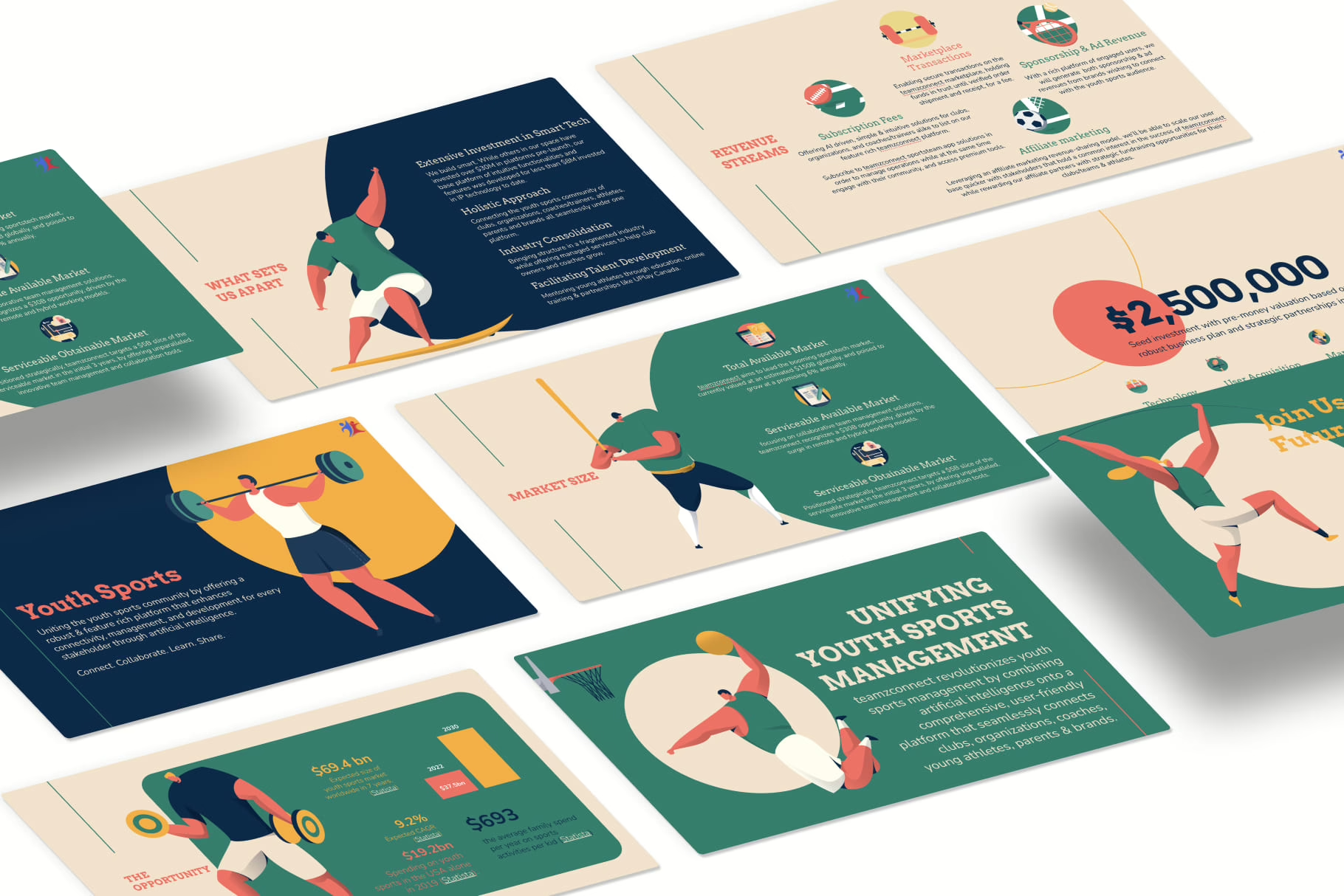
3 Sports Pitch Deck Examples
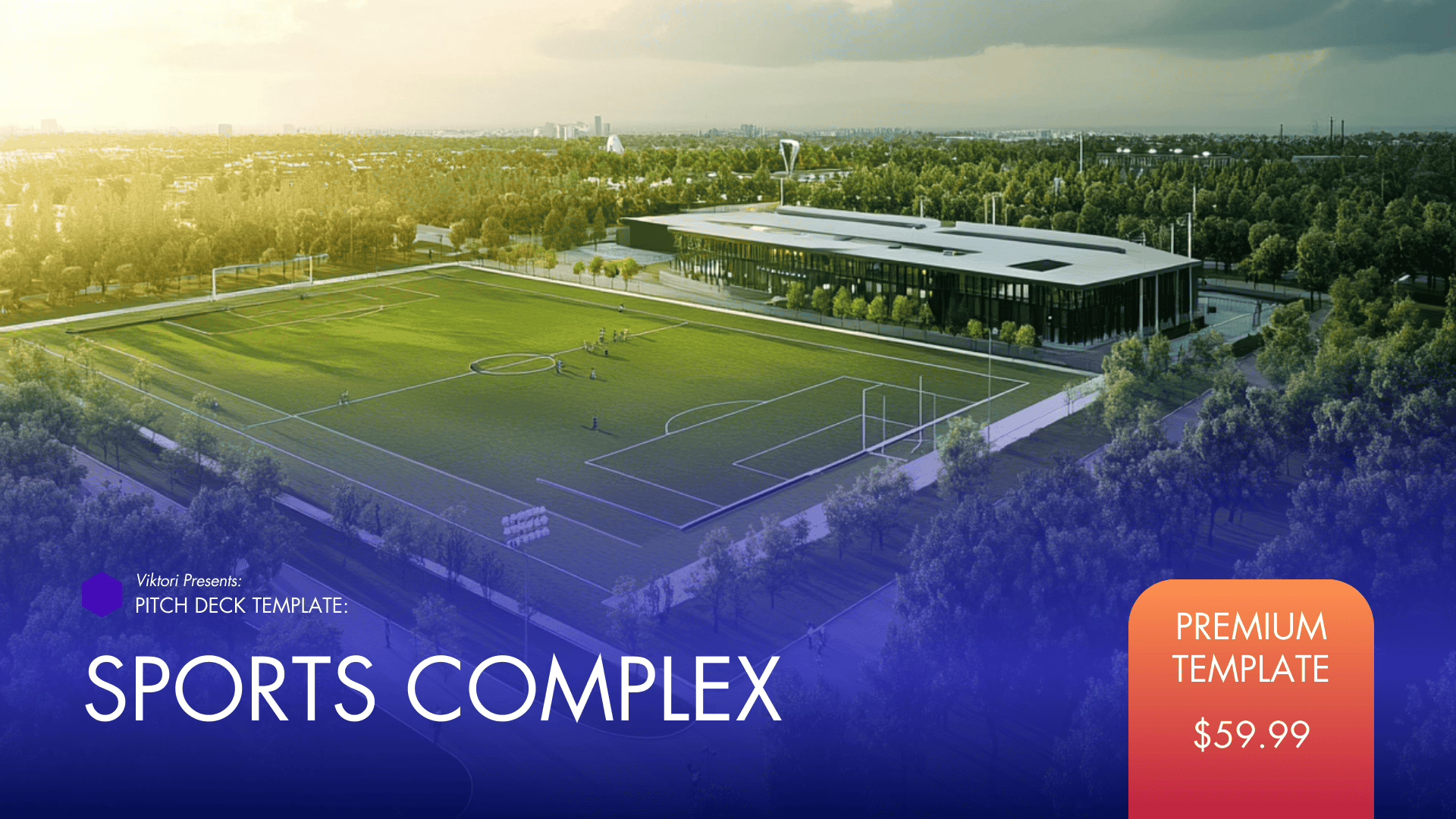
Overview: This 15-slide template is designed for entrepreneurs seeking to develop a sports complex. It provides a comprehensive framework to present the project’s vision, market analysis, financial projections, and strategic plans.
Key Components:
Cover Slide: Features the project name, logo, and a compelling tagline to capture attention.
Problem Statement: Identifies the gap in the market for quality sports facilities.
Solution: Details how the proposed sports complex addresses the identified problem.
Market Analysis: Presents data on target demographics and market demand.
Revenue Model: Outlines various income streams, such as memberships, events, and sponsorships.
Marketing Strategy: Describes plans for attracting and retaining customers.
Financial Projections: Provides forecasts for revenue, expenses, and profitability.
Team Introduction: Highlights the experience and expertise of the management team.
Effectiveness: This template is effective because it offers a structured approach to presenting a complex project. The inclusion of detailed market analysis and financial projections demonstrates thorough planning, while the emphasis on the team’s qualifications builds credibility with potential investors.
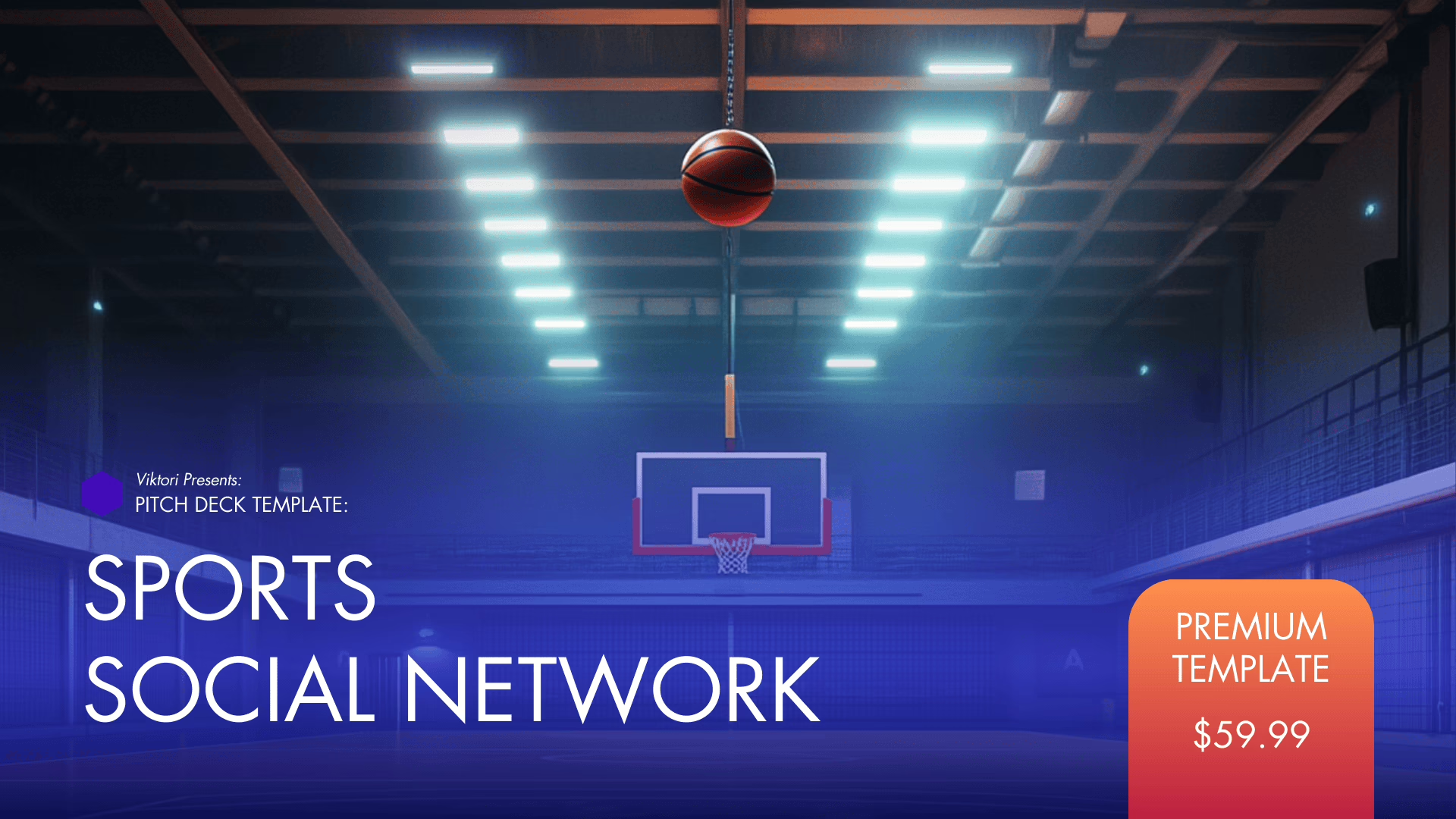
Overview: A 10-slide template tailored for startups aiming to launch a sports-focused social networking platform. It emphasizes user engagement, market potential, and monetization strategies.
Key Components:
Introduction: Introduces the platform and its unique value proposition.
Market Opportunity: Highlights the demand for niche social networks within the sports community.
Product Features: Showcases key functionalities that differentiate the platform.
User Acquisition Strategy: Details plans for attracting and growing the user base.
Monetization Model: Explains revenue streams, such as advertising, premium subscriptions, and partnerships.
Competitive Analysis: Compares the platform to existing competitors, highlighting advantages.
Traction: Provides evidence of user interest or early adoption metrics.
Financial Overview: Summarizes financial needs and projected returns.
Effectiveness: This pitch deck is effective due to its focus on user engagement and clear monetization strategies. By addressing both market demand and competitive differentiation, it presents a compelling case for investment in the sports social networking space.

Overview: A 16-slide template designed for ventures in the virtual reality (VR) sports sector. It aims to showcase innovative technology solutions that enhance sports experiences through VR.
Key Components:
Vision Statement: Articulates the mission to revolutionize sports experiences with VR technology.
Problem Identification: Discusses limitations in current sports viewing or training experiences.
Innovative Solution: Details how VR technology addresses these limitations.
Market Potential: Presents data on the growing VR market and its applications in sports.
Product Demonstration: Provides visuals or descriptions of the VR experience.
Business Model: Outlines revenue generation plans, including sales, subscriptions, or licensing.
Go-to-Market Strategy: Describes plans for product launch and market penetration.
Financial Projections: Offers detailed forecasts of financial performance.
Effectiveness: This pitch deck stands out by combining cutting-edge technology with practical applications in sports. The clear articulation of market potential and innovative solutions makes it appealing to investors interested in the intersection of sports and technology.
FAQ
What is the primary goal of a sports pitch deck?
A sports pitch deck is designed to secure funding, attract sponsorships, build partnerships, or drive sales by clearly presenting your business vision, value proposition, and growth potential in the sports industry.What are the essential components of a sports pitch deck?
Key components include a compelling problem statement, innovative solution, market analysis, business model, financial projections, team introductions, traction metrics, and a clear call to action.How long should a sports pitch deck be?
A pitch deck should typically be 10–15 slides long. It should be concise enough to maintain investor interest while covering all essential information.What makes a sports pitch deck different from other industries?
Sports pitch decks often emphasize unique aspects like fan engagement, athlete endorsements, sponsorship opportunities, or the integration of emerging technologies like AR/VR or AI.How do I tailor a sports pitch deck for different audiences?
Research your audience and address their specific priorities. For example, focus on ROI and scalability for investors, fan demographics for sponsors, or community impact for local stakeholders.What metrics are important to include in a sports pitch deck?
Include metrics like market size, user acquisition rates, sponsorship revenue potential, fan engagement statistics, and projected financial growth. These demonstrate the viability and scalability of your business.How can storytelling improve my sports pitch deck?
Storytelling creates an emotional connection with your audience. By narrating the problem, your innovative solution, and its impact, you make your pitch more engaging and memorable.Should I include visuals in my sports pitch deck?
Yes, strong visuals like infographics, product mockups, user testimonials, and videos can enhance understanding and capture the excitement of your sports concept.How do I address competition in a sports pitch deck?
Include a competitive analysis slide that highlights your differentiators, such as unique features, pricing advantages, or exclusive partnerships, and explain how you stand out in the market.What common mistakes should I avoid in a sports pitch deck?
Avoid overloading slides with text, omitting key data like financials, failing to tailor the pitch to your audience, or not having a clear and compelling call to action. A professional, well-organized deck makes all the difference.
Related sports pitch deck resources
Urkey Pitch Deck Case Study – Decentralized Identity With Swagger
November 7, 2025 No Comments
Read More »