


Real estate investor materials often fall into one of two traps: they are either visually attractive but financially vague, or financially dense but impossible to read. This project required something more precise — a one-page investor memo capable of communicating a mixed-use retail development clearly enough for capital partners, while remaining concise enough to be used in early conversations.
The development itself was a phased retail project positioned within a growing suburban corridor in Texas. The core challenge wasn’t the quality of the project — it was how to present it without overwhelming potential partners with raw architectural drawings and spreadsheet logic.
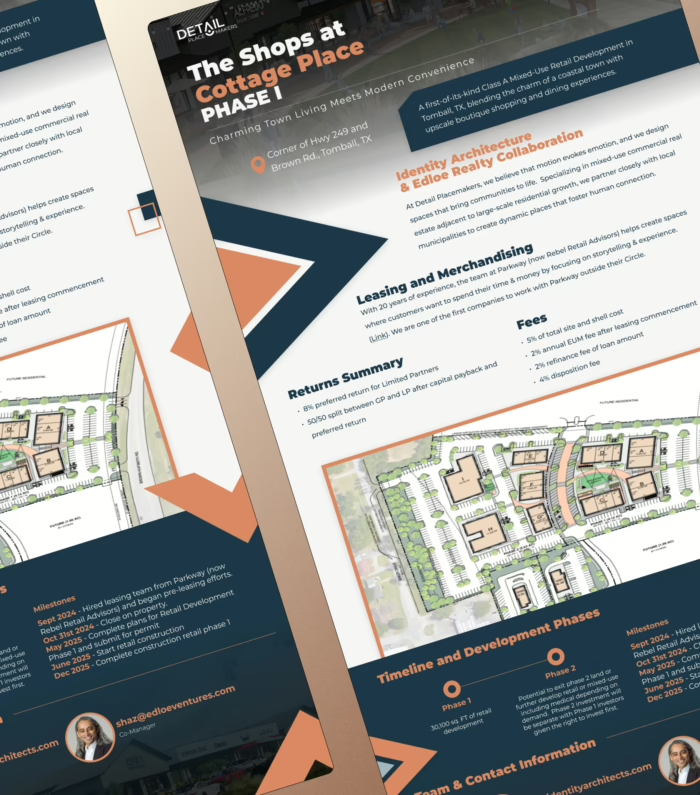
Structuring the narrative around investor logic
Instead of starting with design, the work began with structure. The memo needed to answer, in order:
- What is being built
- Why this location and asset type
- How leasing and tenant strategy drives value
- How returns are generated
- When capital is deployed and returned
Most real estate materials mix these elements together. Here they were separated and sequenced deliberately, mirroring how an investor evaluates risk.
The “Returns Summary” and fee structure were placed in immediate context with development phases and leasing milestones. This avoided the common mistake of presenting projected returns without operational grounding.
Translating plans into clarity
Architectural site plans are informative but not inherently persuasive. They were reframed visually to show:
- Phase breakdowns
- Tenant mix potential
- Parking and access logic
- Development sequencing
Rather than overwhelming the page, these visuals supported the investment narrative.
Outcome
The final memo functions less as a brochure and more as a decision document.
It can be used in early investor outreach, partner discussions, or lender conversations without requiring a full pitch deck.
In capital-intensive sectors like real estate, clarity is often the differentiator. This memo was designed to deliver exactly that.
