


Flood mitigation is emotionally easy to sell (“floods are bad”). But institutional adoption requires a different standard: feasibility, deployment, and budget logic.
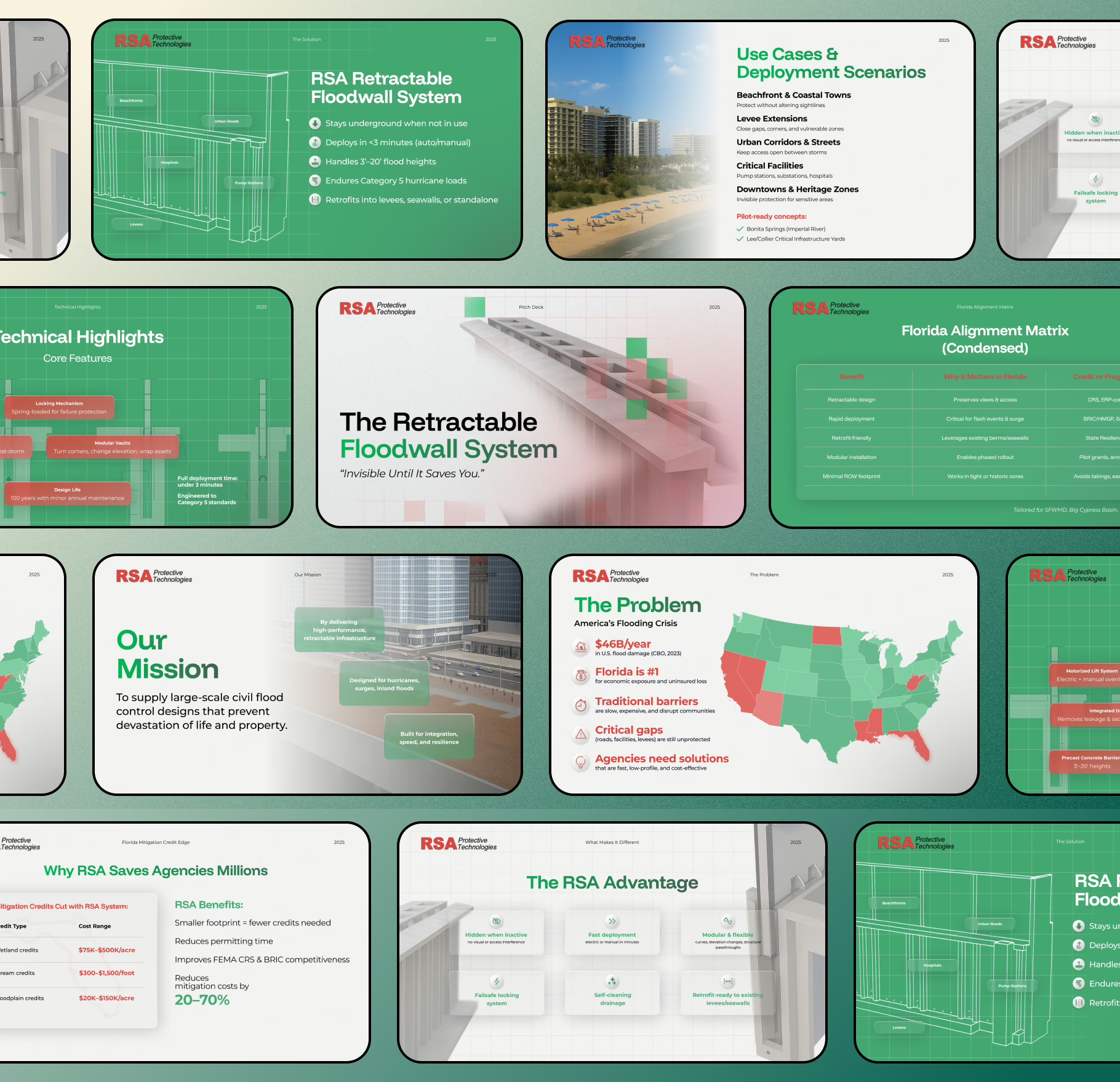
This deck’s visuals show a clean green/white system: a retractable floodwall concept, deployment scenarios, alignment matrix (Florida), benefits, cost ranges, a national map, and “why it saves agencies millions.”
The challenge: two audiences, two languages
Infrastructure solutions live between:
- public sector: procurement, resilience, compliance, risk reduction
- private capital: ROI, deployment pipeline, scalability, unit economics
A deck that only speaks one language fails.
So the presentation needed to carry both:
- “Here’s how it works and how you deploy it.”
- “Here’s why it’s economically rational.”
Structure: cost of inaction → solution → deployment → funding logic
The story was built in a practical cadence:
- The problem: flooding costs and increasing risk (anchored by numbers).
- Traditional barriers: slow, expensive, disruptive infrastructure.
- The solution: retractable floodwall system with clear features.
- Where it fits: use cases (beachfront, levees, streets, critical facilities).
- How it deploys: time-to-deploy, retrofit logic, footprint.
- Why it’s financially attractive: savings, credits, reduced mitigation cost.
- Why now: alignment with climate resilience programs and agency needs.
The “alignment matrix” slide is particularly institutional: it shows you understand how agencies justify decisions (benefits tied to local relevance and credit/program alignment).
Design choices: engineering clarity over “climate marketing”
The deck avoids doom aesthetics and goes for:
- grid-based layouts
- simple feature blocks
- diagrams and modular callouts
- muted photography used as context, not as persuasion
The result feels like something a city, agency, or engineering partner could circulate internally without embarrassment.
The “saves agencies millions” slide is the closer
Public buyers often need a sentence they can repeat. That slide gives it to them, with cost ranges and the savings mechanism. It’s not hype—it’s procurement language:
- smaller footprint
- fewer credits needed
- reduced permitting time
- reduced mitigation costs
That’s how these systems get adopted: not because they’re innovative, but because they’re easier and cheaper to implement.
What the deck enables
This type of deck becomes a multi-channel tool:
- municipal pitch
- grant applications and resilience funding
- partner outreach (engineering, construction, integrators)
- investor conversations (if there’s a scalable rollout model)
In infrastructure, the deck is often the first filter. If it looks unserious, the project never makes it to technical review.
