


Let’s face it: mental‑health care is long overdue for transformation—overload, long waits, high costs, and fragmented access. And adding AI to the mix feels both promising and complex. How do you show investors that your AI isn’t just technology, but real help?
This template isn’t just theory. It’s built on pitch decks that already helped raise funding. Slide by slide, you’ll learn how to map: the problem, your AI‑powered solution, the market scope, regulatory pathways, team strength, and — crucially — how your business model converts help into dollars. It gives you a narrative structure that investors recognize—and respond to.
I’m Viktor, a pitch deck designer and a creative business strategist. Over the past 13 years, I’ve helped businesses secure millions of $ in funding thanks to my approach and I’m sharing it here in this pitch deck guide.
If you’re building a mental‑health platform enhanced by AI and aiming to raise serious capital—this gives you the blueprint to pitch with clarity, credibility and momentum.
Get My 12 Slide Framework That Got $500mil in Funding For Clients.
What do you think of having 12 dead simple formulas, that will help you craft 12 slides, in about 1 hour? That’s what you’ll get, when you download my 12 slide framework. Save hours crafting your pitch deck copy with my tested approach that includes:
- Elevator pitch one sentence formula
- Problem/ solution slide one sentence formula
- Competitor slide one sentence formula
- 9 other formulas, tips, tricks and advice
The formulas worked for 40+ industries and 500+ companies. Including the one you’re looking at now.
Clicking the link won’t charge you anything.
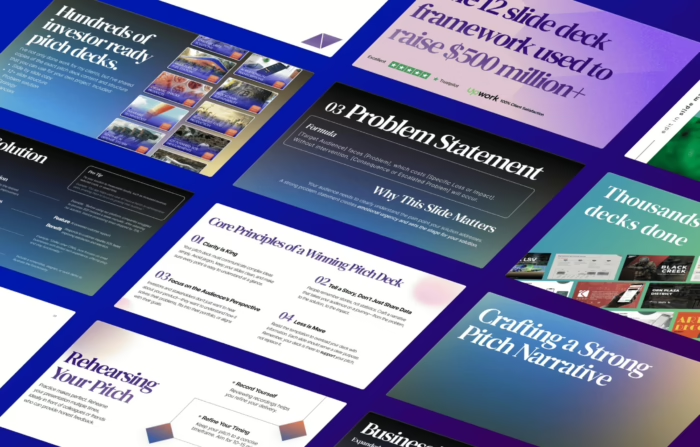
13 Slide AI Mental Health Pitch Deck Template
The above is is just a simplified template.
Founders that are serious about getting the funding they need, opt in for a deck has industry specific content, superb narrative and award winning design like these ones below:


I can help you build that deck with my hands-off process in 7 days or less.
Book a free 30 minute call below if you’re serious about getting an investor ready deck, and we’ll discuss your needs in detail. I’ll help you design the deck, write the content, develop the narrative and flesh out the strategy with financials.


Follow us on social for the newest templates:
1. Elevator Pitch Slide
- Headline: “Revolutionizing Mental Health: Personalized AI Support for a World in Need.”
- Content:
- Name the Enemy: “Traditional mental health services are overstretched, inaccessible, and expensive.”
- Create Urgency: “1 in 4 people globally suffer from mental health issues, with a growing demand for immediate and scalable solutions.”
- Agitate the Problem: “The average wait time to see a therapist is 21 days, and 56% of people needing help don’t receive it due to cost and access barriers.”
- Offer the Missing Piece: “MindMend AI offers instant, personalized mental health support 24/7, bridging the gap between need and access.”
- Spark Intrigue: “Introducing MindMend AI, your virtual mental health companion that never sleeps, always listens, and helps when you need it most.”
2. Investor Memo Slide
- Problem Statement:
- “Over 450 million people worldwide suffer from mental health conditions. Of these, 60% go untreated due to stigma, cost, and lack of access, causing a $1 trillion productivity loss globally every year.”
- Solution Overview:
- “MindMend AI is an AI-powered platform that provides real-time mental health support, personalized interventions, and seamless integration with traditional care systems. Available anytime, anywhere, for anyone.”
- Market Opportunity:
- “The global mental health market is projected to reach $240 billion by 2026, with digital mental health solutions growing at a CAGR of 27%.”
3. Problem Slide
- Content:
- Unmet Need:
- “56% of people with mental health conditions go untreated due to stigma, cost, and lack of access.”
- “In the U.S. alone, 19% of adults experience a mental illness, and 60% do not receive adequate care.”
- Impact:
- “Mental health issues lead to over $1 trillion in lost productivity globally each year.”
- “Anxiety disorders, the most common mental illness in the U.S., affect 40 million adults but only 36.9% receive treatment.”
- Pain Points:
- “Traditional therapy is costly (average of $100-$200 per session), inaccessible (average wait time of 21 days), and not scalable (limited to therapist availability).”
- Unmet Need:
- Visuals:
- Infographics showing untreated cases, economic losses, barriers to access, and the high costs of traditional mental health care.
4. Solution Slide
- Content:
- What is MindMend AI?
- “MindMend AI is an AI-driven platform that offers 24/7 mental health support through chat, voice, and video.”
- Key Features:
- Instant Access: “Available on-demand with no wait times.”
- Personalized Care: “Uses advanced machine learning to tailor interventions based on user behavior, mood, and history.”
- Affordable and Scalable: “Reduces costs by up to 70% compared to traditional therapy.”
- Seamless Integration: “Works alongside existing care systems and can connect users to human therapists if needed.”
- How It Works:
- “Users access the platform via a mobile app or website, engage with AI-driven support, and receive personalized mental health insights, exercises, and referrals.”
- What is MindMend AI?
- Visuals:
- Product mockups, app screenshots showing user interface, a diagram of user journey from initial contact to ongoing support.
Hold on. You might want to check my list on the best presentation and communication books...
These are crucial books that will help you improve the design and structure of your decks and presentations, besides improving your delivery and skyrocketing your confidence when facing investors. Check them out below.

5. Market Opportunity Slide
- Content:
- Total Addressable Market (TAM): “$240 billion globally by 2026 in the mental health sector.”
- Serviceable Available Market (SAM): “$60 billion in digital mental health solutions.”
- Serviceable Obtainable Market (SOM): “$10 billion initially, focusing on North America and Europe.”
- Growth Drivers:
- “Increasing awareness and destigmatization of mental health issues.”
- “Growing demand for remote and accessible care solutions.”
- “Adoption of digital health technologies accelerated by the COVID-19 pandemic.”
- Visuals:
- Graphs showing market growth projections, TAM/SAM/SOM pyramid, and a map highlighting target regions.
6. Business Model Slide
- Content:
- Revenue Streams:
- Subscription Plans: “Monthly ($29.99) and yearly plans ($299/year).”
- Enterprise Solutions: “Custom packages for healthcare providers, insurance companies, and corporations.”
- In-App Purchases: “Additional services such as mindfulness programs, advanced data analytics, and customized self-care plans.”
- Unit Economics:
- Customer Acquisition Cost (CAC): “$15 per user through digital marketing and partnerships.”
- Customer Lifetime Value (LTV): “$300, based on a 10-month average customer retention.”
- Gross Margin: “60% per subscription after operational costs.”
- Revenue Streams:
- Visuals:
- Business model canvas or flowchart demonstrating how revenue streams interact and contribute to growth.
7. Go-To-Market Strategy Slide
- Content:
- Phase 1 – Initial Launch:
- “Soft launch in major U.S. cities with targeted digital marketing and influencer partnerships.”
- Phase 2 – Expansion:
- “Expand to Europe and Asia, leveraging telehealth partnerships, collaborations with insurers, and strategic healthcare alliances.”
- Marketing Channels:
- “Social media advertising, SEO, content marketing, influencer partnerships, and affiliate programs.”
- Sales Strategy:
- “Direct-to-consumer (DTC) marketing for individual users and B2B sales for corporate wellness programs and healthcare providers.”
- Phase 1 – Initial Launch:
- Visuals:
- Roadmap timeline showing different phases, icons representing marketing channels, and growth strategies.
8. Traction Slide
- Content:
- Milestones Achieved:
- “200,000 users within the first six months.”
- “Partnerships with three major healthcare providers and two leading insurance companies.”
- “95% user satisfaction rate based on feedback from initial users.”
- Key Metrics:
- “Monthly recurring revenue (MRR) growth of 35%.”
- “User retention rate of 80% over six months.”
- “20% conversion rate from free trial to paid subscription.”
- Milestones Achieved:
- Visuals:
- Metrics dashboard, growth graphs, and logos of key partners.
9. Competitive Analysis Slide
- Content:
- Direct Competitors: “Woebot, Wysa, BetterHelp.”
- Competitive Advantages:
- “MindMend AI offers advanced personalization algorithms, a broader platform integration, and a lower cost per session.”
- Positioning Matrix:
- “MindMend AI is positioned as more accessible, personalized, and cost-effective compared to current competitors.”
- Visuals:
- Competitive matrix or positioning map highlighting your unique selling points against competitors.
10. Team Slide
- Content:
- Core Team:
- Jane Doe, CEO: “15 years in digital health, ex-Head of Product at a leading telehealth startup.”
- John Smith, CTO: “10 years in AI and ML development, former CTO of an AI-driven analytics company.”
- Sarah Lee, Head of Clinical Innovation: “PhD in Clinical Psychology, formerly Director at a major mental health institute.”
- Advisors:
- “Dr. Mark Thompson, AI ethics expert, and Dr. Anna Garcia, digital health innovation leader.”
- Core Team:
- Visuals:
- Professional headshots, brief bios, and logos of notable previous affiliations.
11. Financial Projections Slide
- Content:
- Year 1 Projections:
- Revenue: “$2 million.”
- Expenses: “$1.5 million (including marketing, R&D, operations).”
- Net Loss: “$500,000 (due to initial investment in product development and marketing).”
- Year 2 Projections:
- Revenue: “$10 million.”
- Expenses: “$6 million.”
- Net Profit: “$4 million.”
- Year 3 Projections:
- Revenue: “$25 million.”
- Expenses: “$15 million.”
- Net Profit: “$10 million.”
- Year 1 Projections:
- Key Metrics:
- “Breakeven Point: Mid-Year 2.”
- “Gross Margin: 60%.”
- “Customer Base: Expected to grow to 1 million users by Year 3.”
- Visuals:
- Line graph of financial growth over three years, table detailing revenues, expenses, and net profits.
12. Ask Slide
- Content:
- Funding Amount: “$3 million in Series A funding.”
- Use of Funds:
- “50% for product development and AI enhancements.”
- “30% for marketing and user acquisition.”
- “20% for expanding strategic partnerships and international growth.”
- Milestones:
- “Achieve 500,000 users within the next 18 months.”
- “Expand to two new international markets within 12 months.”
- Visuals:
- Pie chart showing fund allocation, timeline with key milestones and expected growth.
13. Closing Slide
- Content:
- Compelling Closing Statement: “Join us in revolutionizing mental health care for millions around the world.”
- Contact Information:
- “Email: [email protected]“
- “LinkedIn: linkedin.com/company/mindmendai”
- “Twitter: @MindMendAI”
- Visuals:
- Company logo, contact details, and social media icons.
Pick a specific pitch deck design from the award winning Envato.
1000’s of ready made Powerpoint, Google Slides, and Keynote presentations that are easy to edit, format and tailor to your idea.
Conclusion:
You now hold a 13‑slide framework based on decks that delivered real capital in the intersection of AI and mental health.
If this structure matches what you’re building, use it, adapt it and pitch with confidence. And if your model has unique features—different tech, regulatory path, or market segment—reach out. I’ll help tailor the deck so it fits your vision, strengthens your narrative, and maximizes your chances of funding
Get an investor ready pitch deck that gets you funded and saves over 30 hours of your time.
Join 100s of successful entrepreneurs who’ve transformed their pitch decks by using my hands-off approach, which includes: market research, copy, design, financials, narrative and strategy.
1 week turnaround time and less. Special pricing for early stage companies.
The least you will get on this call is 10 actionable tips & strategies to own that next pitch, worth $599, for free.
If you want to really dive into the world of pitch decks, check out our complete collection of pitch deck templates.
Related Ai Pitch Deck Resources
Check out our massive directory of pitch deck templates, or the following related templates:

Valerie Health Raises $30M to Automate Healthcare’s Front Office — Here’s the Pitch That Closed It
Azoma Raises $4M to Help Brands Win the AI Search Game

Suno Raises $250M to Build AI That Generates a Spotify-Sized Catalog Every Two Weeks

18-Year-Old Dropout Raises $6.2M from Y Combinator to Build Smarter AI Coders
Venn Raises $52M to Turn Apartment Buildings Into Consumer Brands

Theo AI Raises $3M to Predict When Lawsuits Will Settle — and for How Much
Feroot Raises $14M to Make the Internet’s Privacy Nightmares Disappear

AdsGency Raises $12M to Build the World’s First Agentic Ad Agency

Heidi Health Raises $65M to Rewire AI in Medicine — and Tell Doctors, “We Work for You, Not the EHR”

Sensi.AI Raises $45M to Bring Empathetic AI Into Home Health
Requesty Raises $3M to Become the “Cloudflare for AI”
Scorecard Raises $3.75M to Stress-Test AI Agents Until They Break (and Get Better)
Hiverge Raises $5M to Build the World’s First Algorithm Factory
Altan Raises $2.5M to Let AI Dev Teams Code While You Chill

Leo AI Raises $9.7 million — What’s Working (and the Pitch Pattern Behind It)
Bluefish Raises $20M to Redefine AI Search Marketing: Why This Deck Worked
What Made This $15M Translation Tech Pitch Deck So Convincing?

13 Slide AI-Powered Travel Deck Template | Google Slides
You’ve planned the ultimate vacation in your mind—beaches, mountain views, perfect sunsets. But planning the…

12 Slide AI Manufacturing Solutions Pitch Deck Template | Google Slides
Let’s be real: factories aren’t exactly the settings of futuristic sci-fi novels—yet. Machines break down,…

11 Slide AI Vision in Manufacturing Pitch Deck | Google Slides
Picture this: You’re running a manufacturing plant that could give Tony Stark’s lab a run…
Check out some of the essential 101 guides:

Burn Rate and Runway in a Pitch Deck: How to Show Investors Survival Math
Burn rate is where a pitch deck stops being brave and starts being accountable. Up…
Financial Projection Slide: How to Show Investors the Numbers Behind the Story
A financial projection slide shows investors how your business could grow over time. It usually…
Revenue Model Slide: How to Show Investors How You Make Money
A revenue model slide explains how your business makes money. That sounds simple, but this…
Use of Funds Slide: How to Show Investors Where the Money Goes
Use Of Funds Slide Quick Summary A use of funds slide explains how the capital…

Top Pitch Deck Design Agencies for Investor-Ready Presentations
Quick Summary A pitch deck design agency helps startups turn complex business ideas into clear,…

How to Create a High-Impact Investment Highlights Slide For Your Pitch Deck
An investment highlights slide is often the moment in a pitch deck when investors decide…
