


In a pitch deck, color psychology isn’t decoration — it’s one of the earliest signals the viewer’s brain uses to sort meaning under time pressure. Before anyone evaluates your traction, market size, or financials, your color scheme has already shaped a first read: stable or risky, calm or urgent, premium or improvised.
That’s partly because evaluation environments reward fast pattern recognition. Investors scan before they analyze, and your palette becomes a shortcut for how “together” the whole story feels — which is why color choices belong in the same conversation as the fundamentals of what an investor pitch deck actually is, not as a design layer you slap on at the end.
Why Color Psychology Matters in Pitch Decks
Color psychology matters in pitch decks because it consistently shows up as interpretation patterns during review, not because it “convinces” anyone. Under time pressure, people use visual cues to reduce uncertainty. Color is one of the fastest of those cues.
In practice, this usually expresses itself as:
- Perceived trust calibration – cooler hues (blue, green) are commonly read as controlled, stable, and considered.
- Attention direction – warm accents are typically interpreted as “this matters” or “this is urgent.”
- Perceived coherence of brand identity – tight palettes read as intentional; scattered color choices read as improvised.
- Cognitive load management – high contrast reduces friction; low contrast increases effort.
This is also why color decisions shouldn’t be treated as “styling.” They need to be decided alongside narrative flow and slide hierarchy, the same way you’d approach how to create a pitch deck that reads cleanly under real investor conditions.
The Psychology of Colors in Your Pitch Deck
Different colors are consistently interpreted in specific ways when people are skimming, comparing, and deciding what deserves attention. These are not universal truths — they’re common patterns that show up under uncertainty and speed.
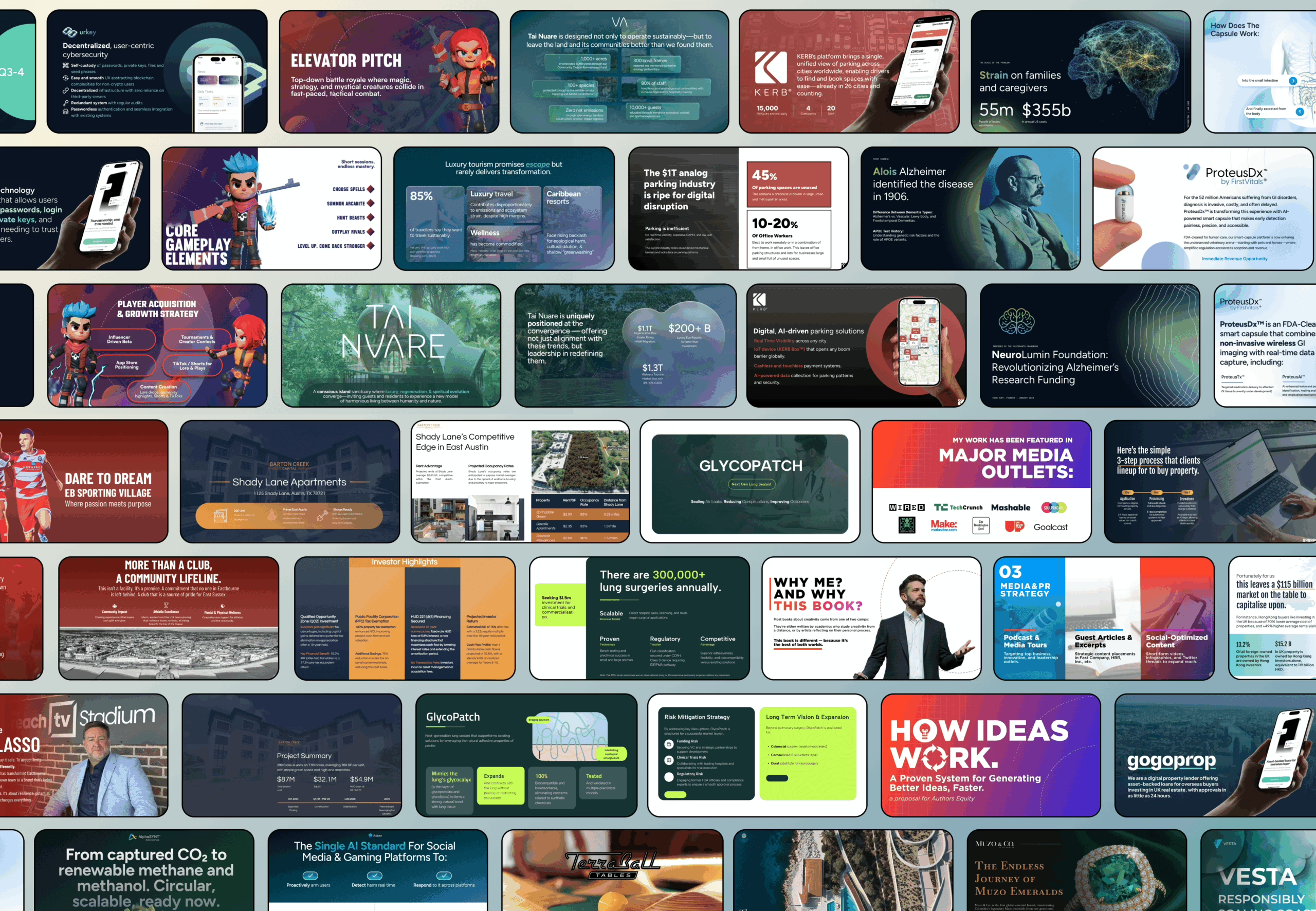
Before breaking down warm, cool, and neutral colors, one important thing: color never acts alone. It’s read in context with layout, hierarchy, spacing, and pacing — which is why it connects directly to pitch deck structure more than most founders want to admit.
Warm Colors: Energy, Urgency, Momentum
Warm colors (red, orange, yellow) are commonly interpreted as movement and immediacy. In review environments, they tend to compress “time” in the viewer’s mind — things feel active, pressing, or in motion.
- Red is often read as power, intensity, and action. Under evaluation, it typically signals “pay attention here.”
- Orange is commonly interpreted as approachability and creative energy.
- Yellow is usually read as optimism and visibility, but can drift into noise if overused.
Cool Colors: Trust, Stability, Professionalism
Cool colors (blue, green, purple) are typically interpreted as control, reliability, and composure.
- Blue is commonly read as structured, credible, and safe.
- Green tends to signal balance, growth, and financial health.
- Purple is often interpreted as ambition, creativity, and premium intent.
Neutral Colors: Control, Clarity, Authority
Neutral colors (black, white, grey) usually form the interpretation frame rather than the signal.
- Black is commonly read as authority and seriousness.
- White is interpreted as clarity and openness.
- Grey often signals neutrality and restraint.
In practice, neutrals decide whether your accent colors read as intentional or chaotic.
Common Color Mistakes That Instantly Weaken a Pitch Deck
When people talk about “color mistakes” in pitch decks, they usually imagine something dramatic—like someone choosing an ugly palette—when the real damage tends to be quieter and more practical: color choices can add subtle friction to the way a reviewer interprets the deck, especially when they’re skimming fast and deciding, in seconds, whether this looks like a serious, coherent business story or a loosely assembled slide pack.
That’s why these issues show up so early in the reading experience, and why they often influence how the entire investor pitch deck is perceived long before anyone reaches your market slide or financials.
Too many colors often creates the impression of too many directions. If a deck relies on five, six, or seven unrelated colors, the result rarely reads as “creative” in a high-stakes review context; it more commonly reads as visually undecided, as if the presentation is switching personalities from slide to slide, which can spill into a subconscious read that the strategy itself is also switching.
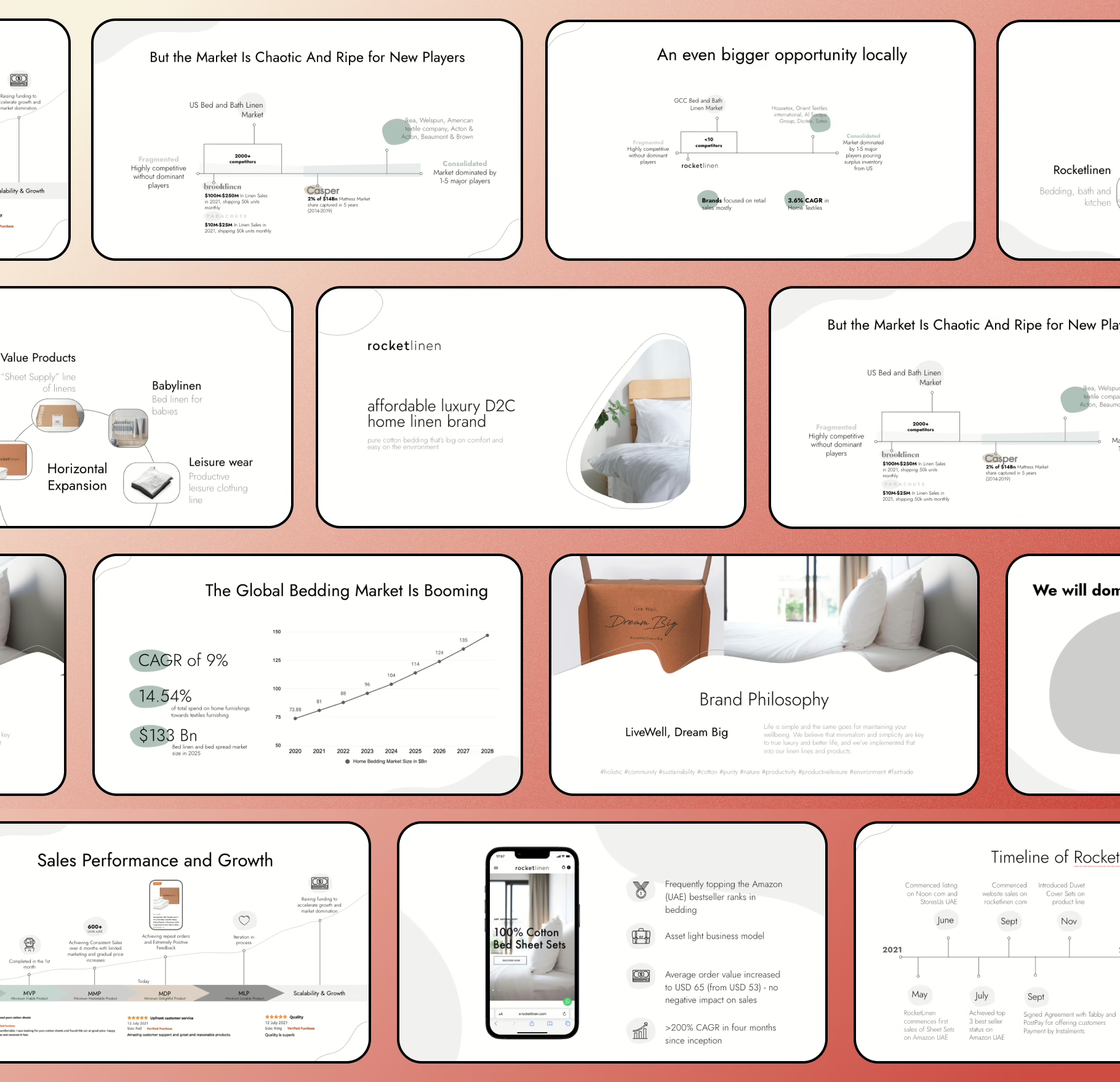
Even when the content is solid, that kind of inconsistency can make the story feel less unified than it actually is.
Low contrast can make even a good deck feel like work. When text is placed on backgrounds with weak separation—light text on light surfaces, muted tones stacked on muted tones, or busy color fields behind important numbers—reviewers don’t always consciously notice the design issue, but they do notice the effort required to process it, and effort is exactly what you want to remove when you’re thinking about how to create a pitch deck that reads cleanly under real investor conditions. In practice, poor contrast tends to create the impression of density, even if the slide contains very little information.
Overly saturated or neon colors tend to create an “immaturity” signal in serious settings. Extremely bright tones can be appropriate for certain consumer brands or playful products, but in investor review environments they are often interpreted as a stylistic cover for weak structure, or as “template energy,” which quietly erodes the sense of credibility that founders are usually trying to build with their narrative and numbers.
Inconsistent chart coloring often reads like lack of coordination rather than a design preference. If the same metric is blue on one slide and green on another, the viewer’s brain has to re-learn the visual language every time, and that interruption creates noise; importantly, that noise is frequently attributed not to “design,” but to operational sloppiness, which is exactly the kind of avoidable perception problem you don’t want showing up during evaluation.
Excessive decorative gradients can make the deck feel like it’s compensating. Gradients can look premium when used sparingly and intentionally, but when they become a constant background feature they often pull attention away from hierarchy, spacing, and emphasis, and the overall read becomes “visual dressing” instead of clarity; this is why the discipline of pitch deck structure matters, because it determines whether style supports meaning or competes with it.
Color, Contrast, and Readability as a Credibility Signal
Readability in a pitch deck is rarely framed as a credibility issue, but in practice it behaves exactly like one, because the ease with which a person can process your slides becomes part of how they judge the underlying business: when slides are effortless to scan, the company tends to feel clearer and more organized, and when slides require squinting, zooming, or re-reading, the company tends to feel more complex and harder to trust, even when the logic is sound. This is why contrast decisions belong near the beginning of the process, alongside understanding what an investor pitch deck is meant to do, rather than being treated as a final “polish” pass once the story is already locked.
Strong contrast reduces cognitive load, and cognitive load is one of the biggest invisible deal-killers in pitch materials, because it turns the reading experience into work; once the deck feels like work, the reviewer starts looking for reasons to disengage, not reasons to understand.
The practical effect is that even good content can be perceived as “dense” or “unclear” when the real issue is simply that the visual system is forcing unnecessary effort.
Accessibility is also relevant here, not as a moral add-on, but as a realism check, because real audiences include people reading on laptops in bright rooms, on phones while traveling, and with different levels of visual acuity; when a deck remains legible under those conditions, it preserves momentum, and momentum is the thing that allows a narrative to carry the reader through to the end. If you want the deck to feel smooth rather than heavy, the choices you make around legibility should be aligned with the same thinking you apply when deciding how to create a pitch deck that performs under time pressure.
Color in Data Visualization and How Attention Gets Directed
The place where color psychology becomes most measurable is not the cover slide or the background theme, but the charts, because charts are where readers switch from “story mode” into “verification mode,” and that shift makes them unusually sensitive to signals of clarity, consistency, and discipline.
In other words, the way you use color in graphs and tables becomes part of the deck’s structural language, which is why it belongs in the same mental bucket as pitch deck structure rather than being treated as a purely aesthetic choice.
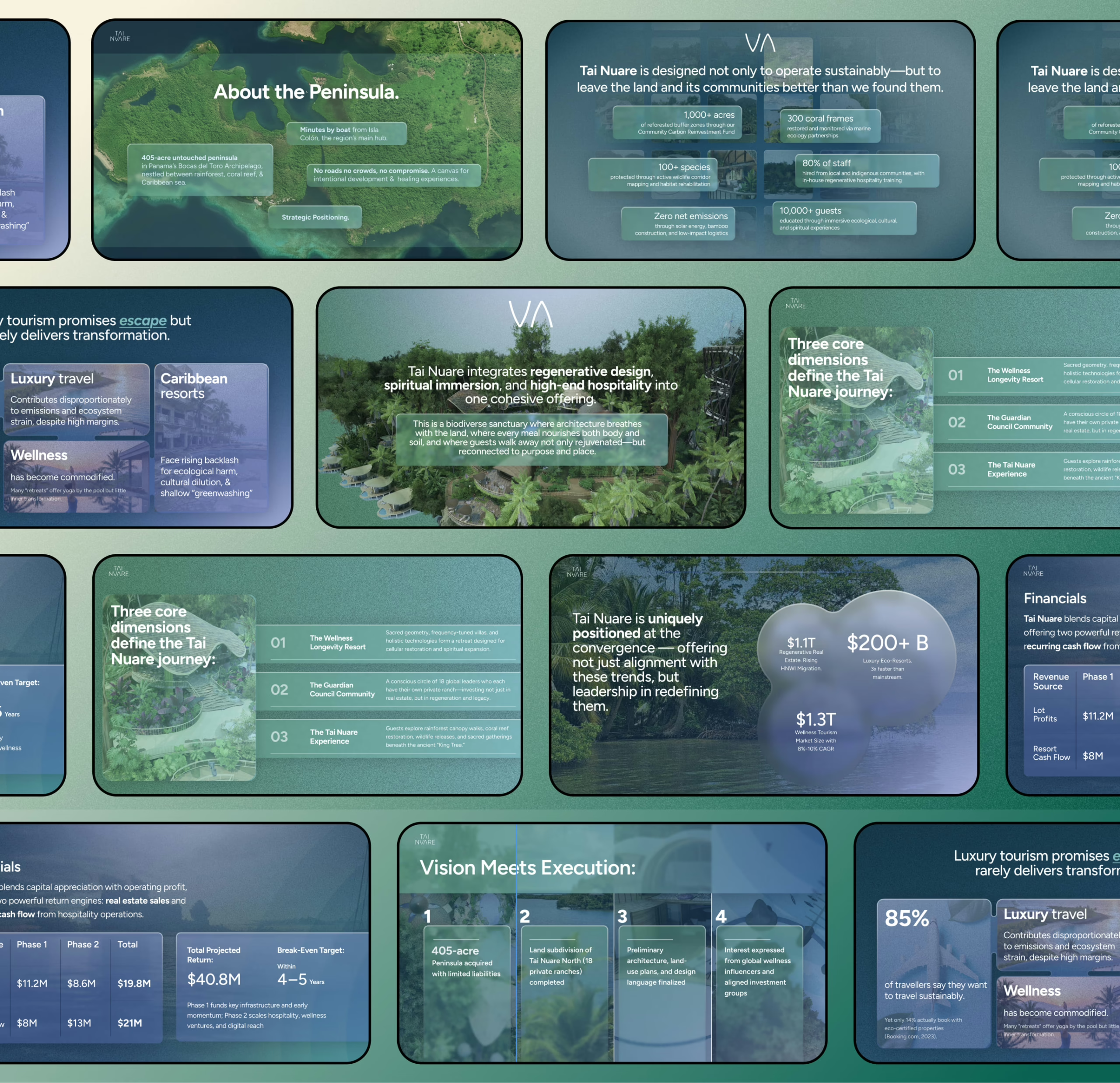
Most reviewers process charts by following the strongest visual cue first, and in practice that cue is usually the most saturated or most distinct color, which means color becomes a priority signal whether you intend it or not; when everything is equally bright, nothing reads as important, and when everything is muted, nothing reads as memorable.
The ideal is a visual hierarchy where one element clearly communicates “this is the takeaway,” while supporting series remain readable but secondary, because that arrangement mirrors how people naturally scan for meaning when they are comparing multiple decks and multiple opportunities.
Consistency across slides matters more than people expect, because if a series changes color from slide to slide, the chart stops feeling like a continuation of the same story and starts feeling like a new puzzle every time; that disruption creates friction, and friction in data is often interpreted as unreliability, not because the numbers are wrong, but because the visual logic is unstable. In investor review settings, unstable visual logic is a surprisingly fast way to reduce confidence, even if the business fundamentals are strong.
FAQ: Color Psychology in Pitch Decks
What are the best colors for an investor pitch deck?
There isn’t a universally “best” palette, but cool tones and neutrals are most commonly interpreted as stable, credible, and controlled in investor contexts, which is why they frequently appear in serious decks, especially when the goal aligns with what an investor pitch deck is designed to communicate.
How many colors should a pitch deck use?
Most strong decks tend to feel coherent when they rely on a primary color, a restrained accent, and a neutral base, because too many competing colors often reads as a lack of hierarchy and planning, which undermines the perceived discipline that good pitch deck structure is meant to create.
Is a dark background bad for pitch decks?
A dark theme isn’t inherently negative, and it can read as premium or modern, but it only works when contrast is strong and the layout is disciplined, because weak contrast on dark backgrounds quickly increases cognitive load and makes the deck feel heavier than it needs to.
What colors feel most trustworthy in a pitch deck?
Blue and green are frequently interpreted as trustworthy and stable, largely because they are strongly associated with security, reliability, and balance in modern business contexts, particularly in finance, software, and healthcare.
How do I choose colors if I don’t have a brand yet?
A useful starting point is to decide what you want the deck to be interpreted as—stable, premium, energetic, technical, approachable—and then choose a palette that supports that read, because color should express positioning rather than substitute for it, and that positioning still needs to be carried by the logic of how to create a pitch deck.
What colors should I avoid in charts?
Highly saturated neons, rainbow palettes, and inconsistent series colors across slides are commonly associated with clutter and instability, which is exactly the opposite of what you want when numbers are being evaluated.
Does color psychology actually work, or is it hype?
Color rarely “persuades” on its own, but it does shape interpretation by influencing attention, emotional tone, and perceived clarity, which is why it matters most in the first moments of evaluation when the reader is deciding how seriously to treat the deck.
Can bad color choices really hurt a pitch?
They usually don’t ruin a deck in a single obvious moment, but they can weaken the experience through accumulated friction, making the narrative feel less coherent, the data feel less trustworthy, and the overall presentation feel less disciplined than the business actually is, which is why tightening these signals supports the intent behind strong pitch deck structure.
