


Use Of Funds Slide Quick Summary
A use of funds slide explains how the capital you are raising will be used and what that capital is expected to unlock.
It should not be a random budget breakdown.
Investors are not only asking, “Where will the money go?”
They are asking:
- Can this team allocate capital intelligently?
- Will the funding extend runway?
- Will it unlock specific milestones?
- Does the plan match the company’s stage?
- Are the numbers connected to growth, hiring, product, sales, or operational progress?
A strong use of funds slide makes the raise feel intentional. It connects the amount of money being raised to the next stage of the business.
A weak use of funds slide makes the raise feel vague, inflated, or disconnected from the actual plan.
What Is a Use of Funds Slide?
A use of funds slide is the part of a pitch deck that shows how a company plans to allocate the capital it is raising.
It usually appears near the end of the deck, after the business model, traction, market opportunity, financials, and fundraising ask have already been explained.
The slide should answer three basic questions:
What are you raising?
Where will the money go?
What will that spending help you achieve?
For example, a startup raising $1.5M might allocate capital across product development, hiring, sales, marketing, operations, and runway. But the real value of the slide is not the categories themselves. The value is showing how those categories connect to business progress.
A use of funds slide should make the fundraising ask feel logical, not arbitrary.
If your raise amount appears out of nowhere, investors will question it. If your use of funds slide is too vague, investors will assume the plan is not fully thought through. If the slide is too detailed, it can feel like a spreadsheet pretending to be a pitch deck.
The best version sits in the middle: clear enough to show discipline, simple enough to be understood quickly, and specific enough to connect capital to milestones.
Why Investors Care About the Use of Funds Slide
Investors care about the use of funds slide because it shows how founders think about capital allocation.
A good slide suggests discipline. A bad slide suggests guesswork.
When investors review this slide, they are usually looking for signals like:
- whether the raise amount matches the company’s stage
- whether the spending plan supports specific milestones
- whether the team understands runway
- whether hiring plans are realistic
- whether the budget supports growth without pretending risk does not exist
- whether the capital plan connects to the next fundable moment
The use of funds slide is not just about spending. It is about proving that the next round of capital has a clear job.
For investors, this slide helps answer a deeper question:
“Will this money create enough progress to justify the next step?”
That next step might be another funding round, a product launch, regulatory clearance, first revenue, stronger unit economics, market expansion, enterprise sales traction, or operational de-risking.
A weak use of funds slide says:
“We need money to do more things.”
A strong use of funds slide says:
“We need this amount of capital to reach these specific milestones, and those milestones make the company more valuable, more fundable, or less risky.”
That difference matters.
What to Include in a Use of Funds Slide
A strong use of funds slide usually includes a few core elements. You do not need to overcomplicate it, but you do need to make the logic visible.
Raise Amount
Start with the total amount you are raising.
Example:
Raising $1.5M seed round
or:
Seeking $3M to reach commercial launch and 18 months of runway
The raise amount should feel connected to the rest of the deck. If your financial projections, hiring plan, and go-to-market strategy suggest one level of ambition, but the raise amount suggests something completely different, investors will notice.
Main Allocation Categories
Break the raise into a few simple categories.
Common categories include:
- product development
- engineering
- sales and marketing
- hiring
- operations
- regulatory or compliance work
- inventory or production
- customer acquisition
- runway
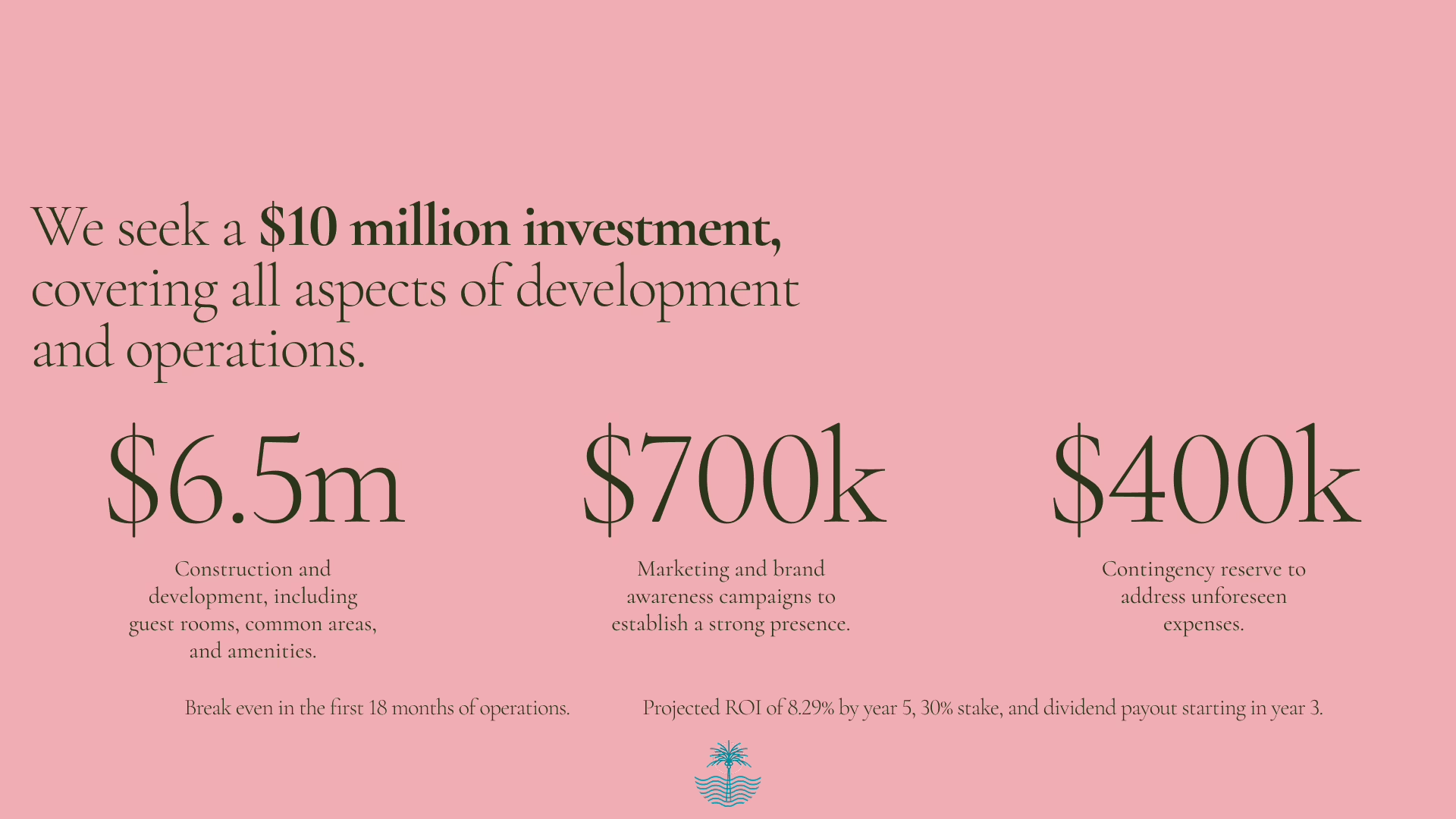
Keep the categories simple. Four to six categories are usually enough.
The use of funds slide should not become an accounting document. It should show the major allocation logic behind the raise.
Percentages or Dollar Amounts
You can show percentages, dollar amounts, or both.
For example:
- 40% Product and Engineering
- 25% Sales and Marketing
- 20% Key Hires
- 10% Operations
- 5% Legal and Compliance
Percentages are easier to scan. Dollar amounts feel more concrete. In many cases, using both can work well, but only if the slide remains readable.
The mistake is showing too many tiny categories. If you need twelve allocation lines, the slide probably belongs in a financial model or appendix, not in the main pitch deck.
Runway
Your use of funds slide should usually show how much runway the round provides.
For example:
This round funds 18 months of runway.
or:
This raise supports operations through product launch and first enterprise sales cycle.
Runway is important because investors want to understand how long the company can operate before needing more capital.
A use of funds slide without runway often feels incomplete. It shows where the money goes, but not how long the plan survives.
Milestones
This is the part most founders miss.
Do not only show where the money goes. Show what the money unlocks.
For example:
- launch v2 product
- hire two senior engineers
- reach 12 months of runway
- expand into two new markets
- complete regulatory approval
- reach $100K MRR
- sign first enterprise customers
- complete pilot program
- move from prototype to production
- validate repeatable acquisition channel
This makes the slide much more investor-friendly because it connects spending to progress.
The slide should not only say:
“40% product, 30% marketing, 20% hiring, 10% operations.”
It should say:
“This allocation helps us launch the product, hire the core team, reach 18 months of runway, and validate the next stage of growth.”
How the Use of Funds Slide Connects to Pitch Deck Financials
The use of funds slide should not sit alone.
It should connect to the financial projections, burn rate, runway, revenue model, hiring plan, and growth assumptions in the rest of the pitch deck.
If the financials say one thing and the use of funds slide says another, investors will notice.
For example, if your financial projections show aggressive sales growth, but the use of funds slide barely allocates anything to sales, marketing, partnerships, or customer acquisition, the story breaks.
The use of funds slide should also match the way the business makes money, so the revenue model slide and use of funds slide need to support the same financial story.
It should also support the company’s runway logic, because investors need to understand how long the capital lasts and what it helps prove. I explain that in my guide on burn rate and runway in a pitch deck.
If your deck says product development is the main bottleneck, but most of the raise goes to general operations, the story breaks.

If you claim the round gives you 18 months of runway, but the use of funds slide suggests spending that would burn through the money in 8 months, the story breaks.
For a broader breakdown of financial slides, read my guide on how to present financials in a pitch deck.
The financials page gives the broader context. This page focuses specifically on how to make the use of funds slide clear, believable, and useful.
The use of funds slide should also match the financial projection slide, because investors need to see that the raise amount, runway, spending plan, and forecast all support the same story.
The Real Job of the Use of Funds Slide
The real job of the use of funds slide is not to explain spending.
The real job is to prove capital discipline.
Investors want to know that you understand the relationship between capital and progress.
That means the slide should connect four things:
- the amount being raised
- the allocation of that money
- the runway it creates
- the milestones it unlocks
When those four pieces work together, the slide becomes much stronger.
A clear use of funds slide says:
“We know what we need, why we need it, how we will use it, and what progress it should produce.”
That is what investors want to see.
Good vs Bad Use of Funds Slides
A bad use of funds slide is usually vague, generic, or disconnected from the business.
A good use of funds slide makes the allocation logic clear.
Bad Use of Funds Slide
A weak version might look like this:
- 40% Marketing
- 30% Product
- 20% Operations
- 10% Miscellaneous
This is not terrible, but it is not very useful.
It gives categories, but no context.
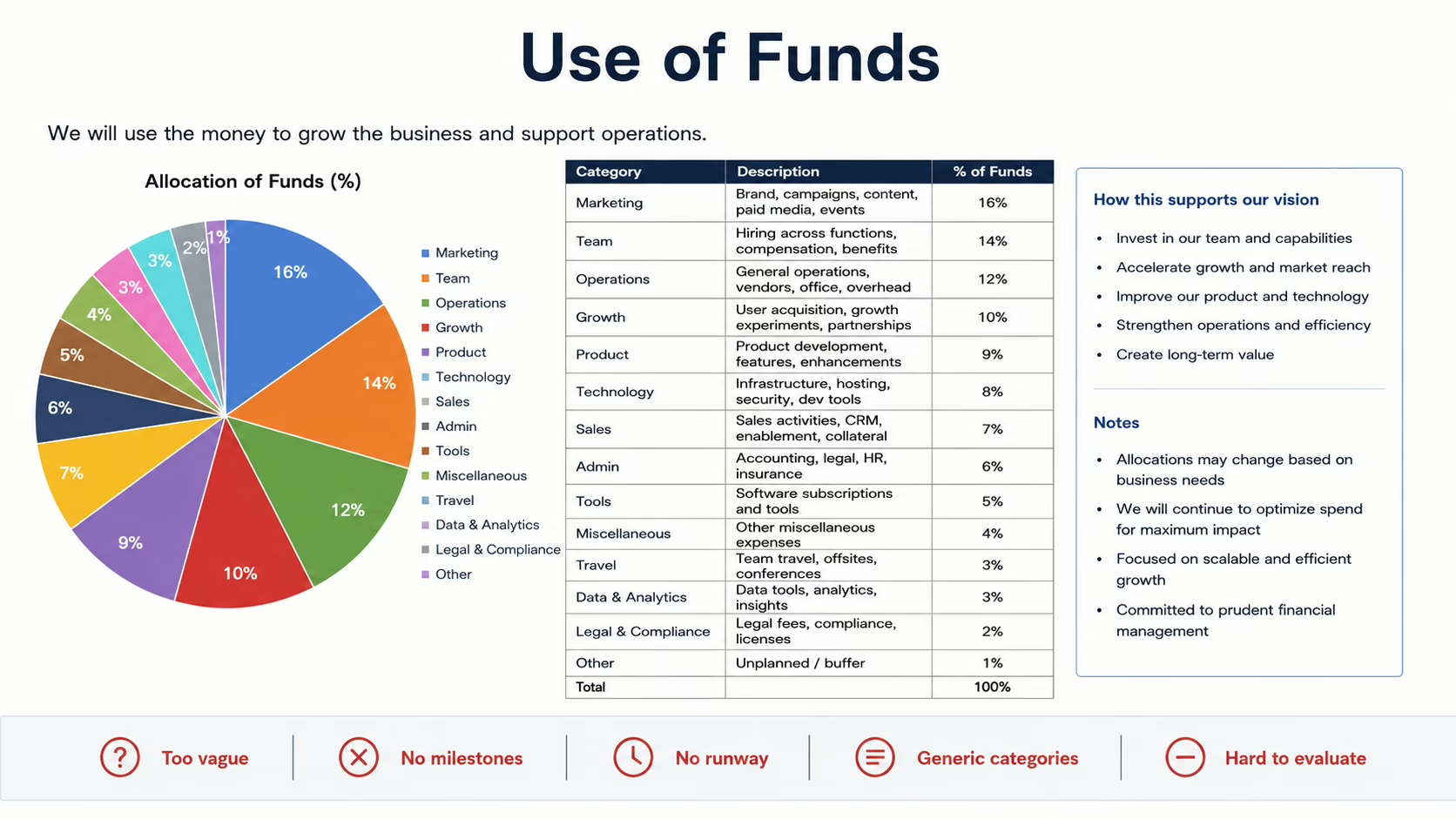
It does not explain how much is being raised. It does not show runway. It does not explain what the money unlocks. It does not connect to milestones. It also includes “miscellaneous,” which usually makes investors suspicious.
The problem is not that the categories are wrong. The problem is that the slide does not show the logic behind them.
Better Use of Funds Slide
A stronger version might say:
Raising $1.5M to fund 18 months of runway and reach commercial launch.
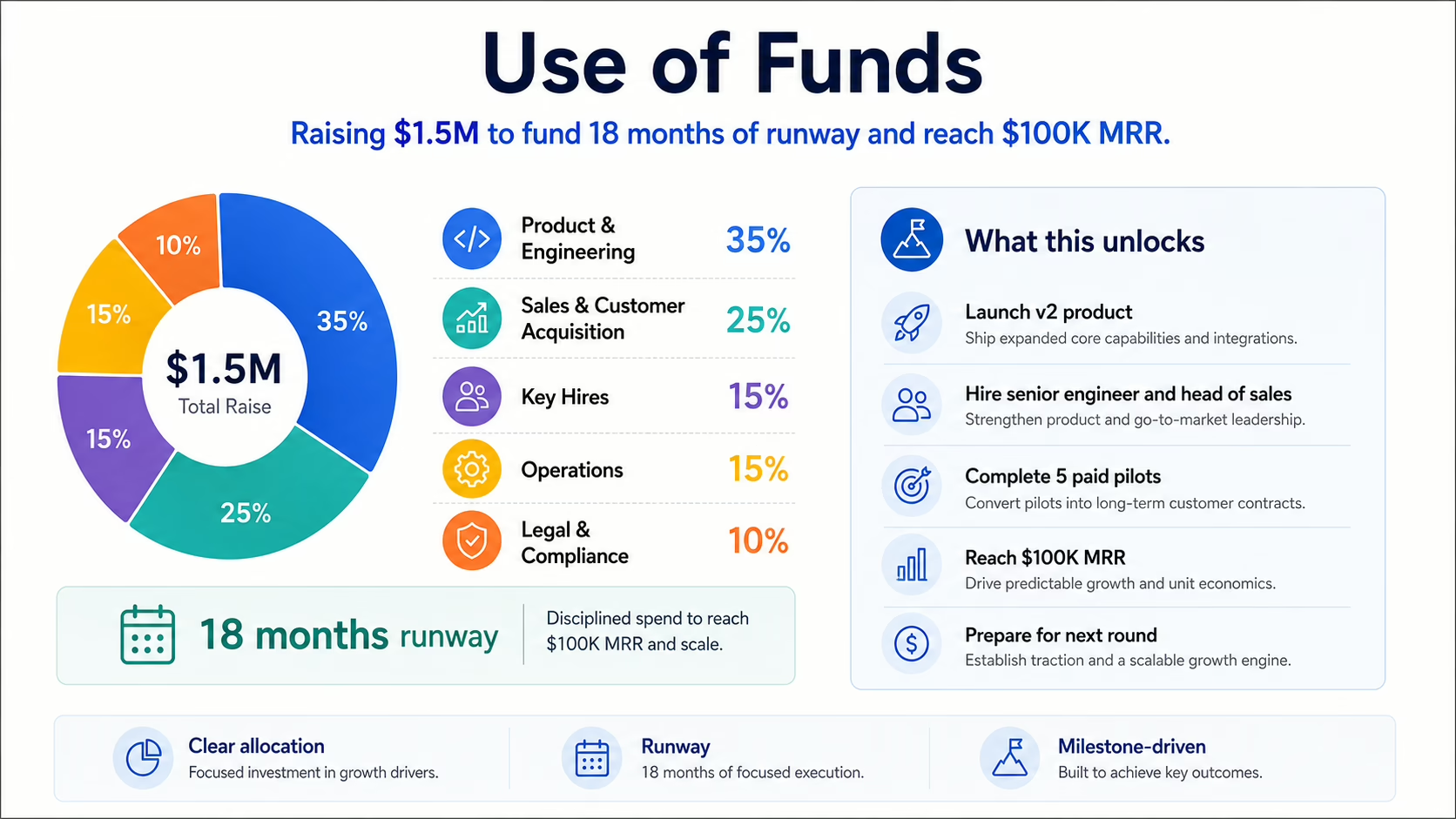
Allocation:
- 35% Product and Engineering
- 25% Sales and Customer Acquisition
- 20% Key Hires
- 10% Operations
- 10% Legal, Compliance, and Finance
Milestones:
- launch v2 product
- hire senior engineer and head of sales
- complete 3 enterprise pilots
- reach $50K MRR
- prepare for seed extension or Series A readiness
This version is stronger because it connects spending to progress.
It tells the investor what the capital is supposed to do.
Use of Funds Slide Examples by Stage
Different stages require different use of funds logic. A pre-seed company should not sound like a Series B company, and a real estate project should not sound like a SaaS startup.
The slide should match the company’s stage, business model, and capital path.
Pre-Seed Use of Funds Slide
At pre-seed, investors usually expect the capital to help the company validate the core idea.
Common use of funds categories:
- product prototype
- early engineering
- founder runway
- customer discovery
- MVP launch
- early market testing
- legal setup
Common milestones:
- build MVP
- test core user workflow
- validate customer pain
- onboard first users
- complete pilot
- gather early traction signals
- prepare for seed round
A pre-seed use of funds slide should not pretend the company has everything figured out. It should show that the team knows what needs to be validated next.
Example framing:
Raising $500K to build MVP, validate customer demand, and reach first pilot customers.
Seed Use of Funds Slide
At seed stage, the company usually needs to prove that the product can become a repeatable business.
Common use of funds categories:
- product development
- engineering hires
- sales and marketing
- customer acquisition
- operations
- runway
Common milestones:
- reach meaningful revenue
- prove repeatable acquisition
- hire core team members
- improve retention
- expand product features
- validate pricing
- prepare for Series A metrics
Example framing:
Raising $2M to fund 18 months of runway, expand the product team, grow from $20K to $100K MRR, and validate repeatable sales.
Series A Use of Funds Slide
At Series A, the use of funds slide usually needs to show scaling logic.
Common use of funds categories:
- go-to-market expansion
- sales team growth
- customer success
- product scaling
- operational infrastructure
- market expansion
Common milestones:
- scale revenue
- expand into new markets
- improve unit economics
- build management team
- increase enterprise sales capacity
- strengthen retention
- prepare for next institutional round
Example framing:
Raising $8M to scale go-to-market, expand enterprise sales, improve customer success capacity, and reach $5M ARR.
Series B Use of Funds Slide
At Series B, the use of funds slide usually needs to show how capital will help the company scale what is already working.
This is no longer just about validating the product, proving demand, or finding early traction. Investors want to see that the business has enough proof to justify larger capital deployment.
Common use of funds categories at Series B include:
- go-to-market expansion
- sales team growth
- customer success
- product infrastructure
- international or regional expansion
- operational systems
- senior leadership hires
- strategic partnerships
- working capital
Common milestones might include:
- expand into new markets
- grow ARR or revenue to the next major threshold
- improve sales efficiency
- strengthen retention and customer success
- scale enterprise sales
- expand product lines
- prepare the company for Series C or strategic acquisition interest
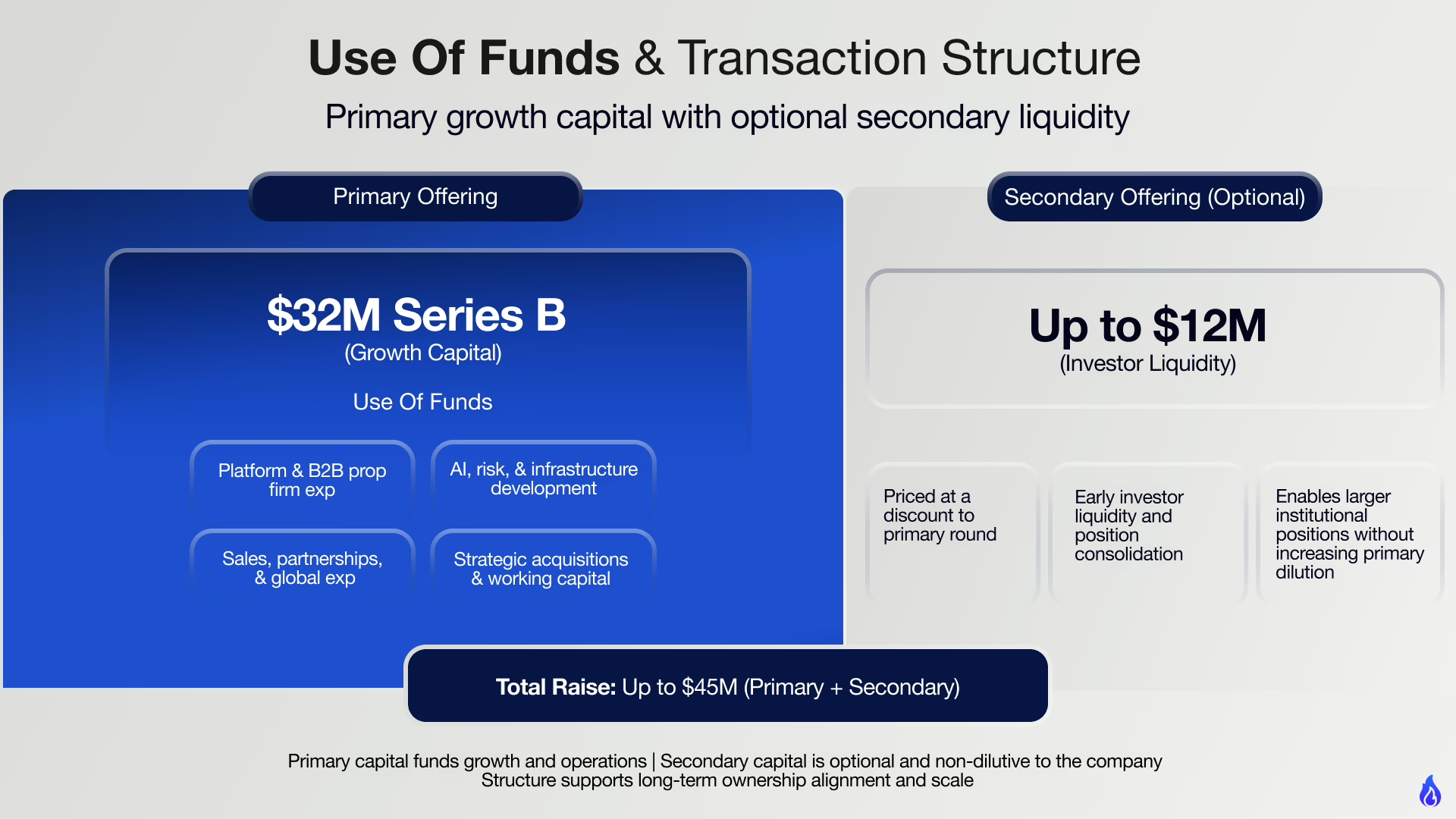
Example framing:
Raising $20M to expand go-to-market, strengthen customer success, scale enterprise sales, and grow from $8M to $25M ARR.
A Series B use of funds slide should feel disciplined, not experimental. The investor needs to understand why this larger round of capital can turn existing traction into a more scalable company.
Real Estate or Infrastructure Use of Funds Slide
For real estate, infrastructure, energy, or physical asset projects, the use of funds slide has a different job.
It needs to show how capital moves the project forward.
Common use of funds categories:
- land acquisition
- permitting
- engineering
- construction
- equipment
- professional services
- working capital
- contingency
Common milestones:
- secure site control
- complete permits
- finalize engineering
- begin construction
- reach operational launch
- secure tenants or offtake agreements
Example framing:
Raising $4M to complete site acquisition, permitting, engineering, and early construction milestones.
This type of slide should be very concrete. Investors or lenders will care about timeline, risk, approvals, and the relationship between capital and project progress.
CPG or Food and Beverage Use of Funds Slide
For consumer brands, the use of funds slide often needs to connect production, inventory, marketing, and distribution.
Common categories:
- inventory
- packaging
- retail expansion
- sales team
- marketing
- working capital
- operations
Common milestones:
- complete production run
- expand to new retail locations
- increase monthly sales
- support distributor relationships
- improve margins
- launch new SKU
Example framing:
Raising $750K to fund inventory, retail expansion, marketing, and working capital for the next 12 months.
The important thing is to avoid making the slide look like all the money is going into vague “brand awareness.” Investors want to see how the spend supports distribution, revenue, margins, or repeatable demand.
How to Design a Use of Funds Slide
The design of a use of funds slide should make the allocation logic easy to understand quickly.
This is not the place for visual decoration. It is the place for clarity.
Use a Simple Allocation Graphic
A pie chart can work, but only if the categories are simple and the percentages are easy to read.
A stacked bar can also work well because it shows allocation cleanly without making the slide feel like a generic finance template.
Another strong structure is a two-column layout:
Left side:
- raise amount
- runway
- allocation
Right side:
- milestones unlocked
- next fundable moment
This format often works better than a pie chart because it connects the spending to outcomes.
Use Plain Labels
Avoid vague labels like:
- growth
- team
- operations
- development
- general expenses
Use more specific labels when possible:
- product and engineering
- customer acquisition
- regulatory approval
- enterprise sales
- inventory and production
- runway and operations
Specific labels make the slide feel more controlled.
Show Milestones Visually
The milestones should not be hidden in a paragraph.
You can show them as a short list, timeline, or simple milestone row.
For example:
Capital raised → 18 months runway → v2 launch → 3 pilots → $100K MRR → next round readiness
This makes the logic easier to follow.
Keep the Slide High-Level
The slide should not include every expense.
Do not show:
- office supplies
- software subscriptions
- small contractor costs
- tiny line-item budgets
- individual salaries
- detailed monthly cash flow
Those details belong in the financial model, not the main deck.
The use of funds slide should be a capital allocation summary.
Common Use of Funds Slide Mistakes
Most use of funds slide mistakes happen because founders treat the slide like a budget rather than an investor communication tool.
Mistake 1: Showing Generic Categories
Generic categories make the slide feel copied from a template.
For example:
- 30% marketing
- 30% product
- 20% team
- 20% operations
This does not say much.
The fix is to connect categories to the business model and stage.
Instead of “marketing,” say “enterprise sales and customer acquisition.”
Instead of “team,” say “senior engineering and customer success hires.”
Instead of “operations,” explain whether this means regulatory, inventory, production, or runway.
Mistake 2: No Milestones
A use of funds slide without milestones only explains spending.
It does not explain progress.
Investors need to understand what the capital changes.
The fix is simple:
Add a short milestone section.
Examples:
- reach $100K MRR
- launch v2 product
- complete 5 paid pilots
- secure regulatory approval
- expand to 50 retail locations
- reach 18 months runway
Mistake 3: No Runway
Runway is one of the most important parts of the capital plan.
If the use of funds slide does not show how long the round lasts, investors are left to guess.
That is not good.
Add a clear line like:
This round funds 18 months of runway.
or:
This raise supports operations through commercial launch and early revenue.
Mistake 4: Too Much Detail
Too much detail makes the slide harder to read.
A pitch deck is not a budget meeting.
Investors do not need to see every small expense on the main use of funds slide. They need to understand the allocation logic.
Keep the slide high-level, and put the detailed budget in the appendix or financial model.
Mistake 5: The Raise Does Not Match the Plan
Sometimes the use of funds slide reveals that the raise amount is not realistic.
For example:
A founder says they are raising $500K, but the use of funds includes hiring five people, launching two markets, running paid acquisition, finishing product development, and keeping 18 months of runway.
That math probably does not work.
The slide should force clarity. If the plan is too big for the raise, either the raise amount needs to change or the milestones need to become more realistic.
Mistake 6: The Slide Ignores the Next Fundable Moment
Capital should create progress.
Progress should make the company more fundable, more valuable, or less risky.
If the use of funds slide does not explain what the company looks like after the money is spent, it is incomplete.
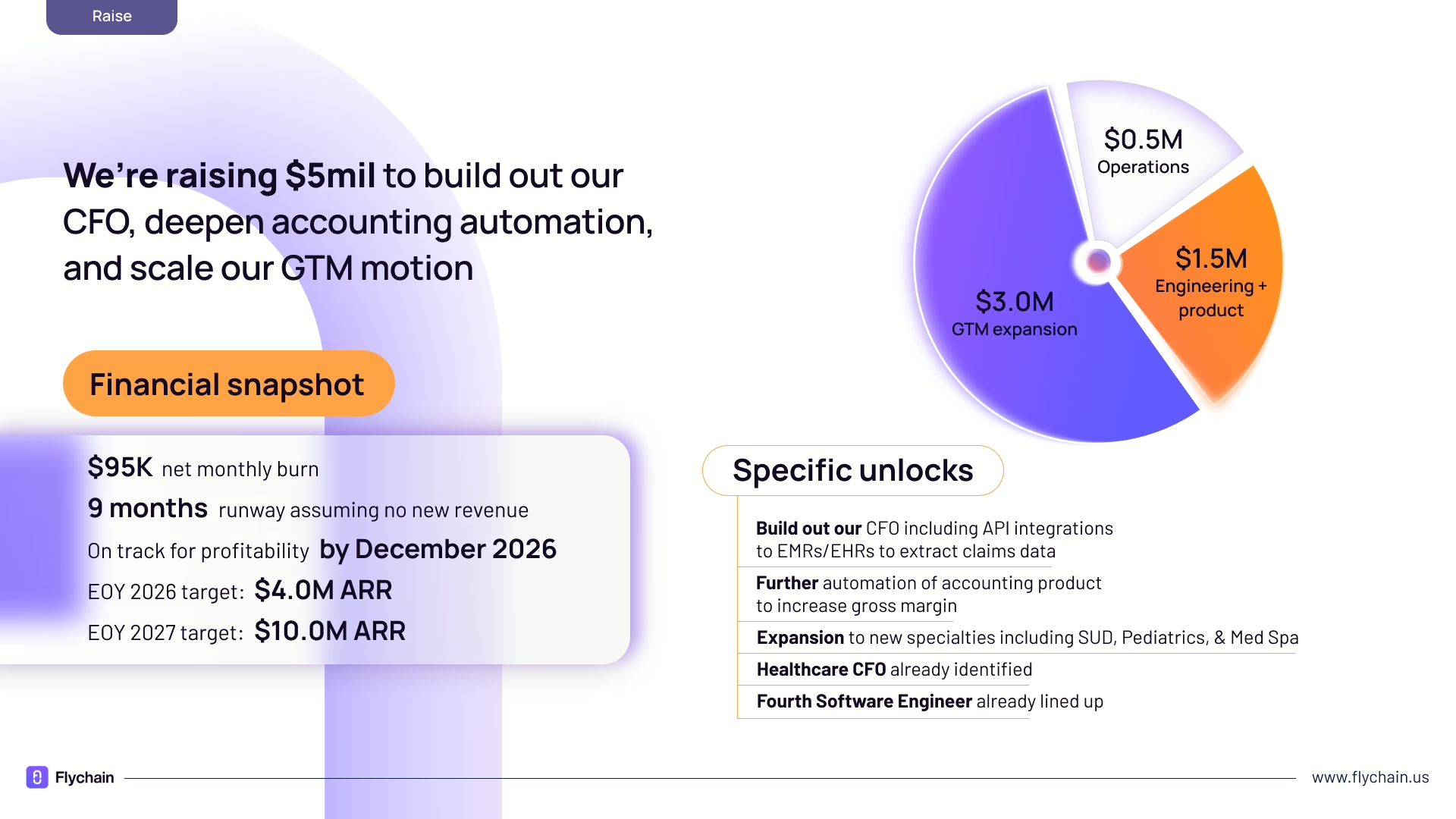
Investors are thinking:
“What will be true after this round that is not true today?”
Your slide should help answer that.
How to Connect Use of Funds to the Fundraising Story
The use of funds slide is not just a financial slide. It is also a narrative slide.
It tells investors what the next chapter of the company looks like.
That is why the slide should connect to the fundraising story.
If your deck says the main problem is product readiness, the use of funds should support product progress.
If your deck says the main opportunity is customer demand, the use of funds should support sales, marketing, customer acquisition, or distribution.
If your deck says the main bottleneck is regulation, the use of funds should support compliance, approvals, or clinical/regulatory work.
If your deck says the main risk is operational scale, the use of funds should support hiring, systems, infrastructure, or production capacity.
When the use of funds slide is disconnected from the narrative, the deck feels weaker.
If the positioning, fundraising logic, or capital story behind the raise still feels unclear, you may need fundraising narrative strategy before building the final slides.
A use of funds slide works best when the story is already clear.
Use of Funds Slide Template
Here is a simple structure you can use:
Headline
Raising $X to achieve Y within Z months.
Example:
Raising $1.5M to fund 18 months of runway and reach $100K MRR.
Allocation
Show 4 to 6 categories.
Example:
- 40% Product and Engineering
- 25% Sales and Customer Acquisition
- 15% Key Hires
- 10% Operations
- 10% Legal and Compliance
Milestones
Show what the money unlocks.
Example:
- launch v2 product
- hire senior engineer and head of sales
- complete 5 paid pilots
- reach $100K MRR
- prepare for next funding round
Runway
Add a clear runway statement.
Example:
This round supports 18 months of runway.
Optional Note
Add one short note that explains the allocation logic.
Example:
The allocation prioritizes product completion and early revenue validation before scaling the sales team.
This simple structure is usually enough.
Use of Funds Slide Copy Examples
Here are a few headline examples you can adapt.
SaaS Startup
Raising $2M to expand product development, build the sales team, and reach $100K MRR within 18 months.
Healthcare Startup
Raising $3M to complete regulatory preparation, expand clinical partnerships, and support 18 months of product and commercial development.
CPG Brand
Raising $750K to fund inventory, retail expansion, marketing, and working capital for the next 12 months.
Real Estate Project
Raising $4M to complete site acquisition, permitting, engineering, and early development milestones.
AI Startup
Raising $1.8M to improve model performance, hire engineering talent, expand enterprise pilots, and reach commercial launch.
Climate or Energy Startup
Raising $5M to complete engineering, secure project approvals, expand partnerships, and reach deployment readiness.
These examples are not meant to be copied exactly. The right wording depends on your business model, funding stage, and actual plan.
Where the Use of Funds Slide Goes in a Pitch Deck
The use of funds slide usually appears near the end of the pitch deck.
A typical order might look like this:
- Problem
- Solution
- Product
- Market
- Business model
- Traction
- Go-to-market
- Competition
- Team
- Financials
- Fundraising ask
- Use of funds
Sometimes the use of funds slide is combined with the fundraising ask slide.
For example:
“We are raising $2M to fund 18 months of runway, scale product and sales, and reach $100K MRR.”
This can work well if the deck is short.
But if the raise is complex, the use of funds deserves its own slide.
Should You Use a Pie Chart?
You can use a pie chart, but only if it makes the slide easier to understand.
A pie chart works when:
- categories are simple
- percentages are clean
- there are not too many slices
- the visual does not dominate the slide
- milestones are still visible somewhere
A pie chart does not work when:
- there are too many categories
- labels become tiny
- the slide looks generic
- milestones disappear
- the chart becomes decoration rather than explanation
In many investor decks, a stacked bar, allocation table, or milestone-based layout works better than a pie chart.
The best format is the one that makes the capital plan easiest to understand.
Need Help Building an Investor-Ready Use of Funds Slide?
A use of funds slide needs to do more than show a spending breakdown.
It has to connect the raise amount, runway, milestones, hiring plan, financial logic, and investor narrative into one clear slide.
If you need help turning your financials, use of funds, revenue model, and fundraising story into a clearer investor-ready presentation, explore my pitch deck design services.
Use of Funds Slide FAQ
What is a use of funds slide?
A use of funds slide is a pitch deck slide that explains how a company plans to allocate the capital it is raising. It usually shows the raise amount, spending categories, runway, and the milestones the funding is expected to unlock.
What should be included in a use of funds slide?
A use of funds slide should usually include the total raise amount, major allocation categories, percentages or dollar amounts, expected runway, and key milestones. The best slides connect spending to business progress.
Where does the use of funds slide go in a pitch deck?
The use of funds slide usually appears near the end of the pitch deck, often after the financials and fundraising ask. In shorter decks, it can be combined with the ask slide.
Should a use of funds slide include percentages or dollar amounts?
It can include percentages, dollar amounts, or both. Percentages are easier to scan, while dollar amounts feel more concrete. The right choice depends on the complexity of the raise and how much detail investors need.
Is a pie chart good for a use of funds slide?
A pie chart can work if the categories are simple and easy to read. However, many use of funds slides are stronger with a stacked bar, allocation table, or milestone-based layout because these formats can better connect spending to outcomes.
What is the biggest mistake founders make with the use of funds slide?
The biggest mistake is showing where the money goes without explaining what the money unlocks. Investors want to see how the capital extends runway, reduces risk, supports growth, and moves the company toward the next fundable milestone.
How detailed should a use of funds slide be?
It should be high-level enough to scan quickly, but specific enough to show capital discipline. Four to six allocation categories are usually enough. Detailed budgets, salaries, and monthly line items belong in the financial model or appendix.
How does the use of funds slide connect to financial projections?
The use of funds slide should match the financial projections, burn rate, runway, hiring plan, and growth assumptions. If the use of funds slide says one thing and the financial model says another, investors may lose confidence in the plan.
Can the use of funds slide help with fundraising?
Yes. A clear use of funds slide can make the fundraising ask feel more credible because it shows that the founder understands how capital will be allocated and what progress the funding is expected to create.
Do all pitch decks need a use of funds slide?
Most fundraising decks should include one. If you are asking for capital, investors need to understand how that capital will be used. For very short teaser decks, the use of funds can be summarized on the ask slide.
