


Banks are not discretionary allocators of capital. They are regulated balance sheets operating inside fixed capital requirements, supervisory frameworks, and systemic risk controls. This page explains how institutional banking capital evaluates lending risk through a sector-specific lens, applying the universal capital decision logic established upstream. Authority for that logic lives entirely in the institutional capital framework defined at Viktori.co; this page does not restate it, optimize it, or provide execution guidance. It does not explain how to raise capital, structure a pitch, or influence outcomes. It explains how banking institutions assess eligibility, risk containment, and capital adequacy before credit is ever extended.
Why Banking Is a Constrained Capital Environment
Banking capital is constrained by design. Unlike private investment capital, banks operate within mandatory capital frameworks enforced by regulators and supervisory bodies such as the Federal Reserve system and the Basel Committee on Banking Supervision. Capital is not deployed based on upside narratives, but on whether risk-weighted exposure can be absorbed without impairing the bank’s capital position.
Risk in banking is non-linear. A single credit exposure does not stand alone; it compounds across portfolios, capital buffers, stress scenarios, and regulatory thresholds. Lending decisions are therefore evaluated not as opportunities, but as liabilities the bank must permanently support with regulatory capital.
Regulatory Capital Adequacy as the First Gate
The primary evaluation filter in banking is capital adequacy. Every lending decision is assessed against minimum capital requirements and internal capital targets. Reviewers evaluate how much regulatory capital must be held relative to the risk-weighted assets created by the loan.
Banks assess whether the exposure degrades Common Equity Tier 1 ratios, Tier 1 capital levels, or total capital ratios beyond acceptable limits. If a transaction increases capital strain or pushes the bank closer to supervisory thresholds, it fails—regardless of yield, collateral narrative, or borrower confidence.
What typically fails here is misalignment between the perceived safety of a loan and its regulatory capital charge. Banks do not lend based on intent; they lend based on how capital frameworks classify risk.
Risk-Based Capital and Portfolio Impact
Bank capital evaluation is portfolio-centric. Lending risk is assessed through risk-based capital measures that determine how much capital must be held against the exposure over time. Market risk capital, credit risk capital, and operational risk implications are considered together.
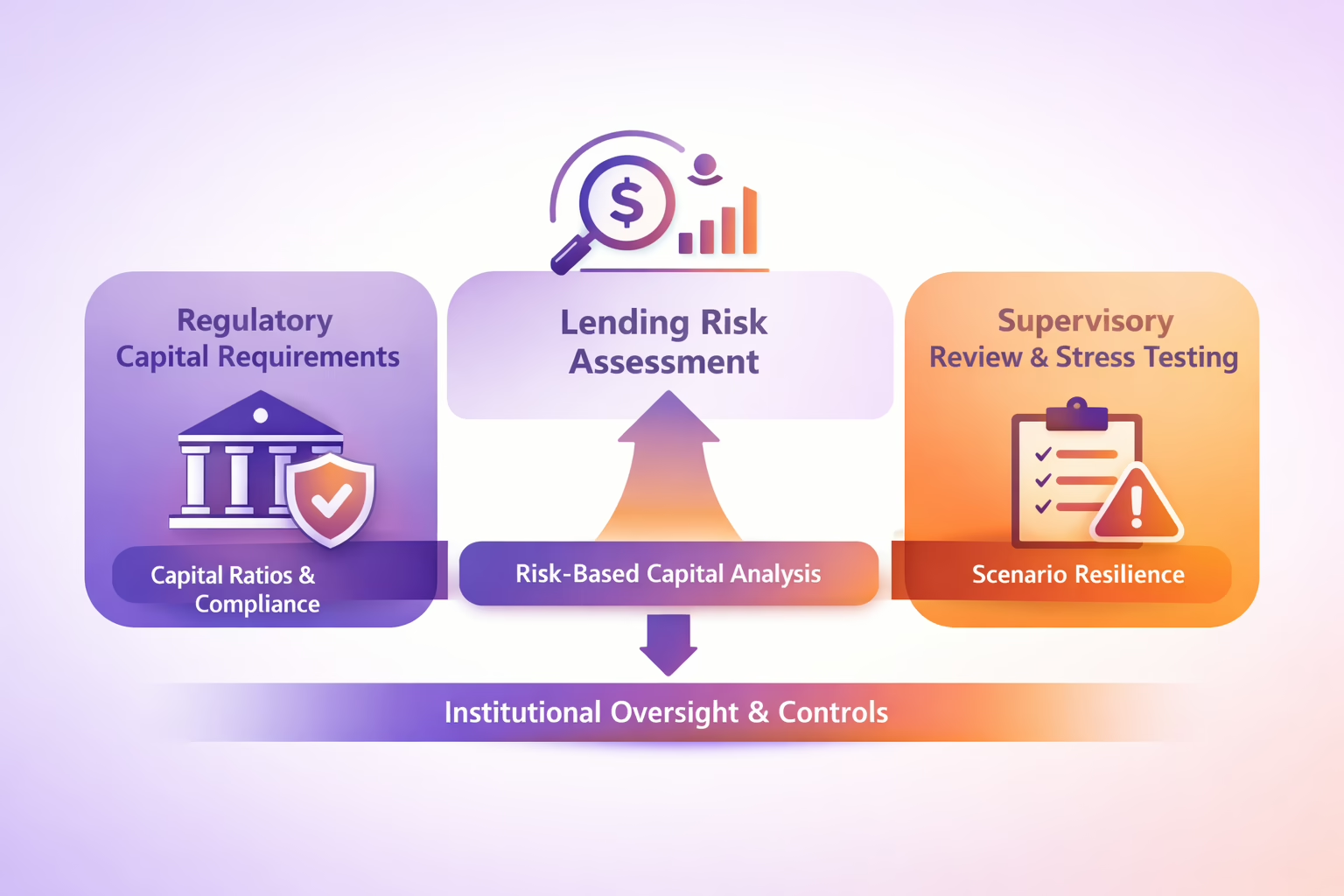
Reviewers assess whether the loan concentrates risk in a way that elevates capital requirements across the portfolio, particularly for large banks subject to higher capital requirements. Even profitable transactions are rejected if they worsen portfolio capital efficiency or increase volatility under stress scenarios.
What fails at this gate is the assumption that isolated deal quality outweighs aggregate capital impact. In banking, it does not.
Supervisory Expectations and Stress Resilience
Bank supervision introduces an additional layer of evaluation beyond static ratios. Institutions assess how a lending exposure performs under adverse conditions, including stress capital buffer calculations and countercyclical capital buffer considerations.
Credit committees evaluate whether the bank could maintain adequate capital levels if defaults increase, liquidity tightens, or market conditions deteriorate. The likelihood of bank failures—however remote—anchors conservative assumptions.
Transactions fail here when they rely on stable conditions to remain viable. Banking capital is structured for resilience, not optimism.
Governance, Controls, and Capital Discipline
Banking capital is deployed within strict governance frameworks. Lending risk is evaluated not only on borrower characteristics, but on whether the exposure fits approved capital frameworks, internal policies, and regulatory scrutiny.
Reviewers examine whether the loan introduces complexity that strains internal monitoring, reporting, or compliance systems. Capital that is difficult to supervise is treated as higher risk, regardless of return.
Failures occur when structures appear technically sound but increase supervisory friction or governance exposure.
Sector-Specific Failure Modes in Banking Credit
Common structural rejection reasons include:
- Capital charges that exceed acceptable thresholds
- Deterioration of regulatory capital ratios post-deployment
- Increased concentration risk within risk-weighted portfolios
- Stress scenario fragility under supervisory models
- Governance or monitoring burdens inconsistent with bank supervision standards
These are not fixable through reframing. They are structural outcomes of capital regulation.
The Role of Evaluation Artifacts in Banking
Pitch decks, financial models, and credit memoranda function as validation artifacts in banking evaluation. They are used to confirm assumptions, quantify exposure, and document compliance with capital frameworks.
They cannot reduce regulatory capital requirements. They cannot override supervisory constraints. They cannot compensate for capital inefficiency.
Artifacts clarify risk; they do not negotiate it.
How Banking Expresses Universal Capital Logic
Banking applies the same institutional capital decision logic as all allocators, but with the narrowest tolerance for deviation. Eligibility, downside containment, governance integrity, and systemic alignment are enforced through regulatory capital standards rather than discretionary judgment.
Where sector-specific banking evaluation collapses back into universal logic, decisions are governed by the universal institutional capital allocation framework.
This page operationalizes that logic within the banking system—nothing more, nothing less.
